
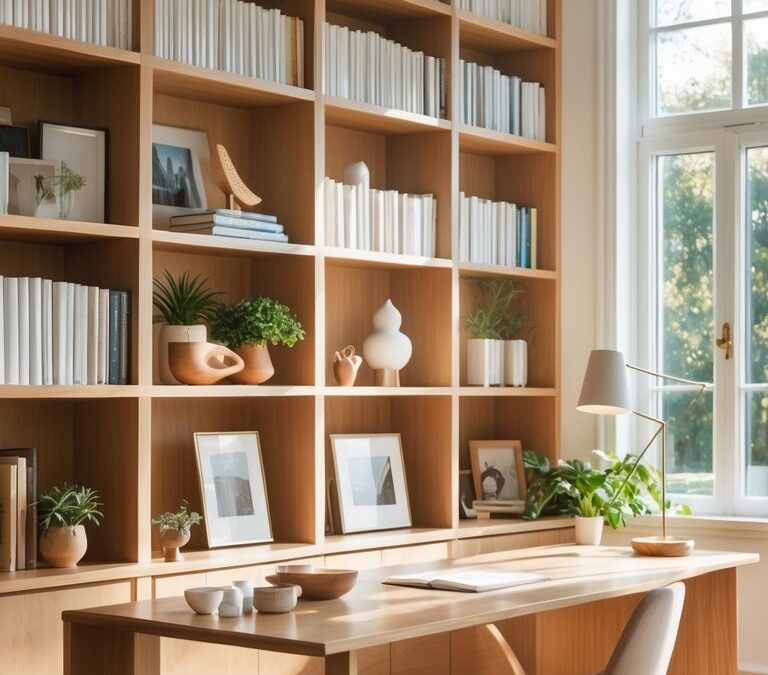
You can make your office shelf feel warm, stylish, and calm without overdoing it. Use a mix of books, small plants, and a few special objects to create a layered look that feels lived-in and intentional.
You will learn simple styling choices that instantly lift a bookshelf into a Nancy Meyers–inspired focal point for your workspace.
Think about comfort and personality as you style: cozy seating, soft textures, and personal finds make the space inviting, while smart organization keeps it from feeling cluttered. This article walks you through easy, practical tips to balance color, texture, and objects so your shelf looks polished and welcoming.
Treat one shelf as a mini vignette and build around a single standout item—like a framed black-and-white photo, a sculptural object, or an art book with its cover facing out. Start by anchoring that shelf with a few vertically arranged books, then add a small plant and a decorative bookend to frame the scene. Use horizontal stacks to create height variation and break up repetitive lines. Keep lower shelves practical with woven baskets for storage, and reserve the eye-level shelves for items you want to see and enjoy. Aim for a mix of warm neutrals and a couple of richer tones to mimic a cozy, cinematic office vibe. Adjust spacing so items breathe; a little negative space makes each piece feel deliberate.
1) Arrange books by color for a vibrant, eye-catching display
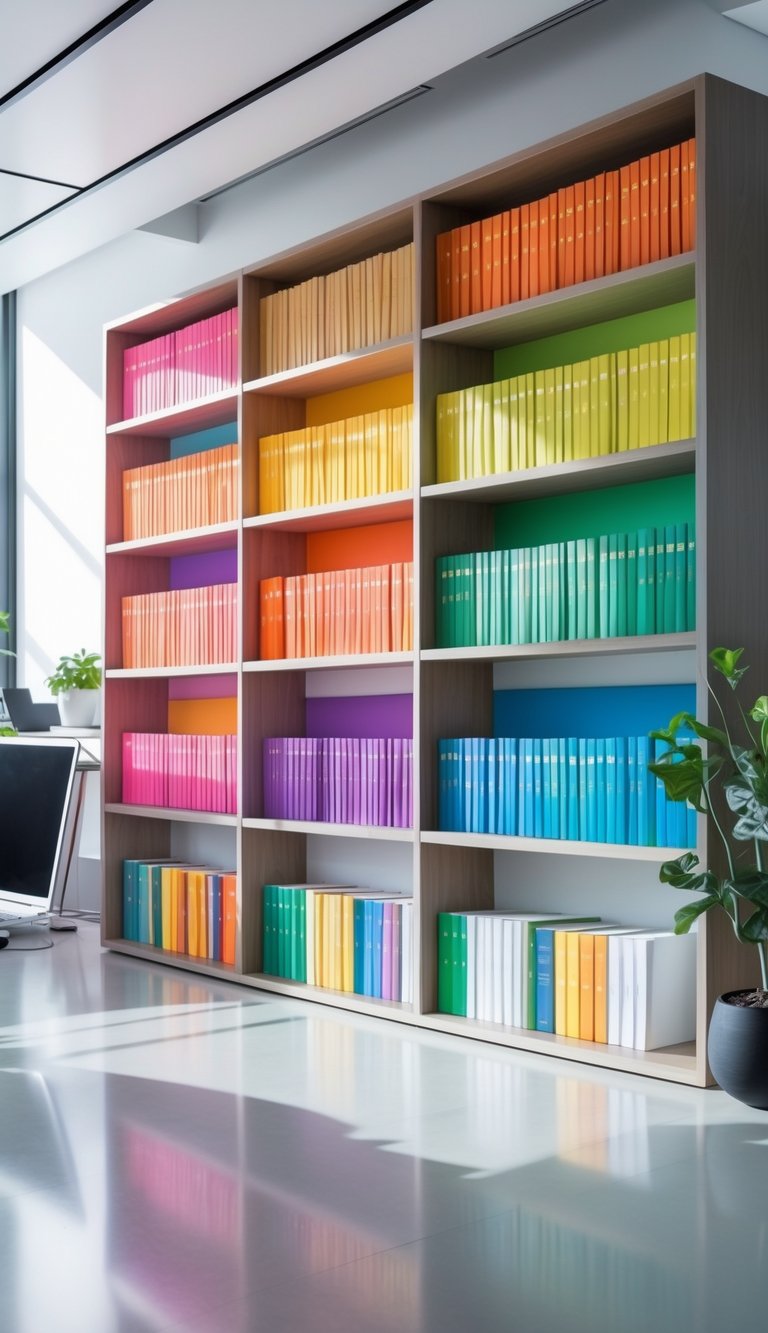
Organize your books into color groups to make the shelf pop. A rainbow or grouped hues create a strong visual that draws the eye and adds personality to the room.
You don’t need perfect order. Mix shades within a color band to keep the look natural and avoid a staged feel. Leave small gaps for decor items so the colors breathe.
Use color-coding for quick visual access when you want a mood or theme. Keep practicality in mind: shelve heavy reference books together even if they interrupt the color flow.
PRO TIP
When you color-code, photograph the arrangement after you finish. The photo saves your layout for future moves or if you need to restore the order after borrowing or adding books. Consider labeling the back of shelves with tiny sticky notes showing the color order. That helps if you share the space or have kids who shift things around. Rotate colors seasonally to refresh the room: swap brighter covers in summer and deeper tones in winter. Finally, mix in a few neutral items—small plants, framed photos, or white ceramics—to balance vivid sections and keep the shelf from feeling overwhelming.
2) Include a mix of vintage and modern book covers
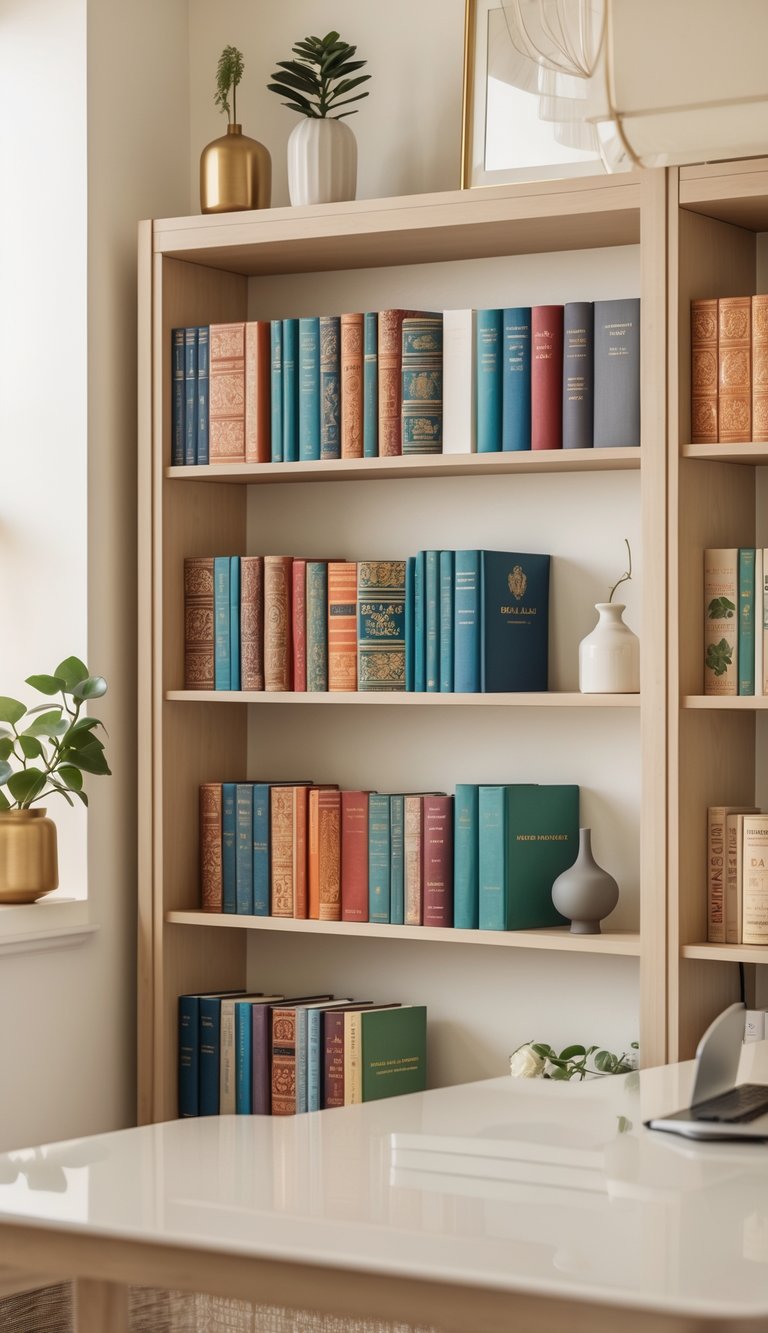
Mixing old and new book covers gives your shelf a lived-in, stylish look. Place a few well-worn spines next to glossy, contemporary jackets to create contrast and visual interest.
Use color and texture to guide you. Neutral, faded covers pair well with bold modern designs, and small stacks of vintage books can soften a row of sleek editions.
Let some covers face out to show artwork. A single vintage cover displayed upright adds charm, while a modern bestseller laid flat gives balance.
Rotate pieces seasonally to keep the shelf fresh. Swapping one or two books changes the vibe without much effort.
PRO TIP
You can create a curated, Nancy Meyers–inspired feel by combining books with small decorative objects. Place a ceramic vase or brass bookend beside a stack of old paperbacks to add depth and warmth. Pick items in soft, classic tones—cream, muted greens, warm brass—to echo both eras. Keep negative space so the arrangement doesn’t look crowded; empty areas make each piece stand out more. Use groups of three or five for a balanced, natural look, and vary heights to avoid a flat line. Consider thrift stores for unique vintage finds; they add personality without costing much.
3) Stack some books horizontally to break up vertical lines
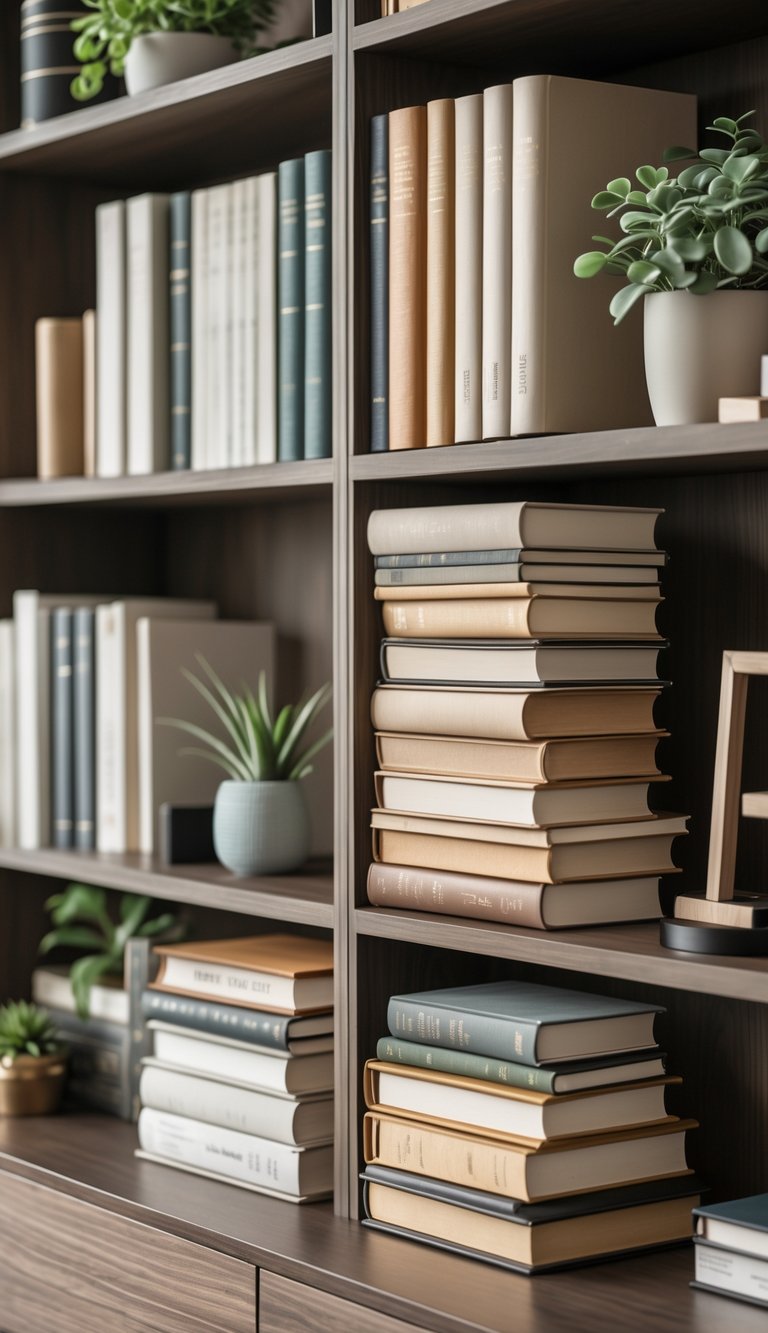
Stacking books horizontally adds shape and rhythm to your shelves. Place a small stack next to a row of upright books to make the eye move across the shelf. This simple change keeps the look tidy but less predictable.
Use horizontal stacks as platforms for small decor like a plant, candle, or framed photo. That raises objects slightly and adds depth without crowding the shelf. Vary stack heights to avoid a flat line.
Keep stacks practical by not overloading them; three to six books works well. Alternate paperbacks and hardcovers for stability, and pull a book forward now and then to create relaxed, lived-in styling.
PRO TIP
Think of horizontal stacks as mini stages. Use them to group items by theme, color, or texture so each stack feels intentional. For a Nancy Meyers–inspired warm office, mix neutral covers with a single accent color and place a small ceramic piece or brass bookend on top. Rotate what sits on the stacks seasonally to keep the shelf fresh. If a stack needs height, add a slim box or decorative tray under the books to protect the shelf surface and maintain balance.
4) Add elegant ceramic or glass bookends
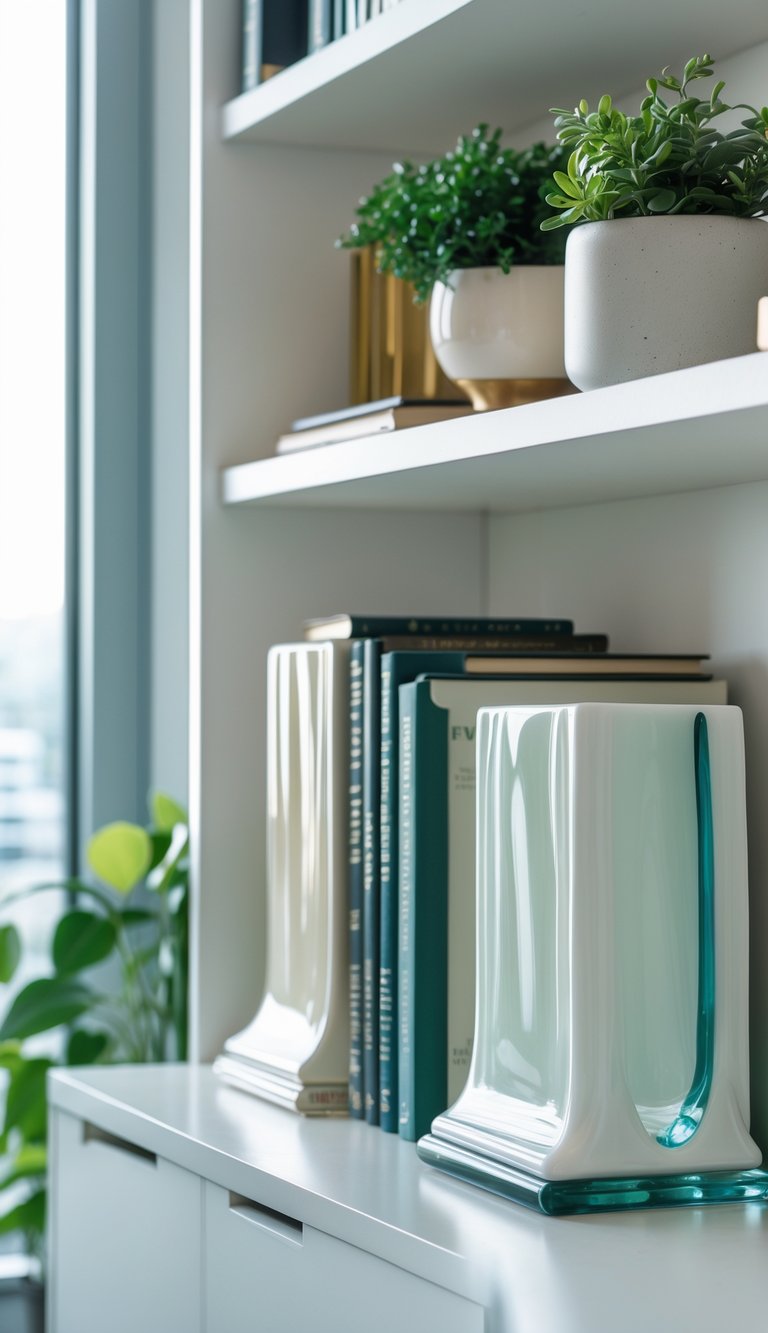
Pick ceramic or glass bookends to lift the look of your shelf. They keep books upright and add a clean, polished feel without crowding the space.
Match the finish to the rest of your office. Matte ceramics feel soft and warm, while clear or colored glass gives a brighter, more modern touch.
Use bookends to create small groupings. Place a pair at the ends of a stack, or anchor a mix of books and decorative objects for balance.
Vary shapes and heights for visual interest. Keep heavier books near solid, sturdy bookends and lighter books with delicate glass pieces.
PRO TIP
Choose bookends that connect to at least one color or texture already in your room so the shelf looks intentional. If your desk or lamp has brass details, try ceramic bookends with a subtle gold stripe or glass with warm undertones. For a calm, neutral office, pick opaque white ceramics that blend with pages and let artwork stand out. Place bookends in odd-numbered groupings when you can; odd groups read as more natural to the eye. Finally, trade glass for heavier stone or metal if you store large hardcovers, since they give better support and last longer.
5) Incorporate small green plants like succulents or ferns
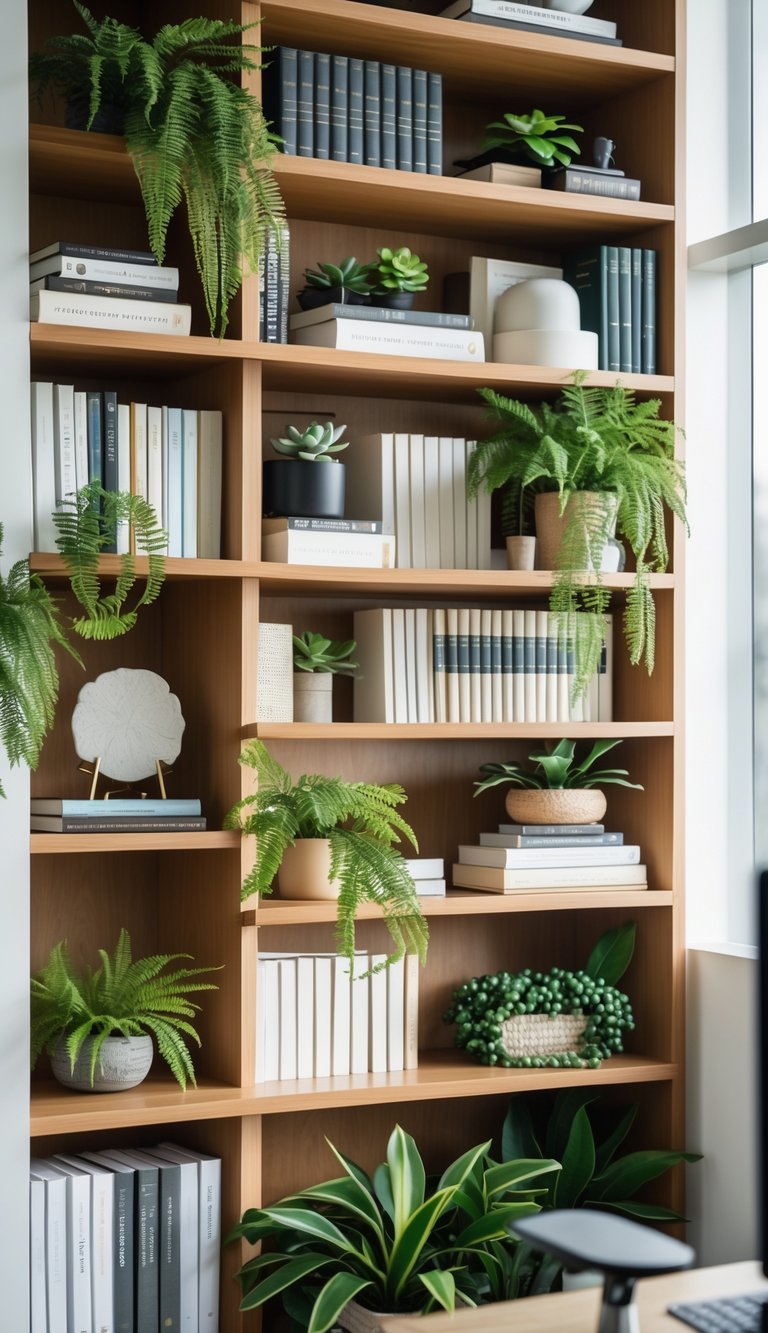
Place small succulents or ferns on your bookshelf to add life and color. You can tuck them between books or set them on empty shelf spaces to break up straight lines.
Choose low-maintenance plants if you don’t want extra work. Succulents need little water, while small ferns like bright, indirect light and occasional misting.
Use simple pots that match your room’s palette to keep the look cohesive. Mix pot sizes and heights for visual interest without clutter.
Rotate plants occasionally so each one gets light. This keeps them healthy and prevents one side of the shelf from looking sparse.
PRO TIP
Select pots with drainage or use a liner to protect your shelves from water damage. Place a small saucer under each pot, or use a pebble layer to catch excess moisture. If your shelves are open to sunlight, pick sun-tolerant succulents like haworthia or echeveria. For shadier spots, choose ferns or ZZ plants that handle low light. Group a few small plants close together for a curated look, and spread taller pieces across higher shelves to guide the eye. Remember to dust leaves gently every few weeks so your plants look fresh, and set a simple watering schedule to avoid overwatering.
6) Use a plush armchair nearby for cozy reading sessions
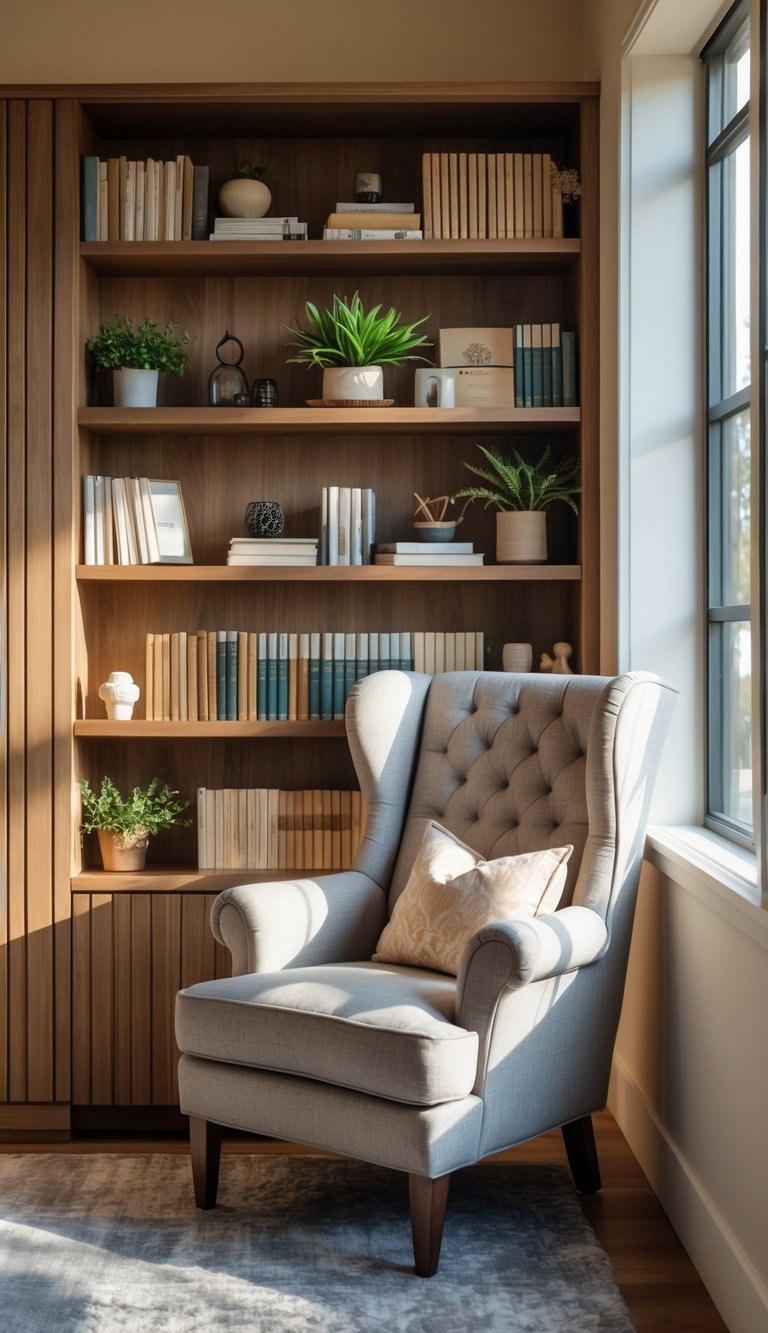
Place a plush armchair close to your bookshelf to create a natural spot for reading. You want a seat that invites you to sit down and stay awhile, with enough padding and a supportive back.
Choose fabric and color that match your office vibe. Soft neutrals work well for a Nancy Meyers look, but a muted pattern can add warmth without stealing attention.
Add a small side table for your drink and a lamp for focused light. A floor lamp or table lamp with warm bulbs makes reading easier and keeps the space cozy.
Keep a throw blanket and a cushion within reach for extra comfort. These small touches make your reading corner feel personal and lived-in.
PRO TIP
Pick an armchair with the right scale for your room so it doesn’t block walkways or overwhelm the shelves. Measure the area before you buy, and test how it feels when you sit for a few minutes. Consider a swivel or reclining option if you like to shift positions while reading. Choose a durable upholstery that resists spills and wear if you use the chair daily. Add a slim side table or floating shelf for a lamp and a cup, keeping surfaces clutter-free. Finally, orient the chair toward natural light when possible to reduce eye strain and make the nook feel bright and inviting.
7) Place framed black-and-white photos for a personal touch
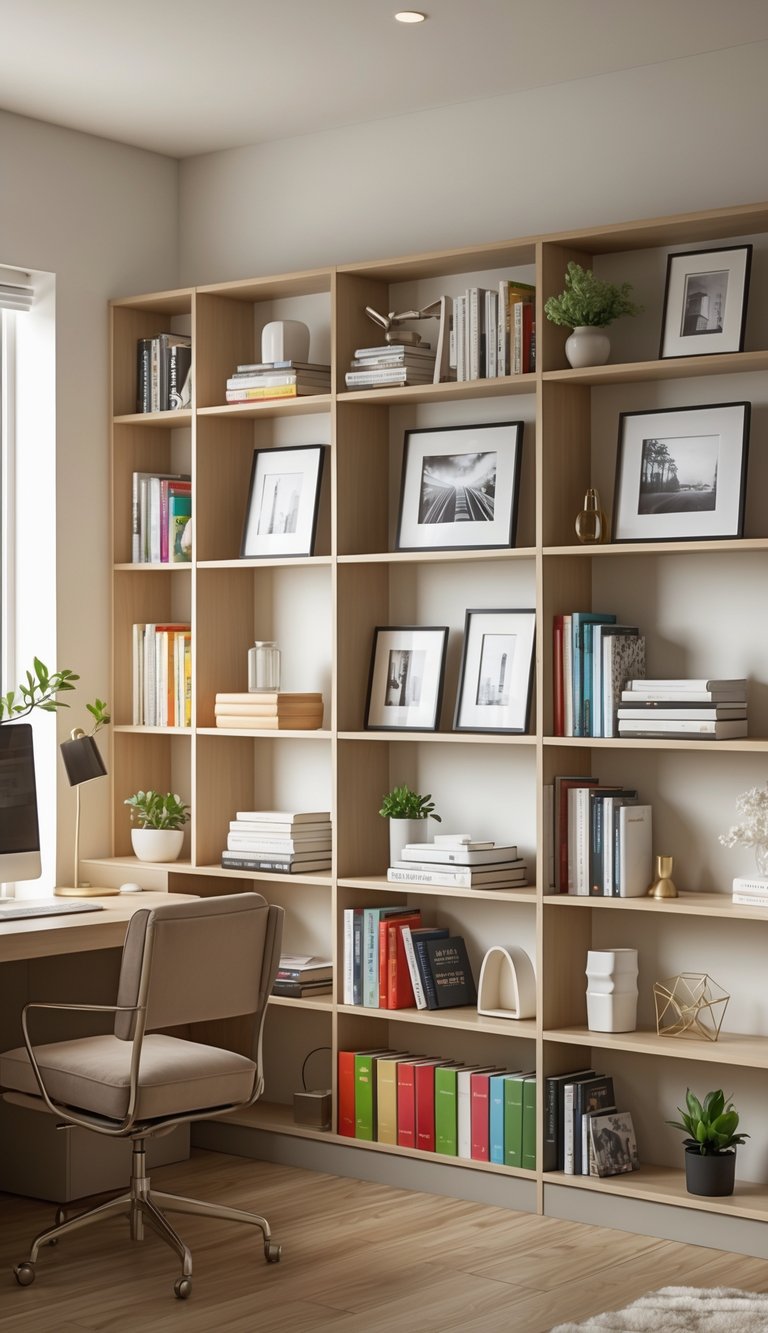
Black-and-white photos add warmth without clashing with other colors on your shelf. You can mix small frames with taller objects to create rhythm and guide the eye.
Lean one frame against the back of the shelf and stand another upright to add depth. Vary frame styles—simple black wood, thin metal, or white mats—to keep the look layered but calm.
Choose photos that matter to you: family moments, travel shots, or places that inspire you. The timeless contrast of black and white keeps the display elegant and prevents it from feeling cluttered.
PRO TIP
Pick frames that match the room’s mood but don’t force every frame to match exactly. A consistent palette—black, white, or natural wood—will tie photos together while allowing each image to stand out. Use mats to give breathing room around images and prevent glare from touching the glass. Try groupings of three or five for balance, and place them at varying heights for a relaxed, collected look. Change one photo seasonally to keep the shelf feeling fresh and personal.
8) Include sculptural decor pieces for artistic appeal

Pick a few sculptural pieces to break up rows of books and add visual interest. A small bust, an abstract form, or a ceramic knot gives your shelf a gallery-like feel without overcrowding the space.
Place sculptures at eye level or on staggered heights to guide the viewer’s eye across the shelf. Let negative space surround each piece so it reads clearly and doesn’t compete with nearby items.
Mix materials and finishes for texture contrast—think metal next to wood, or matte ceramic beside glass. Keep scale in mind: one larger sculpture can anchor a shelf, while several tiny objects work well in clusters.
PRO TIP
When choosing sculptural decor, focus on pieces that reflect your taste but also offer strong shapes. Choose one statement object per shelf section and balance it with smaller, simpler items. Use pedestals, stacked books, or trays to raise low sculptures so they sit at varied heights. Rotate a few pieces seasonally to keep your shelf feeling fresh. Lighting matters: point a small lamp or spotlight toward your sculptures to cast gentle shadows and highlight form. This boosts the artistic vibe without adding clutter.
9) Use woven baskets on lower shelves for stylish storage
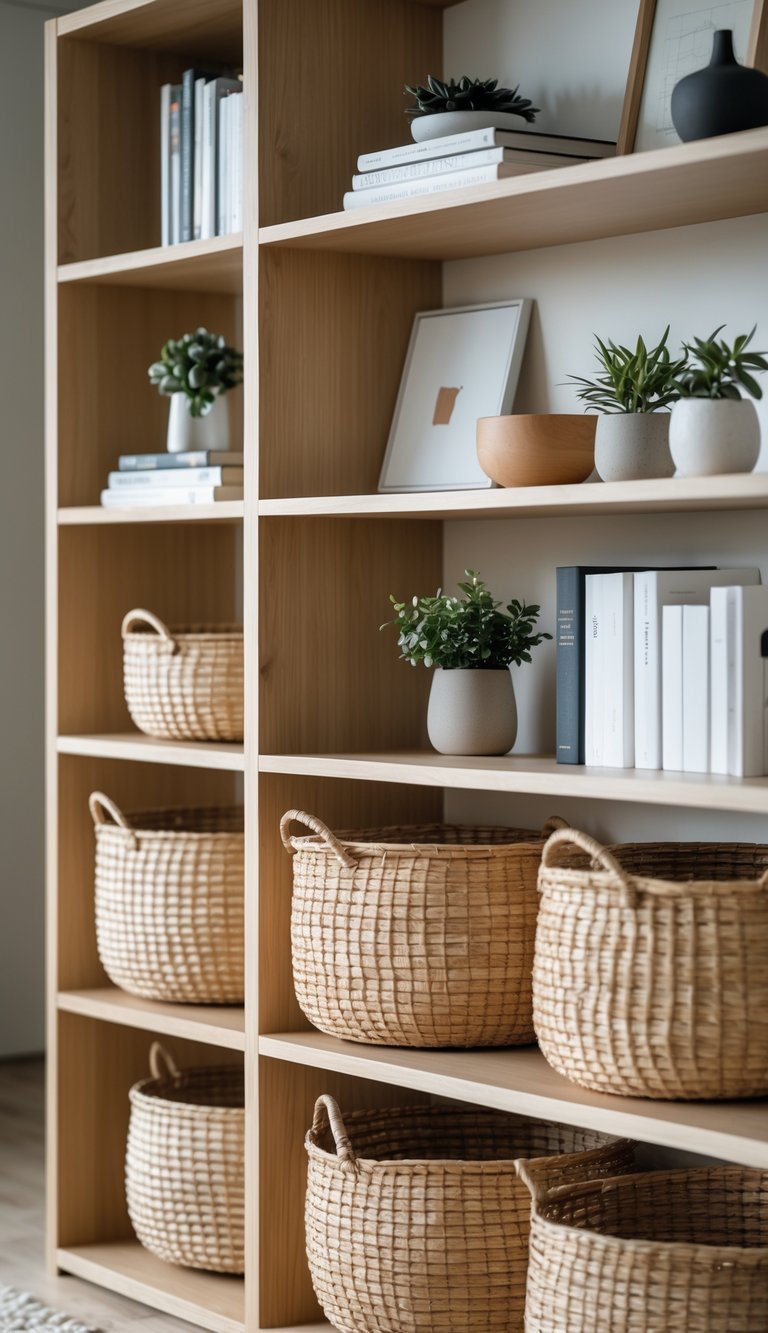
Place woven baskets on the lower shelves to hide clutter and keep your top shelves neat. They add texture and a warm, natural feel that fits a Nancy Meyers–inspired office.
Choose baskets that fit the shelf depth and leave a bit of space around them. This makes pulling them out easier and keeps the shelf from looking cramped.
Mix sizes and shapes for visual interest, but keep the color palette simple. Neutral tones like tan, black, or cream match most decor and make the display feel calm.
Use baskets to store extra cords, notebooks, or seasonal items you don’t need every day. Label the inside edges if you want quick access without digging.
PRO TIP
Pick baskets with handles so you can pull them out quickly when you need something. If your office gets a lot of light, pick materials that won’t fade easily, like sealed wicker or dyed fibers. Line delicate baskets with simple fabric to protect fragile items. To keep a tidy look, limit what you store in each basket—one or two categories per basket works best. Rotate items seasonally to refresh the shelf’s appearance. Finally, measure before buying so the baskets sit flush with the shelf face and look intentional.
10) Add candles or small lamps to soften the lighting
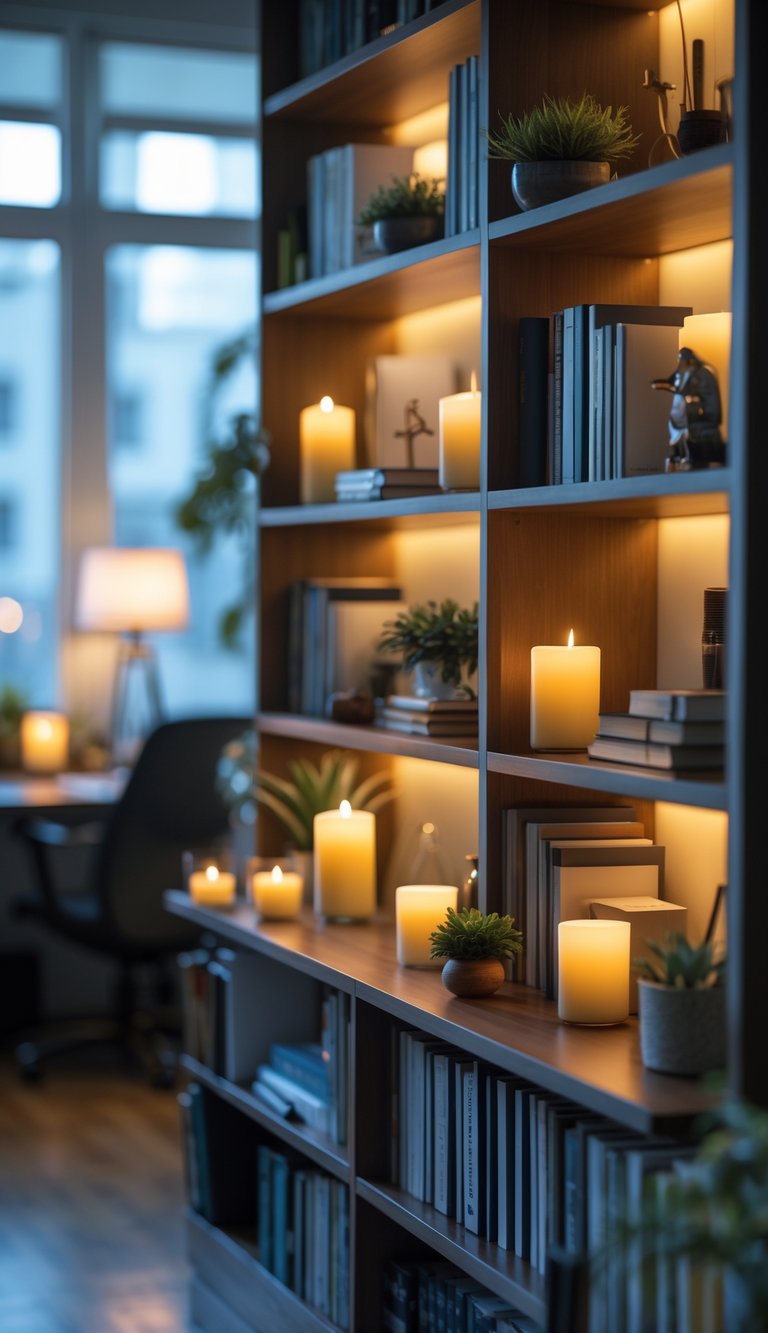
Soft light makes your bookshelf feel lived-in and calm. Place a few small lamps on staggered shelves to create pools of warm light that highlight books and objects.
Use flameless candles for safety, especially near paper or fabric. They give a gentle flicker without the fire risk and work well inside glass containers or on ceramic dishes.
Mix lamp styles and heights to avoid a uniform look. A small brass lamp, a linen-shaded table lamp, and a tiny puck light can work together to add depth and charm.
Keep bulbs warm (2700K–3000K) to preserve that cozy glow. Dimmer switches help you adjust brightness for reading or relaxing.
PRO TIP
When you arrange lights, think about balance and layering. Place stronger light where you read or display key items, and softer light around the edges to reduce contrast. Test placement at different times of day so you see how natural light interacts with your lamps and candles. Use battery-operated LED candles with timers if you want glow without fuss. For a polished look, tuck wires behind books or use cord covers that match the shelf color. Rotate lighted displays seasonally to keep your shelf feeling fresh and intentional.
11) Display favorite art books with their covers facing outward
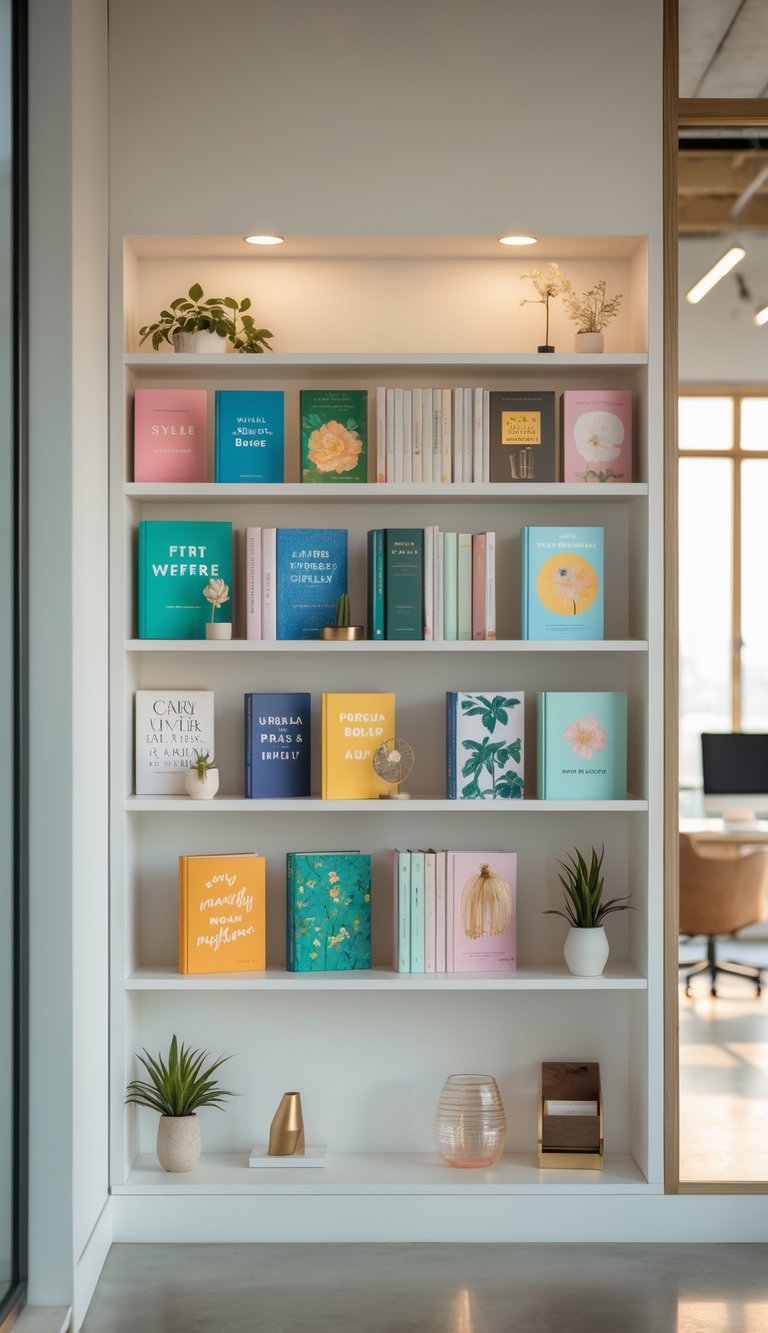
Arrange several art books with their covers facing outward to make your shelf feel like a tiny gallery. Place them at eye level so the covers catch attention, and mix sizes for a casual, layered look. You can lean a few against bookends or stack two flat with one face-up on top.
Rotate which covers you show to keep the display fresh and seasonal. Use bold or colorful covers to add visual punch, or choose a monochrome set for a calmer vibe. Let a few spines peek through to keep the shelf practical for finding books.
PRO TIP
Pick three to five standout art books as your main display and build around them with smaller objects like a ceramic vase or framed photo. Keep negative space so the covers don’t feel crowded; empty spots help each book read as art. If you own valuable or delicate books, keep them away from direct sunlight and high humidity to avoid fading and warping. Consider swapping covers every month or when you change room decor; frequent rotation makes the shelf feel intentional and lived-in. Use a soft cloth to dust covers so they stay clean and vivid.
12) Intersperse unique finds like antique cameras or globes
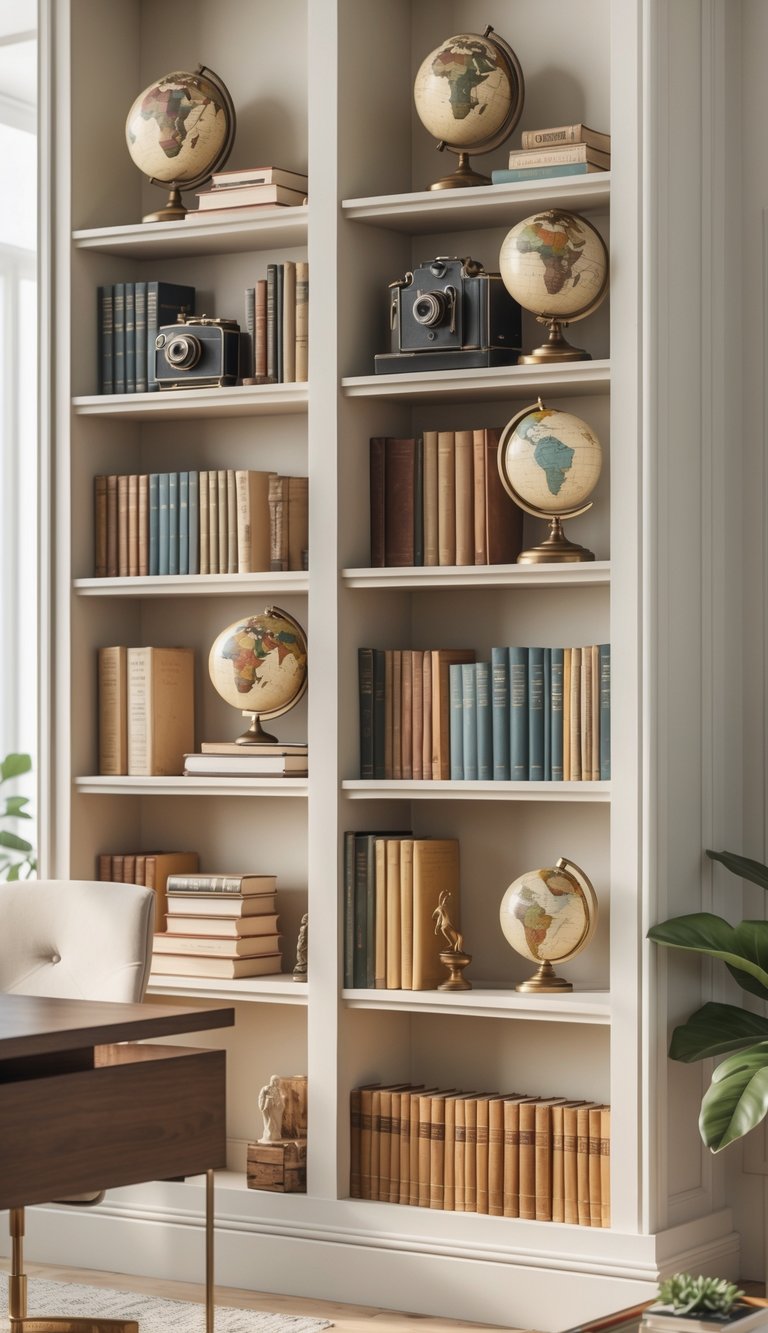
You can add instant character by placing an antique camera or globe among your books. These pieces break up rows of spines and give the eye a focal point.
Position a camera on a stack of two or three books so it feels purposeful, not crowded. A globe works well on a low shelf where its shape contrasts with rectangular books.
Mix heights and textures to keep the shelf balanced. Leather, brass, and patina pair nicely with paper and wood for a layered, lived-in look.
Keep the display practical. Leave enough space to remove items without disturbing the whole arrangement, and rotate pieces occasionally to refresh the room.
PRO TIP
Choose one or two standout vintage items and let them lead the styling of the shelf. If you have a small camera collection, show only the best piece and store the rest; too many objects can make the shelf look cluttered. For globes, pick one with colors that match your room’s palette or a simple neutral finish so it complements rather than competes. Use book stacks, small risers, or a tray to elevate the item slightly and create visual levels. Add a small plant or a single framed photo nearby to soften the metal or hard lines and to tie the look into the rest of your office decor.
13) Layer in soft textures with a cashmere throw over the chair
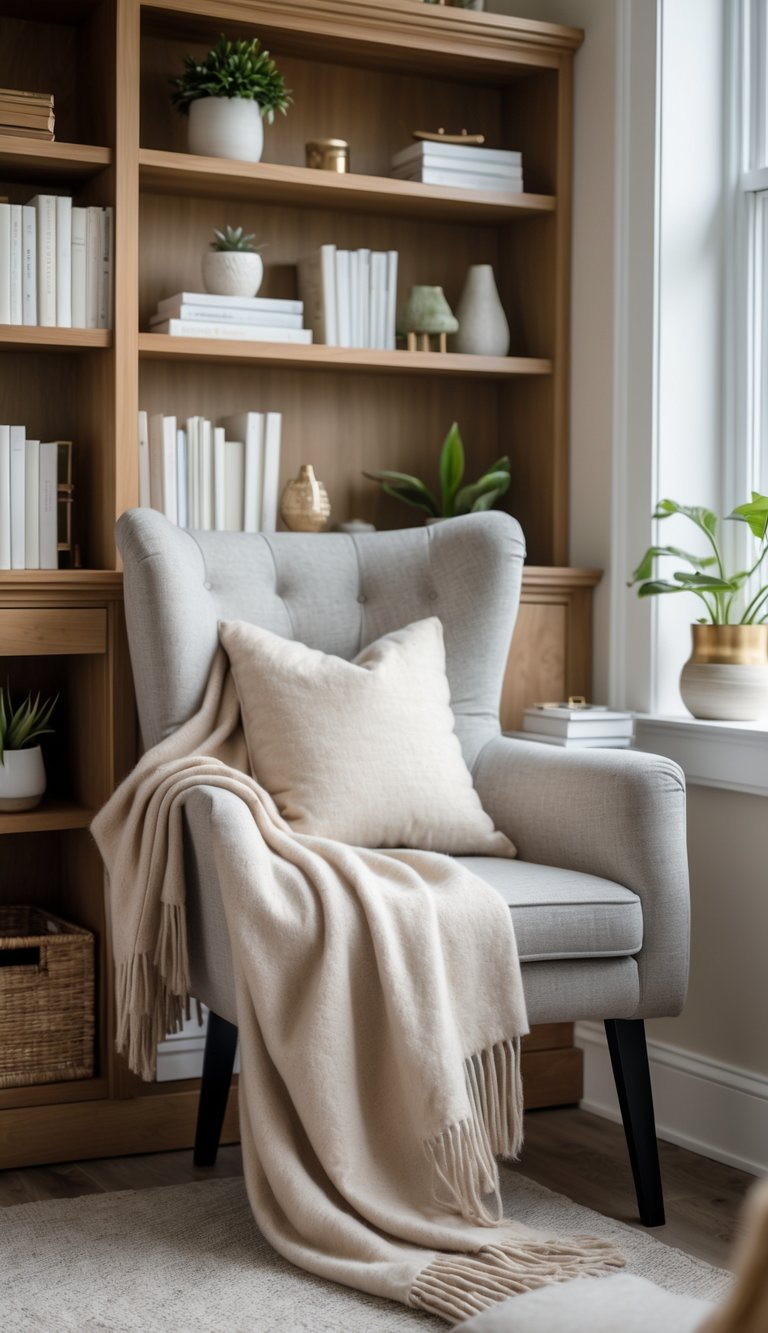
Drape a cashmere throw over the back or arm of a chair to add warmth and a lived-in feel. The soft texture contrasts nicely with wood, metal, or leather, which helps your bookshelf area feel cozy and inviting.
Choose a neutral or soft color that ties into your room’s palette. A subtle pattern or ribbed knit adds interest without competing with books or decorative objects.
Fold the throw casually rather than perfectly. Let one corner hang down to create movement and make the space look relaxed and intentional.
PRO TIP
Pick a high-quality cashmere that feels soft but holds its shape after use. Rotate the throw periodically so wear looks even, and gently shake it outdoors to fluff the fibers. If your chair sits near sunlight, choose a color that won’t fade quickly. When stacking books or placing a lamp nearby, make sure the throw doesn’t cover vents or cables. For a layered look, pair the cashmere with a textured cushion in a complementary color. This keeps the chair comfortable for sitting while looking styled and approachable.
14) Keep items neatly organized but not overly perfect
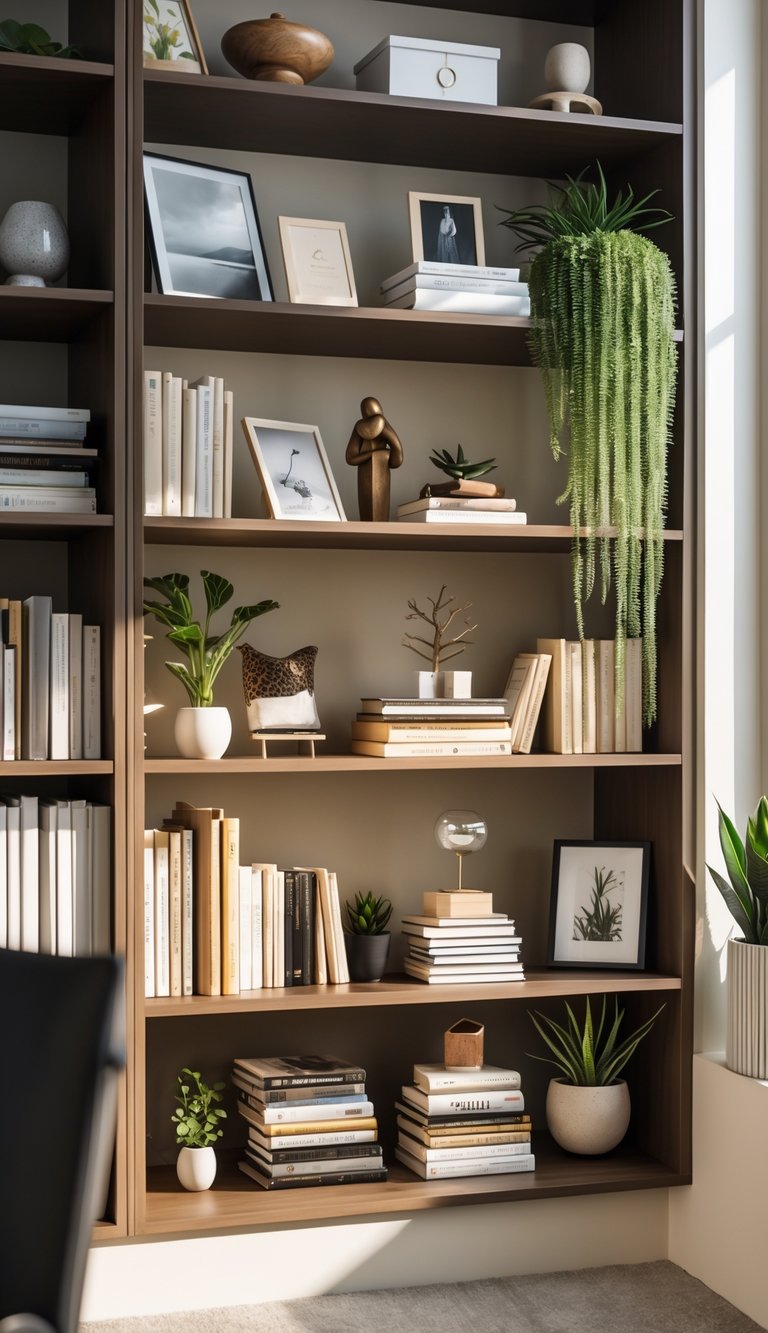
You want your bookshelf to look calm and intentional, not staged. Group books by size or color and leave small gaps so the arrangement breathes.
Mix vertical stacks with horizontal piles to add interest. Place a few decorative pieces like a framed photo or a small plant to break up rows of books.
Avoid rigid symmetry. Slightly askew objects and varied spacing make the shelf feel lived-in and approachable, not museum-like.
Keep everyday items within reach and tuck away less-used things in closed storage. This balance keeps your office tidy while still feeling warm and personal.
PRO TIP
You can aim for a curated look that feels natural by editing regularly. Take a few minutes each month to remove items that no longer fit your style or function. Rotate in seasonal pieces or a new book to keep the shelf fresh without overhauling it. Use small trays or bookends to corral loose items like glasses or chargers so they look intentional. If something looks too perfect, nudge one item slightly out of place to add warmth. These small habits help your shelf stay organized, useful, and welcoming without looking sterile or overdone.
15) Use a mix of neutral and warm tones in decorative accessories
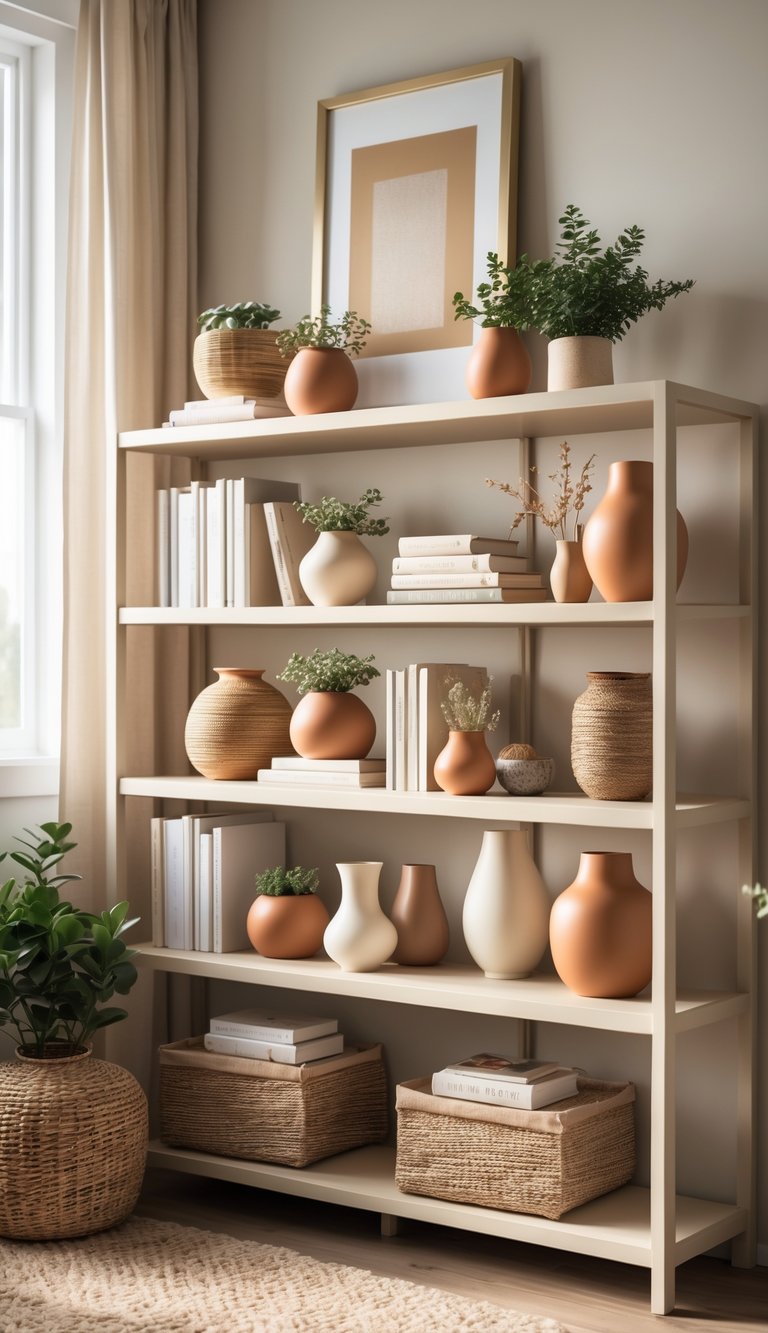
Choose neutral bases like white, beige, or soft gray for larger items on your shelf. These tones create calm and let other pieces stand out.
Add warm accents—think terracotta, caramel leather, and honeyed wood. Small objects like bowls, frames, or stacked books in warm colors give the shelf a cozy, lived-in feel.
Keep the palette simple so the display stays elegant. Too many bright colors will break the calm, but a few warm pieces add depth and charm.
Pay attention to texture as well as color. Linen, woven baskets, and wood grain warm the space without adding visual noise.
PRO TIP
When you edit your arrangement, step back and look at the shelf from a few feet away. Swap one neutral item for a warm-toned piece and see how the mood changes. Aim for balance: roughly two-thirds neutral and one-third warm accents across the whole shelf. Group warm items in small clusters rather than spreading them evenly to create focal points. Rotate accessories with the seasons—darker, richer tones in fall and lighter, muted warms in spring—to keep the look fresh while staying true to the Nancy Meyers cozy aesthetic.