
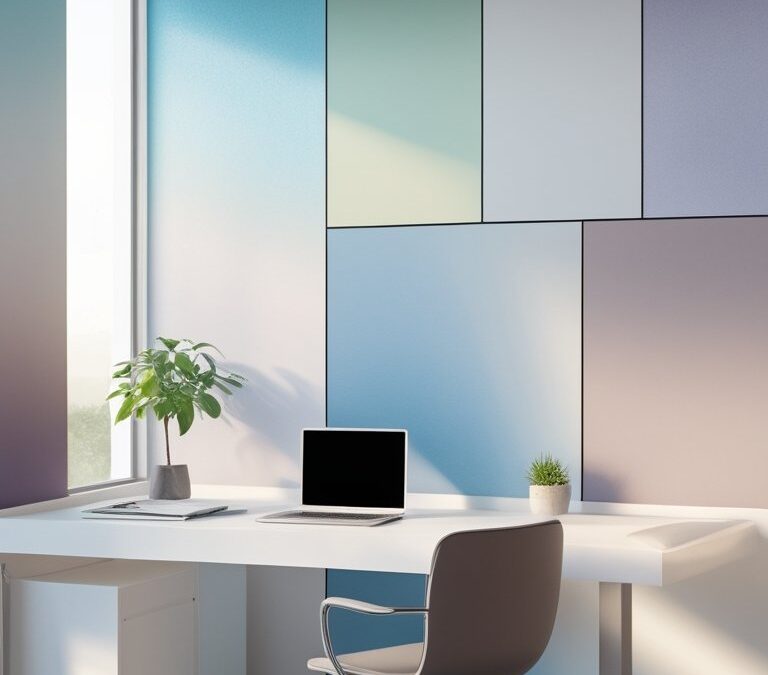
You can change your mood and focus by swapping a plain wall for a soothing gradient wallpaper. A gentle blend of colors calms the eye, reduces visual noise, and helps you work with less stress, letting you feel more centered in your space. This article shows how soft fades, muted tones, and subtle textures can make your workspace feel calmer and more intentional.
Explore simple gradient ideas that fit different styles—from airy morning skies to deep teal horizons—so you can choose the feel that suits your work and personality. You’ll find practical visual options that help you create a quiet, focused corner without a big redesign.
Pick a gradient that supports the tasks you do most. If you need calm focus, choose cool, muted tones like soft blues, sage, or pale mint; these reduce eye strain and keep your attention steady. Want gentle energy for creative work? Try warm sand-to-blush or peach blossom pastels to nudge mood and imagination without overwhelming your senses. Consider the light in your room: darker gradients work well behind bright monitors, while lighter fades open up small spaces. Use vertical gradients to make ceilings feel taller and horizontal fades to widen narrow rooms. Test a removable peel-and-stick sample first to see how the color shift looks at different times of day before committing.
1) Soft Morning Sky Gradient Wallpaper
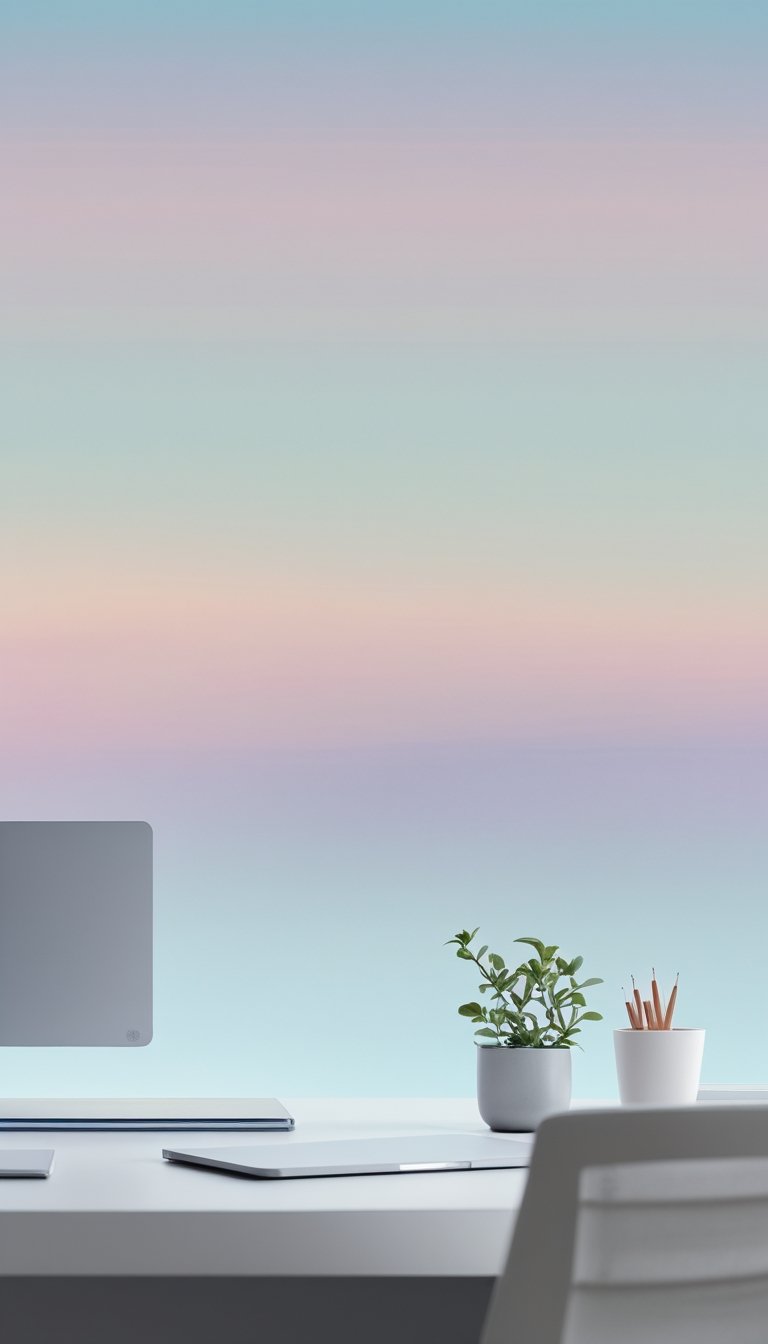
A soft morning sky gradient uses pale blues, blush pinks, and warm creams to mimic sunrise light. You can feel calm and focused when the colors are gentle and balanced. This palette reduces visual noise and helps your eyes relax during long work sessions.
Place the gradient as a full-wall wallpaper or on a feature wall behind your desk to create depth without distraction. Pair it with light wood furniture and neutral accents for a cohesive look. Small plants and simple artwork will stand out against the soft backdrop without competing with it.
PRO TIP
Choose a gradient with a smooth transition between colors to avoid harsh lines that can break your focus. Test the wallpaper in different lighting — morning sun will enhance warmth while cool afternoon light can mute tones. If you work late, switch to a darker desktop or a task lamp to keep contrast comfortable. For monitors, use a slightly desaturated version of the gradient to lower eye strain. Keep clutter to a minimum so the soft sky remains the main calming element in your workspace.
2) Muted Sage-to-Cream Ombre Mural
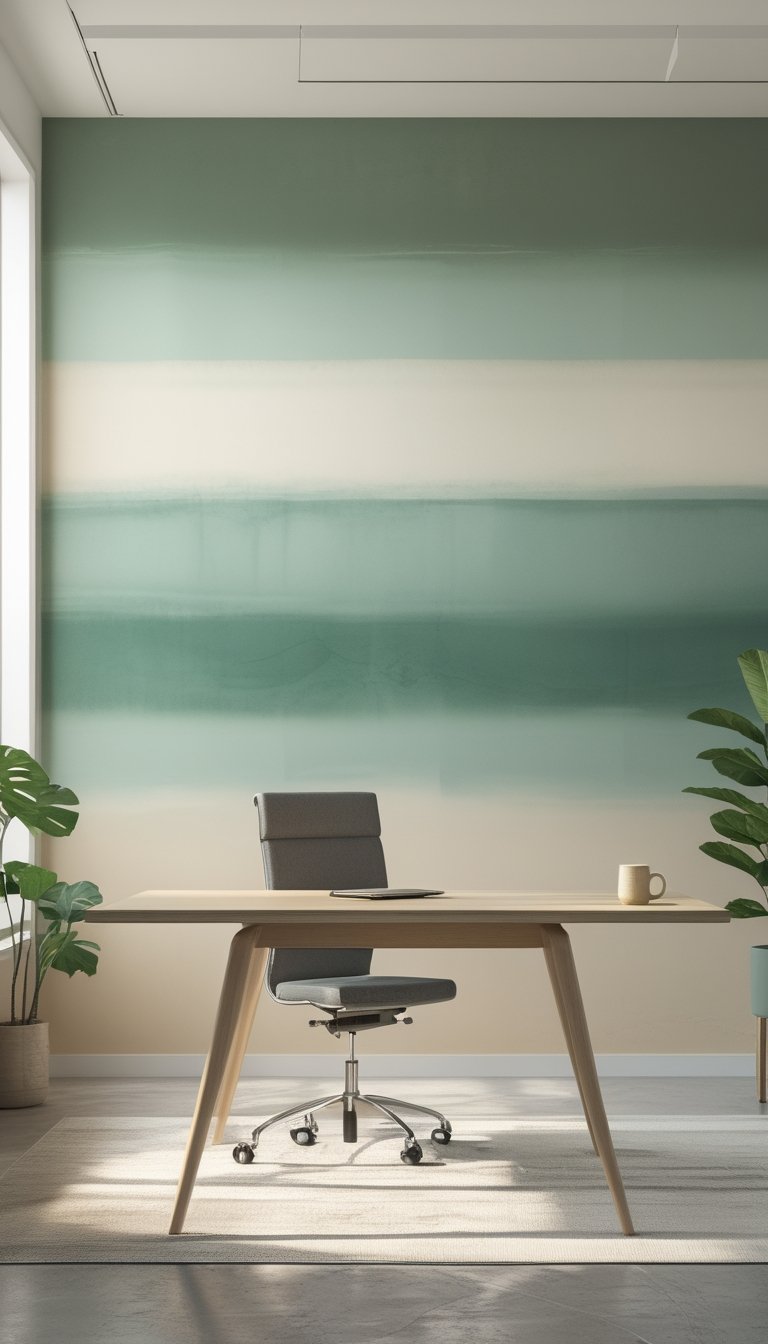
A sage-to-cream ombre mural brings calm to your office with a gentle color fade. The cool green at the top eases stress, while the warm cream at the bottom keeps the space bright and inviting.
You can place it on the wall behind your desk to create a soft focal point without stealing attention. The subtle watercolor or paper texture adds depth without busy patterns, which helps you focus during long tasks.
Pair the mural with light wood furniture and neutral textiles for a harmonious look. Add a few plants to echo the sage tone and keep the vibe natural and balanced.
PRO TIP
Choose a removable, self-adhesive wallpaper for easier updates and less fuss during installation. Measure your wall twice and order a little extra to match the gradient seams smoothly. Test a small sample square first to confirm the color shift under your office lighting. If your room gets cool, pick a cream with warm undertones so the mural still reads cozy; in bright rooms, a truer cream keeps the gradient soft. Balance the mural with simple desk accessories and low-profile shelving to avoid visual clutter that competes with the ombre effect. Replace heavy patterns with solid or lightly textured items to maintain a steady, relaxing atmosphere.
3) Warm Sand-to-Blush Sunset Gradient
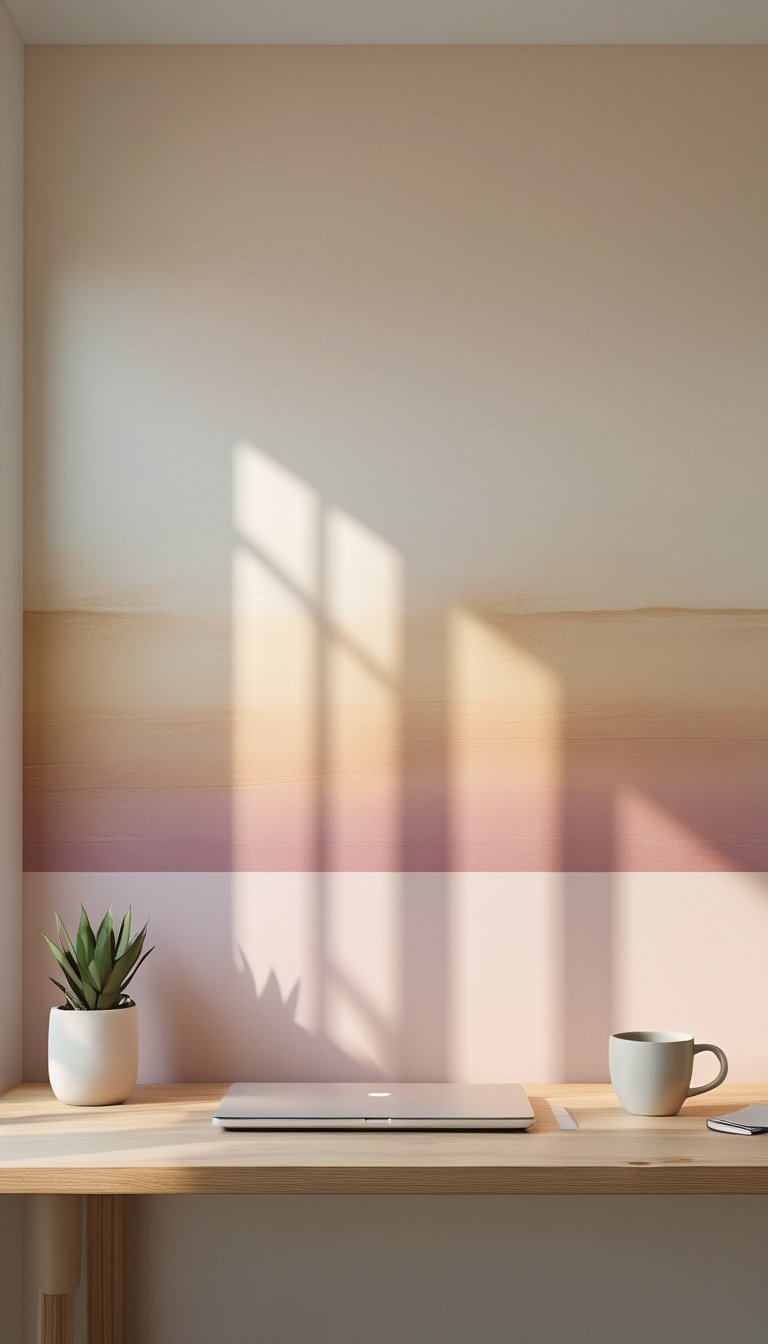
This gradient blends warm sand tones into soft blush, giving your workspace a calm, grounded feel. You’ll get a gentle warmth that lifts mood without feeling bright or harsh.
Place this wallpaper behind a desk to create a subtle focal point that doesn’t compete with monitors or paperwork. The neutral base pairs well with wood furniture and plants, and the blush adds a soft, modern touch.
Use matte or low-gloss finishes to keep light reflections low and reduce eye strain. Keep other colors in the room muted so the gradient stays soothing and steady.
PRO TIP
Choose a wallpaper file with smooth color transitions to avoid banding, which looks like visible steps in the gradient. If you print the wallpaper, pick a paper with a slightly textured surface to hide minor printing artifacts and add a tactile feel. For digital displays, set your monitor or TV to native resolution and disable any heavy sharpening to preserve the soft blend. Test the design in the room at different times of day, because natural light shifts can change how the blush and sand read on your walls. If you want more contrast, add a single darker accent like a slate-gray chair or black lamp rather than multiple bold colors.
4) Cool Mist Blue-to-Gray Fade
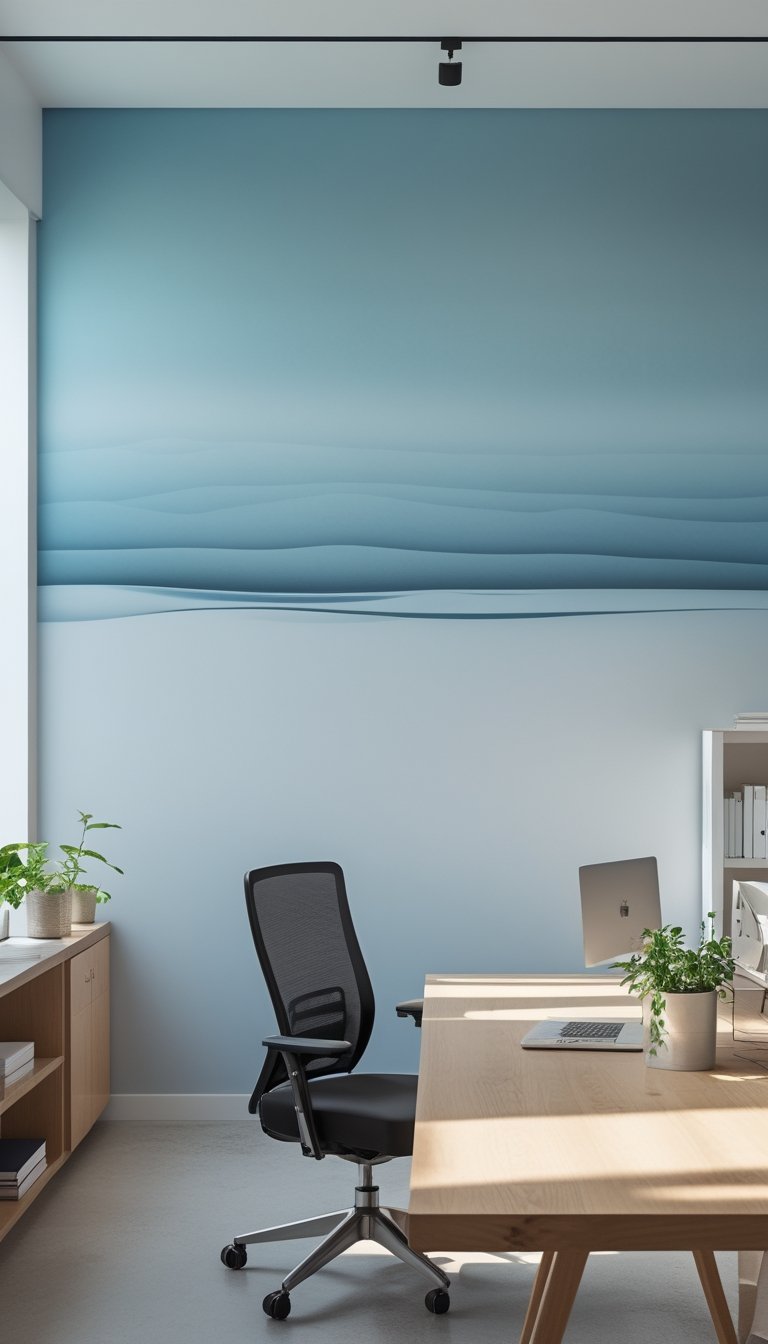
A blue-to-gray fade brings calm without being cold. You can use soft blue at the top that gently shifts into muted gray, which helps reduce visual clutter and keeps focus on your tasks.
This gradient works well behind desks or screens because it does not compete with icons or papers. It brightens the room subtly while keeping a low-contrast look that eases eye strain over long work sessions.
Choose a version with a slight texture or grain to add depth, or keep it smooth for a minimal feel. Pair it with warm wood or matte white furniture to avoid a sterile look and keep the space inviting.
PRO TIP
You can adjust the balance of blue and gray to match the light in your room. If your office gets cool natural light, favor warmer gray tones to keep the space cozy. For darker rooms, increase the blue slightly to add a refreshing feel without becoming too vivid. Try a gradient that darkens toward the bottom to ground the room and make shelving or lower cabinets stand out. Use LED bulbs with a color temperature of about 3500K to 4000K to harmonize with the gradient. If you have plants, place them where the blue is lighter to make greenery pop, or near the gray area for a softer contrast.
5) Lavender Haze Gradient Accent Wall
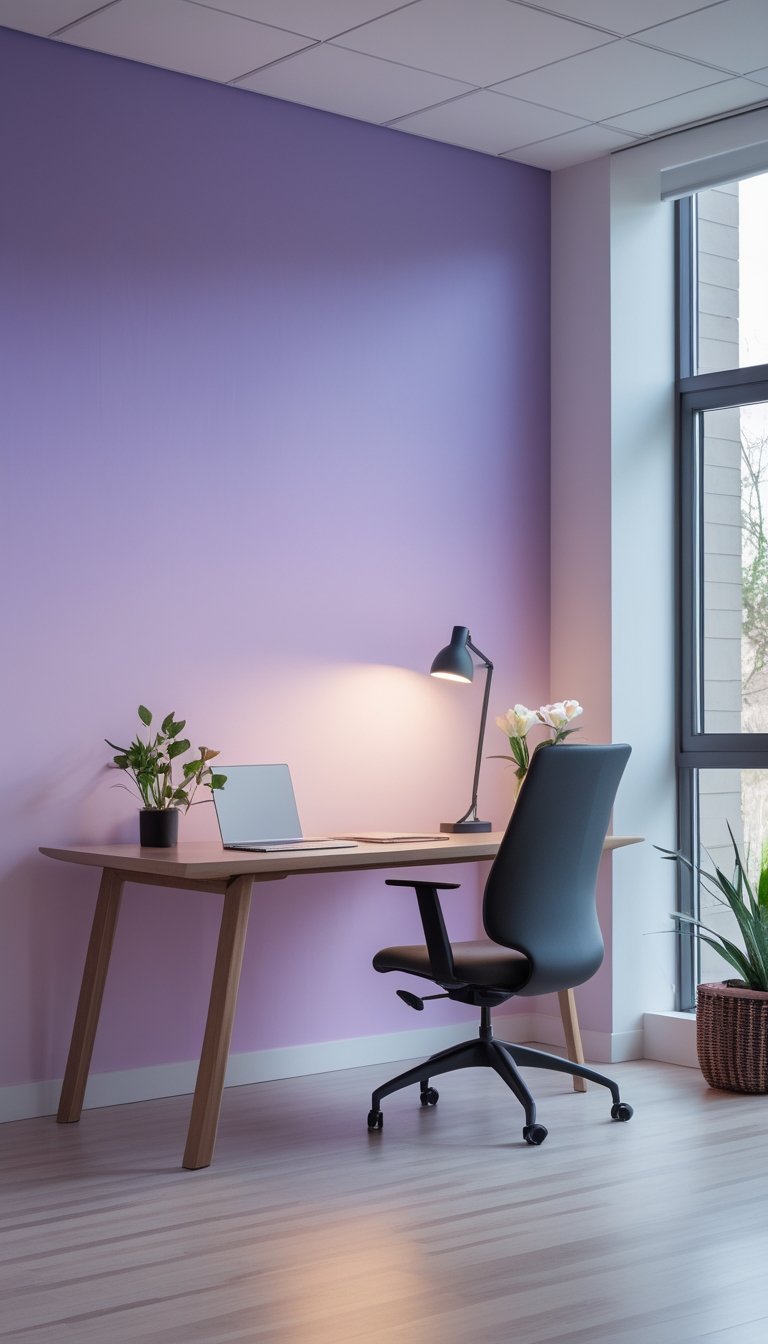
A Lavender Haze gradient brings calm and clarity to your workspace. Start with a soft lavender at the top that subtly deepens toward the bottom. This gentle shift in tone reduces visual clutter and helps your eyes rest during long work sessions.
Place the gradient on one wall only to keep the room balanced. Pair it with neutral furniture and natural wood accents to maintain a peaceful look. Light fixtures with warm bulbs make the lavender feel cozy, not cold.
Choose a matte finish to avoid glare on screens. If you rent, use removable wallpaper or paintable adhesive panels for an easy, low-risk update.
PRO TIP
You can create a professional-looking gradient without hiring a painter. Test small swatches first to find the lavender shades that suit your light and mood. Use a light base coat, then blend in the darker shade with a wide, soft brush or a sponge for a smoother transition. Work in horizontal sections and feather the edges while the paint is wet to avoid harsh lines. If you prefer less effort, order a pre-made removable gradient wallpaper that matches your measurements. Measure twice and cut once; seams appear less when panels align with natural features like windows or trim. Keep touch-up paint on hand for quick fixes, and consider a low-VOC formula for healthier indoor air.
6) Seafoam Green Vertical Gradient
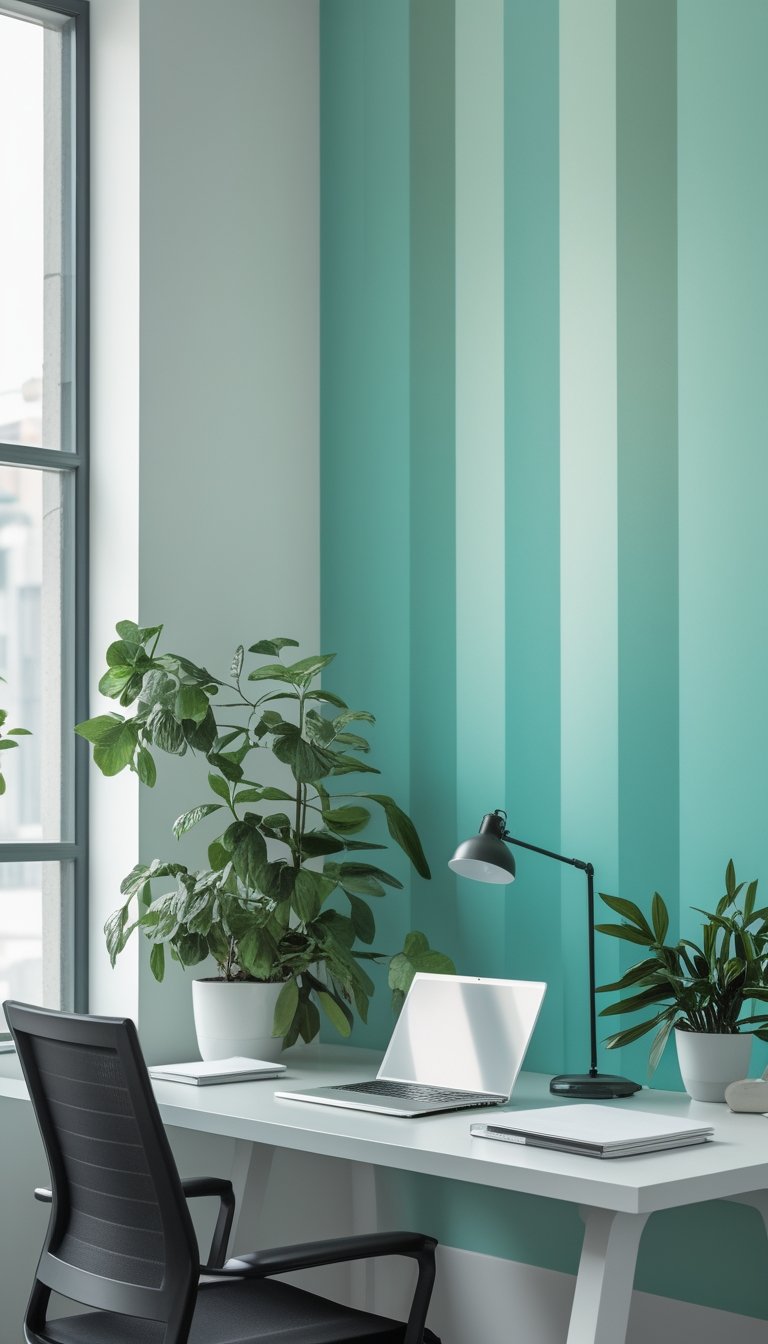
A seafoam green vertical gradient brings calm and clarity to your workspace. The color sits between green and blue, so it feels fresh without being bright or harsh. Vertical shading guides the eye upward, which can make a room feel taller and more open.
This design works well behind a desk or on a single accent wall. Pair it with simple white or warm wood furniture to keep focus on tasks. It also blends with natural plants and soft metal finishes for a modern, peaceful look.
PRO TIP
When you pick a seafoam green vertical gradient, test the wallpaper in different light across the day. Natural sunlight will show cooler blue tones, while warm indoor light brings out softer green hues. Consider a removable peel-and-stick version if you rent or like to change looks often. Keep other wall colors neutral and add a few textured elements like a woven rug or linen curtains to avoid a flat appearance. For balance, use artwork or shelving with thin frames so the vertical flow stays visible and your room keeps a relaxed, organized feel.
7) Warm Stone-to-White Textured Fade
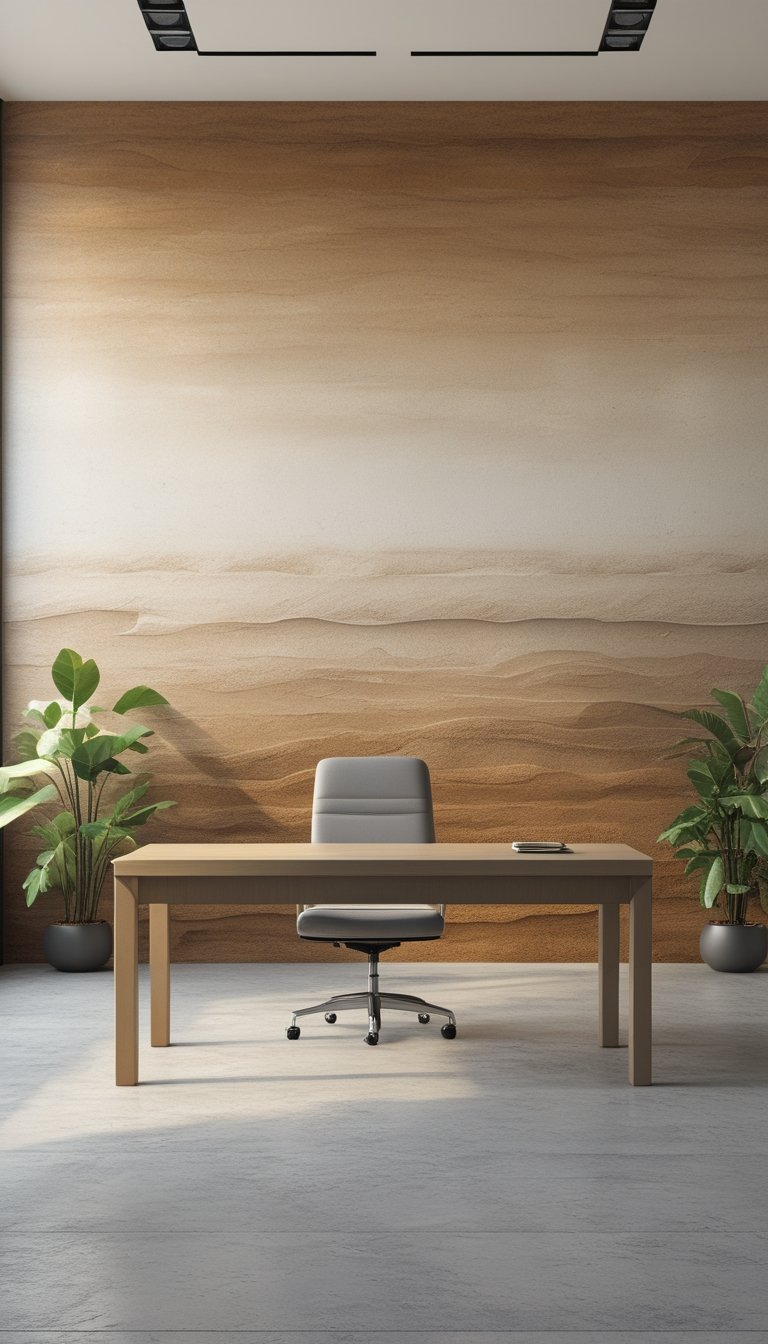
You can create a calm, grounded feeling by using a warm stone-to-white textured fade on your office wall. The subtle shift from soft beige or sandstone up to clean white keeps the space bright while adding a natural, earthy base. Texture matters: a light grain or plaster effect breaks flatness and adds quiet visual interest without distraction.
Place the stronger warm tones lower on the wall to anchor desks and shelves. The white near the top reflects light and makes the room feel open. This gradient suits both busy workdays and focused tasks because it balances warmth with clarity.
PRO TIP
Choose paint or wallpaper with a tactile finish that mimics stone or limewash; it hides minor scuffs and reduces glare from screens. Test samples on the wall at different times of day to see how the gradient reads with your lighting. If you want a softer effect, use a very fine grain texture and blend colors with a wide brush or sponge for a seamless fade. For a slightly more modern look, add matte white trim and natural wood furniture so the gradient remains the room’s focal point without feeling cold.
8) Peach Blossom Pastel Gradient
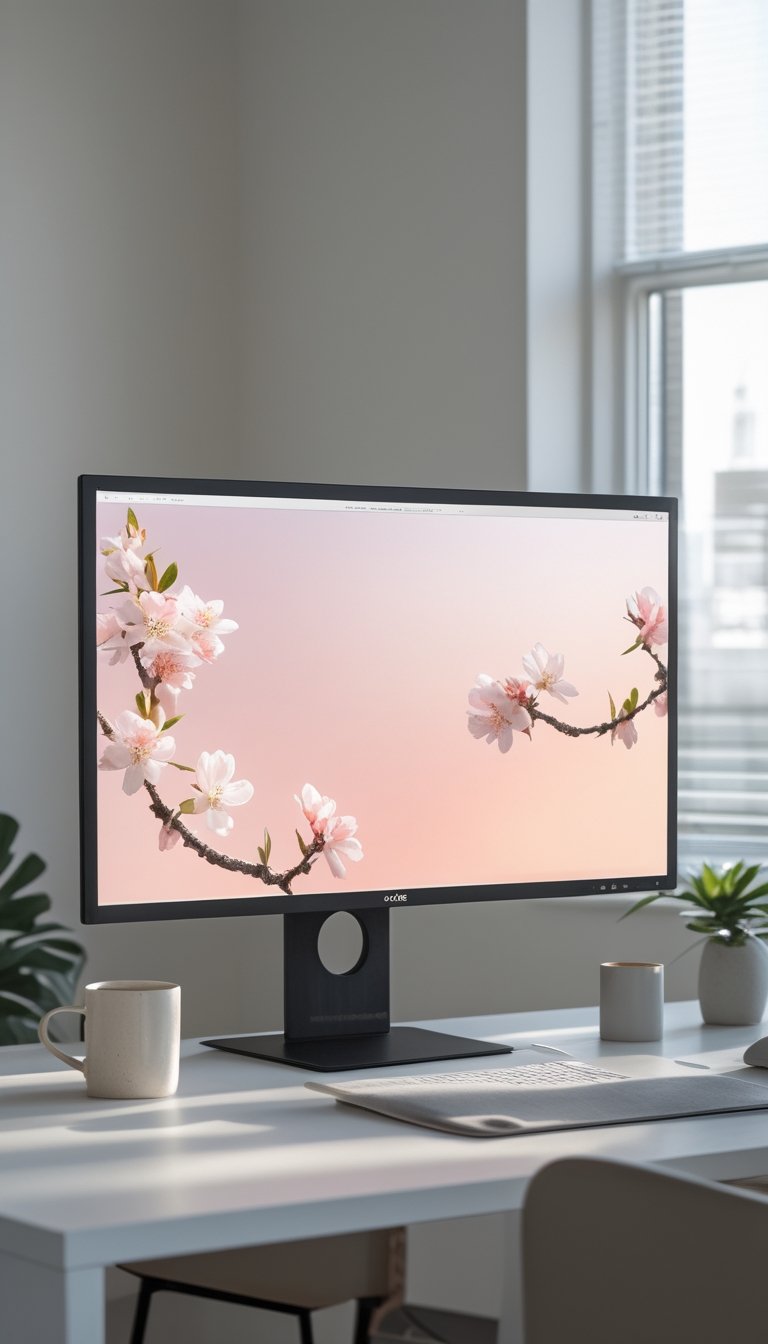
Peach Blossom Pastel Gradient blends soft peach, pink, and pale coral tones for a calm, cozy feel. It gives your workspace a warm, gentle glow without being distracting.
You can place this gradient behind a clean desk setup or a simple shelf to keep focus on tasks. The soft colors help reduce visual stress and pair well with neutral furniture.
Use it as a full-wall wallpaper or a large accent panel. It brightens small rooms and complements wood and white finishes.
PRO TIP
You can change the gradient angle to match your light source; a diagonal or vertical flow feels more natural than a flat horizontal band. For a balanced look, keep desk items minimal and choose one or two accent colors from the gradient for accessories like a lamp or mousepad. If you need contrast for reading or notes, add a white or light-gray task board. For digital wallpaper, set the gradient at 140–160 degrees to mimic morning light and reduce glare. Consider a matte finish for printed wallpaper to avoid reflections.
9) Deep Teal to Soft Aqua Horizon
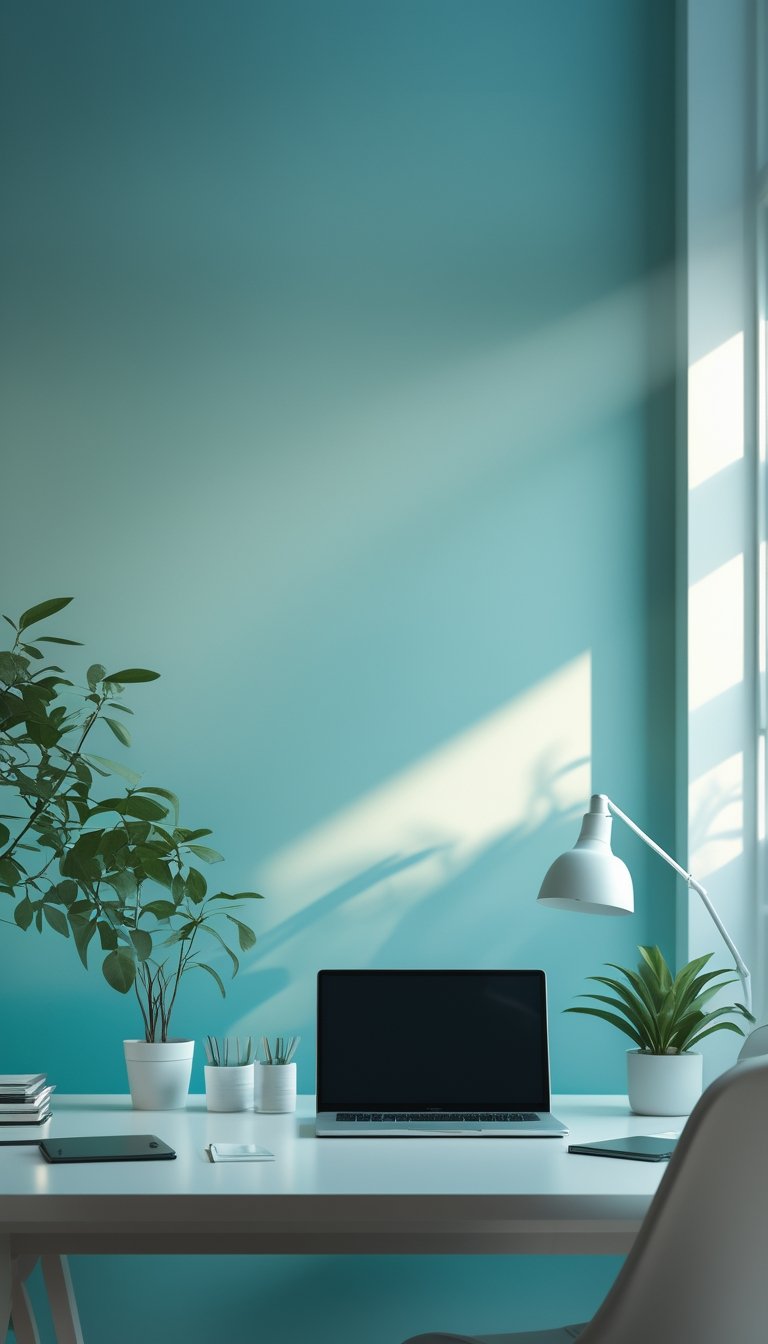
A deep teal fading into soft aqua gives your office wall a calm, natural feel. The darker tone at the bottom grounds the room, while the lighter aqua lifts the eye and adds airiness.
You can place this gradient behind a desk or seating area to create a focused zone. It works well with wood furniture and warm metals like brass or copper.
Keep other walls neutral so the gradient stays the focal point. Add a few plants or simple art pieces to echo the color without cluttering the space.
PRO TIP
You can layer texture over the gradient to add depth without changing the peaceful mood. Try a very fine grain or subtle watercolor wash so the shift from teal to aqua looks organic. If your room gets little natural light, choose a slightly brighter aqua to keep the space from feeling dim. For busy rooms, limit accessories to one or two complementary colors—soft coral or cream work well. When hanging art, use frames with thin, dark edges to tie back to the deep teal and maintain a clean, calm look.
10) Earthy Clay-to-Beige Gradient Panel
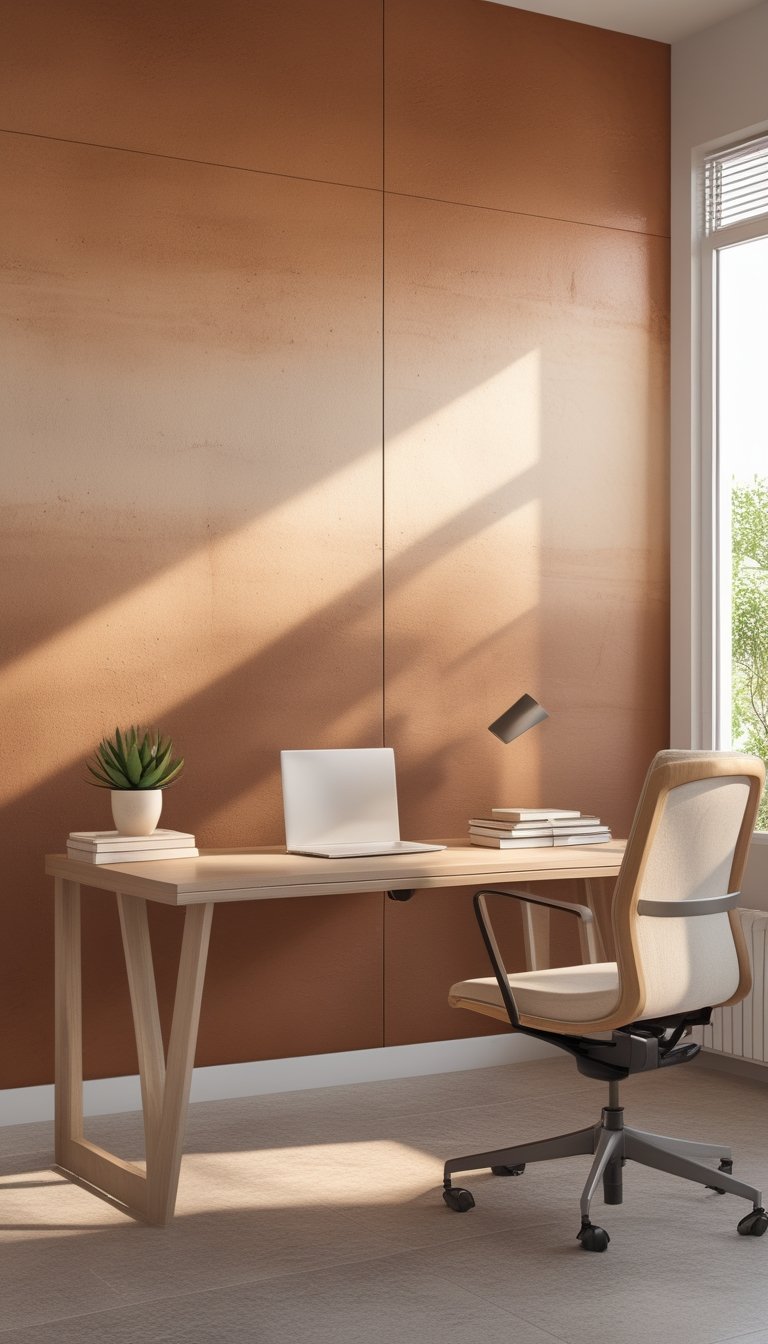
An earthy clay-to-beige gradient panel brings warm, natural color to your workspace. The gradient moves from soft terracotta clay at the top to a light beige at the bottom, creating a grounded, calming backdrop for your desk.
You can place the panel behind your monitor or along an accent wall to make the room feel cozier without overwhelming it. The muted tones work well with wood furniture, woven textiles, and plants, so your space feels balanced and intentional.
Keep other decor simple to let the gradient shine. Use a few textured elements like a linen curtain or a clay pot to echo the palette and create a cohesive look.
PRO TIP
When you choose an earthy clay-to-beige gradient panel, pick a matte finish to reduce glare and keep the colors soft. Position the panel where natural light hits it gently; too much direct sunlight can wash out subtle gradations. If you want more visual interest, add a slim floating shelf across the middle and display a small plant or a ceramic vase that matches the clay tone. For larger rooms, combine two panels with a slight gap between them to create scale and rhythm. If you prefer a cooler feel, introduce small accents in muted green or gray to balance the warmth without clashing.
11) Pale Mint to Chalk Gradient
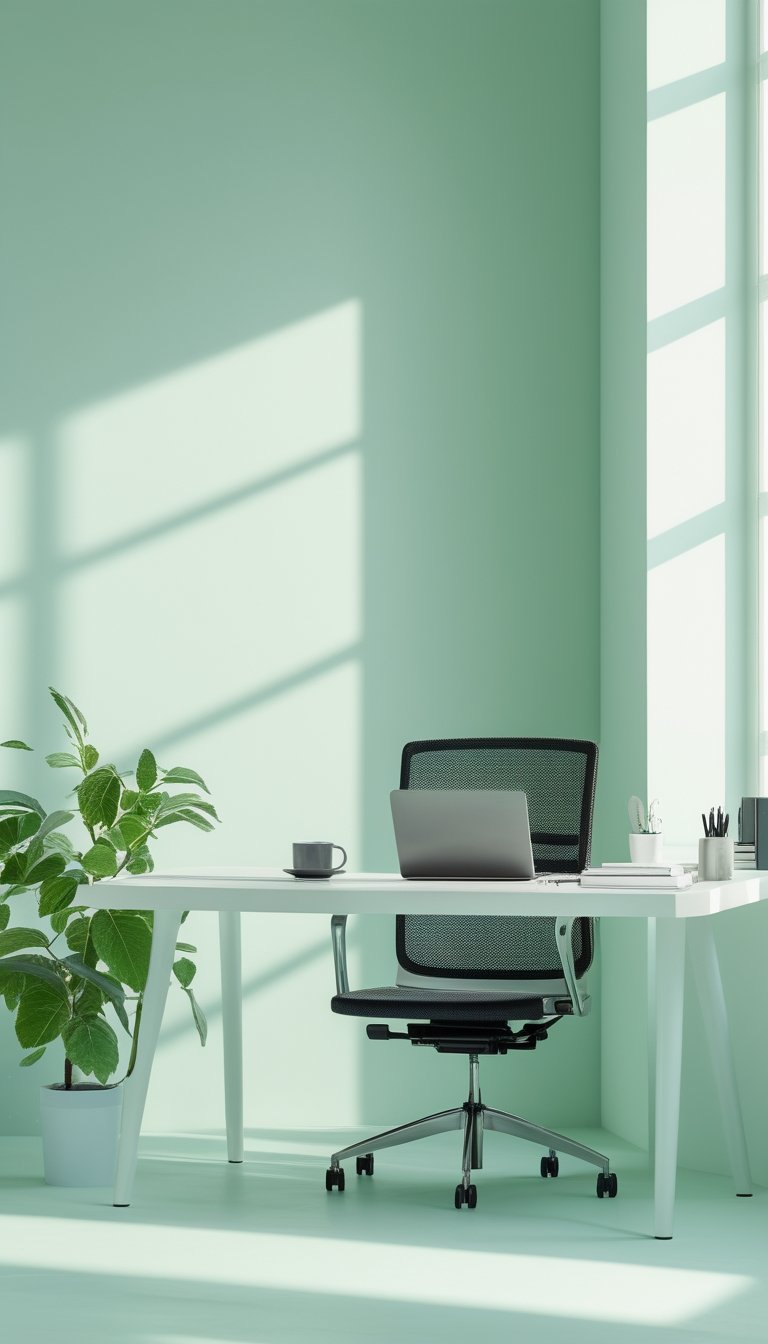
A pale mint to chalk gradient gives your office a soft, fresh look without stealing attention from work. The mint brings a cool, airy feel while the chalky off-white keeps the space bright and calm. Together they create a gentle flow that helps you focus.
Use this gradient on a single accent wall or across a full room to change the mood subtly. It pairs well with light wood furniture and simple white or gray desk accessories. Add a few green plants to echo the mint and keep the palette serene.
PRO TIP
You can control the vibe by changing the gradient direction and saturation. Horizontal fades feel wider and more relaxed, while vertical fades add a sense of height. Keep the mint muted—too bright can distract—so aim for soft pastel tones. If you use the gradient on digital screens or wallpaper, test it in your room light at different times of day. Natural light can wash out pale colors, so consider slightly deeper mint for north-facing rooms. For furniture, choose neutral textures like linen or matte finishes to maintain a calm, cohesive look.
12) Dusky Rose to Taupe Subtle Ombre
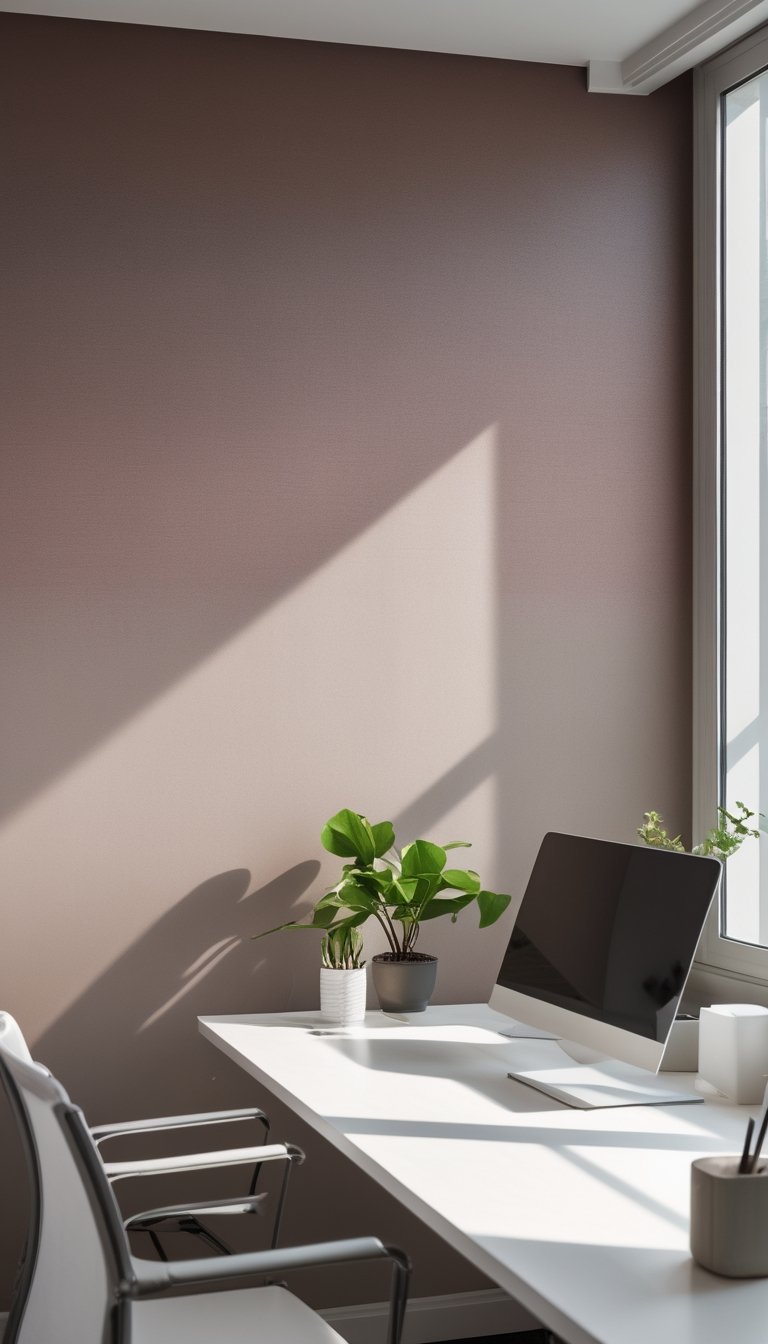
You can use a dusky rose to taupe ombre to add calm warmth to your office without shouting for attention. The soft pink tones bring a gentle, comforting feel while the taupe grounds the space, making it easier to focus on work. This gradient works well on a single feature wall behind your desk or across a whole room for a unified look.
Pair this ombre with light wood furniture and matte metals for a modern, cozy vibe. Keep textiles neutral—think cream or warm gray—to let the gradient do the visual lifting. Add a few plants to introduce a subtle contrast and a touch of nature.
PRO TIP
Choose a matte or low-sheen finish for the wallpaper to avoid glare and keep the ombre feeling soft under office lights. Test a large sample on your wall before committing, since color reads differently by window light and artificial light. If your workspace faces north, pick a slightly warmer taupe to prevent the room from feeling cool; if it faces south, cooler taupe maintains balance. Match your desk chair and storage to the taupe tone for cohesion, and bring in small rose accents—like a lamp or notebook—for harmony without overpowering the calm gradient.
13) Ocean Foam Horizontal Gradient Stripe
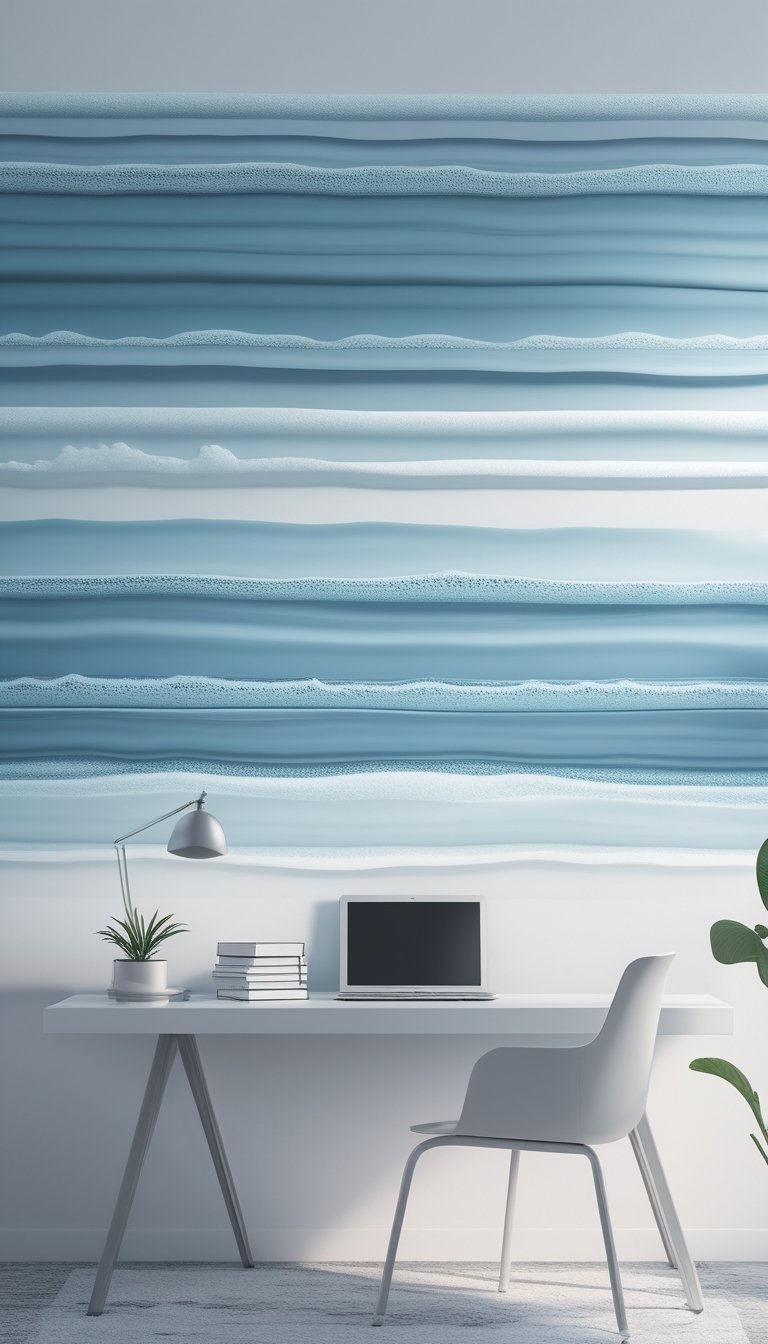
This design uses soft horizontal bands that move from pale seafoam to deep teal. The stripes mimic ocean foam washing over sand, giving your workspace a calm, steady rhythm.
Place this wallpaper behind a simple desk to keep the view uncluttered. It soothes without being dull, and it pairs well with light wood or white furniture.
Use muted contrasts so the stripes feel gentle on your eyes during long work sessions. The horizontal flow can make small rooms feel wider and more open.
PRO TIP
You can match your monitor brightness to the wallpaper’s midtones to reduce eye strain. Add a small plant or a textured desk mat in natural hues to echo the ocean theme without creating visual noise. If you use multiple screens, set the same gradient across them for a seamless look. Avoid high-gloss screens or reflective desk surfaces that might compete with the subtle bands. Finally, pick task lighting with warm temperature to balance the cool tones and keep your workspace comfortable.
14) Smoky Indigo to Slate Gradient
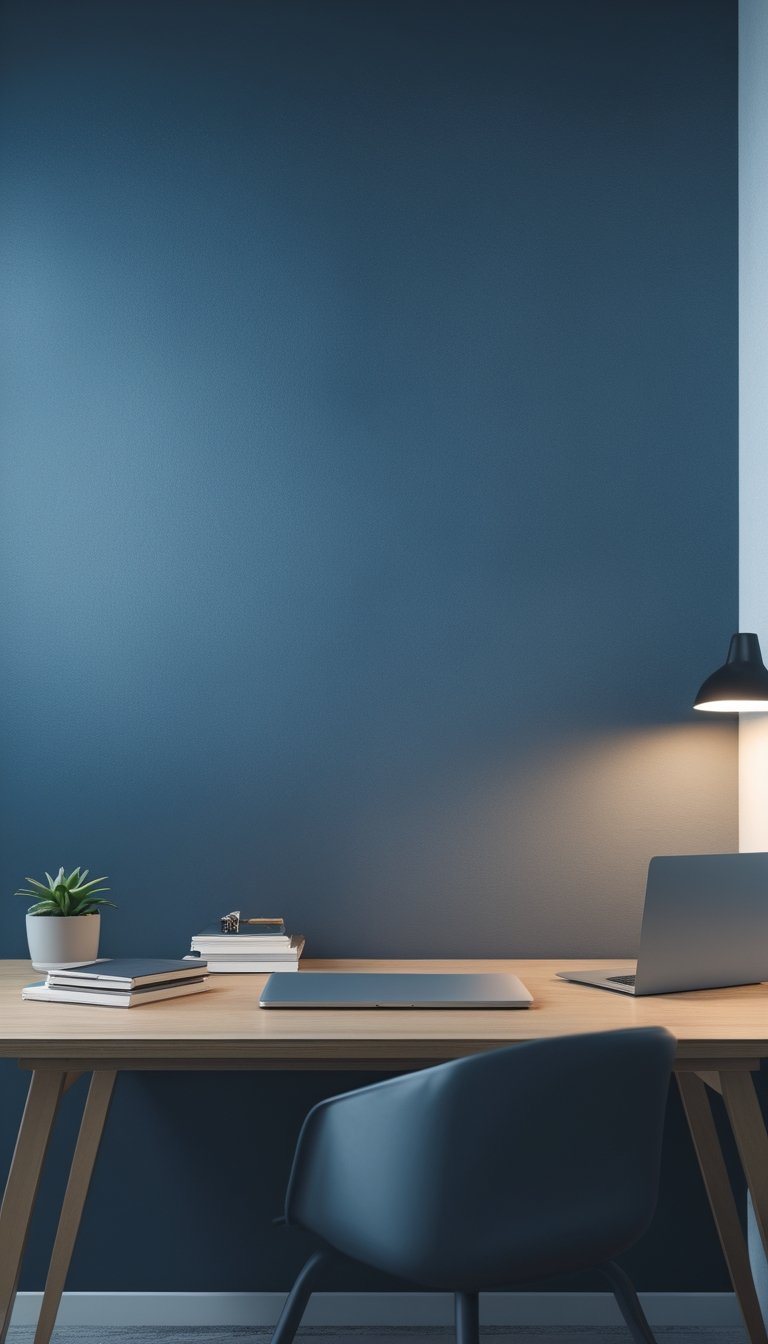
This gradient moves from deep smoky indigo to cool slate gray. It creates a calm, focused backdrop that reduces eye strain during long work sessions.
Place it behind a monitor or on an accent wall to make your desk feel more grounded. The darker indigo anchors the space while the slate lightens the mood without being bright or distracting.
Pair this palette with natural wood or matte black furniture for a balanced look. Add soft lighting and a few green plants to keep the room from feeling too cool.
PRO TIP
Choose a gradient with subtle transitions and low saturation for the most soothing effect. You can adjust color stops so the indigo sits mostly at the top and the slate takes over lower down; this helps keep your visual focus toward your screen. Use a matte finish on walls or wallpapers to reduce glare. If you want variety, apply the gradient as a desktop wallpaper and a smaller matching print on the wall to create cohesion. Test the colors at different times of day to ensure they stay calming under warm and cool light.