
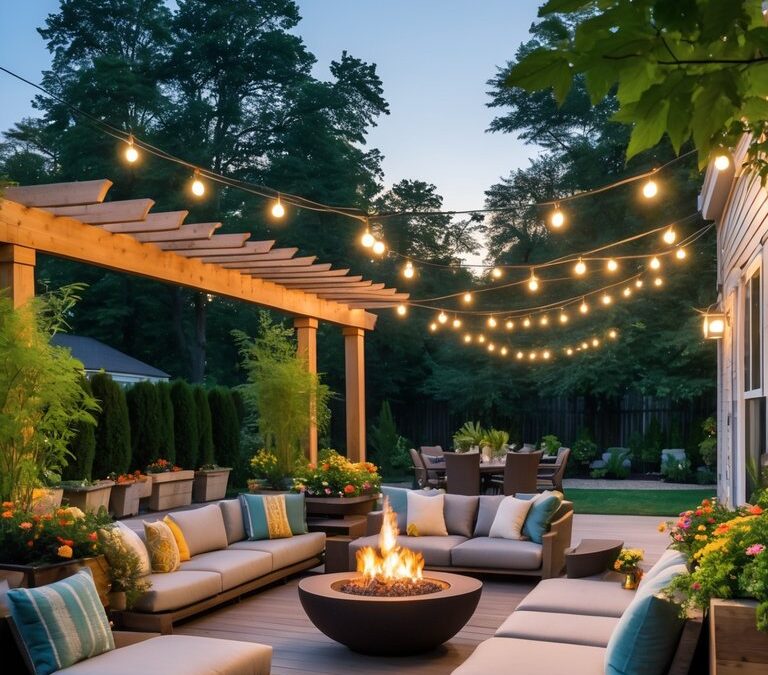
You want your backyard to feel like an extension of your home, not an afterthought. This article shows 18 practical patio ideas that help you turn a plain yard into a welcoming, useful outdoor living space you’ll enjoy every day.
You’ll find a variety of styles and layouts that fit different budgets and yard sizes, from cozy corners to large entertainment areas. Use these ideas to spark plans for seating, lighting, materials, and features that match your taste and how you actually like to spend time outside.
Think about how you’ll use the patio before choosing materials or a layout. Pick a primary purpose—dining, entertaining, quiet relaxation, cooking—or a mix of two—and plan the main elements around that use. Measure your space and sketch rough zones for seating, walking paths, and any built-ins like a grill or planter. Choose durable materials suited to your climate and maintenance comfort, such as brick, pavers, or composite decking, and add layered lighting for safety and mood. Consider privacy, shade, and storage early so you don’t shoehorn them in later. Small changes like a fire pit, raised planter, or mixed textures can dramatically improve function and feel without a full remodel.
1) Classic Brick Pattern Patio with Herringbone Design
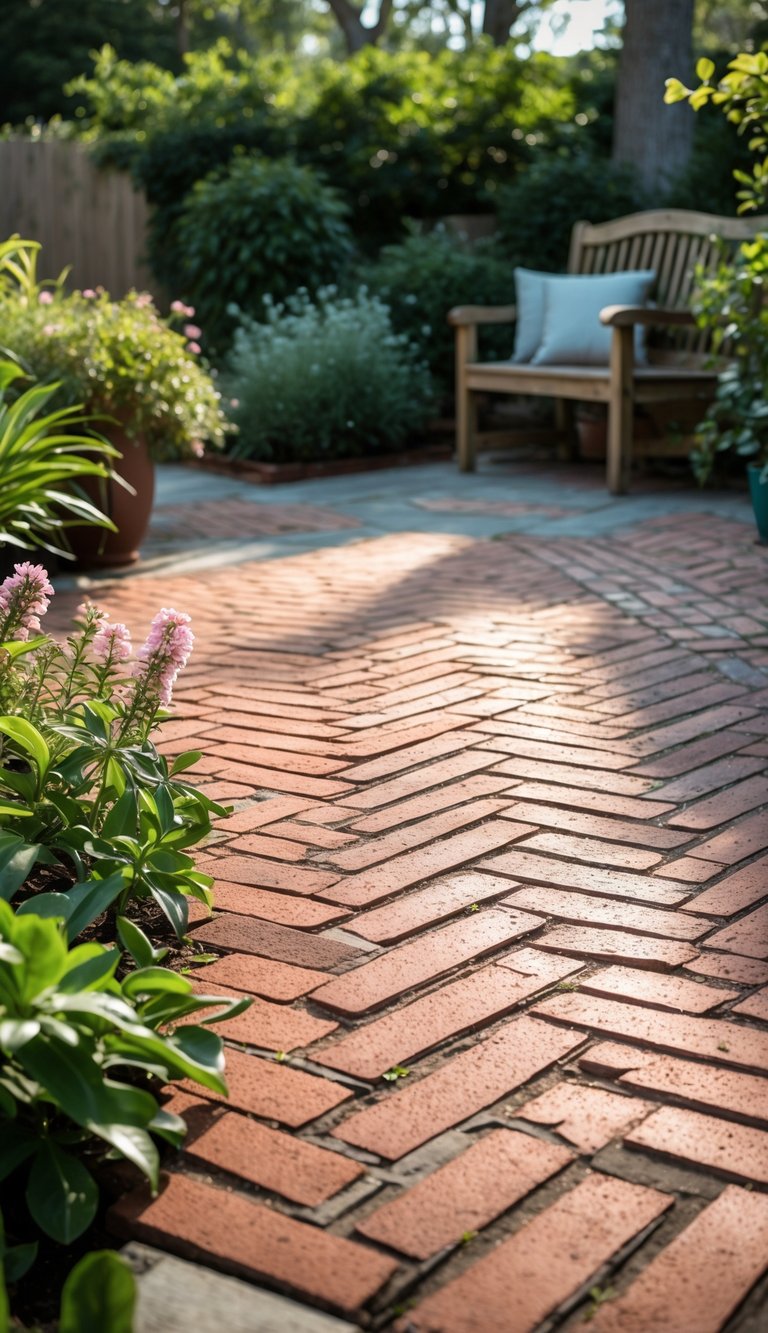
A herringbone brick patio gives your backyard a timeless, tidy look. You can lay bricks in a zigzag pattern that draws the eye and makes small spaces feel more structured.
Choose warm brick tones to match your home or a neutral shade for a modern feel. The pattern works well with curved edges and simple plantings, so you get a balanced, inviting space.
Install a narrow border around the herringbone field to frame the design and keep edges neat. Proper base preparation and tight joints help prevent shifting and reduce maintenance over time.
PRO TIP
When planning a herringbone brick patio, invest time in the base and edge restraint. Excavate to a depth that allows for compacted crushed stone plus paving sand and the brick thickness. Compact each layer firmly; a solid base prevents settling and keeps the pattern crisp. Use a flexible edge restraint or a concrete band to hold the bricks and stop spreading. Cut bricks as needed to keep the herringbone pattern consistent near curves and walls. For long-term durability, brush polymeric sand into joints and mist it to lock joints against weeds and ants. Seal the bricks if you want extra stain resistance and easier cleaning, but test a small area first to ensure you like the color change.
2) Curved Paver Layout for a Soft, Inviting Feel
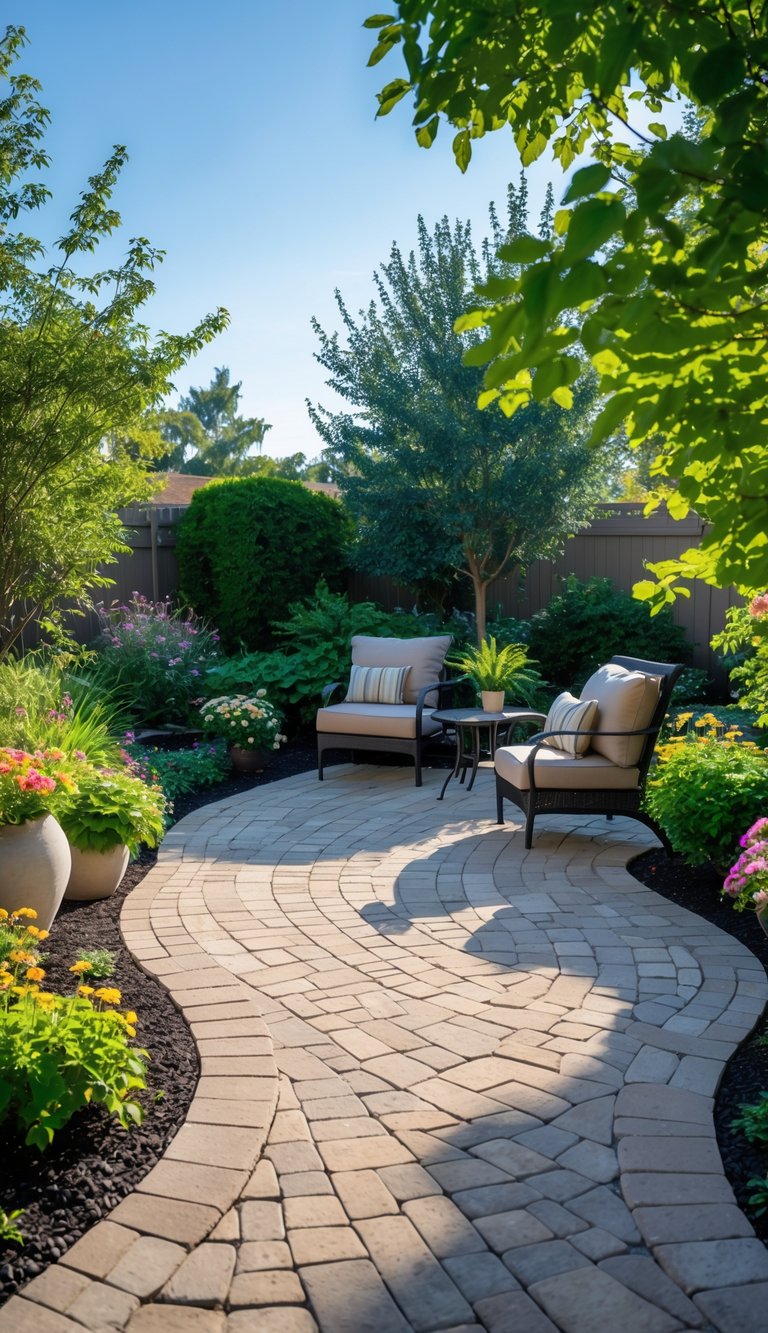
A curved paver layout softens hard edges and makes your yard feel more welcoming. The gentle arcs guide movement and create cozy zones for seating or a fire pit.
Choose paver shapes and colors that match your home and garden. Smaller pavers allow tighter curves; larger pavers suit broader arcs and lower maintenance.
Use edging to hold the curve and prevent shifting over time. Proper base preparation and compacting keep the surface stable and safe to walk on.
Blend the patio with planting beds or a curved pathway to connect spaces. This creates a natural flow that invites guests to explore your backyard.
PRO TIP
When planning your curved paver layout, think about how you use the space daily and for gatherings. Walk the route you expect people to take and mark the curve with a hose or string to test sightlines. Prioritize a solid base: excavate to frost depth if needed, add crushed stone, and compact each layer. Use polymeric sand between pavers for better weed and ant control. Select paver sizes that fit your curve—mixing small accents with larger field pavers can reduce cutting while keeping the curve smooth. Finally, include low plants or lighting along the outer edge to highlight the shape and keep the area safe at night.
3) Multi-Level Patio with Built-In Planter Boxes
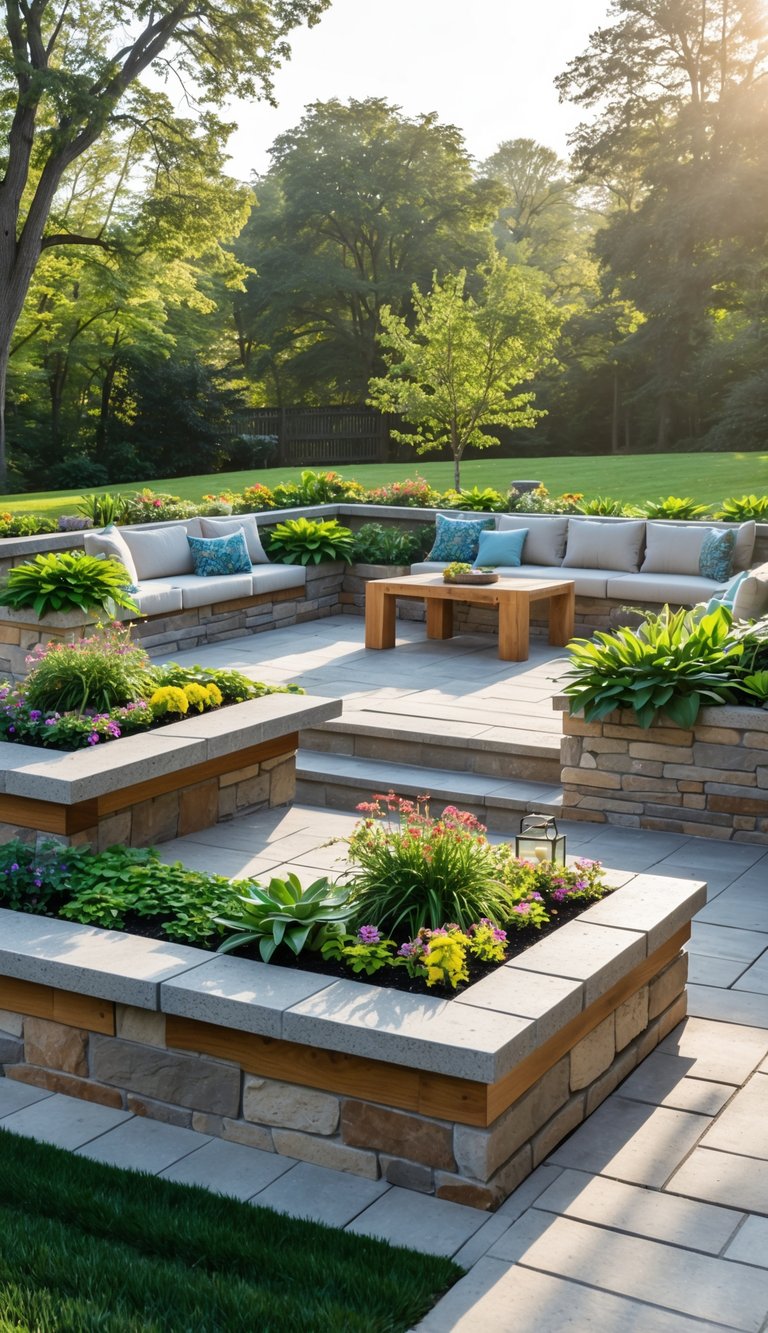
A multi-level patio gives your yard clear zones for dining, lounging, and cooking. You can use steps or short retaining walls to create those levels, which makes the space feel larger and more organized.
Built-in planter boxes anchor each level and add instant greenery without taking floor space. Plant small trees or shrubs in the boxes to provide shade and privacy, or use herbs and flowers for a living edge next to your seating areas.
You control the look by choosing materials that match your house, such as wood, stone, or composite. Add soft lighting and cushions to make each level cozy at night, and arrange planters so sightlines stay open between spaces.
PRO TIP
When planning planter boxes, think about drainage and soil depth first. Use waterproof liners and gravel at the bottom to prevent root rot and water damage to the patio structure. Choose plants that match the sun exposure on each level; shade-tolerant plants work near tall walls while sun-lovers thrive on upper tiers. Keep planter soil high-quality and add slow-release fertilizer to reduce maintenance. If you want cleaner lines, use built-in irrigation with a timer to save time. Finally, place seating so you can enjoy the plants without blocking pathways or views.
4) Cozy Fire Pit Corner with Built-In Seating
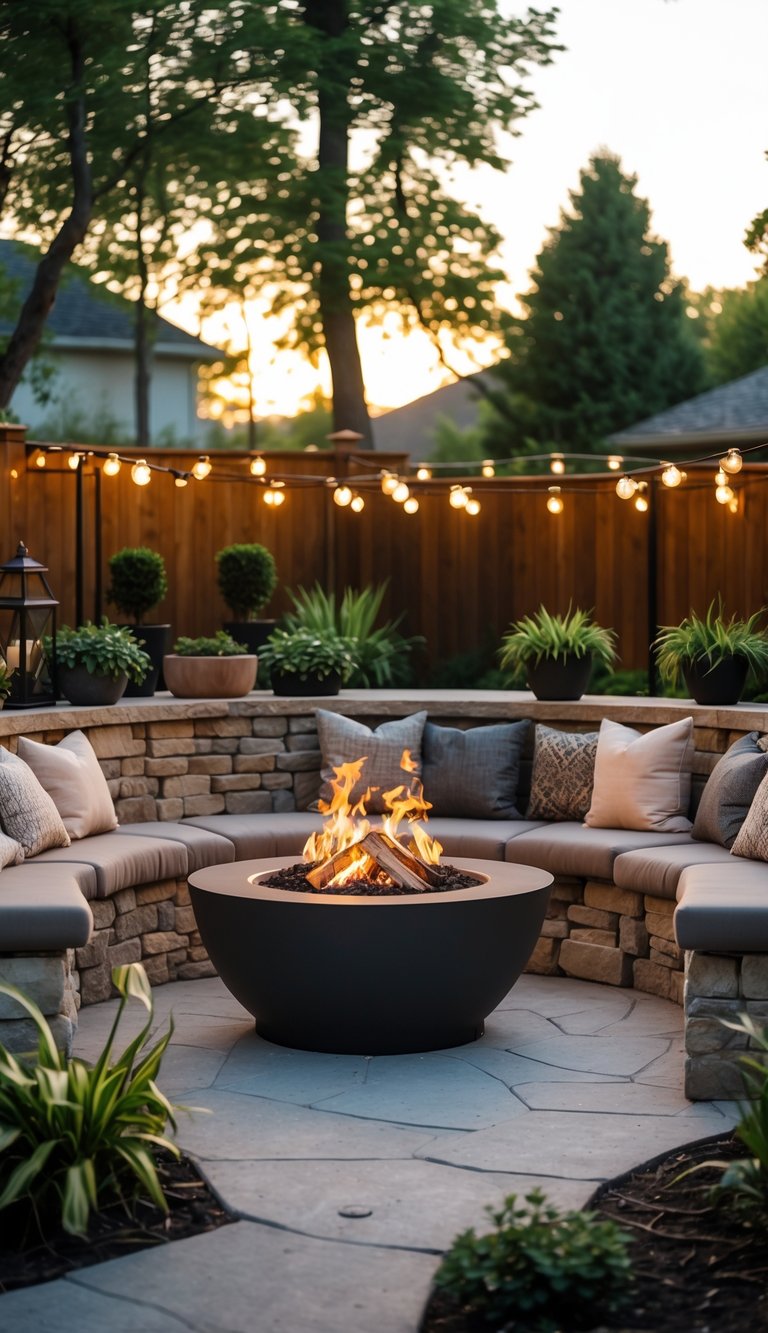
Create a fire pit corner that feels like an outdoor living room. Place a round or square fire pit at the center and build seating around it to save space and boost comfort. Stone or concrete benches look sturdy and match many yards.
Add cushions and weatherproof pillows to soften the seating. Use low-voltage lights or string lights to keep the area usable after dark without harsh glare. Keep a small gap between the seats and the pit for safety and airflow.
Use pavers or gravel to define the corner and stop weeds from coming up. Plant low shrubs or ornamental grasses around the edge to add privacy and soften the hardscape. This setup works well in small yards and creates a warm gathering spot.
PRO TIP
When you plan built-in seating, measure carefully so the bench height matches the fire pit view and comfort. Standard bench height is about 17–18 inches, which fits most people and keeps knees from hitting the pit edge. Include storage under benches for cushions, blankets, and a small fire tool set to keep the area tidy. Choose fire-safe materials like stone, brick, or concrete for the pit surround, and use non-flammable decking or pavers under and around the fire area. Check local codes for open burning and consider a gas insert if you want cleaner, easier fires. Regularly clean ash and check for cracks to keep the feature safe and long-lasting.
5) Modern Geometric Stone Patio with Clean Lines
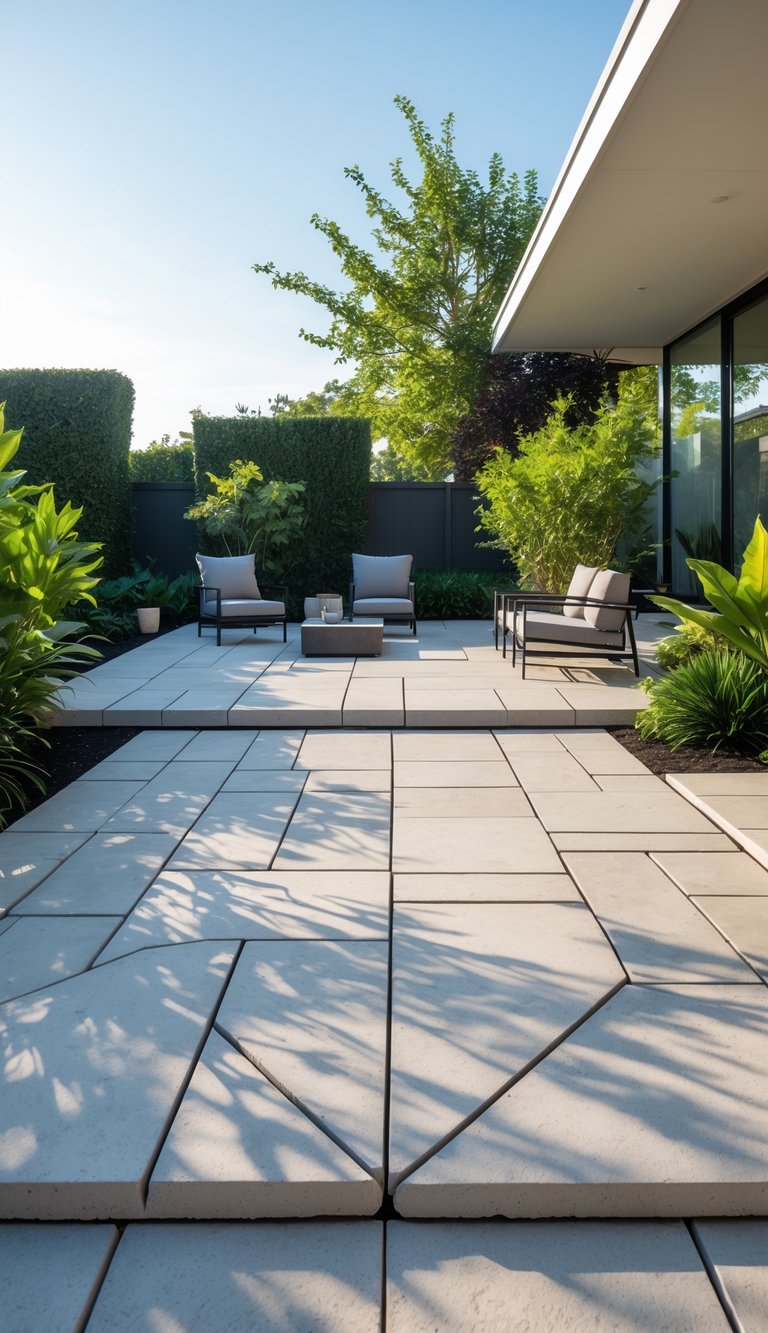
A geometric stone patio gives your yard a clear, modern look. You can use large rectangular pavers or square tiles set in a grid to create sharp, clean lines. Keep plantings simple so the stone pattern stands out.
Choose materials like bluestone or smooth concrete pavers for a sleek finish. Contrast light-colored grout or grass joints to highlight the shapes. This layout works well with a minimalist fire pit or a slim bench.
Plan for level surfaces and good drainage to avoid water pooling. Use a compacted base and edge restraints to keep pavers from shifting over time. Simple lighting along the joints can add drama without clutter.
PRO TIP
When you build a geometric patio, measure and sketch your layout before you buy materials. Mock up the pattern with string and stakes or inexpensive paver samples to confirm spacing and sightlines. Consider adding narrow strips of gravel or low-growing groundcover between large pavers for a softer look that still reads as modern. For durability, hire a pro for base preparation or follow compacted base specs closely if you DIY. Finally, keep furniture and accessories minimal—pick pieces with straight edges and neutral tones to match the patio’s clean lines.
6) Natural Stone Patio Using Flagstone for Rustic Charm
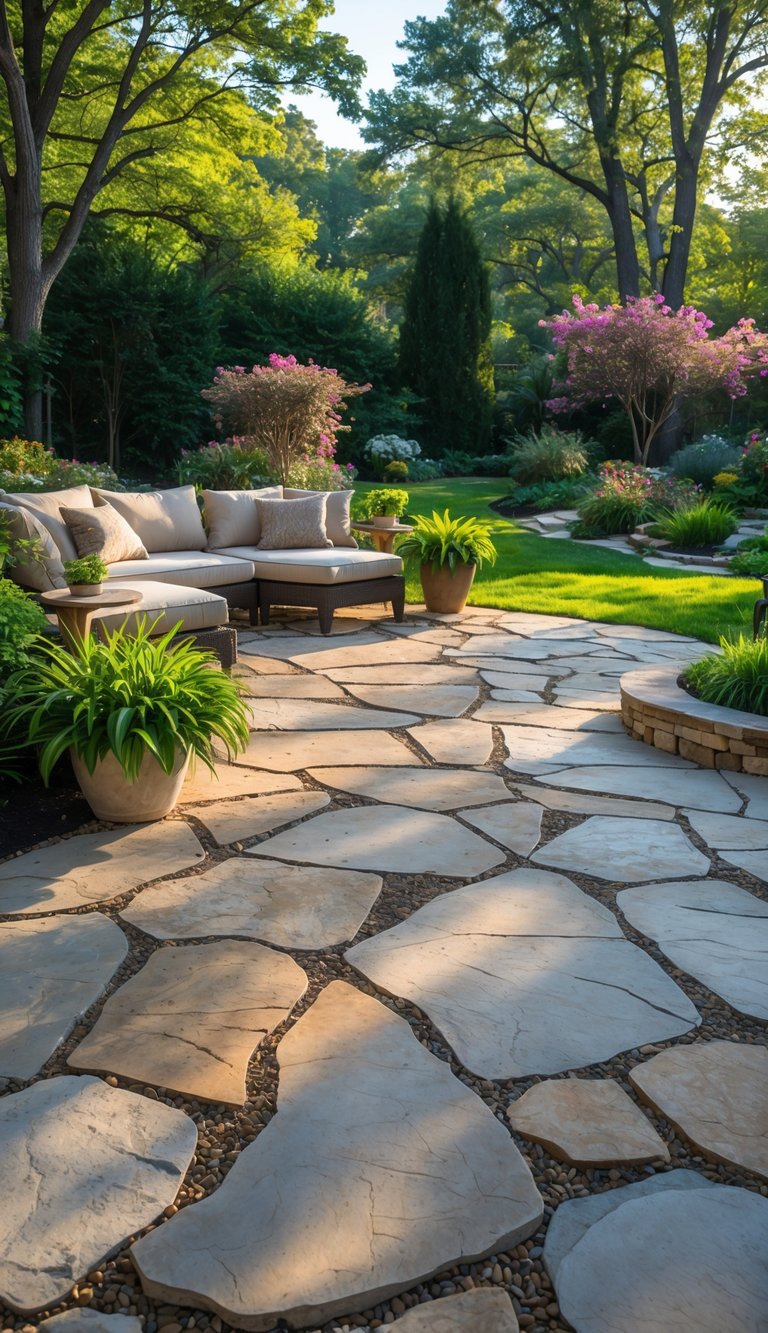
A flagstone patio gives your backyard a warm, lived-in look. The irregular shapes and earthy colors blend with plants and trees, making the space feel natural and calm.
Flagstone works well for walkways, seating areas, or around a fire pit. You can lay stones close together for a tight surface or use wider gaps and fill them with gravel or low groundcover for a looser, cottage-style feel.
Choose local stone when you can; it matches your soil and climate and often costs less. Seal the stone to protect it from stains and weather, and set it on a compacted base to prevent shifting over time.
PRO TIP
When you install flagstone, take time to plan the layout by dry-fitting pieces on the ground first. Move stones around until the shapes fit comfortably and the gaps look natural. Use sand or fine gravel between stones if you want a smooth walking surface, or plant thyme, sedum, or moss in the joints for a softer, green look. For stability, place a compacted base of crushed stone and a layer of sand beneath each flagstone. If you expect heavy use, edge the patio with pavers or a low wall to keep stones from sliding outward. Finally, apply a penetrating sealer suited for natural stone to reduce staining and slow weathering; reapply every few years as needed.
7) Eco-Friendly Patio with Permeable Pavers
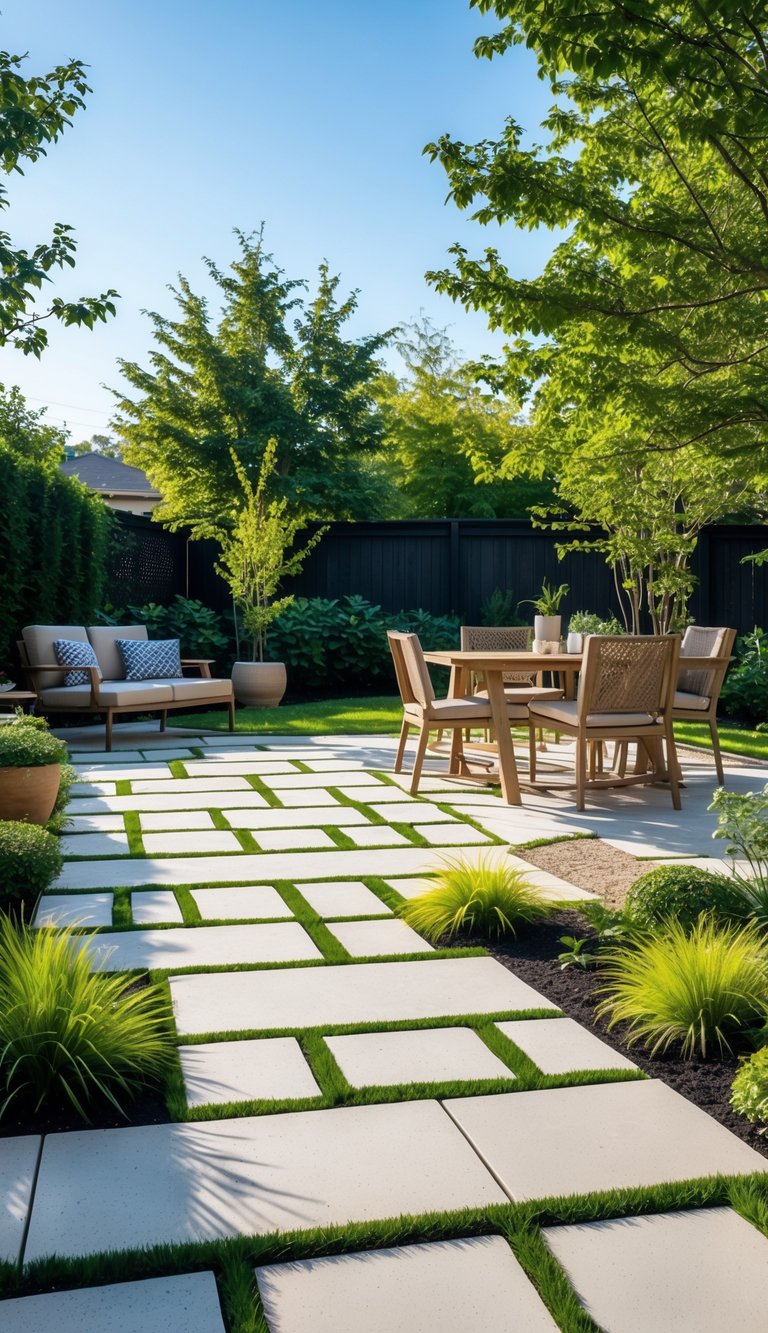
Permeable pavers let water pass through into the ground instead of running off. You reduce puddles and help recharge groundwater while keeping the patio usable after rain.
Choose materials like porous concrete, stone, or grid systems filled with gravel and grass. These options fit many styles and can match your home’s look without adding runoff problems.
Install a proper base with layers that promote drainage and prevent settling. A well-built base keeps pavers stable and lets water soak in slowly.
PRO TIP
Think about where water naturally flows on your property before you place permeable pavers. Align the patio slope so runoff moves toward planted areas or rain gardens that can absorb extra water. Use edging that allows lateral flow into adjacent beds, and consider a mix of gravel joints and turf to soften the look. Regular maintenance matters: sweep debris from joints, refill any settled gravel, and check for soil compaction in surrounding planting zones. If you live in a cold climate, select pavers rated for freeze-thaw cycles and use salt alternatives to avoid joint damage.
8) Outdoor Kitchen with Built-In Grill and Bar
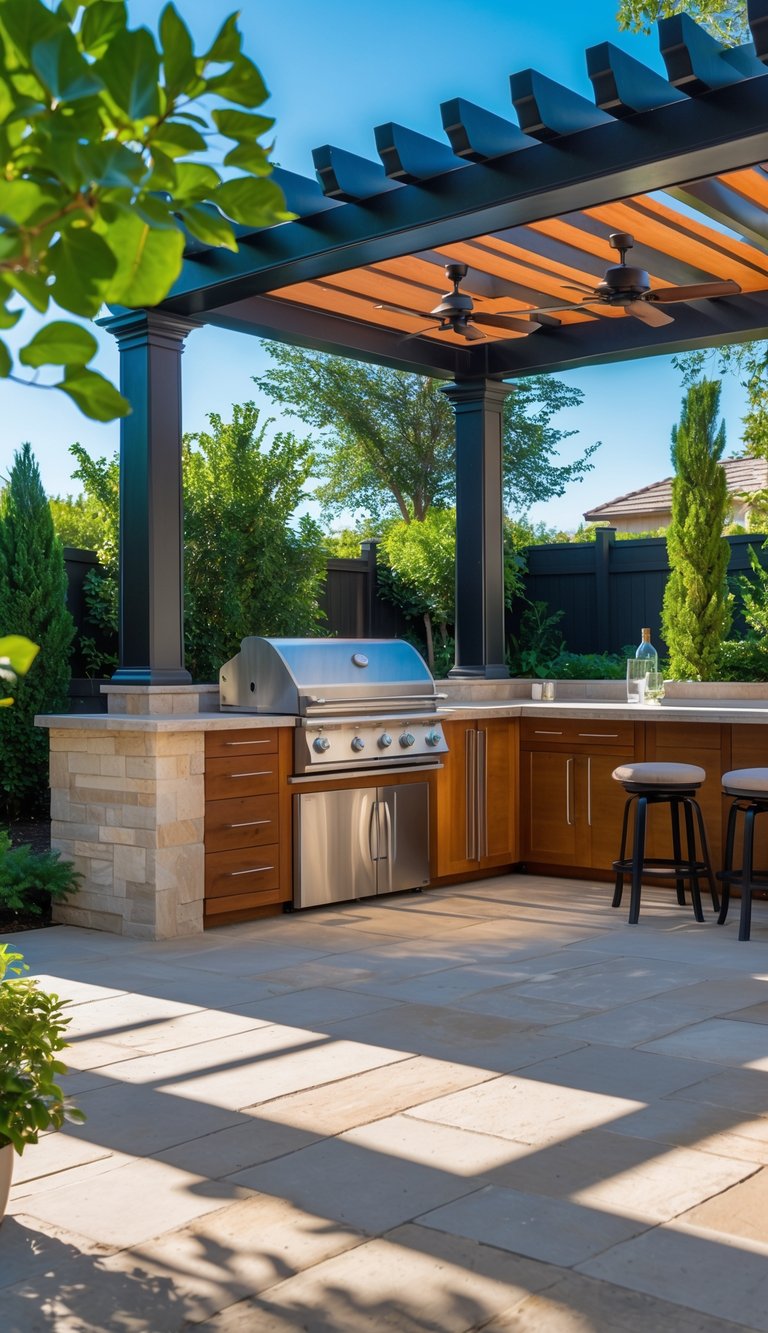
An outdoor kitchen with a built-in grill and bar lets you cook and entertain without running back inside. You can place a grill, counter space, and bar seating so guests can chat while you cook. Use weatherproof materials like stone, stainless steel, and sealed wood for a long-lasting setup.
Keep the layout simple and work-focused. A prep area, grill, and sink in a triangle make cooking easier. Add storage for tools and a small fridge to keep drinks close at hand.
Lighting and shade matter for comfort. Install task lights over the grill and soft lights near the bar. Add an awning or pergola to protect you from sun and light rain.
PRO TIP
Plan your power, water, and gas lines before you build so you avoid costly changes later. Think about where you want outlets for a refrigerator, blender, or outdoor TV and place them within reach. Use non-porous counters and cabinets made for outdoor use to prevent warping and stains. If you plan to host often, include a trash pull-out and separate recycling bins to keep the area tidy. Choose a grill size that fits your usual guest count; larger grills need more gas or a natural gas hookup. Finally, add comfortable bar stools and weatherproof cushions so guests stay longer and enjoy the space.
9) Intimate Retreat Space with Privacy Screens
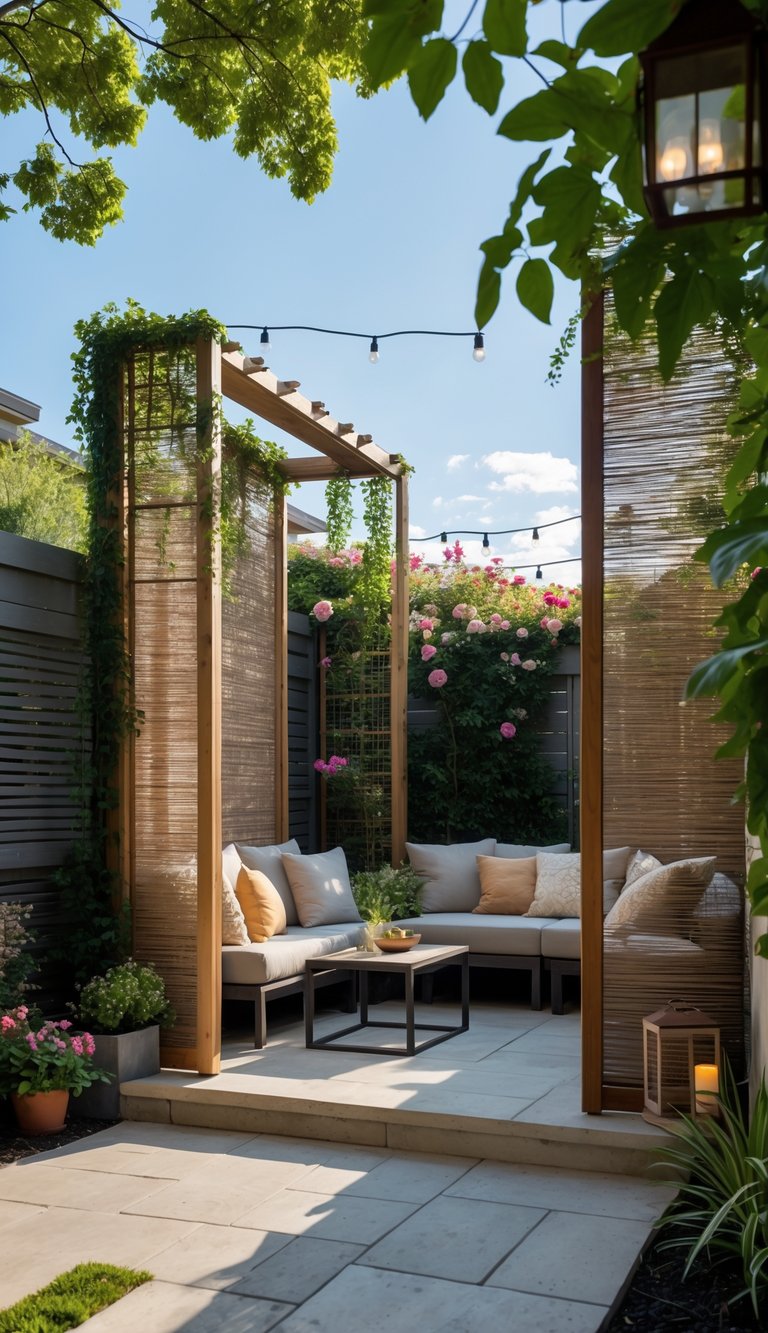
You can turn a small patio into a private retreat with well-placed privacy screens. Use wood slats, metal panels, or woven bamboo to block sightlines while still letting air flow. Screens create a sheltered room feel without building permanent walls.
Mix screens with tall plants or climbing vines to soften hard edges and add greenery. Add a couple of comfortable chairs and a small table, and you have a quiet spot to read, chat, or sip tea. Lighting, like string lights or a warm lantern, makes the space cozy after dark.
Rotate movable screens when you need more openness or more privacy. Choose materials that stand up to your climate so they last longer and need less upkeep.
PRO TIP
When choosing privacy screens, think about how much light and airflow you want. Solid panels give the most seclusion, but they can block breezes and sunlight. Slatted or perforated screens offer a balance: they hide you from view while letting in air and dappled light. Consider modular or folding screens that you can rearrange for parties, plant care, or different sun angles. Match screen height to your sightline—around 5 to 6 feet often works well—so you block neighbors without feeling boxed in. Use durable, low-maintenance materials like pressure-treated wood, powder-coated metal, or weather-resistant composite. Stain or paint wooden screens to protect them and blend with your decor. If you rent, choose freestanding screens or planters with trellises to avoid permanent changes.
10) Built-In Bench Seating Around a Circular Dining Table
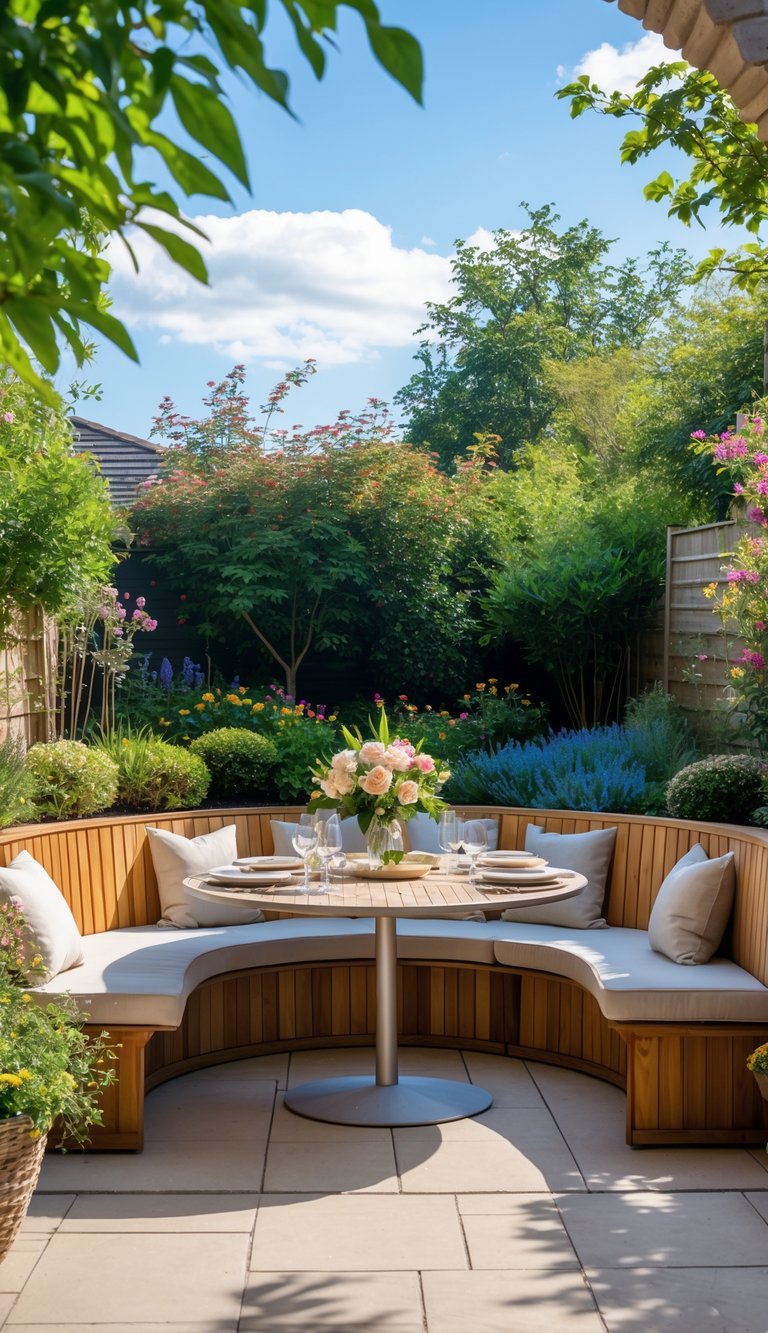
Built-in bench seating around a circular table saves space and creates a cozy feel for your patio. You get more seating than separate chairs, and it keeps the area tidy with a neat, continuous line.
Choose durable materials like treated wood or weatherproof composite so your bench lasts through sun and rain. Add seat cushions and throw pillows for comfort and color; they make long meals and conversations more pleasant.
Consider a curved bench that follows the table’s shape for easier flow and sightlines. You can add storage under the seat for cushions, blankets, or grilling tools to keep things handy and organized.
PRO TIP
Plan the bench height and depth to fit your table and the people who will use it. Standard bench height is about 18 inches from the floor, and 16–18 inches of seat depth works for most adults. Leave about 30–36 inches of clearance from the table edge to obstacles so guests can slide in and out easily. If you want a more intimate setup, choose a slightly smaller table and wrap the bench closer, but keep at least 24 inches per person for comfort. Anchor the bench to the deck or a stable base to prevent wobble. For long-term care, finish wood with a UV-protective sealant and clean cushions regularly to avoid mildew.
11) Mix of Wood and Stone for a Warm, Textured Look
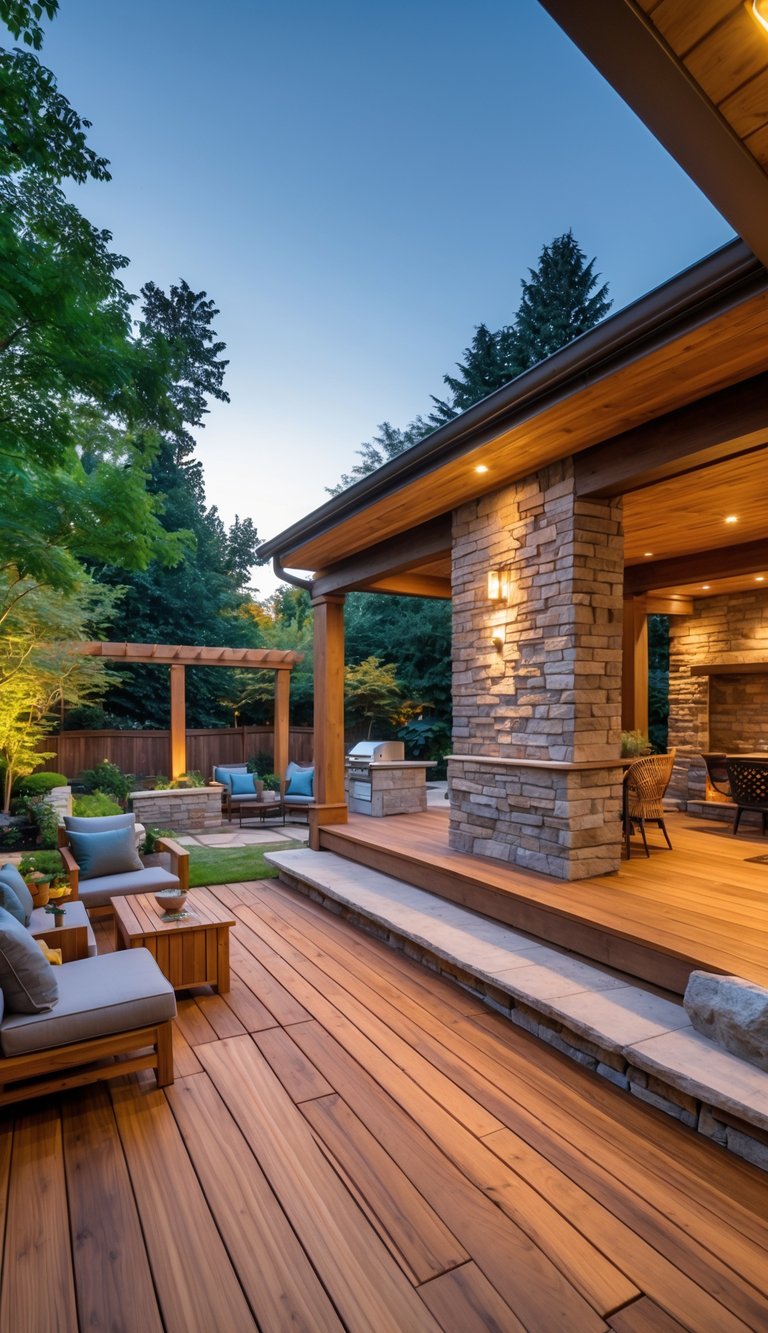
You can combine wood and stone to create a patio that feels cozy and natural. Wood brings warmth while stone adds texture and durability, so together they make the space inviting and practical.
Use stone for the main walking area and add wood decking or timber accents around seating zones. This helps define different areas and makes the layout feel intentional.
Choose materials that work well together in color and scale. For example, wide wood planks pair nicely with larger, irregular flagstones for a balanced contrast.
PRO TIP
When blending wood and stone, think about maintenance and drainage from the start. Stone holds up well to weather and needs little care, while wood may require sealing, staining, or periodic replacement depending on species and exposure. Make sure the wood sits slightly higher or on a proper base so water drains away from it, reducing rot and warping. Use stainless steel or coated fasteners to avoid rust stains on stone, and consider a small gap or gravel joint between materials to allow movement and prevent cracking. Planning these details now saves time and money later.
12) Integrated Lighting with Soft Glow Pathway Lights
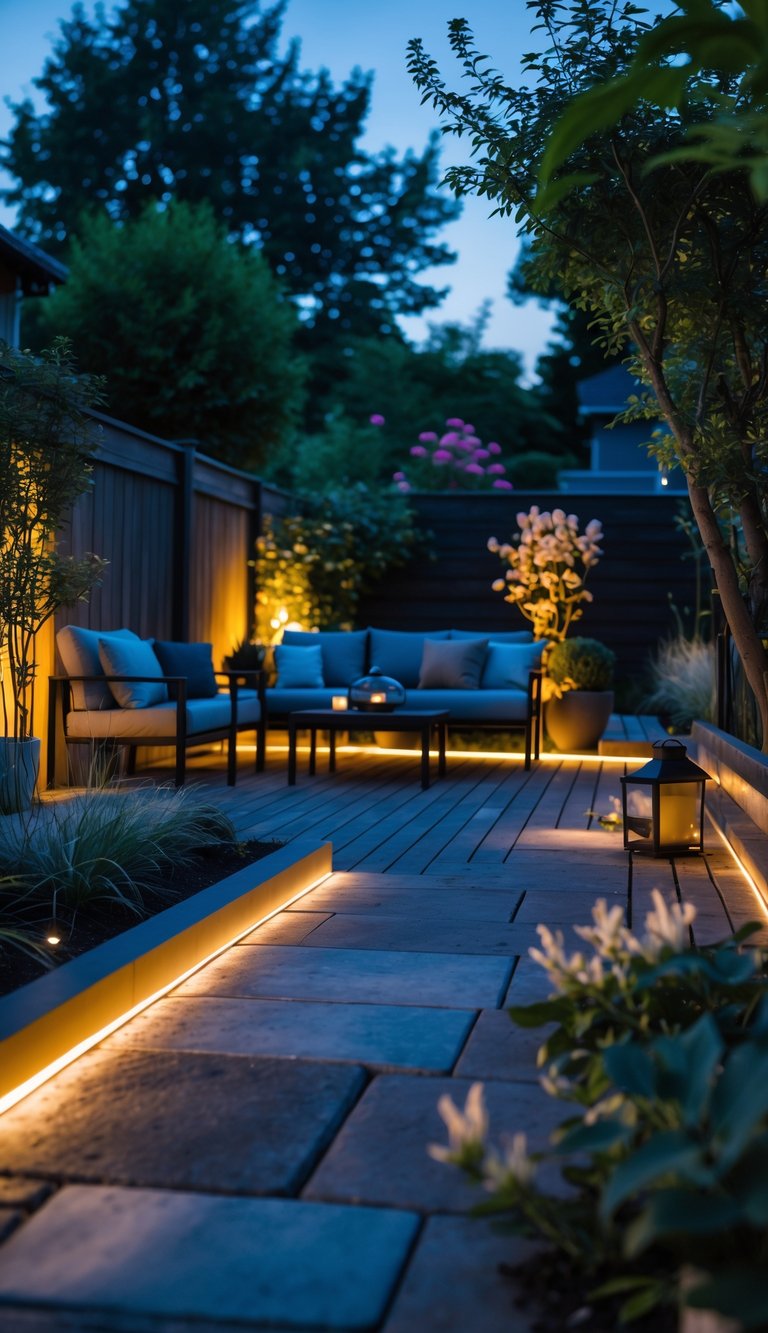
Integrated lighting gives your patio a warm, safe feel after dark. Soft glow pathway lights line walkways and steps so you and guests can move easily without harsh glare. They also make plants and paving look nicer by adding depth and shadow.
You can choose low-voltage LED options that use little power and last years. Place lights 6–10 feet apart for even coverage, and tuck fixtures into plant beds to keep the look subtle. Consider warm white tones for a cozy mood and cooler tones for a modern feel.
PRO TIP
Think about wiring and placement before you install. Bury low-voltage cable where it won’t be stepped on and test lamp positions at night to avoid bright spots. If you rent, pick solar or plug-in fixtures you can remove later. Use dimmers or smart controls to set scenes for dinner, games, or quiet evenings. Mix short bollards with low-profile in-ground lights to guide feet and highlight edges. Regularly clean lenses and trim surrounding plants so the glow stays soft and even.
13) Lush Green Wall Surrounding the Patio Space
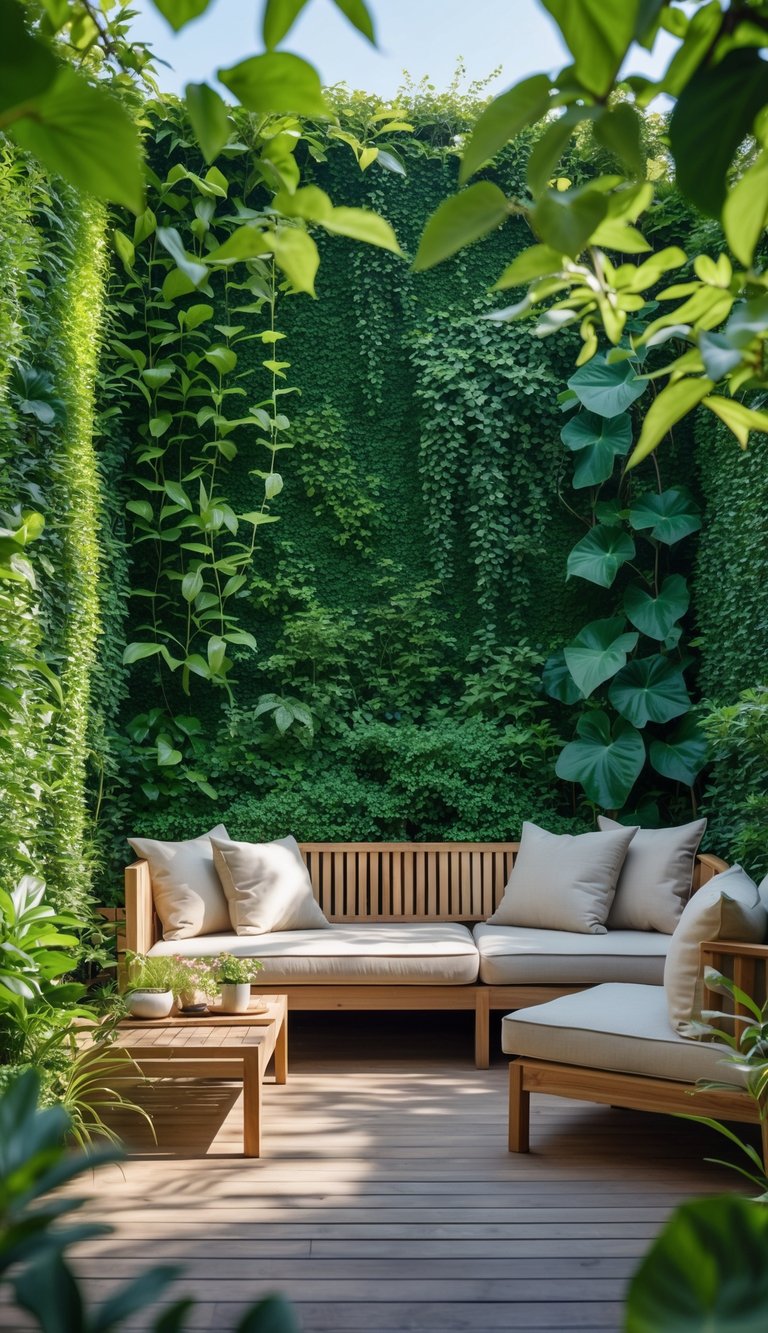
A green wall around your patio brings instant life and color to a dull yard. You get more privacy and a soft, natural backdrop for seating or dining areas.
Choose hardy plants like ferns, succulents, or climbing vines that suit your climate. Mix textures and shades of green to keep the wall interesting without needing constant care.
Install a modular panel system or vertical planters for easier watering and replacement. Add a drip irrigation line to save time and keep plants healthy through dry spells.
Place soft lighting near the green wall to show off leaves at night. This creates a cozy, inviting mood for evening gatherings.
PRO TIP
When you plan a green wall, think about weight, water, and sunlight. Measure the wall and confirm it can hold planters plus moist soil. Use lightweight soil mixes and modular planters to reduce load. Place drip irrigation behind panels with a timer so watering stays consistent and you avoid overwatering. Choose plants for the amount of sun your patio receives; some need full sun, others thrive in shade. Add a slow-release fertilizer twice a year to keep foliage lush. Finally, design access panels or removable pots so you can prune, replace, or check irrigation without dismantling the wall.
14) Raised Deck Patio Overlooking the Yard
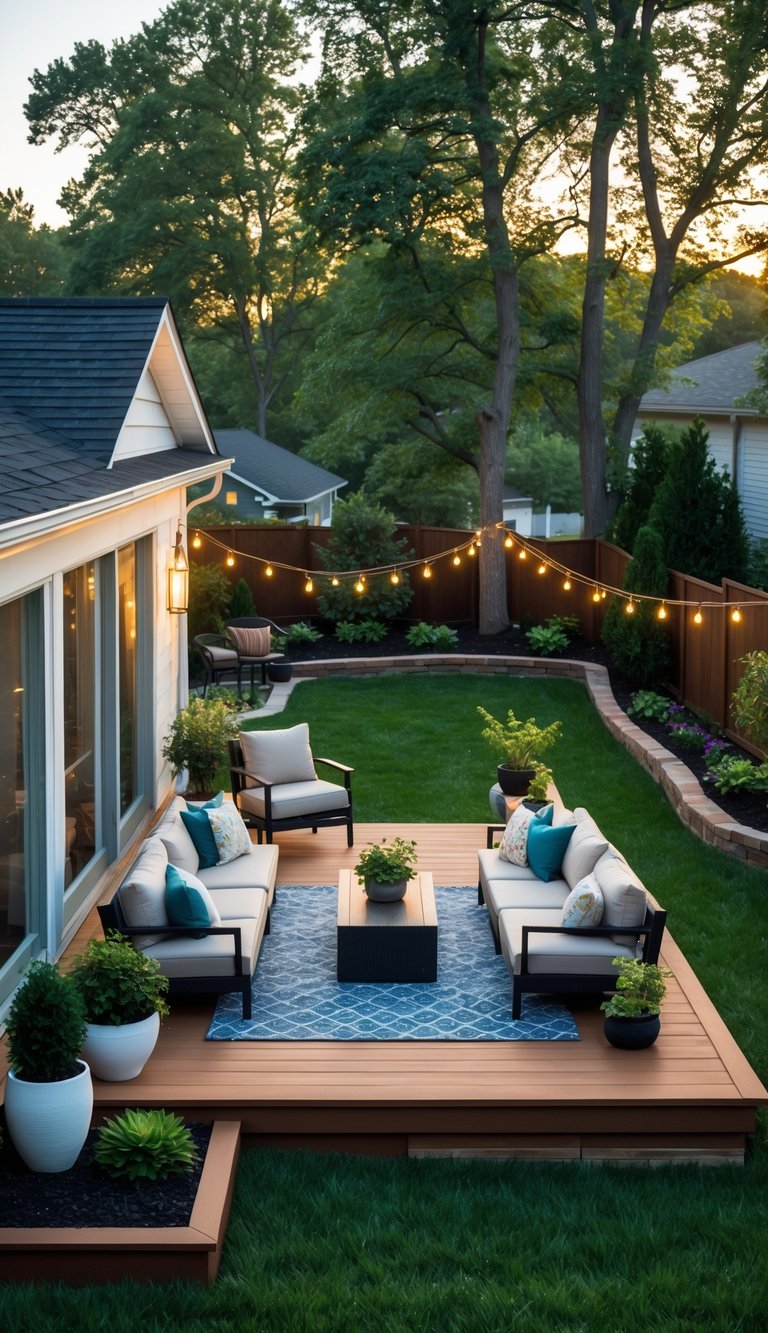
A raised deck patio gives you a clear view of your yard and makes small spaces feel larger. You can sit higher to watch kids play, enjoy sunsets, or keep an eye on garden beds without stepping off the deck.
Use railings that match your home’s style and add built-in seating to save space. Planters along the edge soften the view and bring color closer to your seating area.
Choose materials that resist weather and need little upkeep, such as composite boards or pressure-treated wood. Add lighting on stairs and rails so you can use the deck after dark.
PRO TIP
When planning a raised deck, think about how you’ll access the yard below. Add a staircase or a gently sloped ramp if you expect to move plants, toys, or furniture between levels. Consider storage beneath the deck for seasonal items and garden tools; it keeps your yard tidy and makes the deck more useful. If you live on a slope, design the deck to follow the contour of the land—this reduces excavation and can cut costs. Check local codes for railing heights and stair rules before you build. Finally, pick a neutral deck color so you can change cushions and decor without repainting.
15) Water Feature with Stone Surround and Bench
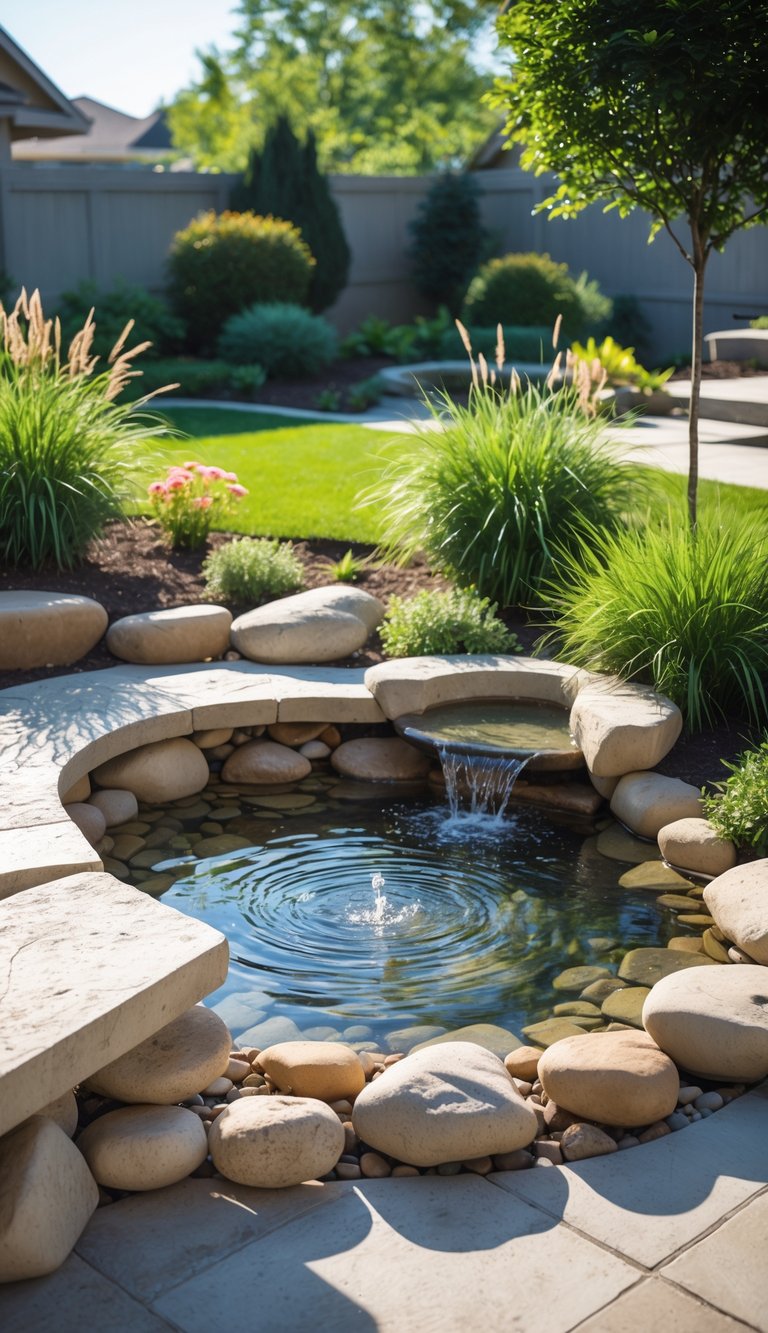
A stone surround with a bench creates a calm spot on your patio. You can sit close to moving water and enjoy the sound while reading or chatting with friends.
Choose natural stone for a timeless look that blends with plants and patio pavers. The bench can be made from the same stone or a complementary wood to add warmth.
Keep the water feature small if your space is tight; a bubbler, low waterfall, or shallow basin works well. Add simple lighting to highlight the stone at night and make the area usable after sunset.
PRO TIP
Think about placement so the bench faces the water but stays dry. Install a pump rated for outdoor use and a simple filter to reduce maintenance. Use frost-resistant stone or a removable pump if you live in a freezing climate. Plant low-maintenance greenery nearby to soften edges and hide plumbing. Consider a bench depth that gives comfortable seating and allows room for cushions. For safety, avoid slick finishes on the bench surface and choose slip-resistant pavers around the water. Regularly check water levels and clean leaves to keep the feature running smoothly.
16) Outdoor Fireplace with Comfortable Lounge Chairs
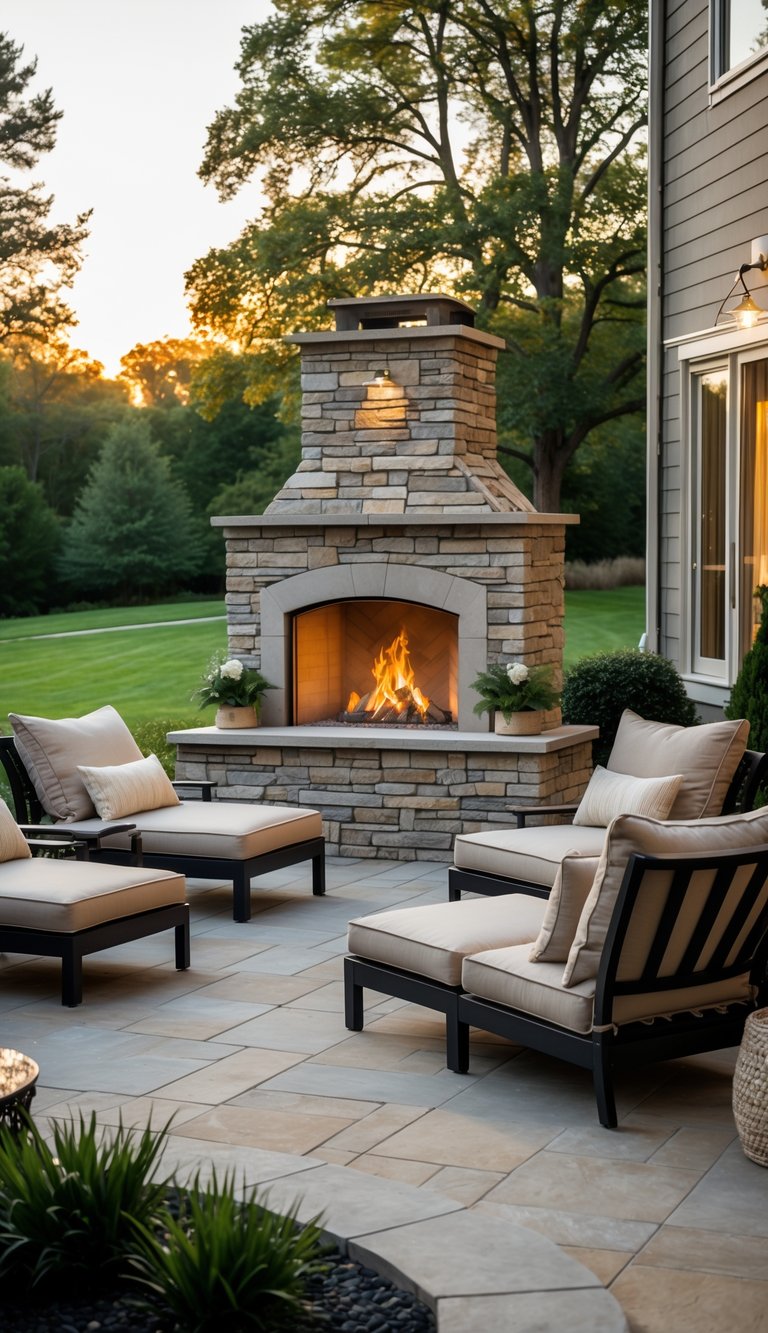
An outdoor fireplace creates a warm focal point that invites you to sit and relax. Place several comfortable lounge chairs around it to encourage long conversations and quiet nights under the stars.
Choose chairs with weather-resistant cushions and simple frames for easy care. Mix deep seats with a couple of upright chairs so guests have seating options that match their comfort needs.
Add a small side table or two for drinks and books. String lights or low lanterns will keep the space cozy without overpowering the firelight.
PRO TIP
Pick furniture that fits the scale of your patio so the area feels balanced and usable. Measure the space before you buy and leave at least three feet between chairs and the fireplace for safety and airflow. Use fabrics labeled for outdoor use to prevent mildew and fading. Keep a fire tool set and a covered container for extra firewood nearby to make maintenance simple. Consider arranging chairs in a semi-circle to promote conversation while letting everyone enjoy the warmth. Rotate cushions indoors during heavy rain or winter to extend their life.
17) Compact Corner Patio with Space-Saving Furniture
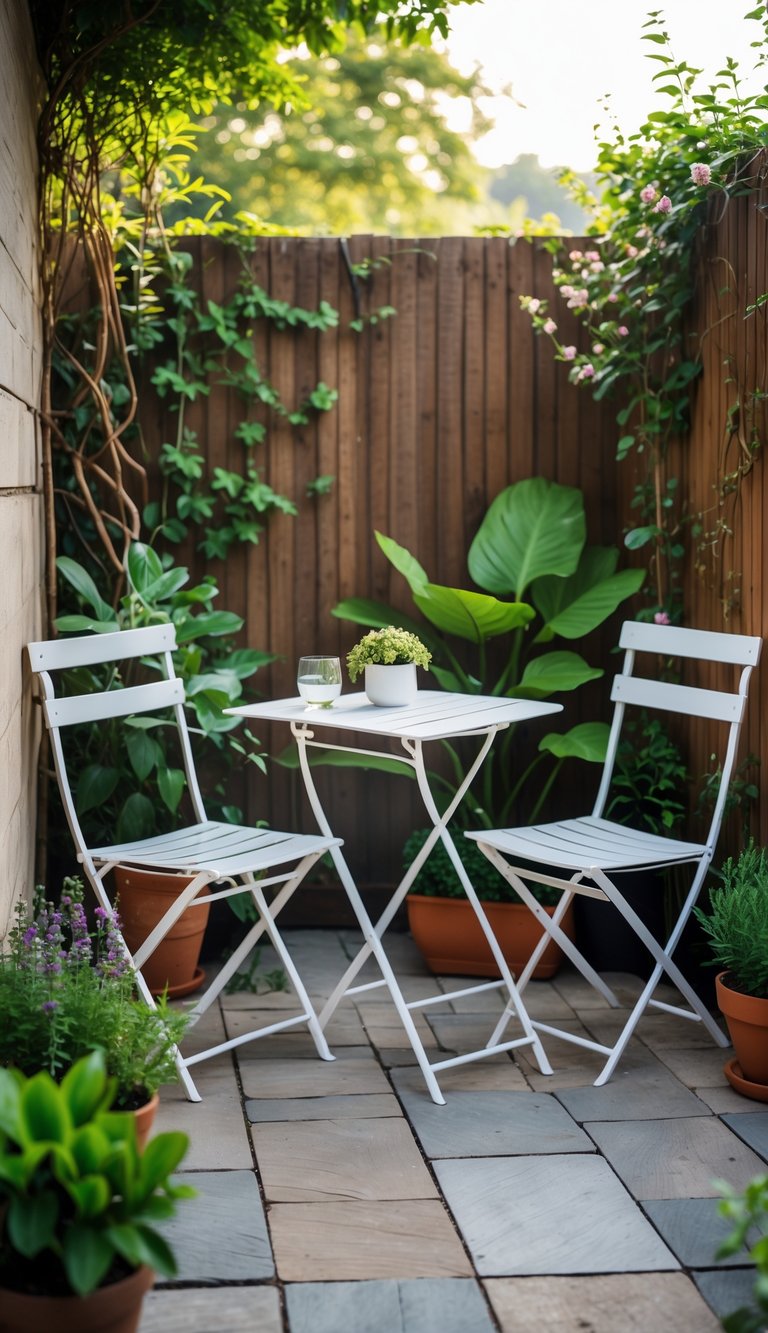
You can turn an unused corner into a cozy patio with the right furniture. Choose a small bistro set, a curved bench, or folding chairs that tuck away when you need room. These pieces give you seating without crowding the space.
Add a narrow table or wall-mounted shelf for drinks and plants. Use cushions and rugs to make the spot feel inviting and tied together. Vertical planters or hanging baskets add greenery without taking floor space.
Pick weatherproof, lightweight materials so you can rearrange easily. A few well-chosen pieces make the corner feel intentional, not cramped.
PRO TIP
When planning your compact corner patio, measure the area first and sketch a simple layout. Place larger pieces against the walls or fence to free up walking space. Look for multi-use furniture like storage benches or nesting tables that serve more than one purpose. Folding and stackable items let you change the layout for guests or activities. Choose slim-profile planters and hang them at different heights to create depth without losing floor room. Finally, pick a consistent color palette of two or three colors to keep the corner visually calm and make small spaces feel bigger.
18) Large Entertainment Patio with Multiple Seating Zones
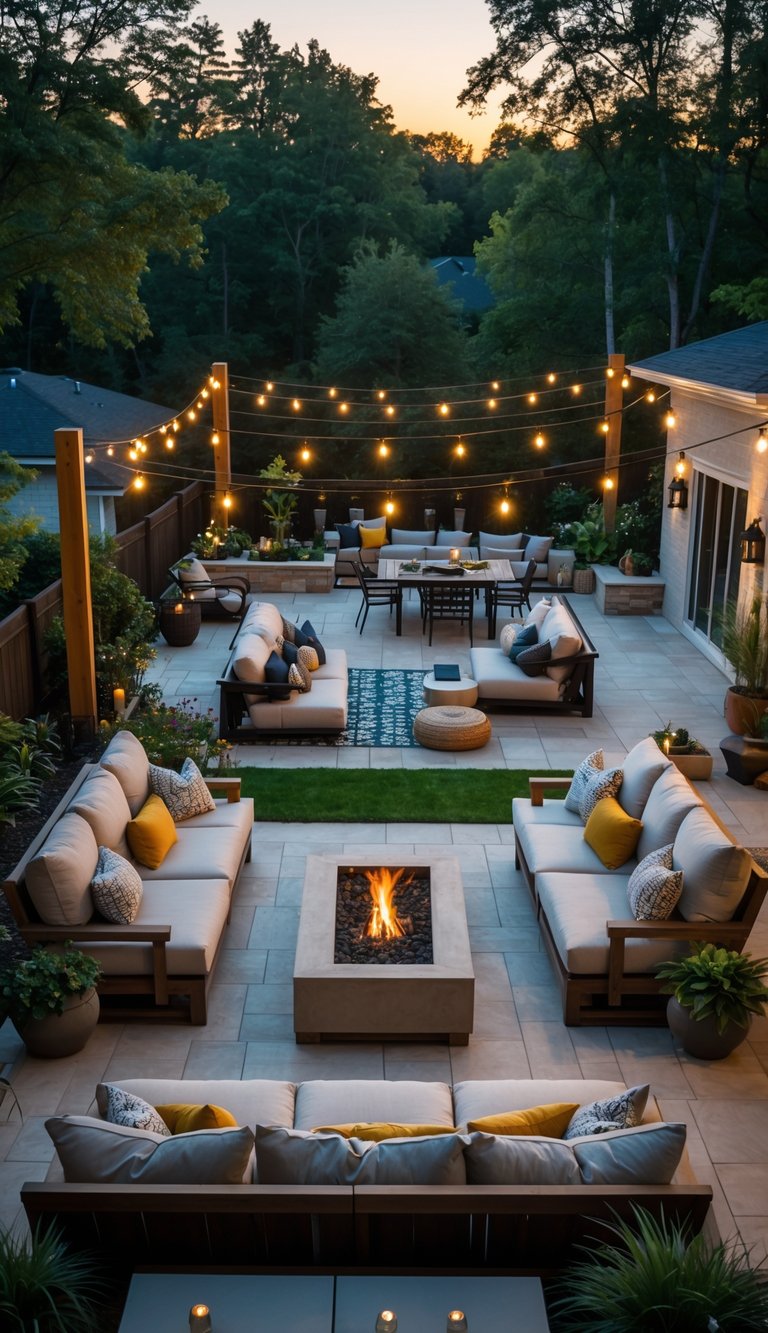
Give your large patio clear zones for dining, lounging, and games. Arrange furniture so people can move between areas without crowding. Use rugs and planters to mark each zone.
Place a dining table near the house for easy kitchen access. Create a lounge area with deep seats and a coffee table for relaxed chat. Add a fire pit or outdoor TV in a third zone to keep guests entertained.
Vary seating heights with benches, chairs, and stools to create visual interest. Keep walkways at least 3 feet wide for comfort. Use durable materials and weatherproof cushions so the space stays usable all year.
PRO TIP
Think about flow and sightlines when planning zones. Place the loudest activity, like a grill or speakers, away from quiet areas such as reading nooks or conversation circles. Use low screens, hedges, or tall planters to soften lines between zones without fully blocking views. Add layered lighting—task lights for the dining area, soft ambient lights for the lounge, and focused lighting for pathways. This helps set mood and keeps each zone functional after dark. Finally, store extra cushions and throws in a nearby weatherproof chest so you can adapt seating quickly for more guests or cooler evenings.