
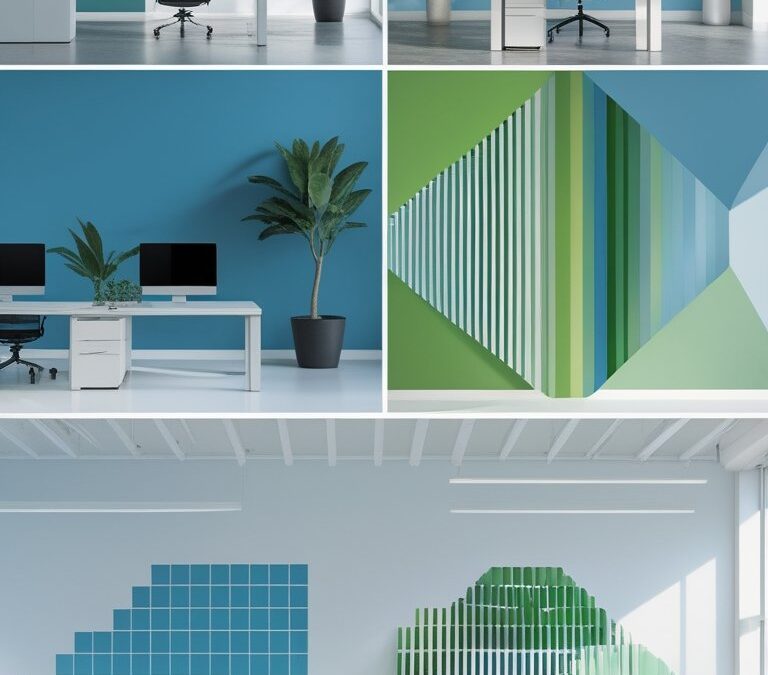
You spend a lot of time at your desk, so the walls around you should work as hard as you do. This article shows simple wallpaper tricks that nudge your brain toward focus, calm, and sustained energy without changing your routine.
You’ll learn wallpaper layouts that shape attention, add depth, and make your workspace feel more purposeful so you can get more done.
Think about how color, pattern, and scale affect your mood and ability to concentrate. The ideas you’ll see blend natural scenes, structured grids, warm accents, perspective tricks, and subtle botanical panels to create a workspace that supports focus and creativity.
Pick one strong wall as your anchor and keep the other walls calm to avoid visual clutter. Choose a mural or accent that faces you while working so it influences posture and attention. If you want depth without distraction, use a monochrome perspective mural or a muted botanical pattern with a high-contrast panel near your monitor; these guide the eye without competing with your task. For energy and warmth, try a geometric accent behind your desk in mustard and terracotta, but limit bold patterns to one area. If you crave calm and concentration, a biophilic mural or subtle gridlines can lower stress and create perceived structure. Always test samples in your actual light and at full scale before committing.
1) Biophilic mural with a floor-to-ceiling rainforest scene
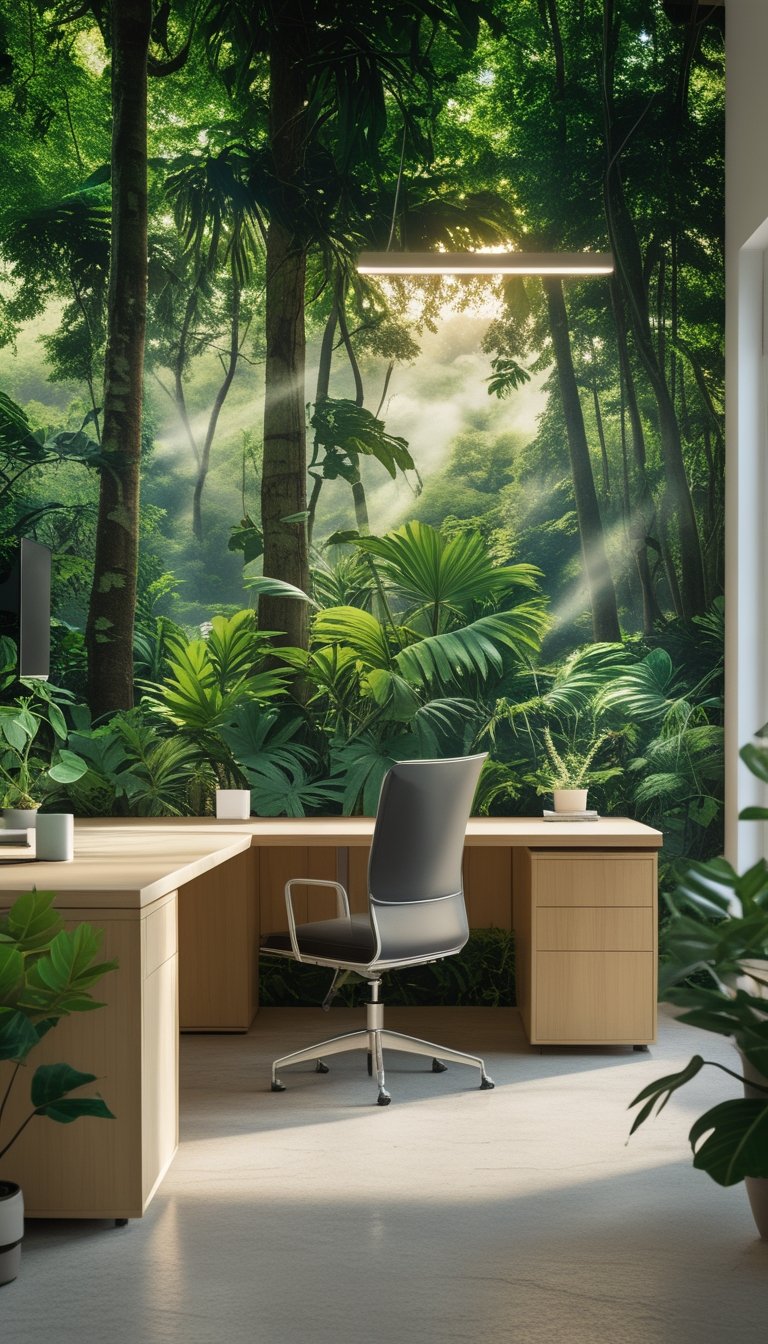
You can use a floor-to-ceiling rainforest mural to make your office feel alive. Large-scale plant imagery brings nature’s shapes and colors into your view, which helps reduce stress and steady your focus.
Choose deep greens and layered foliage to create depth. A full-wall scene reads as an environment, not just decoration, so your brain treats the space as richer and more interesting.
Pick materials that are low-VOC and easy to remove if you rent. Peel-and-stick or FSC-certified papers give you the look without long-term commitment, and water-based inks lower chemical smell.
Place the mural opposite your main work area so you can glance up at it between tasks. The visual break helps reset attention and can push you to return with more energy.
PRO TIP
When you pick a biophilic mural, match its scale to the room. A true floor-to-ceiling mural works best in rooms with at least eight-foot ceilings; smaller rooms need murals with simpler compositions to avoid feeling crowded. Use matte finishes to reduce glare on monitors. If you have windows, orient the mural so light falls naturally across it—this keeps the colors true and prevents flatness. Add a few real plants near your desk to echo the mural and strengthen the biophilic effect. Keep plant varieties low-maintenance, like pothos or snake plant, so they thrive with minimal care. Finally, test a small sample on the wall for a week before covering the whole surface; seeing it in your daily light helps you commit with confidence.
2) Subtle gridlines wallpaper to create perceived structure and focus
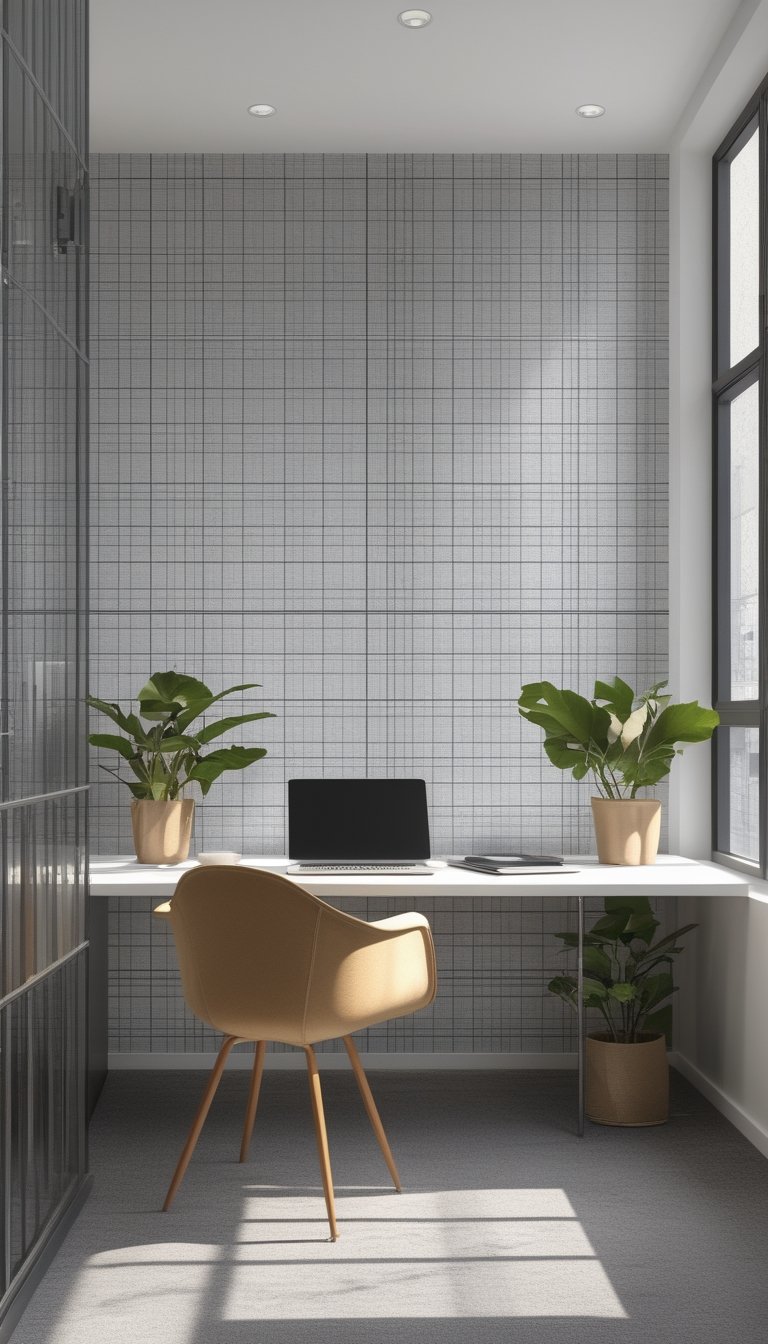
A subtle gridlines wallpaper gives your space a quiet order that your brain reads as structure. You will notice work feels more organized when lines suggest columns and rows, even if you don’t consciously follow them.
Choose thin, faint lines in neutral tones so the pattern supports focus without drawing attention. The grid acts like a visual scaffold that nudges your eyes to move systematically across a page or screen.
This layout suits desks, meeting rooms, and home offices. It helps you scan information faster and keeps small visual distractions from breaking concentration.
PRO TIP
Pick a grid scale that matches your tasks: small tight grids for detail work like coding or editing, and wider grids for brainstorming and sketching. Use muted colors such as soft gray, beige, or off-white so the pattern stays in the background. Avoid high contrast or bold colors that compete with your content. Test the wallpaper at different times of day and under your office lighting to ensure the lines stay subtle. Pair the grid with simple furniture and minimal decor to let structure guide your workflow rather than clutter it.
3) Warm-toned geometric accent wall behind desk (mustard + terracotta)
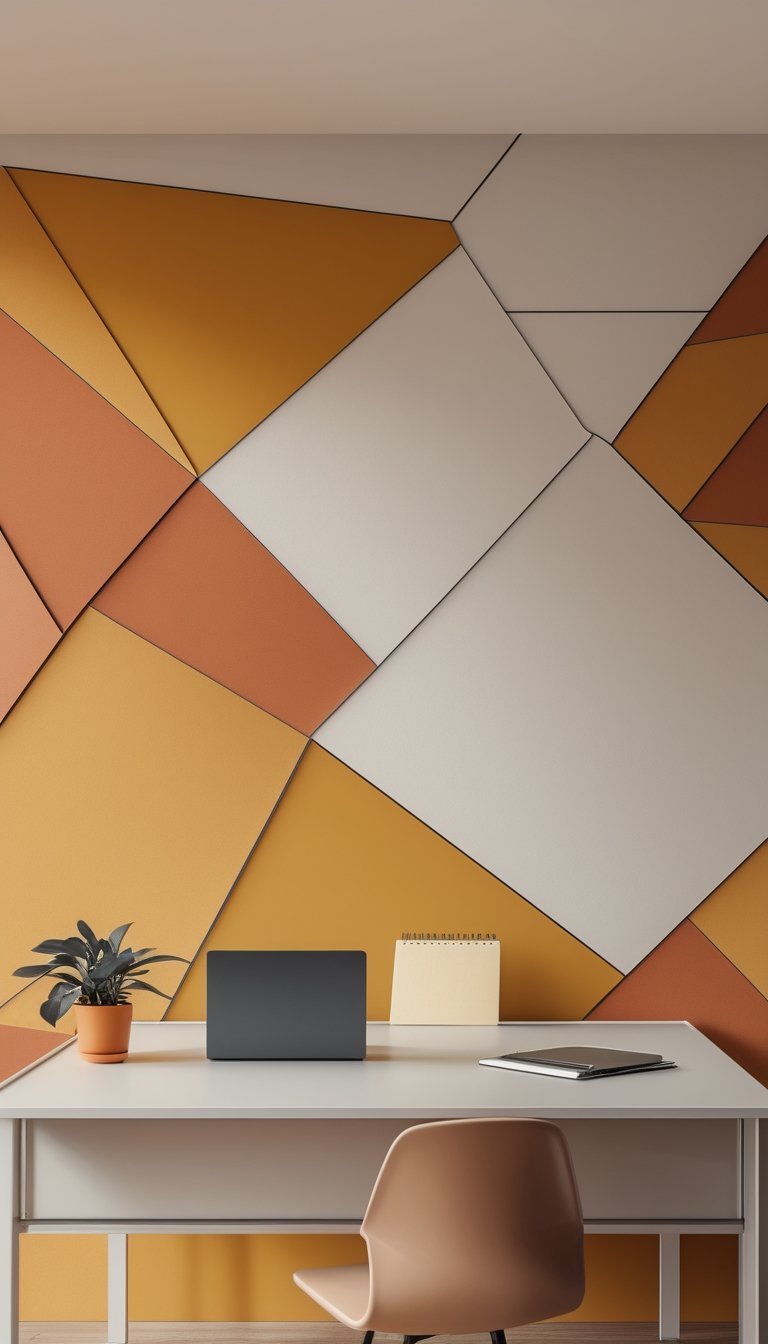
A warm-toned geometric wall behind your desk creates a cozy, focused zone without extra clutter. Mustard and terracotta pair well because mustard brings energy while terracotta adds calm and depth. Together they make a background that feels intentional and steady.
Choose simple shapes like triangles or hexagons so the pattern reads clearly on camera and doesn’t distract your thinking. Balance bold color with neutral furniture — a wood desk and a soft chair keep the eye grounded. Keep the pattern to the wall behind the monitor so the rest of the room stays calm.
PRO TIP
When you install peel-and-stick wallpaper, measure twice and align panels from the center of the wall outward to avoid mismatched seams. If you paint, sketch the pattern in pencil first and use painter’s tape for clean edges; test a small painted swatch to check how your lighting shifts the mustard and terracotta tones. Add a slim shelf or a low-profile organizer on the wall to hold essentials and keep the desk surface clear. Finally, add a small plant or warm desk lamp to soften the geometric lines and make the space feel welcoming.
4) Monochrome perspective mural that adds depth and reduces distractions
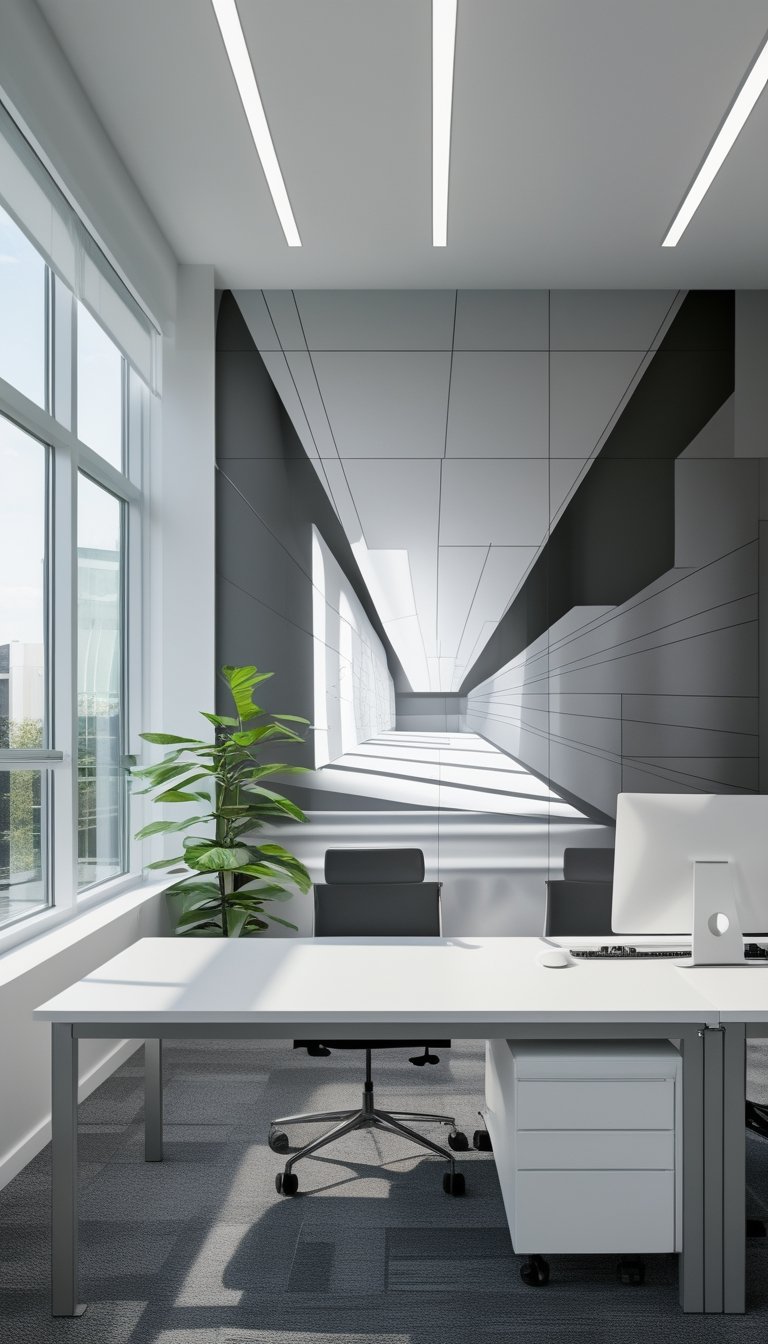
A monochrome perspective mural uses one color in different shades to create a sense of depth without loud patterns. You get a visual anchor that feels calm, so your eyes rest and your focus improves.
Choose a subtle hue like soft gray or muted green to keep contrast low. The perspective lines—like vanishing points or layered planes—make the room feel larger and guide your gaze away from clutter.
A matte finish cuts glare and keeps the mural from pulling attention. You can paint it directly on the wall or use a custom wallpaper for easier installation.
PRO TIP
When you pick a monochrome perspective mural, match the color’s undertone to your office lighting so it stays neutral in both natural and artificial light. Test a large swatch on the wall at different times of day. If you want depth without distraction, use mid-range tones rather than very dark or very light shades. Consider a semi-gloss only on small elements if you want subtle highlights; otherwise stick with matte to avoid reflections. Keep nearby decor simple: one or two accent pieces that echo the mural’s hue maintain cohesion. If you need a quick change, removable wallpaper gives the same depth but lets you swap designs later.
5) Muted botanical pattern with high-contrast focal panel near monitor
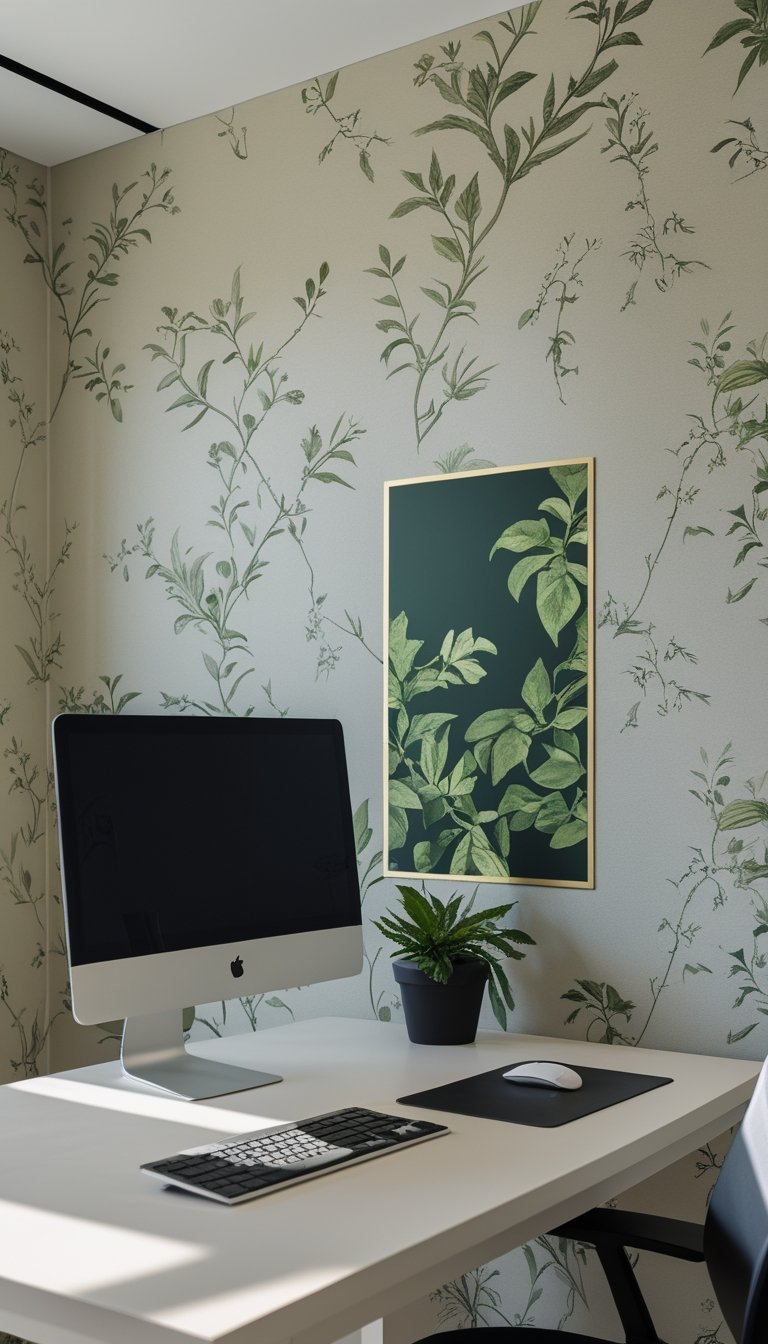
Choose a muted botanical wallpaper to keep your space calm and steady. Soft leaves and faded florals reduce visual clutter so your eyes relax between tasks.
Place a high-contrast panel directly behind your monitor. The panel draws focus and creates a clear visual anchor that helps you concentrate on the screen.
Keep the botanical pattern around the panel subtle and neutral. This balance prevents distraction while keeping the room warm and inviting.
Match the panel’s color to your chair or desk for a cohesive look. Small ties between elements make the design feel intentional and support better focus.
PRO TIP
Pick peel-and-stick or removable wallpaper for easy changes when your needs shift. Use a darker, high-contrast panel no wider than your monitor plus 6 inches on each side so it frames the screen without overpowering the room. Keep the botanical print in muted tones like beige, sage, or terracotta to maintain a calm field of view. Position the monitor so the panel sits centered behind it at eye level; this reduces eye strain and helps your brain treat the screen as the main task area. Add a small desk lamp with warm light to separate work from background and avoid glare on the monitor.