
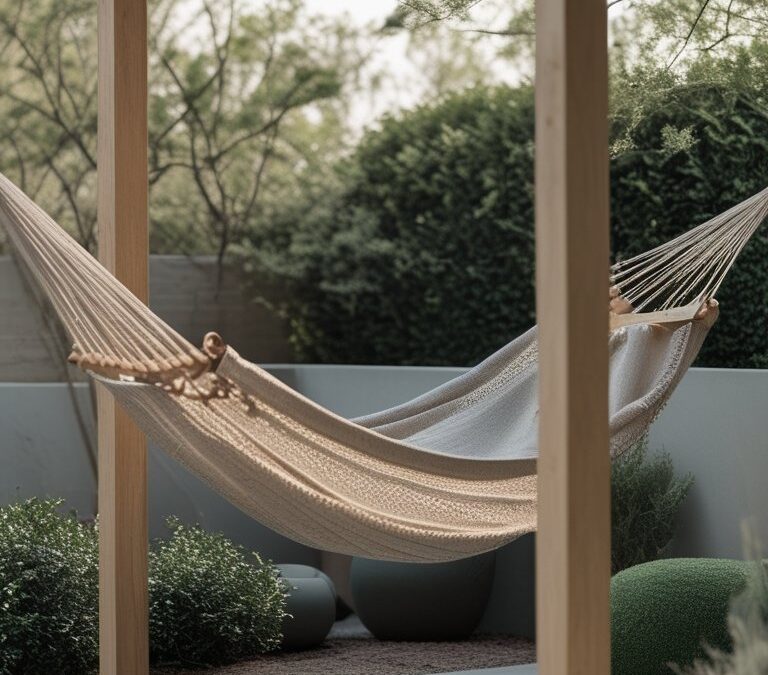
You can turn your patio into a calm place that feels simple and warm. This guide shows 30 easy, minimalist ideas that help you create a peaceful outdoor retreat without clutter or fuss.
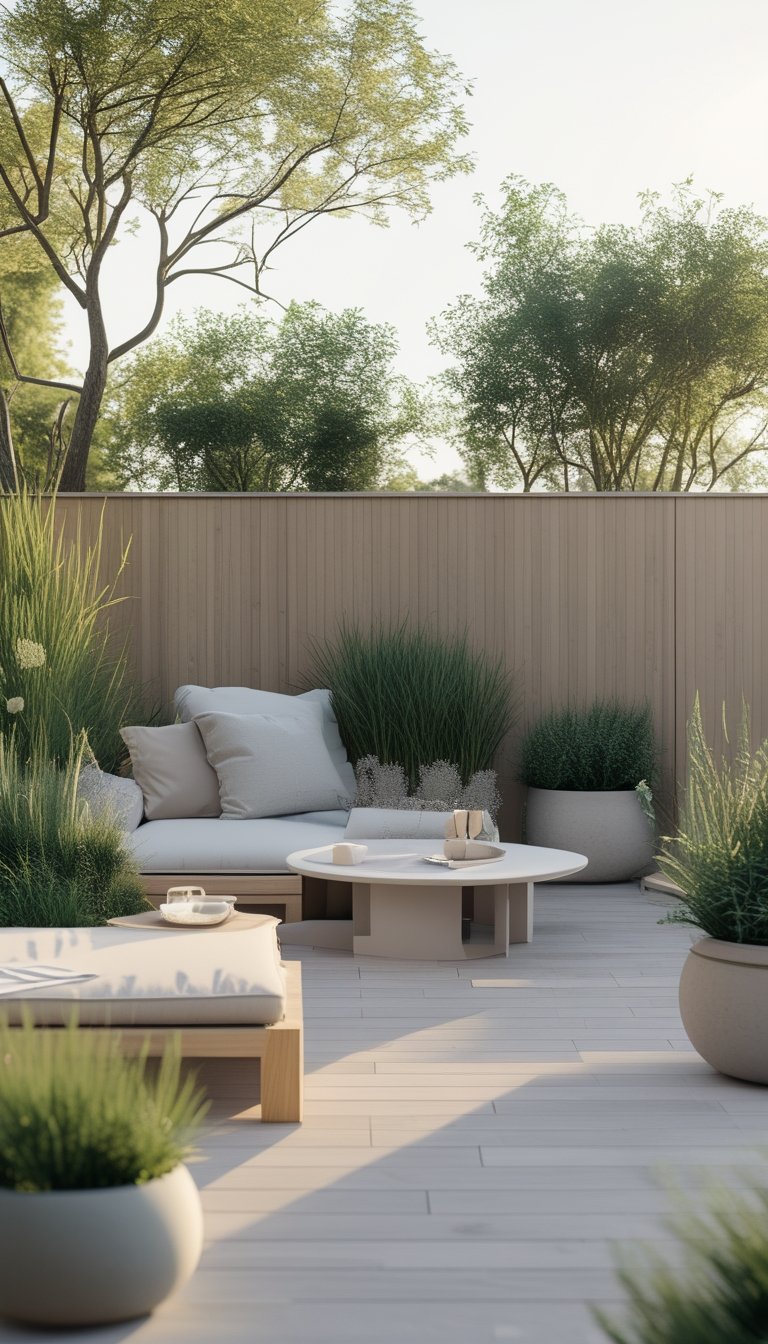
You’ll find practical choices for seating, surfaces, plants, and lighting that fit small or large spaces. Use the ideas to shape a clean, cozy patio that matches your style and makes you want to spend more time outside.
Focus on one or two materials and a limited color scheme to keep the space feeling calm and cohesive. Pick a dominant material—like pale wood, concrete, or corten steel—and repeat it in furniture and planters to create a unified look. Choose a neutral palette with one accent tone to add warmth without stealing the minimalist feel. Prioritize comfort with low-profile seating and one or two soft textiles, such as a lumbar pillow or a layered natural-fiber rug. Add subtle lighting—recessed step lights or a single matte-black sconce—so the patio stays inviting after sunset. Finally, include a simple focal point, like a large sculptural stone, a shallow water bowl, or a sculptural olive tree, to give the space a calm anchor.
1) Neutral-toned modular sofa with teak frame
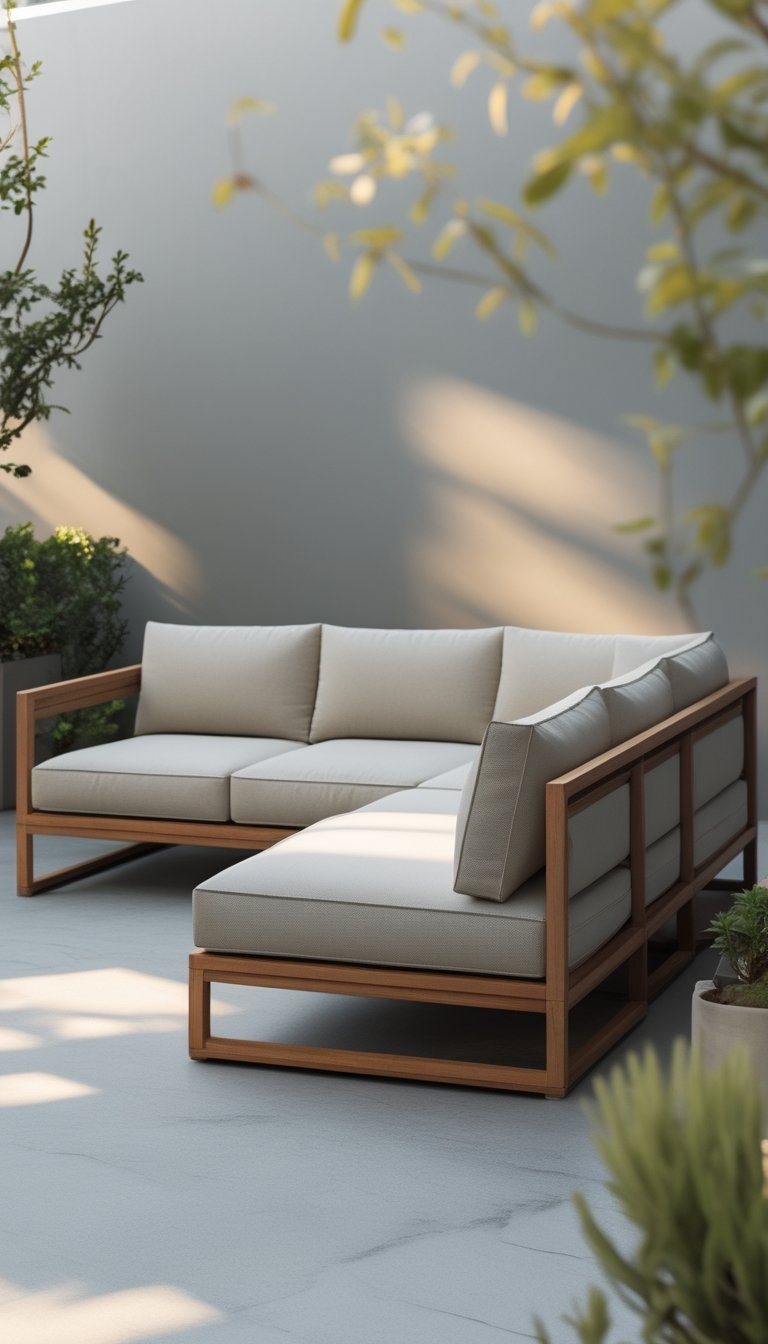
Choose a neutral-toned modular sofa with a teak frame to keep your patio calm and simple. The warm wood pairs well with beige, gray, or off-white cushions and helps your outdoor space feel grounded.
Modular pieces let you change the layout for guests or quiet solo time. Push sections together for a cozy corner or spread them out to open the area for sun and movement.
Teak resists weather and looks better with age when cared for lightly. Add quick-dry cushions and removable covers so cleaning stays easy and your setup remains low-maintenance.
PRO TIP
When you pick a neutral modular sofa, think about scale and flow first. Measure your space and plan a few layouts so each module fits pathways and doesn’t block doors. Choose cushions with Sunbrella or similar fade-resistant fabric and quick-dry foam so the set lasts through seasons. Keep the teak framed by oiling it once a year or letting it silver naturally; both look good, but oil keeps the warm tone. Add one or two textured throws or a single muted accent pillow to avoid visual clutter. Finally, place a low teak coffee table or small side table nearby to keep drinks and books within reach without crowding the seating.
2) Slim-profile concrete coffee table
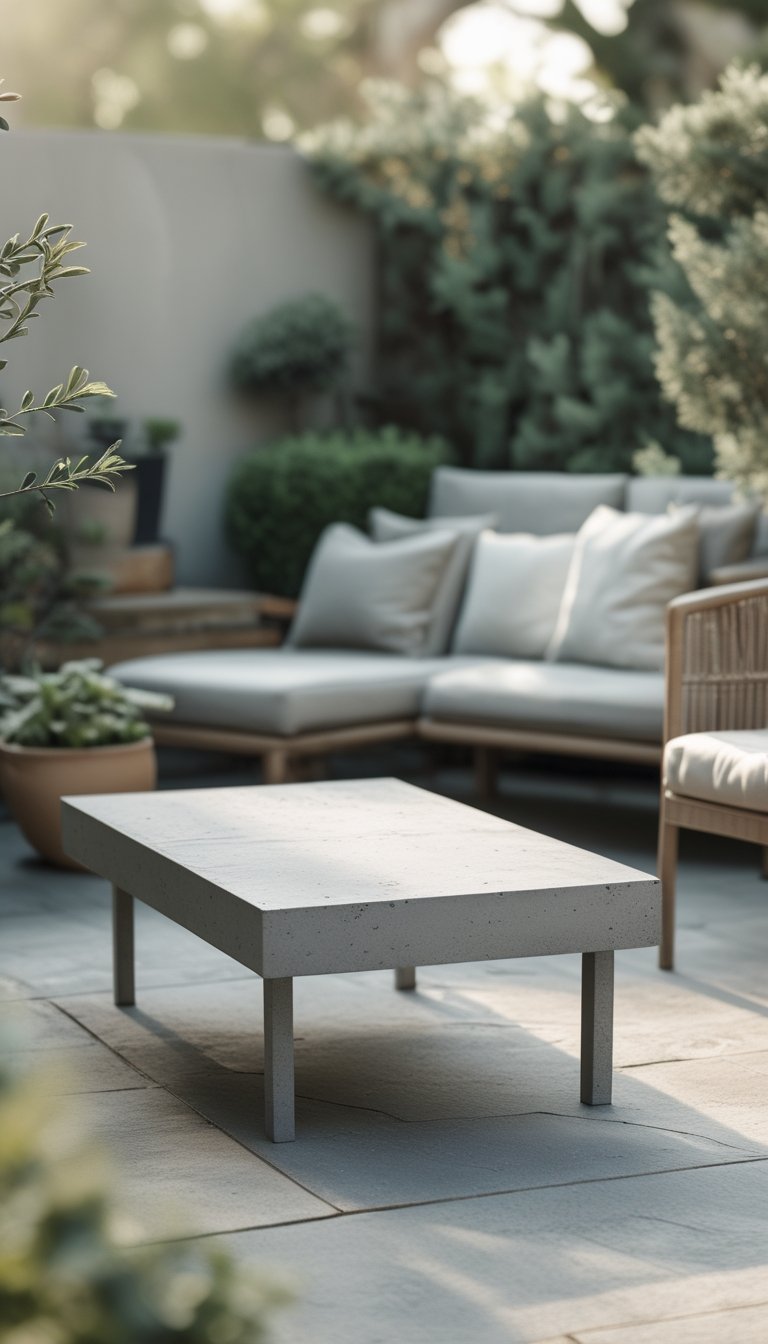
A slim-profile concrete coffee table keeps your patio looking clean and calm. Its low, narrow shape takes up little visual space, so your seating and plants stay the focus. You can place it between chairs or in front of a bench without crowding the area.
Concrete feels sturdy and looks modern, but choose a finish that fits your style. Smooth, light-colored tops keep the feeling airy, while textured or darker finishes add depth. Many slim designs use thin edges and simple legs to stay minimalist.
Keep the table weather-ready with a sealer and raised pads under the legs. That prevents stains and stops moisture from sitting against the surface. You’ll enjoy the table’s clean lines and easy maintenance for years.
PRO TIP
When picking a slim concrete coffee table, think about scale and functionality first. Measure the seating area so the table complements, not overwhelms, your furniture. Aim for a height that matches seat cushions to make reaching drinks and books easy. If you want lighter visual weight, choose a table with thinner edges or a recessed base that creates a floating look. Consider a mix of materials: a concrete top with metal or wooden legs softens the industrial feel and warms the space. For comfort, add a small tray or coaster set to protect the surface and keep items organized. Finally, apply a high-quality outdoor sealer and reapply annually; this preserves color and resists stains while extending the table’s life.
3) Plywood-and-outdoor-foam DIY sectional base with tailored slipcover
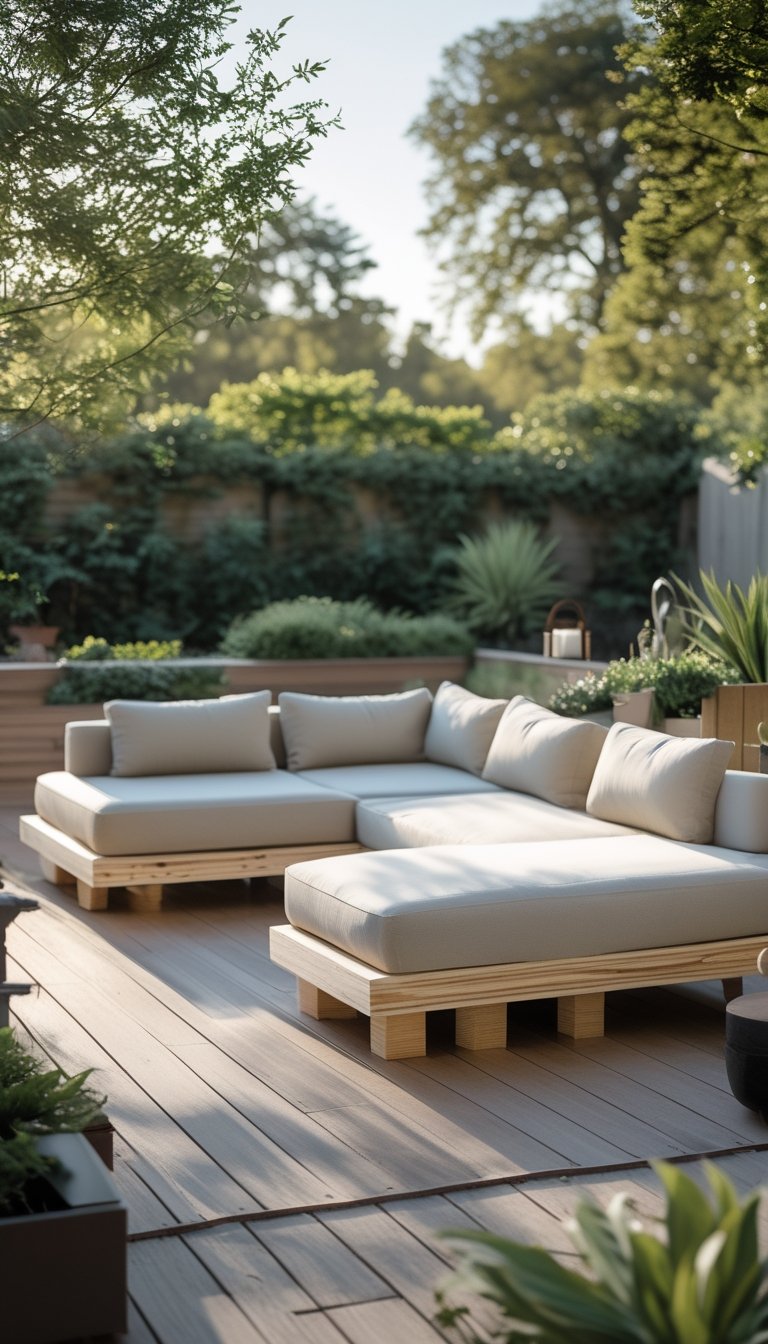
Build a low-cost, sturdy sectional base from exterior-grade plywood and high-density outdoor foam. Cut the plywood to a simple box frame and stack foam on top for seat and back cushioning. This keeps lines clean and maintains a minimalist look.
Sew a tailored slipcover from outdoor-grade fabric to hide the frame and give the sectional a refined finish. Choose a neutral color like clay, sand, or charcoal to keep the space calm and cohesive. Use removable covers so you can wash them or swap styles easily.
Anchor the pieces with simple joinery or brackets so you can rearrange modules as needed. Add weatherproof finishing on the plywood edges to extend the life of your build. Keep cushions low and simple for a modern, uncluttered feel.
PRO TIP
When you build this sectional, measure your space first and plan modular pieces that fit through doorways and around corners. Cut foam in standard thicknesses so replacement or extra padding is easy to find. Use marine or outdoor-grade plywood and seal all cut edges with exterior primer and paint or an epoxy sealer to prevent moisture damage. Choose fasteners and brackets made of stainless steel or hot-dipped galvanized metal to avoid rust. For the slipcover, add simple zippers and Velcro at seams to make removal fast and sewing easier. If you want a softer feel, top the seating foam with a 1–2 inch layer of outdoor memory foam or batting, but keep the profile low to maintain a minimalist look. Place the sectional on a slatted or raised base to allow airflow under the plywood and reduce mold risk.
4) Single slim metal side table
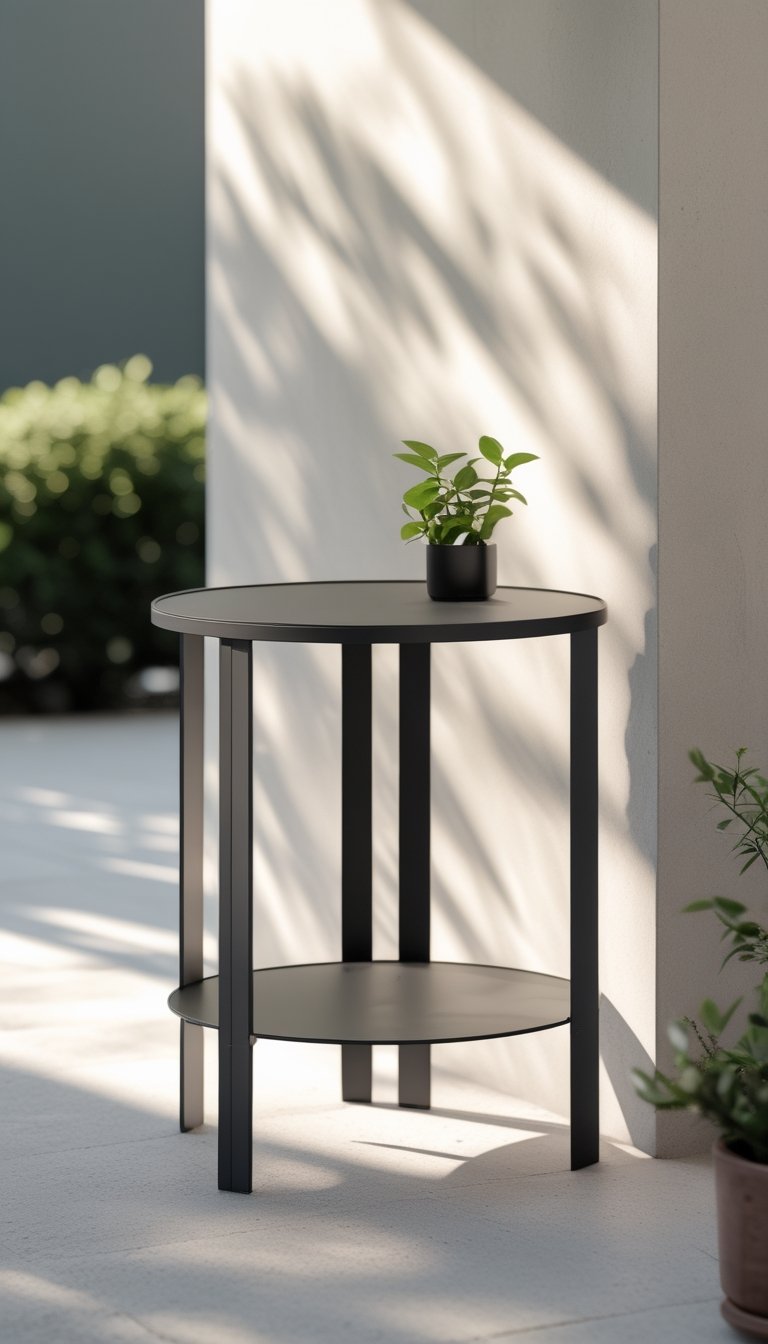
A slim metal side table gives your patio a clean, modern focal point without crowding the space. You can tuck it between two chairs or place it next to a lounger for drinks and a book. Metal holds up well outdoors and often resists rust if finished properly.
Choose a simple shape and neutral color to keep the look calm. Round or rectangular tops work; thin legs keep the profile light. Avoid heavy ornamentation so the table reads as intentional and minimal.
Place just one table to prevent clutter and keep movement easy. Pair it with one textured accessory, like a small concrete planter or linen coaster, for subtle contrast. This small choice brings both function and quiet style.
PRO TIP
When selecting a metal side table, check the finish and maintenance needs so it lasts in your climate. Powder-coated aluminum works well in humid areas because it resists corrosion and stays light to move. Steel can be stronger but needs a good rust-proof finish or regular touch-ups. Consider a removable top or a table with a slight lip to keep items from sliding during wind. If storing for winter, cover or move it indoors to protect the finish. Match the table height to your seating so you don’t reach up or down for drinks. Finally, stick to one accessory on the table to maintain a minimalist, calm vibe.
5) Layered natural-fiber area rug (jute or sisal)
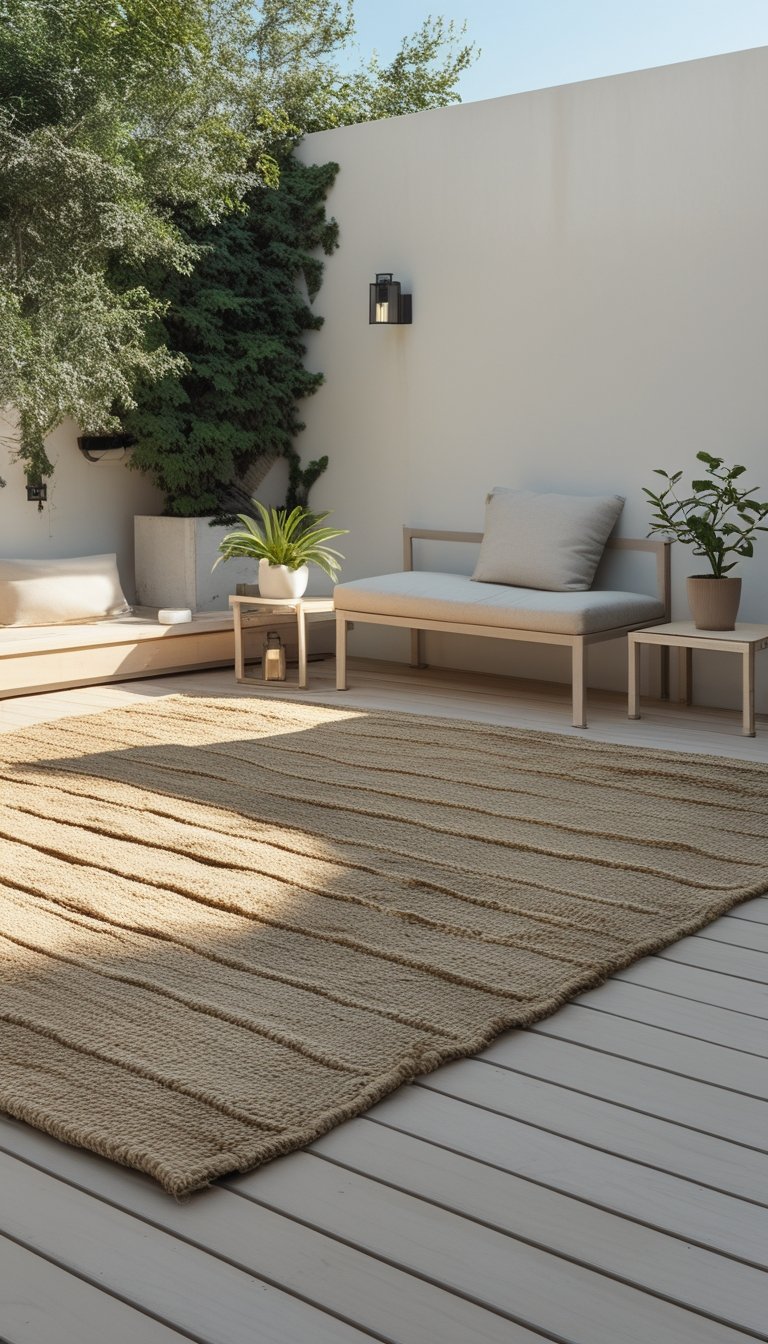
Layering a natural-fiber rug adds warmth and texture to your patio without clutter. Place a large sisal or jute base rug first, then add a smaller patterned or darker jute on top to define a seating area.
Natural fibers stand up well outdoors in covered spaces and dry faster than some fabrics. They bring a calm, earthy look that fits minimalist design and pairs well with wood, concrete, or metal furniture.
Keep the colors neutral to preserve a simple palette. Use rug pads to prevent slipping and to protect the flooring beneath from rough fibers.
PRO TIP
You can mix rug weaves and scales to create subtle contrast while staying minimal. Choose a coarse, flat-woven jute as the anchor layer and place a smaller braided or low-pile sisal rug on top for visual interest. Rotate and air the rugs regularly to reduce mildew and sun damage. If your patio is fully exposed, use rugs labeled for outdoor use or move them indoors during heavy rain. For easier cleaning, sweep or shake them out weekly and spot-clean with mild soap and water when needed. This approach keeps your space calm, durable, and low maintenance.
6) One lumbar pillow in a matching tone
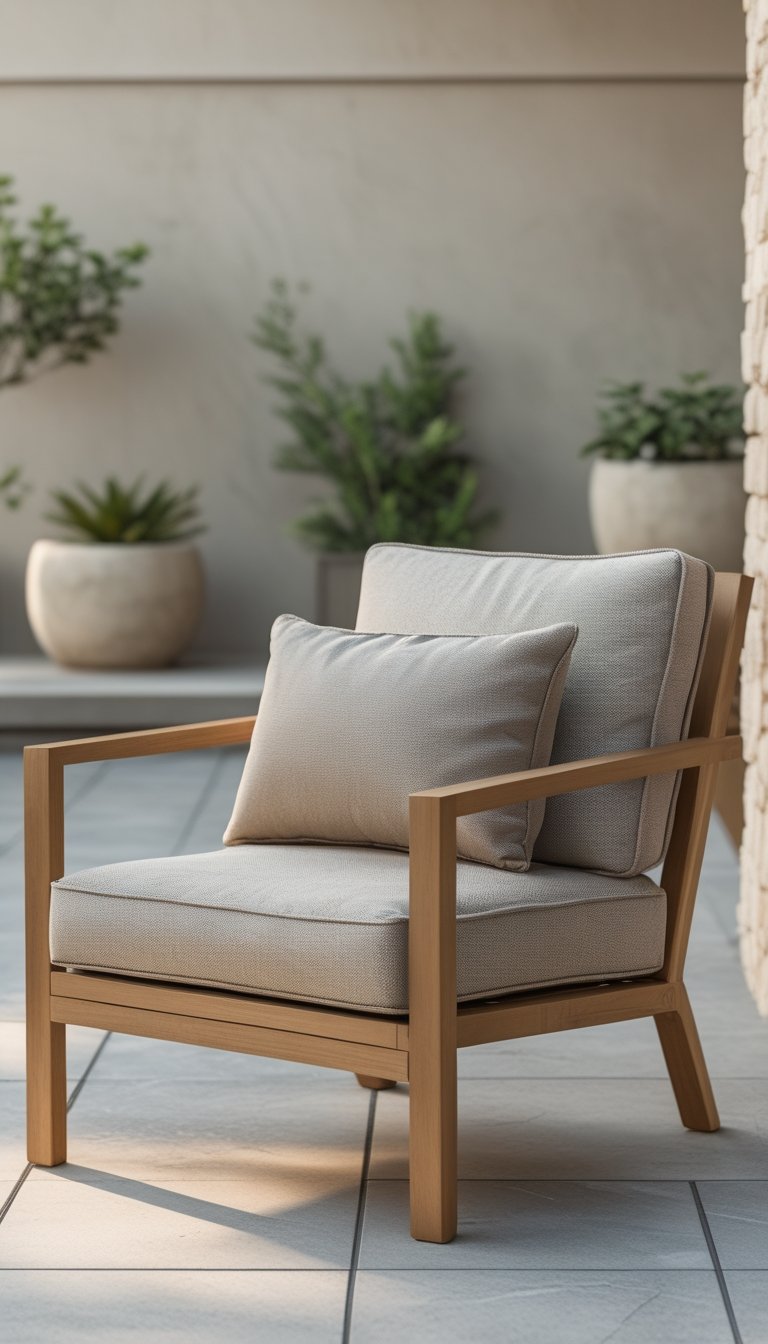
Choose a single lumbar pillow in a color that matches other elements on your patio. This keeps the look calm and intentional without adding clutter.
Place the pillow where it supports lower back comfort on a chair or bench. A matching tone ties seating and textiles together so the space feels planned.
Pick a weather-resistant fabric if the pillow will stay outside. Sun and rain can fade or damage ordinary textiles, so use materials made for outdoor use when possible.
Keep patterns minimal or skip them entirely to maintain a clean look. Texture can add interest without breaking the simple color story.
PRO TIP
When you buy a lumbar pillow, measure the seat depth and back height so the pillow fits and supports you well. Choose a density that feels comfortable—firmer fill gives better support, while softer fill feels plush. If you want seasonal variety, buy a removable cover so you can swap colors or wash it easily. For a cohesive minimal palette, match the pillow to a dominant hue like gray or beige, then repeat that hue in a small accent such as a plant pot or table tray. Small repeats make the design feel deliberate without adding noise.
7) Foldable pale-wood dining set for small patios
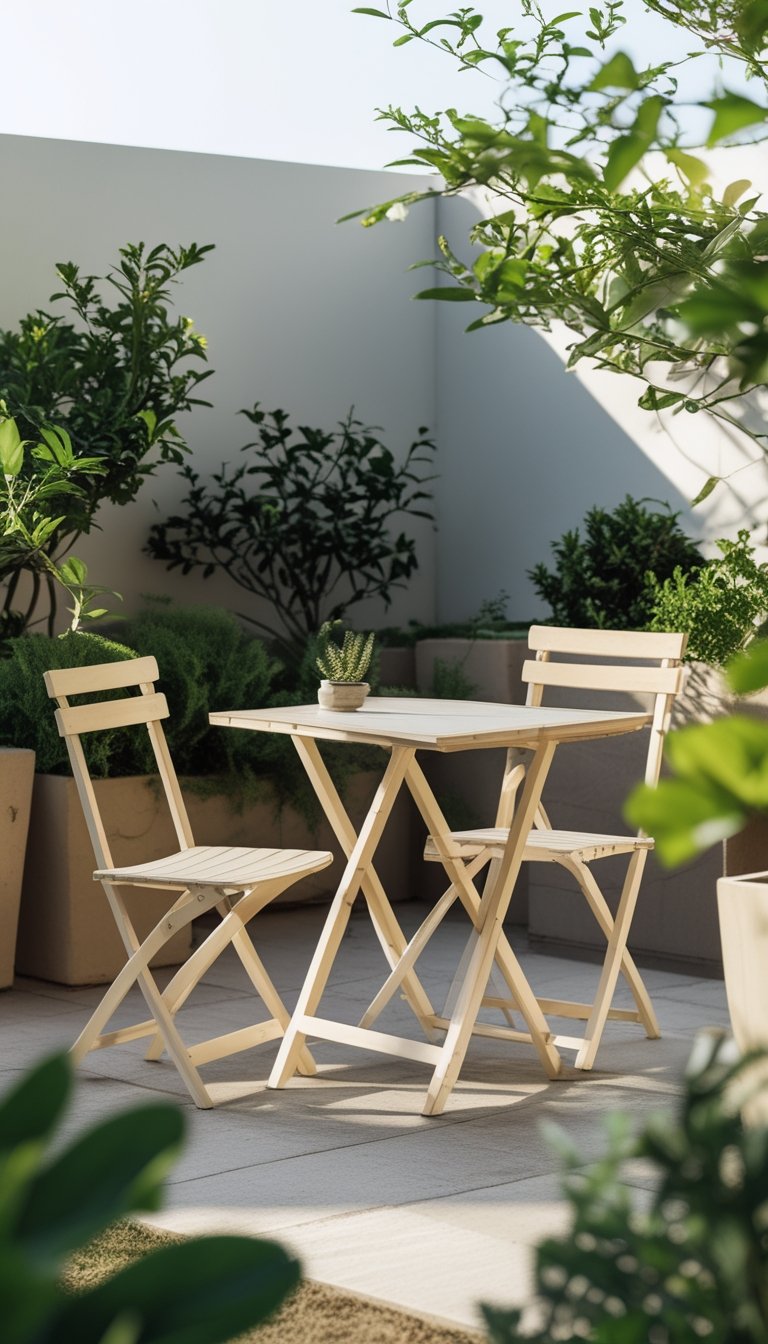
A foldable pale-wood dining set fits tight patios and balconies. You can fold the table and chairs when you need space, so the area stays open for other uses.
Pale wood keeps the look light and calm. It pairs well with plants, soft cushions, and simple tableware to keep your patio feeling minimal and relaxed.
Choose weather-resistant finishes and compact chairs that tuck neatly under the table. This helps protect the wood and makes storage easy when rain or strong sun comes.
PRO TIP
Choose cushions in muted tones and moisture-wicking fabric to keep comfort without adding visual clutter. Measure your patio before buying to ensure the set folds flat against a wall or stores in a closet. Look for sets with rounded edges to prevent knocks in small spaces. Consider a table with an umbrella hole if you need shade, but pick a slim umbrella base to save floor space. If you live in a rainy climate, keep the folded set under an overhang or use a breathable cover to avoid trapped moisture. Regularly treat the wood with a clear outdoor oil to maintain color and protect against wear.
8) Built-in bench seating with hidden storage
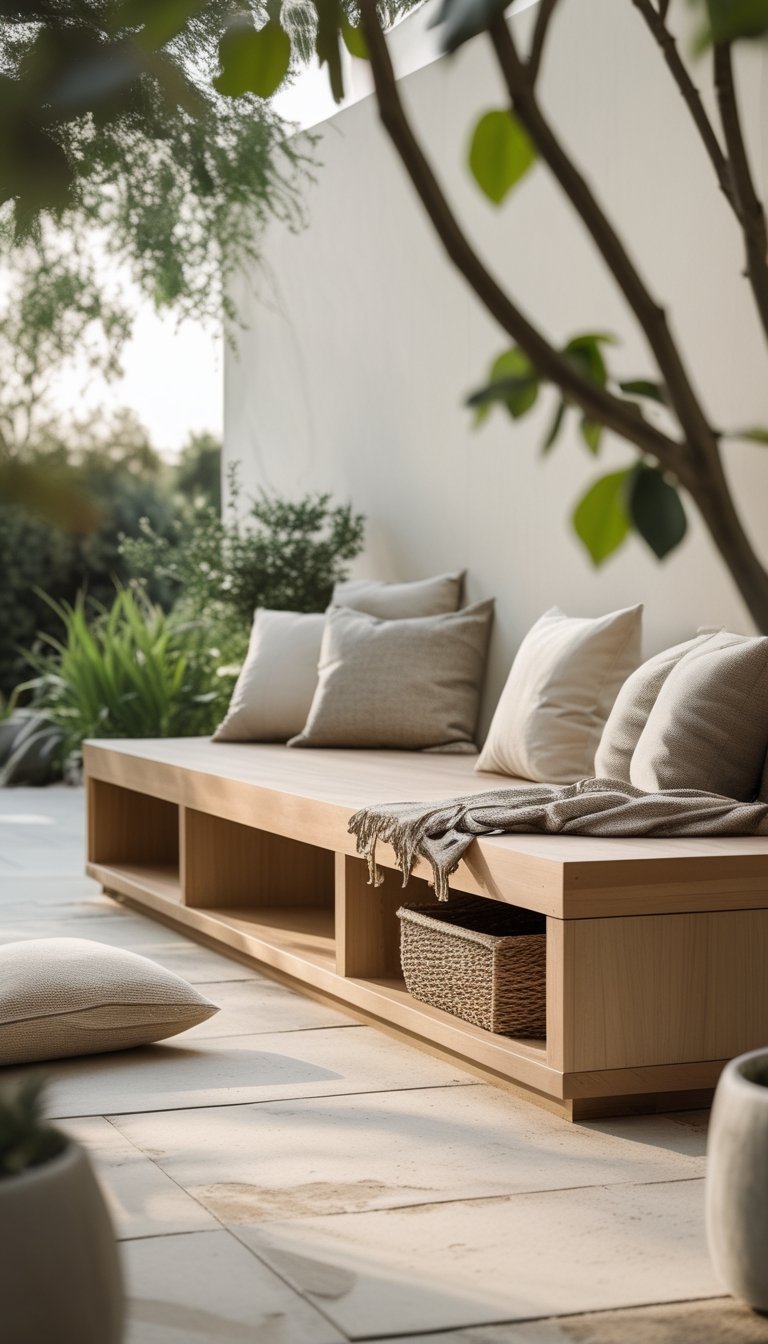
Built-in benches save space and keep your patio looking neat. You get steady seating that feels part of the landscape, not extra furniture you must move.
Hidden storage under the seat holds cushions, tools, or kids’ toys out of sight. This keeps the area calm and clutter-free, so you can relax without stepping on scattered items.
Choose weatherproof materials and simple lines to match a minimalist look. Add a thin cushion or two for comfort and a small backrest if you want more support.
PRO TIP
When planning built-in bench storage, measure the items you plan to store first. Make the storage units slightly larger than those items so you can access them easily and avoid tight fits. Use stainless steel or marine-grade hardware and treated wood or composite decking to resist moisture and sun. Add ventilation gaps or small drainage holes to prevent mold on cushions. For a clean minimalist style, keep visible hardware concealed and use simple pulls or finger grooves. Paint or stain the bench in a single neutral color to blend with your patio and keep the design calm and cohesive.
9) Retractable fabric sunshade in soft gray
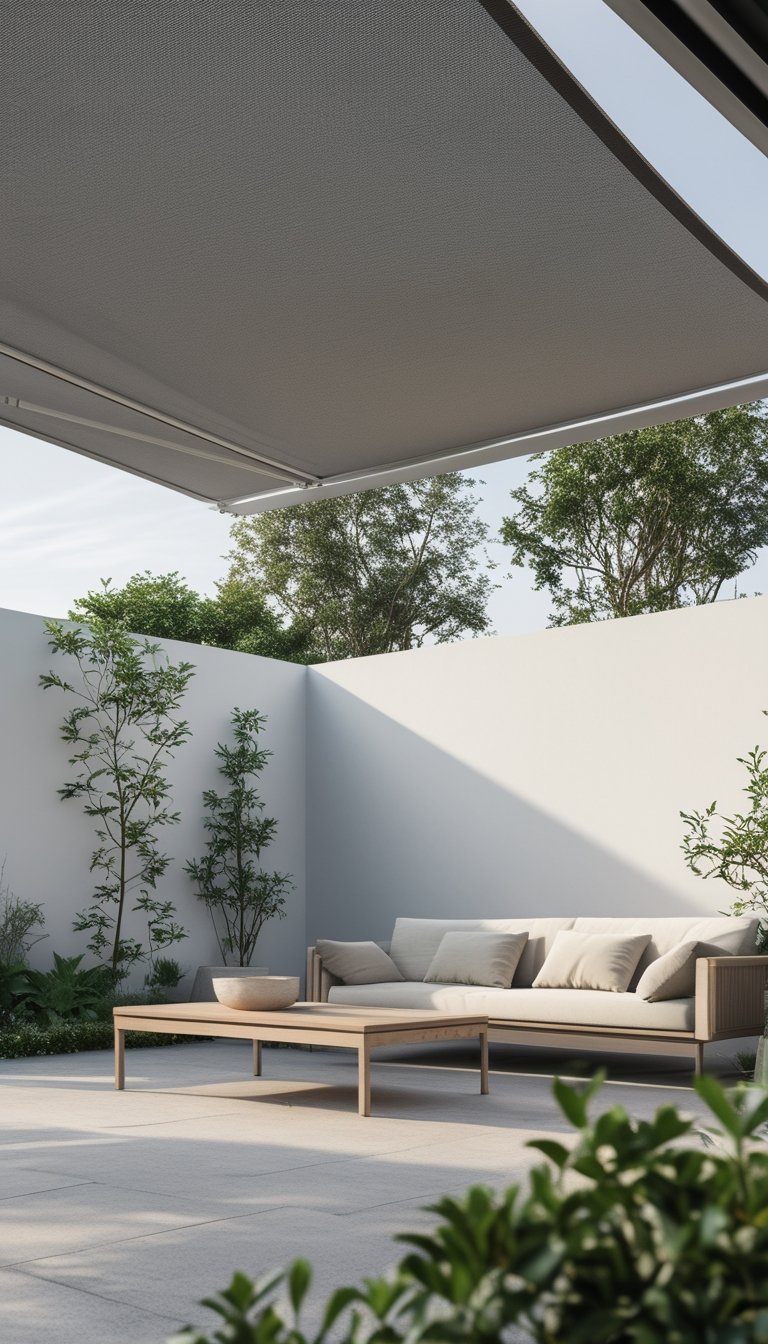
A soft gray retractable fabric sunshade gives your patio calm, clean lines. You can pull it out when the sun is strong and roll it back when you want more sky. The neutral gray blends with wood, concrete, or white walls without drawing attention.
Choose a durable fabric with UV protection and mildew resistance. A manual crank or simple motor keeps operation easy and quiet. Mount it above the seating area so it shades without blocking views.
Keep the frame slim and rust-resistant for a minimalist look that lasts. Coordinate cushions and planters in muted tones to keep the space soothing. This setup reduces glare and heat while keeping the design peaceful.
PRO TIP
When you pick a retractable sunshade, think about wind and storage. Strong winds can damage fabric, so check the local wind patterns before installing. If your area gets gusts, choose a fabric rated for higher wind or remove the shade during storms. Install a secure cassette or cover to protect the fabric when retracted, which extends its life and keeps the patio tidy. Measure the mounting wall and the area you want shaded, then buy a slightly larger projection to avoid gaps. Match the hardware finish to other outdoor fixtures to keep a seamless look. Finally, plan for simple cleaning: gentle soap, a soft brush, and full drying before rolling up prevents mold and keeps the gray fabric looking fresh.
10) Matte-black wall-mounted sconce lighting
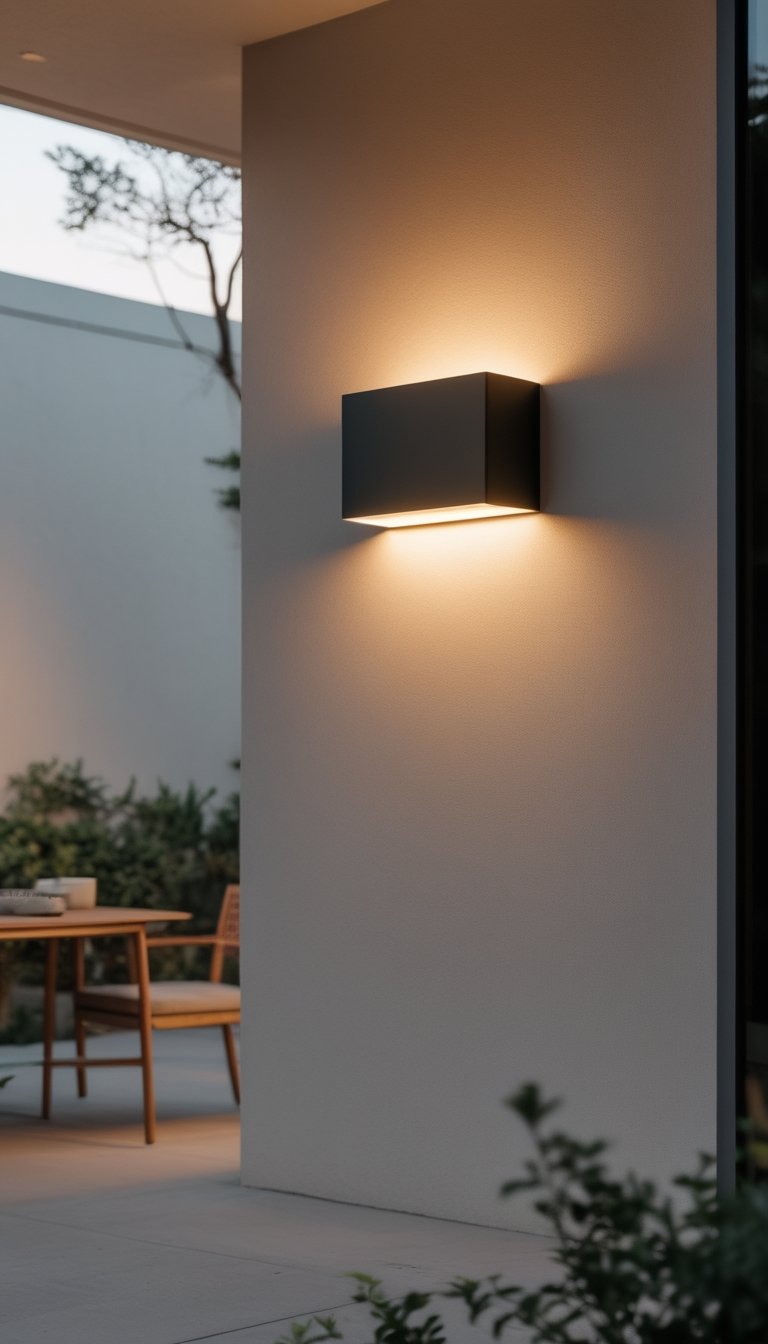
Matte-black wall sconces add calm and simple style to your patio. They anchor seating areas without drawing too much attention, and the dark finish blends with plants and wood.
Pick fixtures with clean lines and a low-gloss finish to keep the look minimal. Clear or textured glass shades add soft diffusion so light feels warm, not harsh.
Choose dusk-to-dawn or dimmable options to control brightness through the evening. Hardwired or wired-with-photocell choices give reliable, hands-off operation for nightly glow.
PRO TIP
When you add matte-black sconces, think about layering light. Use sconces for general or path lighting and add a single accent lamp or low-voltage strip under a bench for depth. Match the scale of the sconce to your wall: small fixtures suit narrow posts and wide fixtures work on broad walls. Position sconces about 60–66 inches above the floor for comfortable eye-level light, and keep them about 6–10 feet apart for even coverage. If you want a gentler mood, install a dimmer or choose lower-lumen bulbs around 800 lumens or less. Matte finishes hide dirt but wipe them occasionally with a soft cloth to keep the clean look.
11) String lights with warm LED bulbs hung minimally
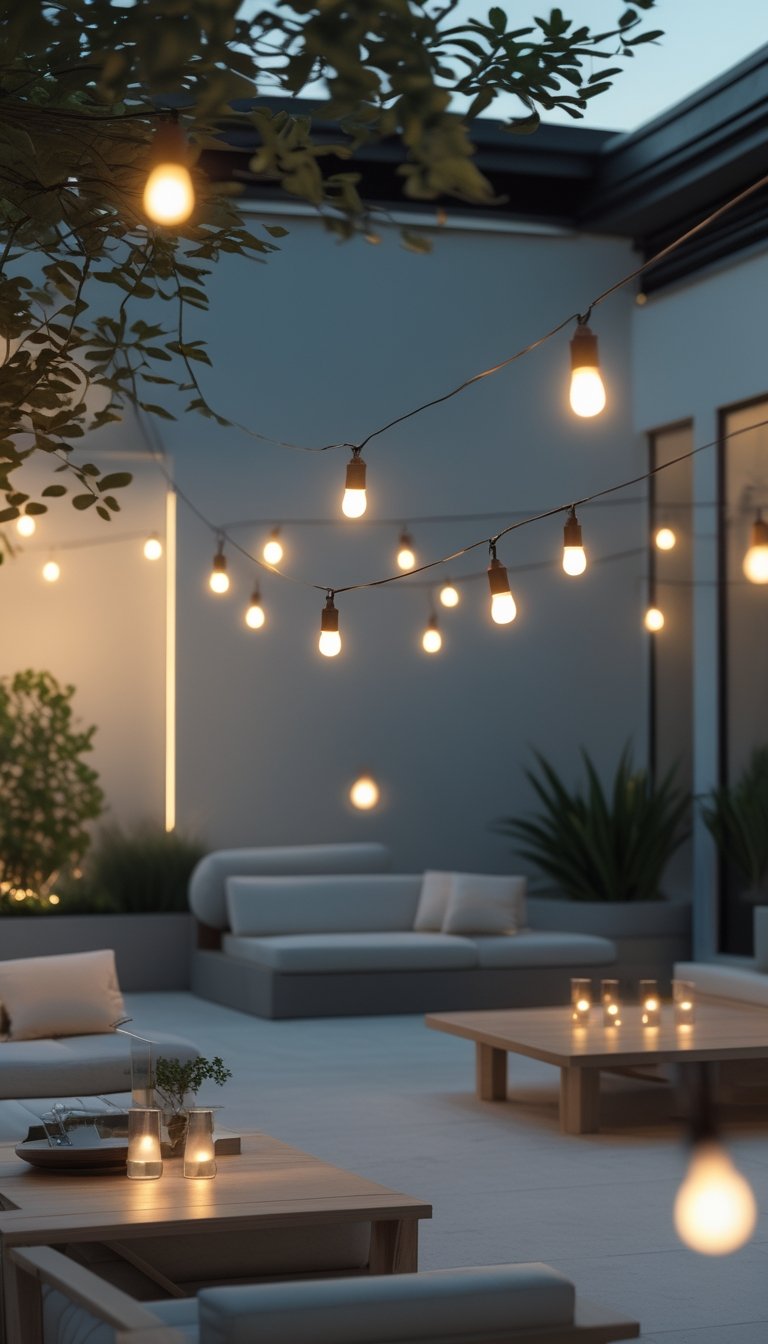
Hang a single strand of warm LED string lights to add soft, steady light without clutter. Keep the line clean and straight, or run it in a simple gentle curve to echo your seating area.
Choose shatterproof bulbs with a warm color temperature (about 2700K) for a cozy, natural glow. LEDs use little power and last long, so you won’t need frequent replacements.
Mount lights to existing anchors like the house eave, a pergola beam, or a sturdy tree limb. Space them so threads don’t crisscross; that keeps the look calm and modern.
PRO TIP
Keep the layout simple and think about how you move through the space. Aim for one to two strands that define the seating or dining zone, rather than wrapping the whole yard. Use adjustable clips or removable hooks so you can lower or raise the line seasonally or for maintenance. If you want dimming, pick lights with a compatible dimmer or smart plug so you control brightness easily. Test the lights at night before final mounting to confirm placement and mood. This simple approach keeps your patio quiet, useful, and welcoming.
12) Raised rectangular planter in corten steel
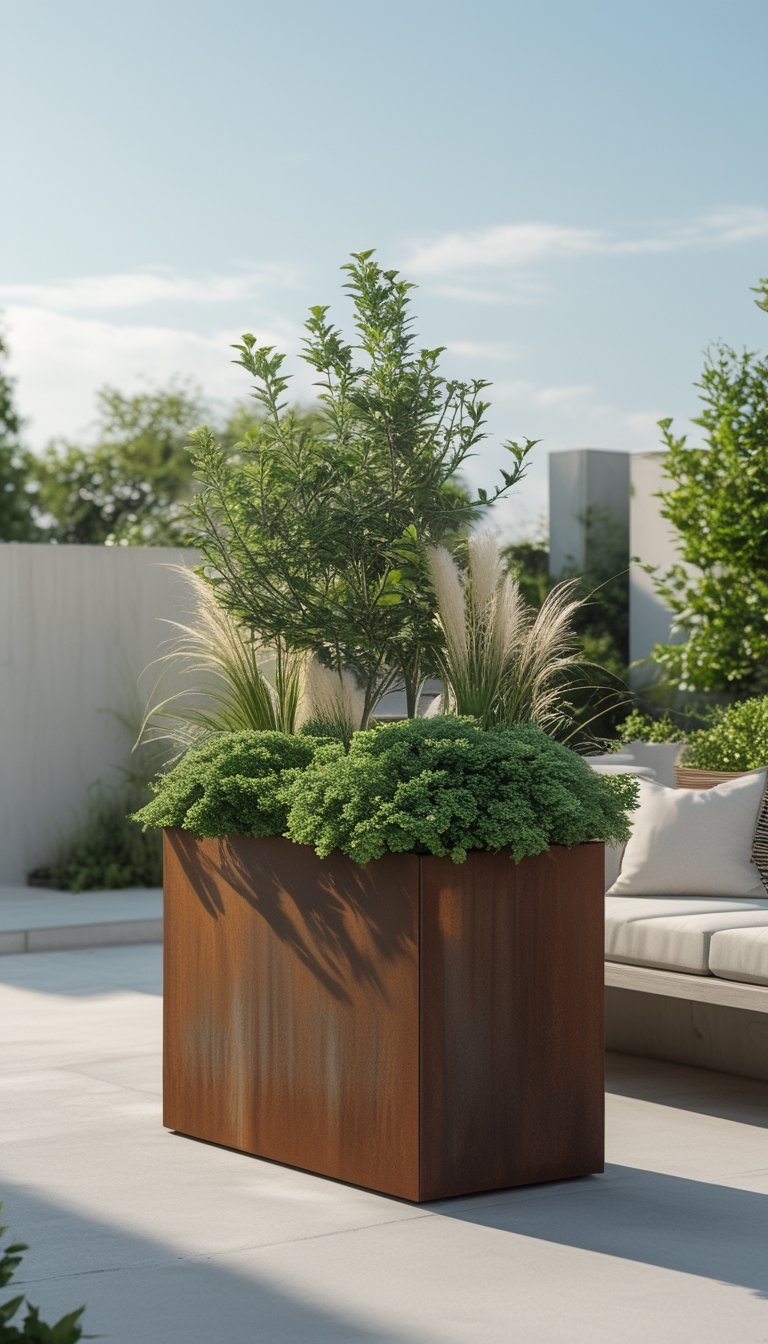
A raised rectangular corten steel planter adds clean lines and a warm, rusty finish to your patio. It gives you height for easy planting and keeps soil contained for a tidy look.
Place it along a railing or use two to frame an entryway. The narrow shape saves space while letting you create layered planting with herbs, grasses, or low shrubs.
Corten steel weathers naturally, so you won’t need to paint it. Still, set it on feet or a liner to protect decking from rust stains and moisture damage.
PRO TIP
Choose a planter with a powder-coated interior or add a plastic liner to extend the life of the steel and protect your deck or patio surface. Use well-draining soil and add gravel at the bottom to prevent waterlogging, which helps plant roots stay healthy. Pick plants with similar water needs so you only water once, saving time and keeping the design simple. For a modern look, pair the corten planter with concrete pavers or light wood furniture to balance warmth and cool tones. Rotate seasonal plants to keep your patio feeling fresh and calm.
13) Bonsai or sculptural olive tree in a simple pot
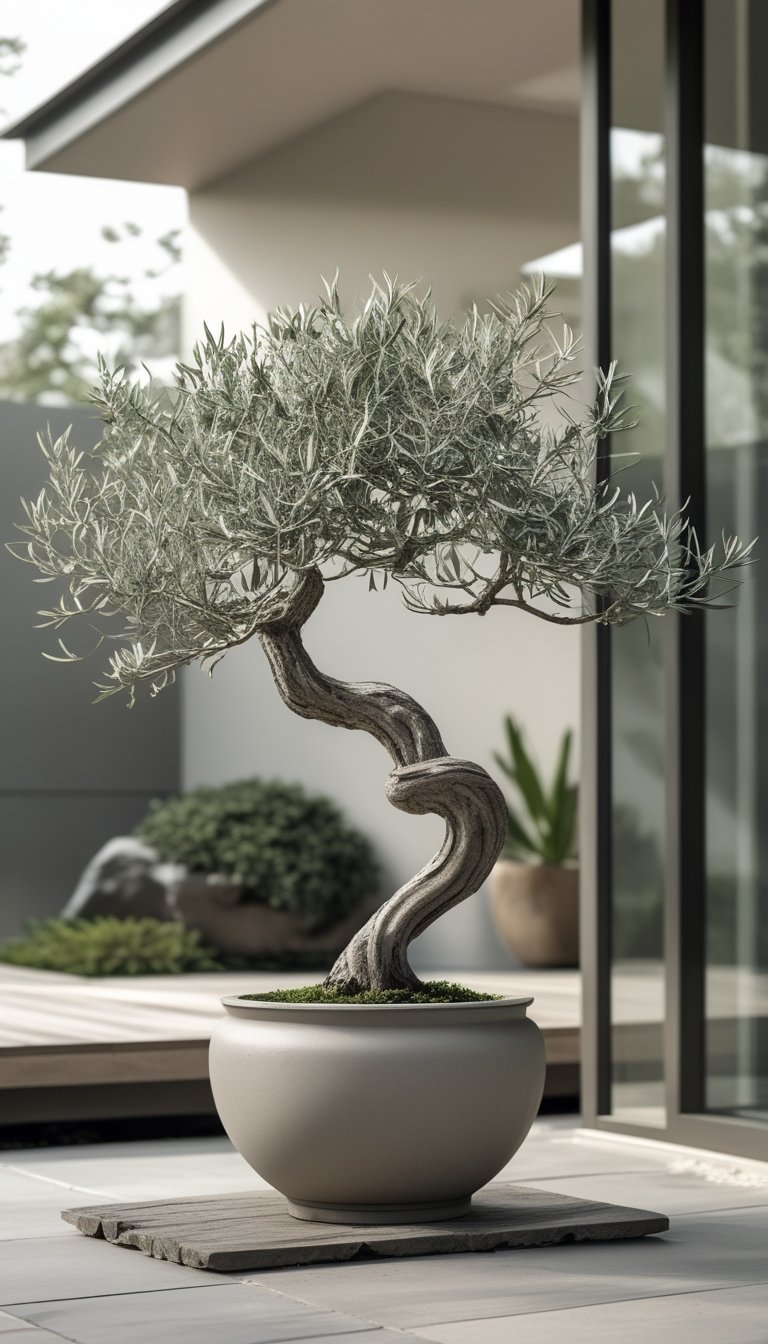
A bonsai or sculptural olive tree gives your patio a quiet, refined focal point. Place it in a clean, simple pot so the tree’s shape stands out without clutter.
Prune the tree to keep a strong silhouette. Small, deliberate cuts make the form clear and calm. The silvery leaves add soft color without overwhelming the space.
Keep the pot and soil neat. A single gravel layer or low moss keeps the look minimal and helps water drain. Move the pot to change light or balance other furniture.
PRO TIP
You can create a calm, sculptural display by choosing a pot that matches your patio’s materials and colors. Pick matte finishes like concrete, terracotta, or unglazed ceramic in neutral tones to keep the focus on the tree. Use a saucer or stand that raises the pot slightly for better viewing angles and easier cleaning. Water consistently but sparingly; olive trees prefer well-drained soil and dry periods between waterings. Feed lightly in spring with a balanced fertilizer and prune in late winter to refine shape. If you move the tree indoors for winter, place it near a bright window and avoid sudden temperature swings.
14) Limestone stepping pavers with groundcover joints
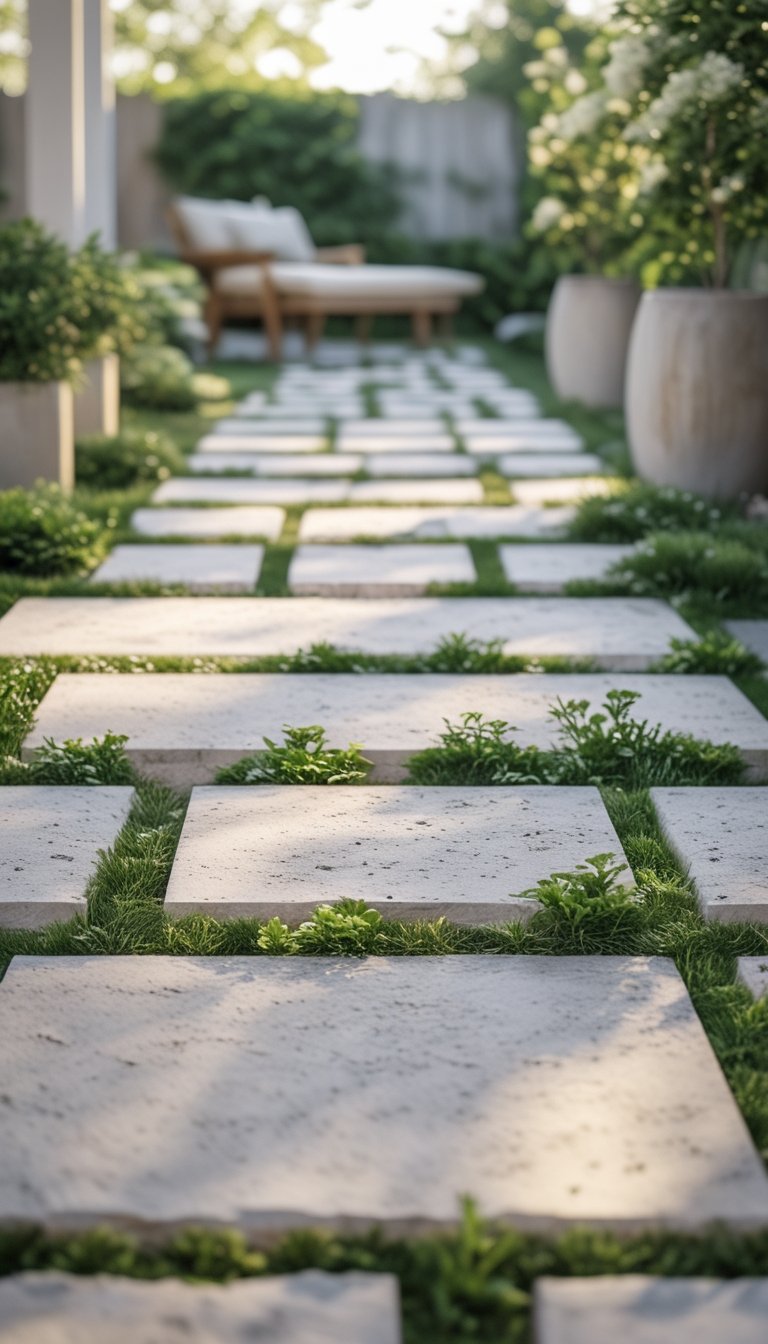
Limestone stepping pavers offer a clean, calming look that fits minimalist patios. You can place large, square or rectangular pavers with thin gaps to keep the layout simple and modern.
Fill the joints with low-growing groundcovers like thyme, Irish moss, or dwarf mondo grass. These plants soften the stone edges, add color, and reduce hard lines without cluttering the space.
Keep the pattern sparse and regular to maintain a minimalist feel. Use consistent paver sizes and straight alignments, then let the groundcover grow in to create a lived-in, natural touch.
PRO TIP
Choose drought-tolerant groundcovers that handle foot traffic and match your climate. Thyme and sedum work well in sunny areas, while Irish moss prefers some shade. Prepare the joints by adding a thin layer of sand or well-draining soil to help plants root. Water regularly at first, then reduce irrigation once established to save water. Leave at least a half-inch gap for the plants to spread without lifting pavers. If you want a tidier look, trim groundcover edges occasionally. Finally, seal the limestone if you’re in a freeze-thaw climate to prevent cracks and keep the stones looking fresh.
15) Minimal water feature: shallow concrete bowl fountain
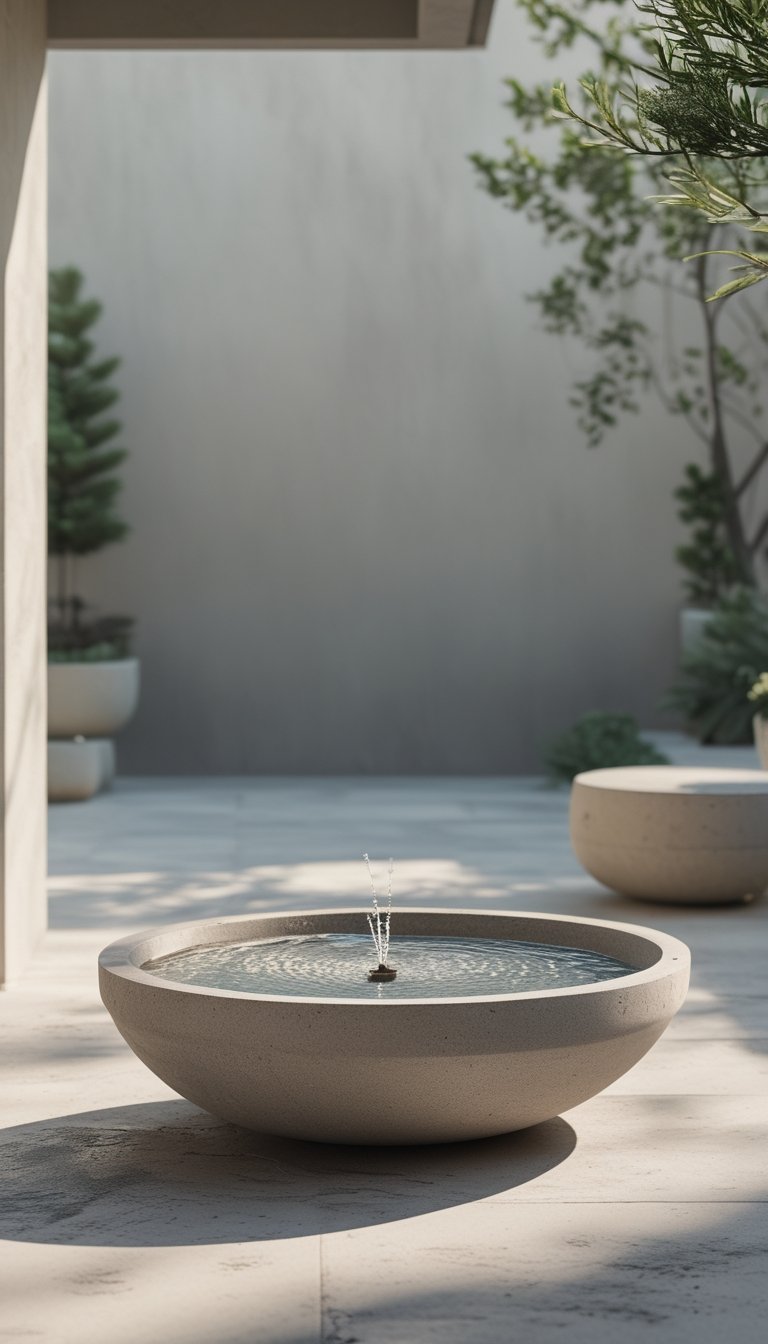
A shallow concrete bowl fountain brings calm with very little fuss. You place a wide, low bowl on a simple base and let water gently spill or lap the surface. The look stays clean and modern, so it fits minimalist patios.
Concrete gives a quiet, natural feel and holds up outdoors. Choose a smooth finish and neutral color to match your patio stones or furniture. A hidden pump and small reservoir keep the flow steady without clutter.
You can use river stones around the base for drainage and a neat edge. Maintenance stays easy: check the pump, top up water, and wipe the bowl now and then. This feature adds gentle sound and a reflective surface to help your outdoor space feel like a retreat.
PRO TIP
Set the bowl on a slight plinth to lift the water surface toward eye level. That small change increases the visual impact without adding clutter. Use a solar or low-watt submersible pump to save energy and reduce wiring needs; place a filter sponge over the pump intake to cut down on debris and algae. Consider adding a hidden basin beneath the bowl to catch overflow and hide the pump for a cleaner look. Pick a bowl diameter that leaves room for seating and walking—about 24–36 inches works well for most patios. Finally, choose a muted finish and simple materials nearby so the fountain reads as a calm focal point, not a loud ornament.
16) Gravel groundcover with a single stepping path
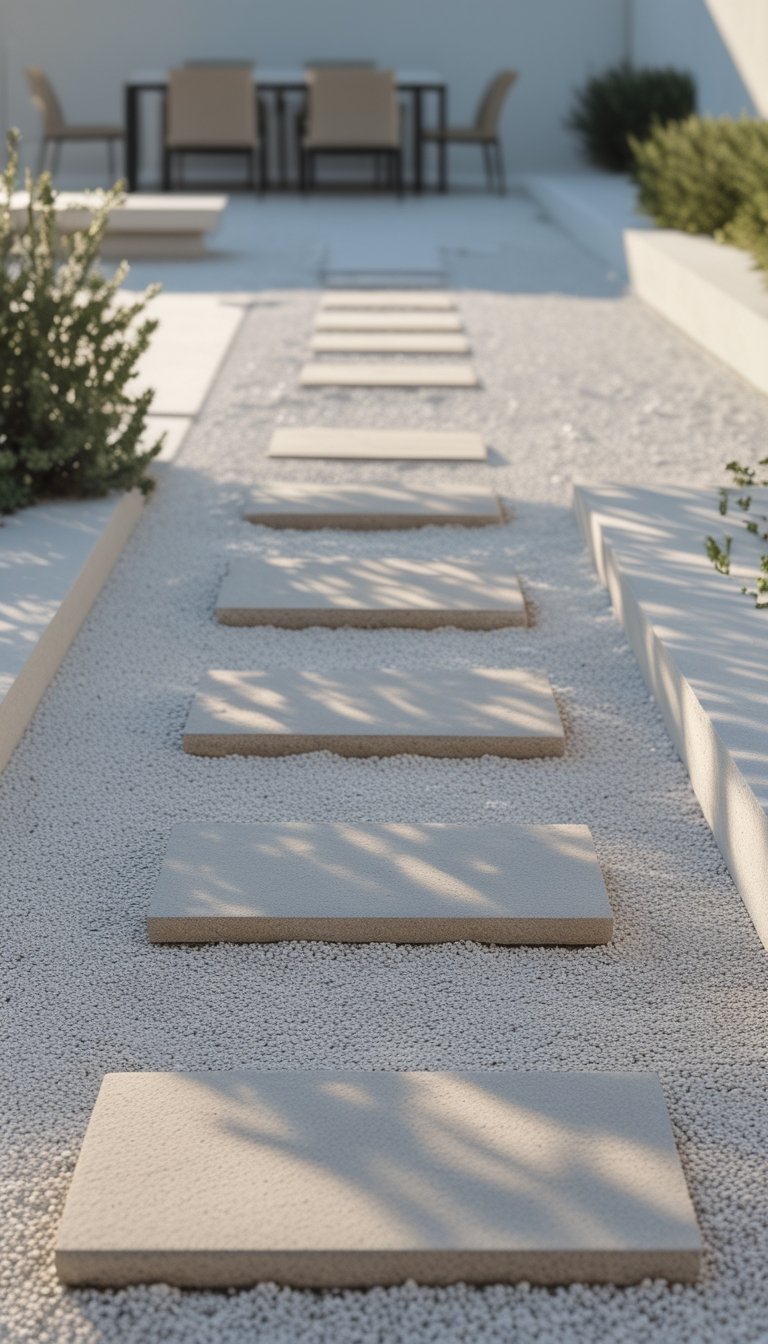
Gravel groundcover creates a calm, low-maintenance base for your patio. You can choose small pea gravel for a soft look or crushed stone for a cleaner, modern feel.
Lay a single stepping path across the gravel to guide movement and keep feet clean. Use larger flat stones or concrete pavers spaced evenly so each step feels intentional and steady.
Keep plantings minimal around the path to preserve the quiet, minimalist look. A few low grasses or succulents near the edges add texture without clutter.
Edges help keep gravel in place and make the path read clearly. Simple metal, wood, or stone edging works well and keeps the design tidy.
PRO TIP
You can install a weed barrier under the gravel to reduce maintenance and keep the surface even. Choose a sturdy landscape fabric and overlap the seams so weeds struggle to come through. Compact the gravel base before laying your top layer; this prevents shifting and makes each step stable. For the stepping path, pick stones with a flat surface and install them slightly proud of the gravel so they stay visible and are comfortable underfoot. Keep spacing consistent—about one to two paces apart—to suit your stride. Finally, sweep or rake the gravel occasionally to maintain a neat appearance and refill low spots after heavy use or rain.
17) Low-profile fire pit in raw steel
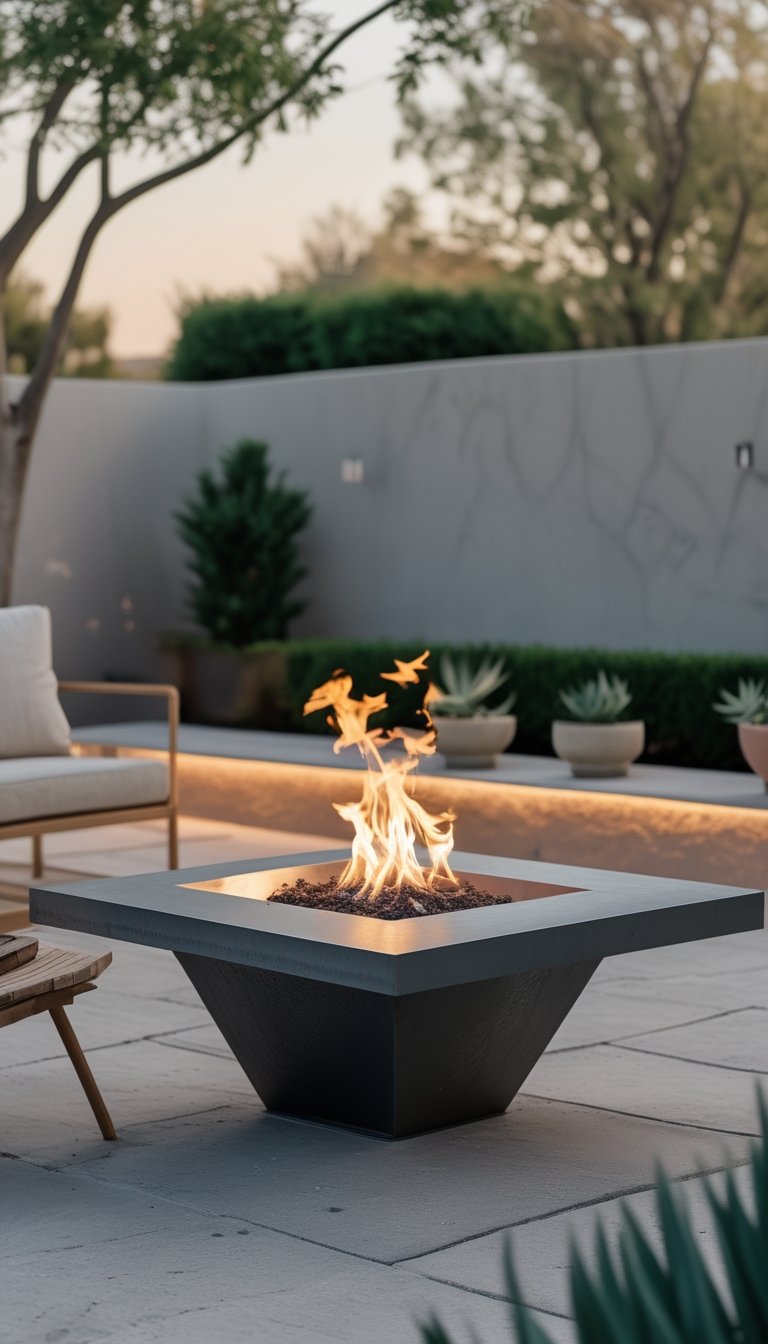
A low-profile fire pit in raw steel keeps your patio looking simple and calm. Its flat shape keeps sight lines low, so you can enjoy the fire without blocking views or conversation.
Raw steel develops a natural patina over time. That brown-gray finish adds character while staying understated and fits with concrete, wood, or gravel surfaces.
Place the pit on a noncombustible base like pavers or a concrete pad. Keep seating close but clear of sparks; low benches or slim chairs work best.
PRO TIP
Choose a steel gauge that balances weight and durability so the pit lasts without being cumbersome to move. If you live in a wet climate, plan for drainage or a cover to slow rust where you don’t want heavy corrosion. Consider a removable steel ring or insert to protect the outer shell and make maintenance easier. Use dry, seasoned wood to limit creosote and smoke, and keep a small metal shovel and fireproof gloves nearby for safe adjustments. For cleaner flames, pair with a propane insert made to fit the bowl. Finally, check local fire rules and siting setbacks before installation to avoid fines or safety risks.
18) Outdoor-rated woven lounge chair in neutral tones
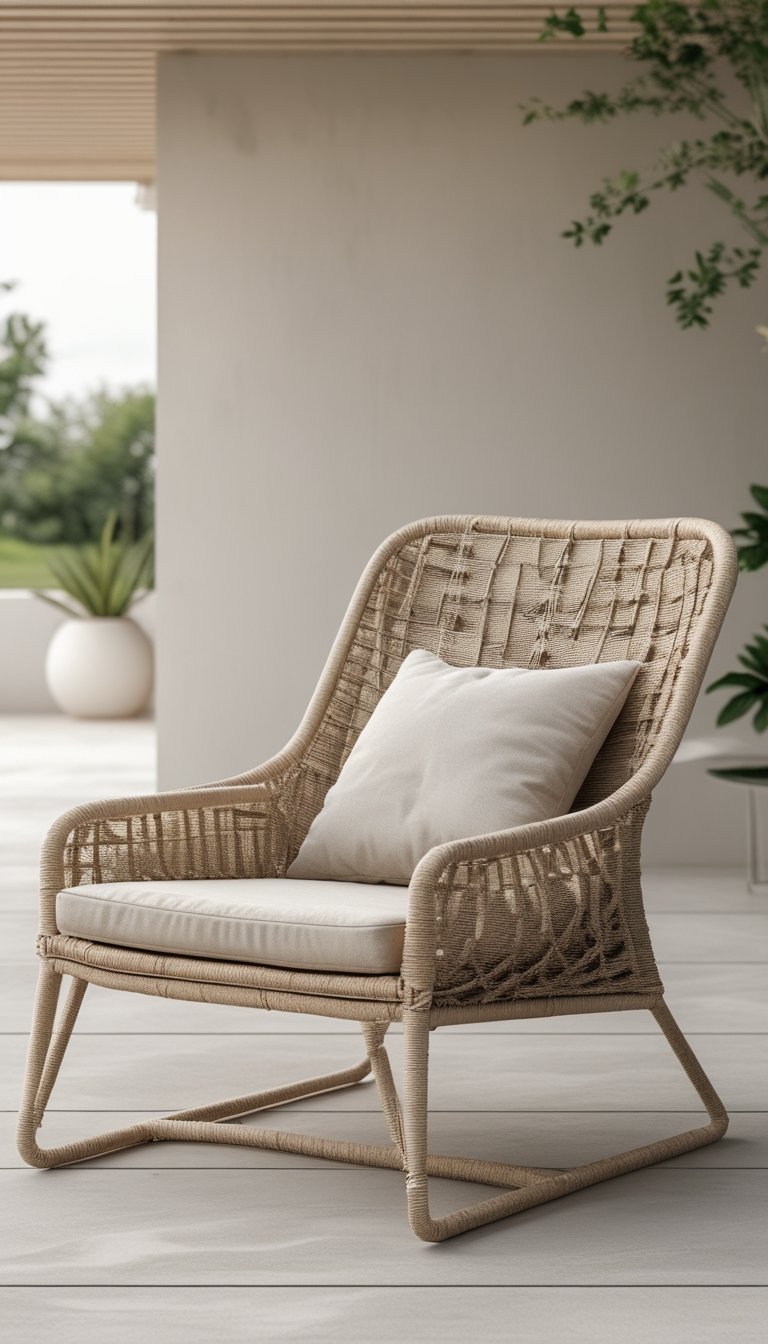
Choose an outdoor-rated woven lounge chair in neutral tones to keep your patio calm and inviting. Neutral colors like tan, gray, or soft white blend with plants and wood, so your space feels balanced without loud contrasts.
Look for materials labeled all-weather or outdoor-rated. These resist sun, rain, and mildew, so your chair lasts longer and needs less care. A simple woven design adds texture without cluttering the look.
Place one or two chairs with a small side table to create a quiet spot for reading or sipping tea. Add a single neutral cushion for comfort, and avoid heavy patterns to keep the scene minimal.
PRO TIP
When you pick a woven lounge chair, check the frame and weave closely. Metal frames with powder-coat finish or marine-grade aluminum resist rust, while synthetic wicker and resin weave handle moisture much better than natural rattan outdoors. Test the seat depth and back angle in person if you can, since comfort varies by design. Keep maintenance simple: brush off debris regularly, rinse occasionally, and store cushions during extended wet seasons. If you want extra durability, choose UV-stable fibers to reduce fading. Finally, pair neutral chairs with a small living element—like a potted succulent—to maintain the minimalist look while adding life.
19) Concrete bench with wooden seat insert
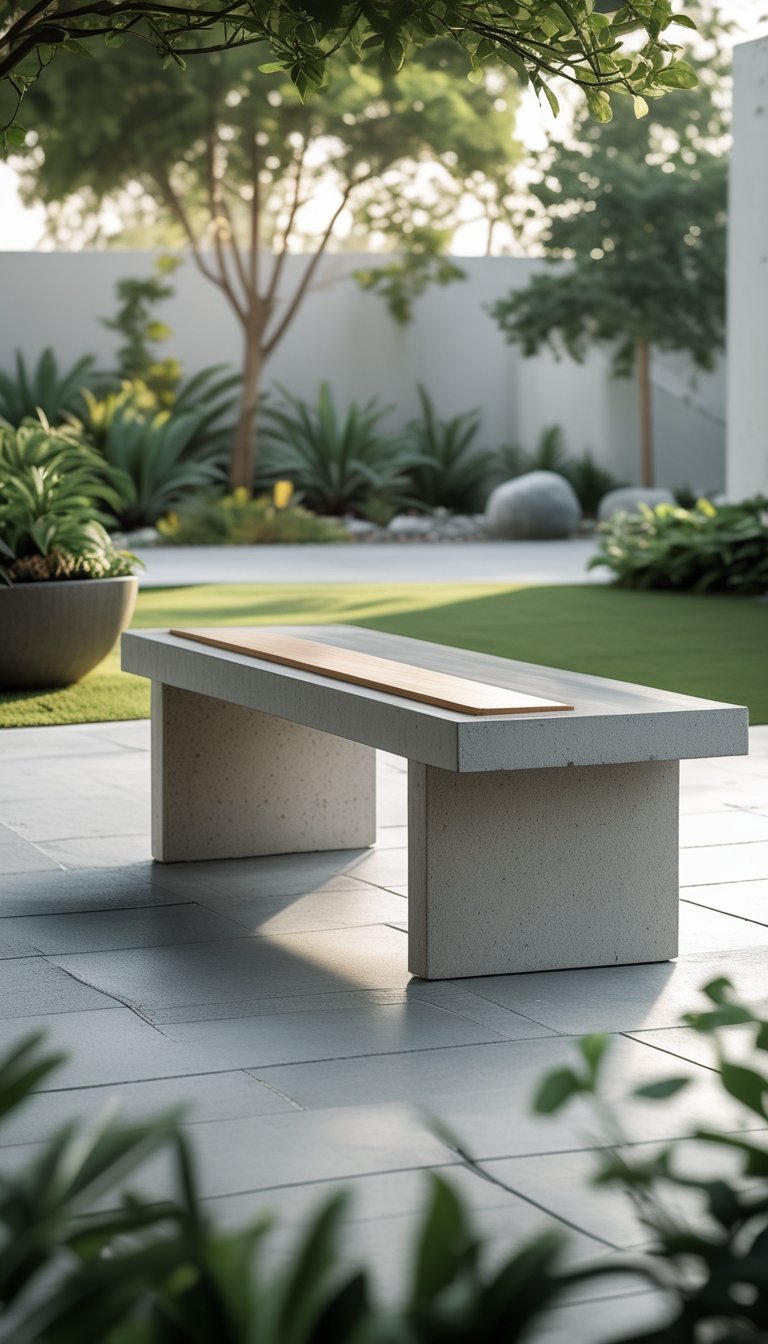
A concrete bench with a wooden seat insert gives your patio a clean, modern look. The concrete base feels solid and low, while the wood warms the design and makes sitting more comfortable.
You can build the base from poured concrete or concrete blocks with a smooth finish. Then add a simple wooden plank or a shaped insert that fits into a recessed top. Choose a rot-resistant wood like cedar, redwood, or treated hardwood for outdoor use.
Keep lines straight and low to match a minimalist style. Add thin cushions or ties in a neutral color if you want extra comfort without changing the calm look.
PRO TIP
You can make the bench last longer by sealing both materials properly. Use an outdoor concrete sealer to prevent stains and moisture absorption. For the wooden insert, apply a UV-protective exterior oil or a marine-grade varnish to slow fading and cracking. Make sure the insert sits on a small gap or rubber pads so water can drain and air can circulate underneath. Fasten the wood with stainless steel or galvanized screws to avoid rust. If you plan to move the bench, build the wooden seat as a removable piece so you can replace or refinish it without disturbing the concrete base.
20) Monochrome palette: varying shades of gray scheme
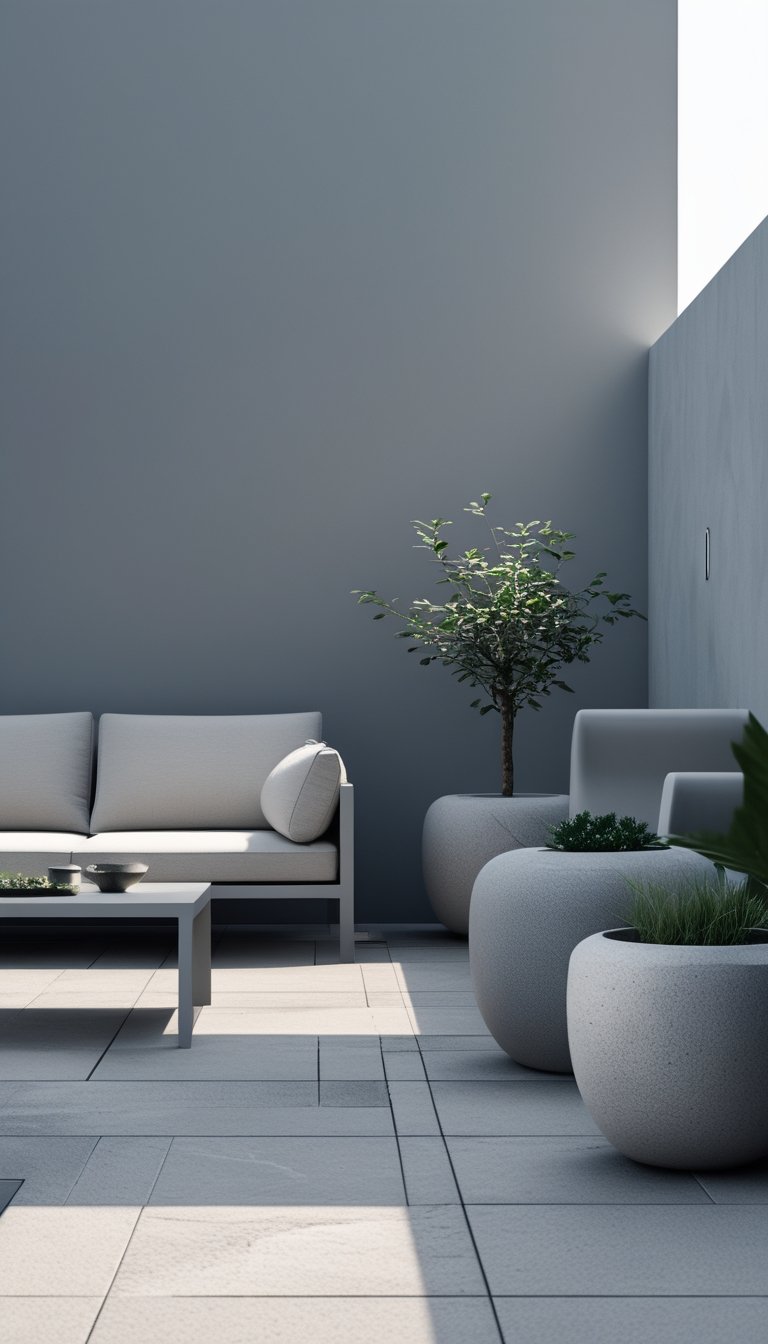
A gray monochrome palette gives your patio a calm, modern look. Use light grays for walls and large surfaces to make the space feel open. Add medium and dark grays in furniture and planters to create depth.
Mix textures to keep the gray scheme from feeling flat. Think matte concrete, soft woven cushions, and a few metal or stone accents. Plants and warm wood tones act as subtle contrast without breaking the serene vibe.
Balance is key. Keep patterns minimal and repeat a few gray tones around the space so it feels cohesive. You can layer rugs and throws for comfort while staying within the gray family.
PRO TIP
Choose one warm and one cool gray to anchor your scheme and prevent the space from feeling too cold. Test paint and fabric samples outside at different times of day to see how light changes the tones. Use a single accent material—like warm wood or rattan—to add visual warmth without introducing bright colors. When selecting plants, pick foliage with varied greens and textures; they pop nicely against gray while keeping the look natural. Keep decorative items sparse and purposeful to maintain a minimalist, restful retreat.
21) Scandinavian pale-wood dining bench
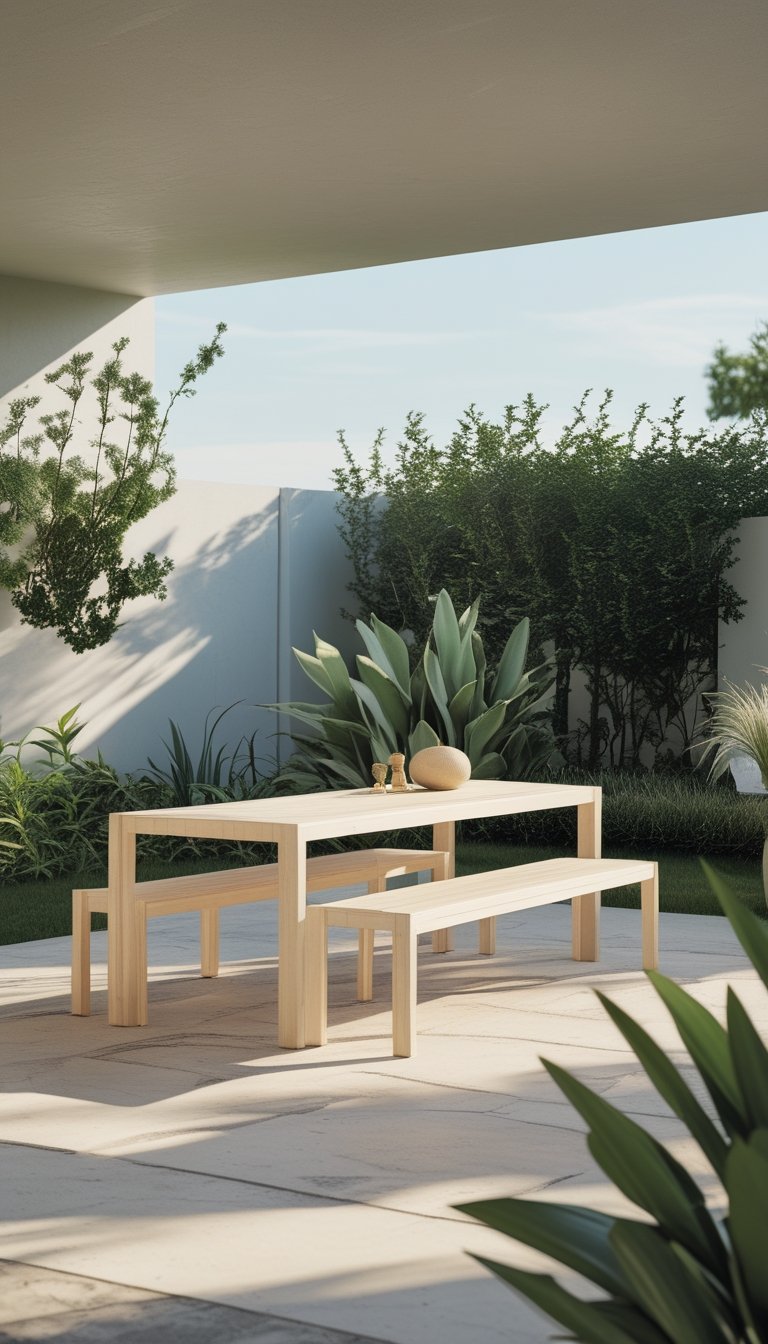
A pale-wood dining bench brings simple warmth to your patio. Its clean lines match minimalist spaces and keep the view uncluttered.
Choose light woods like ash, beech, or pine for that soft, Nordic look. You can pair the bench with a narrow table or use it alone against a wall to save space.
Add a few neutral cushions for comfort, but keep patterns subtle. Natural textiles like linen or cotton keep the palette calm and let the wood stand out.
If you want durability, pick a bench finished for outdoor use or treat the wood with a clear, water-resistant sealant. That protects the grain without changing the gentle tone.
PRO TIP
You can easily make the bench more inviting without changing its minimalist style. Place two thin cushions that match your patio’s neutral palette and a single throw folded at one end. Use washable fabrics so you can clean outdoor dirt and spills quickly. Position the bench near a planter or low screen to create a cozy nook for meals and conversation. If you expect heavy rain, keep a breathable cover on hand or store cushions inside. For added stability on uneven patios, fit small adjustable feet or non-slip pads so the bench sits level and feels solid when you sit.
22) Trellis with trained espalier fruit tree
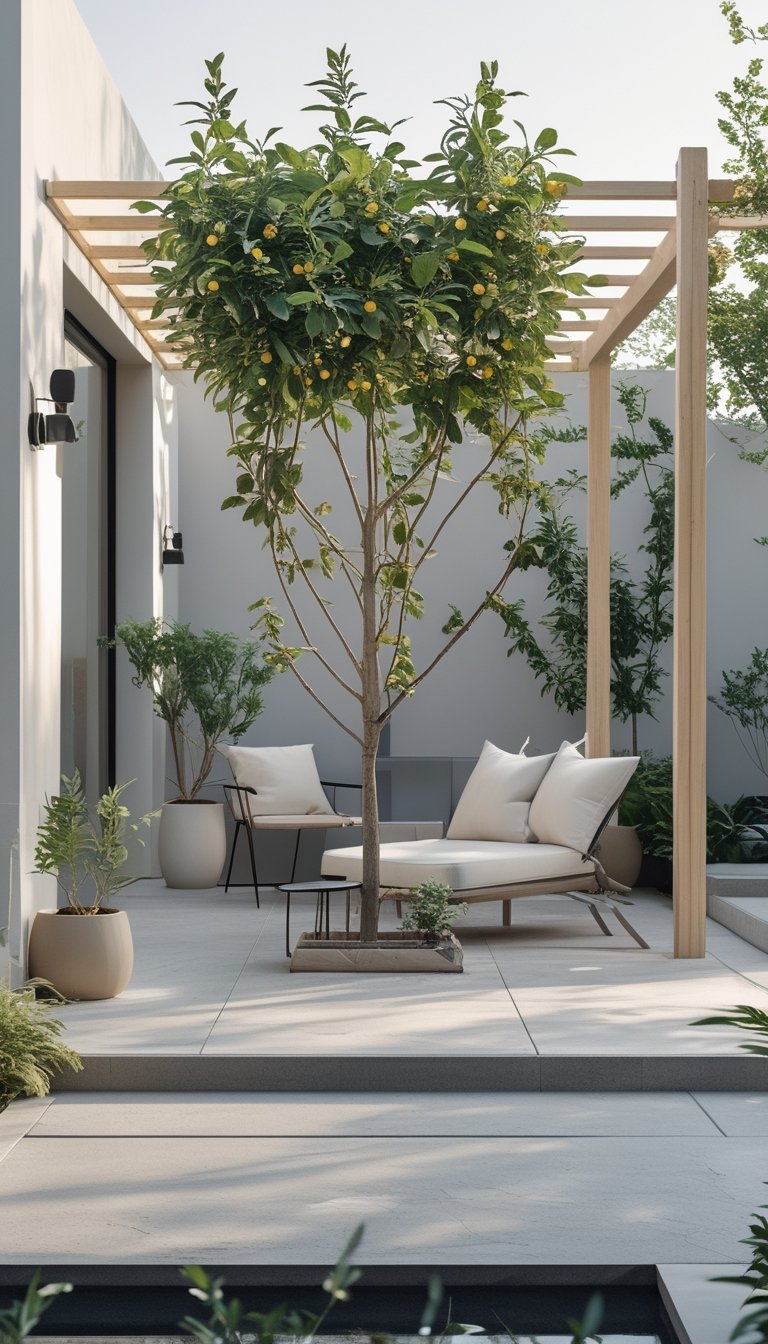
A trellis with a trained espalier fruit tree adds calm and order to your patio. You get fruit, shade, and a flat green wall that fits small spaces.
Espalier training keeps the tree low and wide. You can train apples, pears, or other small fruit trees along horizontal wires for neat lines and easy harvesting.
Place the trellis against a sunny wall or fence for best fruit production. Prune yearly to keep the shape, remove crowded wood, and encourage fruiting spurs.
PRO TIP
Choose a hardy variety that suits your climate and pick a trellis that anchors securely into the ground or wall. Start training young branches with soft ties and move them gradually to the wires over a few seasons. Use clean, sharp pruning tools and cut in late winter to shape the framework while the tree is dormant. Mulch the root zone and water deeply during dry spells to support fruit growth. If you want flowers and fruit without heavy maintenance, select semi-dwarf rootstocks and limit the number of main horizontal tiers to two or three.
23) Slim-profile outdoor radiator for cool evenings
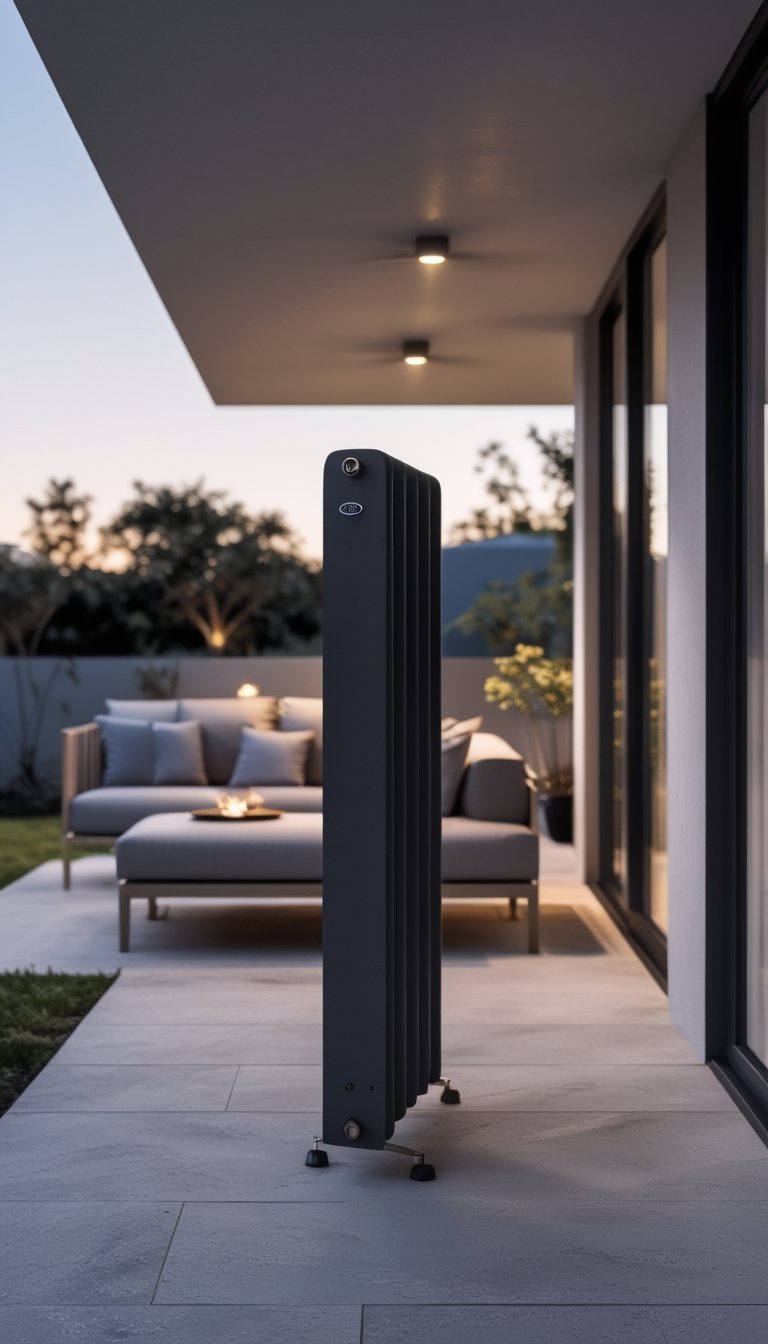
A slim-profile outdoor radiator keeps your patio warm without taking up visual space. It blends into minimalist settings and gives steady, quiet heat for chilly nights. You can place it along a wall or behind seating to keep warmth flowing where you sit.
Choose a unit with a low-profile design and a neutral finish so it complements wood, concrete, or metal surfaces. Look for weatherproof materials and simple controls you can use with gloves. Hardwired or plug-in models both work, depending on your power access.
PRO TIP
When picking a slim-profile outdoor radiator, think about placement first. Mounting it on a low wall or fence saves floor space and keeps the line of sight clean, which helps your minimalist layout stay calm. Match the heater’s color to nearby materials to make it feel built-in rather than added on. Check the radiator’s IP rating and make sure it’s rated for outdoor use to avoid corrosion and safety issues. Consider a model with a timer or remote so you can heat the space only when needed, cutting energy waste. Finally, measure the area and choose a wattage that covers your seating zone without overheating small spaces.
24) Weatherproof curtains in linen-look fabric
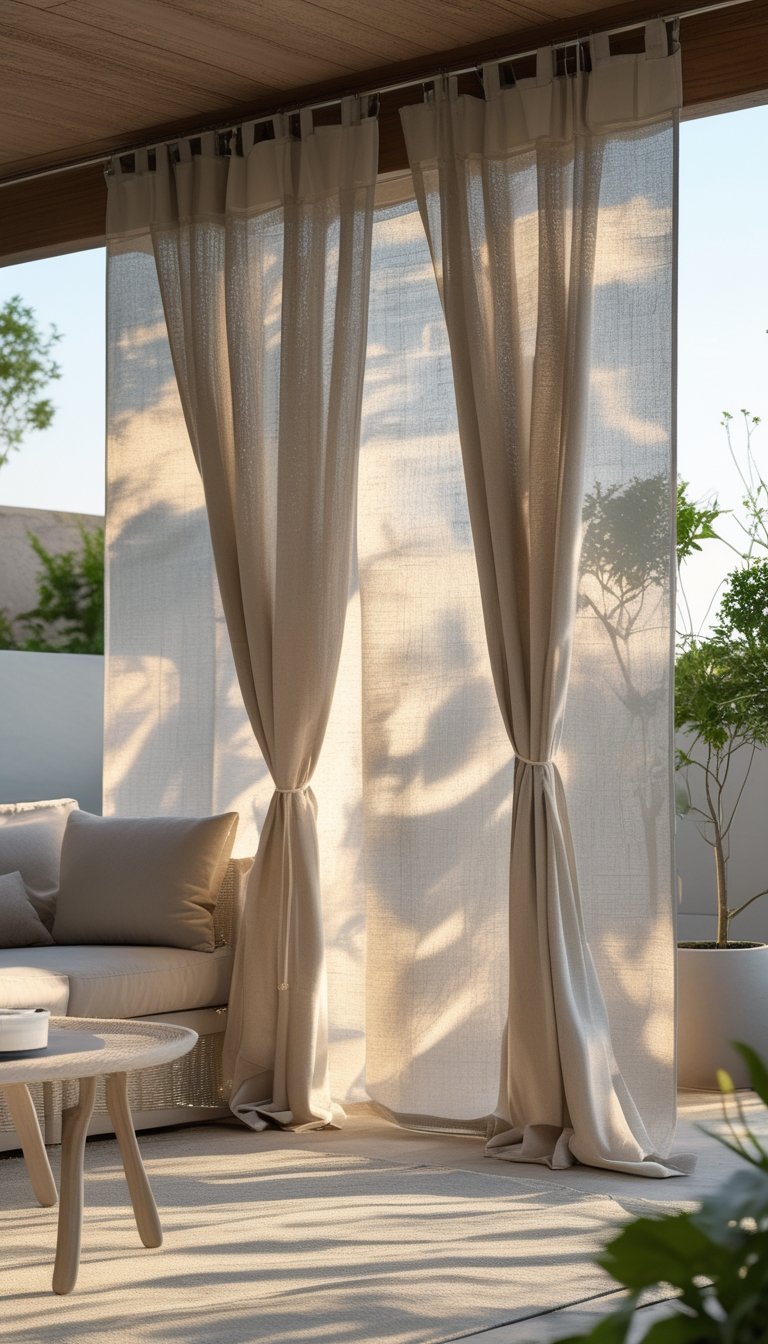
Choose weatherproof curtains that mimic linen to add soft texture without heavy upkeep. They give your patio a calm, airy feel while standing up to sun and light rain. You get privacy and shade without sacrificing a minimalist look.
Look for fabrics labeled waterproof, UV-resistant, and fade-resistant to keep color and form longer. Grommets make hanging and sliding easy, and weighted hems help curtains stay put in breezy spots. Pick neutral tones like warm white, sand, or soft gray to blend with plants and wood.
PRO TIP
You can layer linen-look weatherproof curtains with sheer panels for flexible light control and privacy. Hang a rod across a pergola or between posts, and mount curtains high to make your outdoor space feel taller. For longevity, remove curtains for deep cleaning or during heavy storms, and follow care instructions to keep waterproof finishes effective. If you want more structure, add ties or magnetic weights so curtains stay neatly open when you want airflow. Simple hardware and neutral colors keep the style calm and uncluttered.
25) Large sculptural stone as focal point
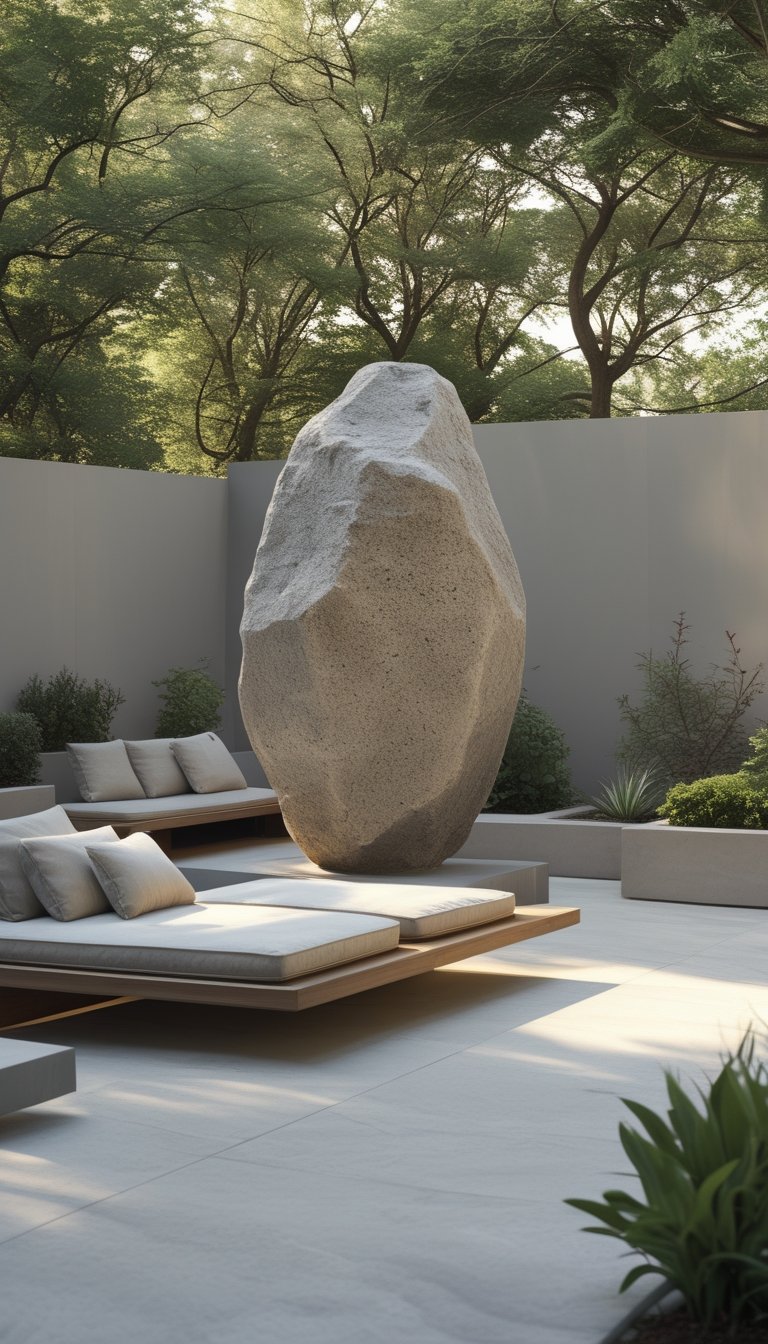
A single large sculptural stone can anchor your patio and bring quiet strength to the space. Place it where paths or sightlines meet so it naturally draws the eye without crowding other elements.
Choose a stone with clean lines and a simple shape to match minimal design. Natural texture adds interest but keep the surrounding area uncluttered to maintain calm.
Use a low planting bed or coarse gravel base to set the stone visually. You can add subtle uplighting for evening drama, but avoid bright or colorful fixtures.
PRO TIP
When you pick a sculptural stone, think about scale and sightlines from inside your home as well as from the patio. A stone that looks perfect up close may overwhelm the view through a window, so test placement by standing at the main indoor vantage points. Consider anchoring the stone with simple, low-maintenance plants like ornamental grasses or succulents to soften edges without creating busy visuals. If the stone feels too heavy, introduce a few lighter elements such as a narrow bench or a shallow water bowl nearby. Keep materials and colors consistent with your patio palette to preserve a calm, cohesive look.
26) Vertical garden panel with succulents only
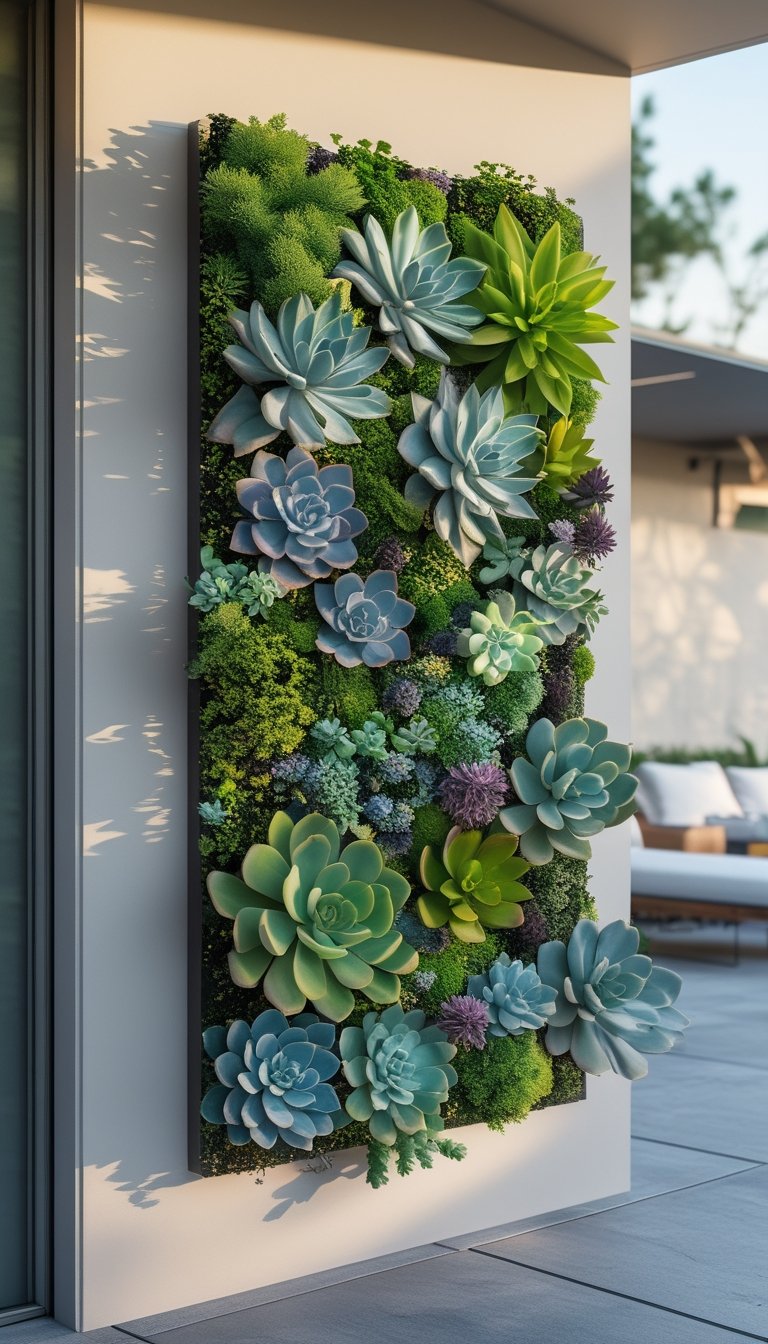
A vertical succulent panel saves space and adds clean, modern texture to your patio. You can mount a wooden pallet or a metal frame and attach pocket planters or shallow trays to hold only drought-tolerant succulents.
Choose compact varieties like echeveria, sedum, and haworthia for a neat look and easy care. Plant them in a fast-draining mix and position the panel where it gets bright, indirect light most of the day.
Water sparingly with a drip line or slow soak from the top so roots don’t sit wet. Rotate the panel occasionally to keep growth even, and replace any plants that show pests or rot.
PRO TIP
When you build your panel, prioritize drainage and access. Line the back of the frame with landscape fabric, add a shallow tray or gutter at the bottom to catch excess water, and use individual small pots or modular pockets so you can swap plants without disturbing the whole panel. Group succulents by similar water and light needs to avoid over- or under-watering any species. If your patio gets strong afternoon sun, add a shade cloth or place the panel where it receives morning sun and afternoon shade. Inspect weekly for signs of pests, mealybugs, or rot, and trim any dead foliage to keep the display tidy.
27) Subtle landscape lighting: recessed step lights
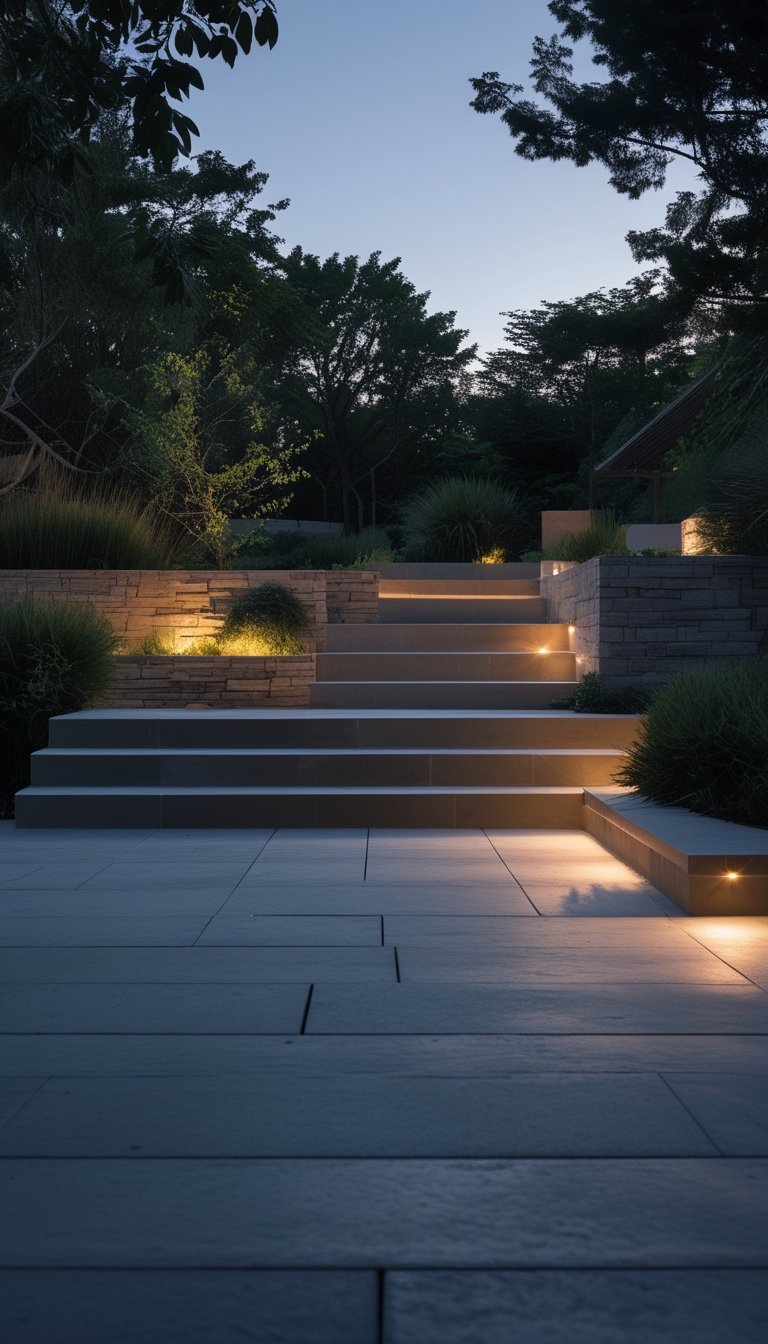
Recessed step lights keep your patio calm and safe without stealing attention. You place them into stair risers or the side of steps, and they cast a soft, low glow that shows each tread clearly.
Choose warm white LEDs for a cozy, natural look. They use very little energy and last a long time, so you won’t fuss with bulbs often.
Keep the fixtures flush with the surface for a minimalist feel. Aim the light downward and shield it to avoid glare and spill onto seating areas.
Mount lights every 3 to 4 feet for even spacing, or place one per step for better definition. Waterproof, dustproof fixtures with low profiles work best outdoors.
PRO TIP
When planning recessed step lights, think about height and spacing for both safety and subtlety. Measure the riser height and test a few placements with temporary lights first. You want enough light to see each step, but not so much that it feels like a runway. Use warm color temperature (2700–3000K) to match other outdoor fixtures and to keep the mood calm. Run wiring on a low-voltage system if possible; it’s safer and often easier for DIY projects. Also consider motion sensors or dimmers so lights stay off or low when you don’t need full brightness. Finally, pick stainless steel or powder-coated trims to resist weather and keep a clean, minimal look over time.
28) Outdoor mirror to reflect sky and expand space
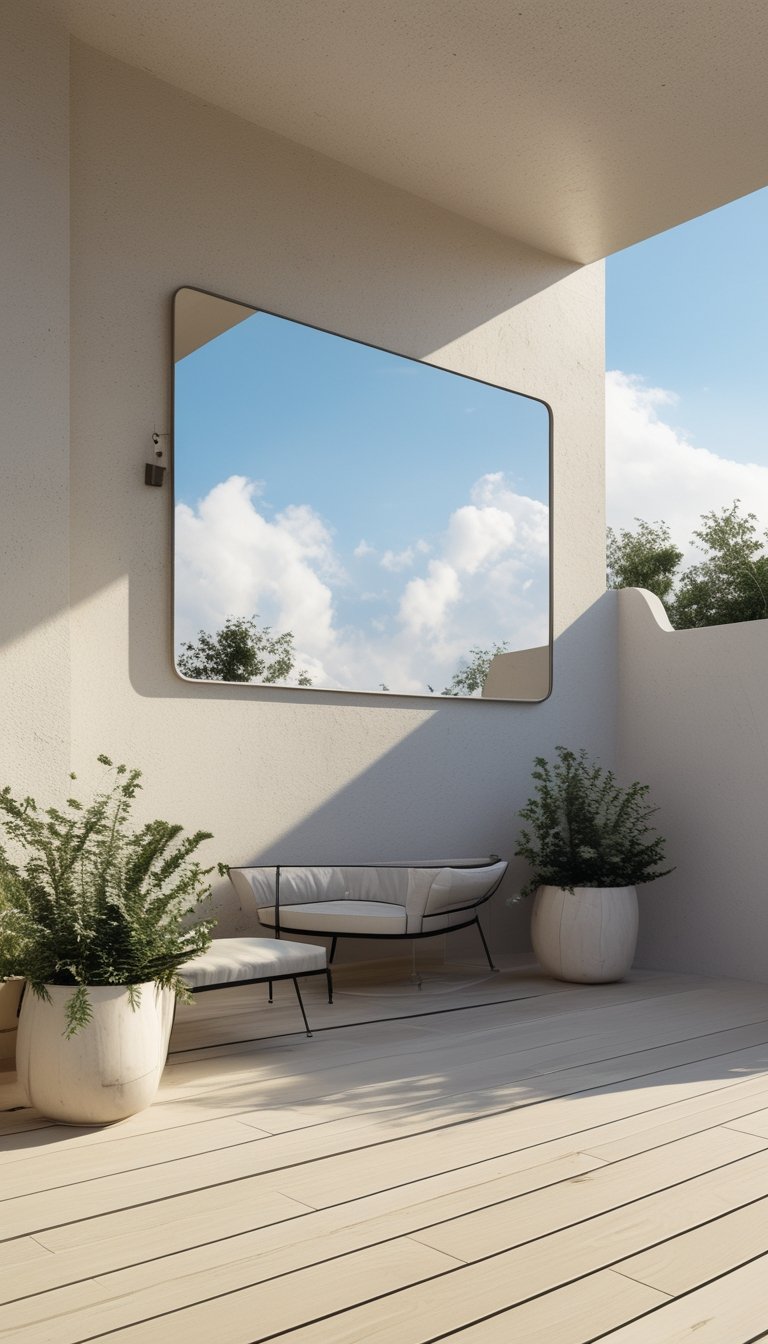
Place a large mirror on a fence or wall to catch the sky and nearby trees. The reflected sky makes your patio feel taller and more open, which helps a small area feel less crowded.
Choose a mirror with a simple frame that matches your minimalist style. Weatherproof materials like powder-coated metal or treated wood will last longer outdoors.
Hang the mirror where it will reflect something pleasant, such as blue sky, clouds, or greenery. Avoid angles that show clutter or neighbors’ windows to keep the view calm.
Secure the mirror well with outdoor-rated hardware and consider a shatterproof panel for safety. Clean the surface regularly so the reflection stays bright and clear.
PRO TIP
When you add an outdoor mirror, think about scale and sightlines to make the effect natural. Use a mirror roughly one-third to two-thirds the height of the wall or fence so it feels balanced, not overwhelming. Place it across from taller plants, a tree canopy, or open sky to create a deep, calming view. If privacy is a concern, angle the mirror slightly upward so it reflects sky more than nearby spaces. For long-term care, pick mirrors labeled for exterior use or add a clear sealant to the frame. Finally, test the reflection at different times of day to find the best spot for soft light and peaceful views.
29) Discrete storage cabinet matched to wall color
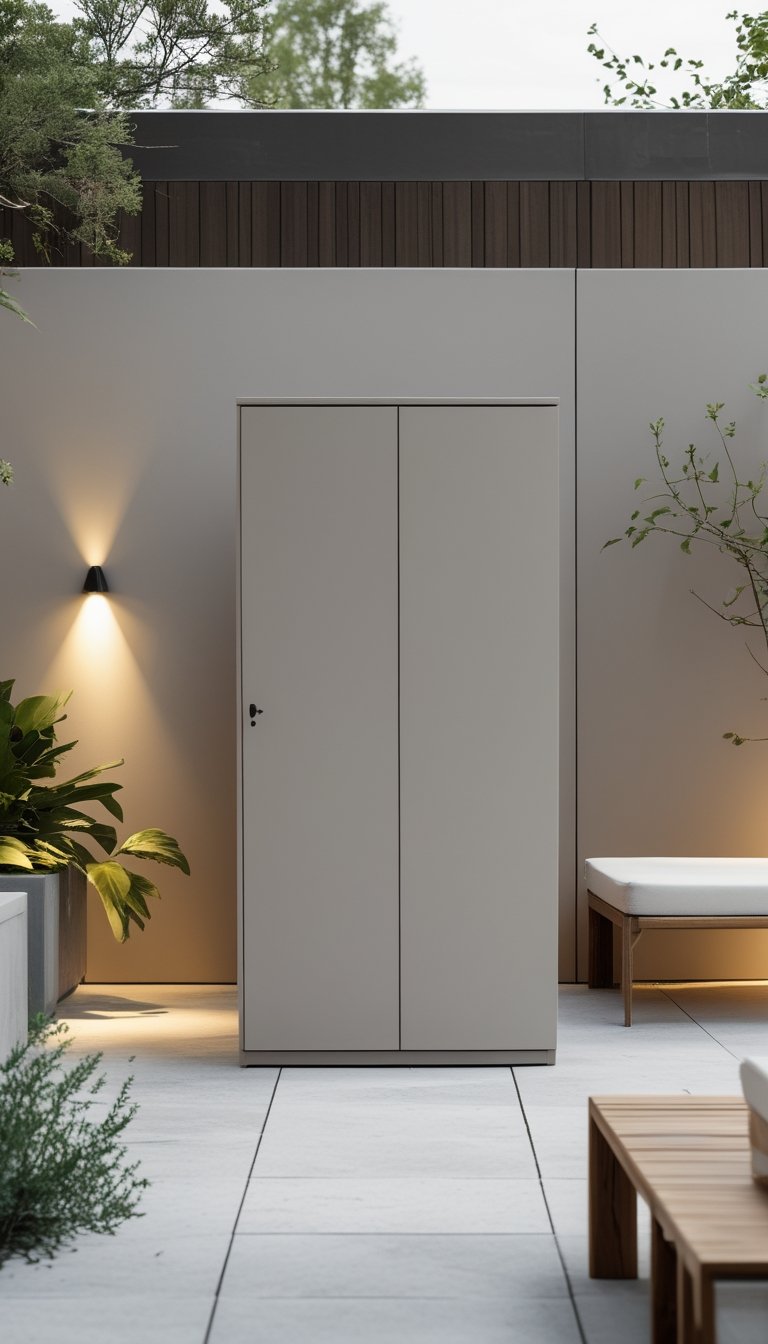
Choose a storage cabinet that blends with your patio wall color so it fades into the background. Matching tones make the cabinet feel like part of the structure, not an add-on, and this keeps your outdoor space calm and simple.
Pick a low-profile design with clean lines. A slim cabinet or one with flat panels stays minimal and holds cushions, tools, and grill supplies without drawing attention.
Use weatherproof materials and paint meant for exterior use. This keeps the finish looking neat and prevents peeling or fading from sun and rain.
PRO TIP
When you match a storage cabinet to your wall color, think beyond exact paint swatches. Bring a small piece of the wall material or a photo to the store to compare colors in different lights. Choose a slightly darker or lighter shade if perfect matching proves hard; this adds subtle depth while still remaining discreet. Consider vertical placement or recessed installation to reduce the cabinet’s visual bulk. Add simple hardware that blends in—matte finishes work well. Finally, keep contents organized with labeled baskets or trays so the cabinet opens to a tidy space, reinforcing the calm, minimalist look.
30) Minimalist hammock with wooden spreader bars
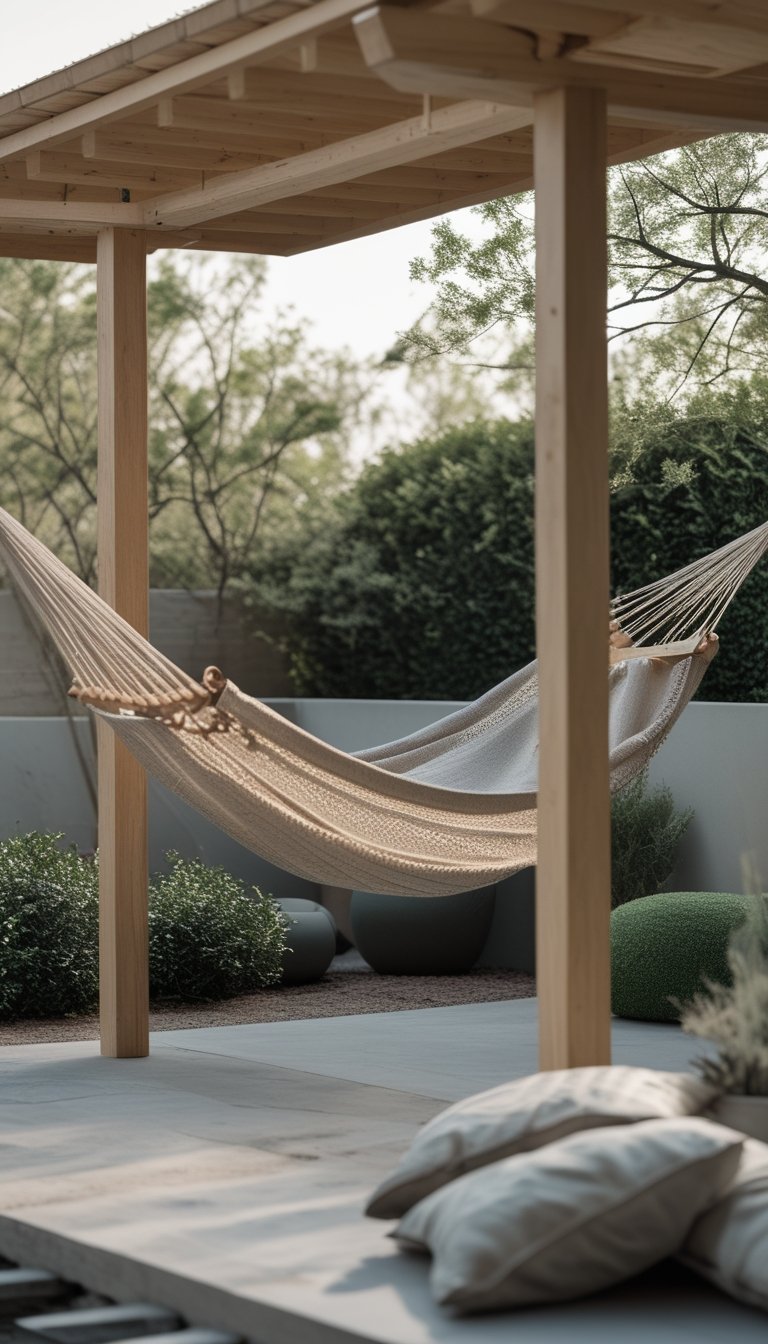
A wooden-spreader-bar hammock gives your patio a calm, simple look. The spreader bars keep the fabric open, so you can get in and out without awkward rolling. This style feels clean and structured, so it fits well with neat, minimalist gardens or covered porches.
Choose neutral colors like white, cream, or soft gray to match a pared-back palette. Pair the hammock with a slim metal or wooden stand for a balanced, modern feel. You can also hang it between sturdy posts or trees if you prefer a more natural setup.
PRO TIP
Pick a hammock made from weather-resistant cotton or a blended fabric to cut down on maintenance. Keep the spreader bars dry and oil any wooden parts once a year to prevent cracking and extend life. If you have limited space, choose a compact stand that folds for storage. Add a single, low-profile cushion in a neutral tone for extra comfort without breaking the minimalist look. Place a small, flat side table nearby to hold a drink or book so you don’t need extra bulky furniture.