
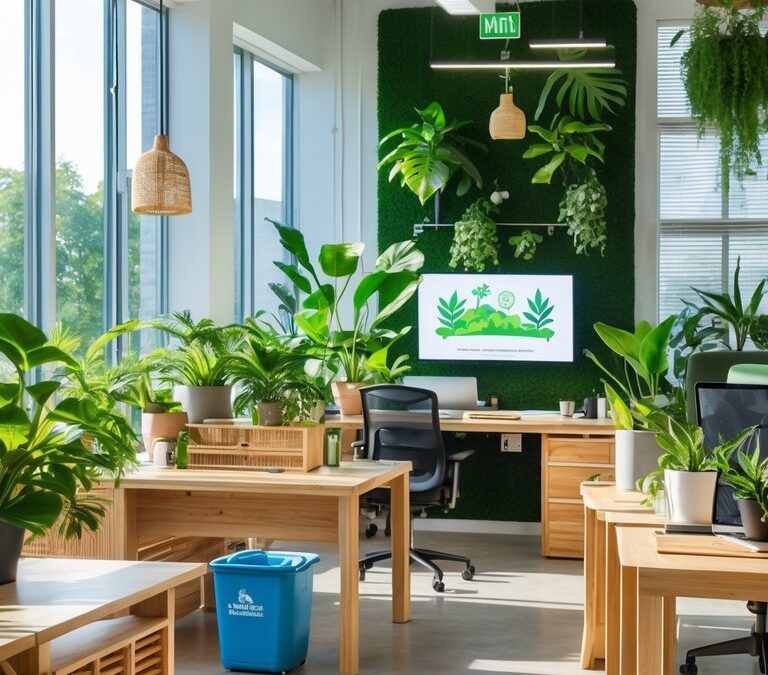
You can make your office greener without disrupting your workflow. This article shows simple, practical ideas that help you cut waste, save energy, and bring nature into your workspace so your team feels better and works smarter.
You will find easy steps and choices that fit any budget, from adding more plants to swapping to energy-saving lighting and reusable kitchen items. Use these ideas to reduce your environmental footprint, improve air quality, and create a calmer, more productive place to work.
Start small and build momentum. Pick two changes you can implement this month—one that impacts daily habits (like switching to reusable water bottles or setting printers to double-sided) and one that upgrades your space (like adding desk plants or choosing low-VOC paint). Track progress with simple measures: energy bills, waste bins, or a short employee survey. Celebrate wins publicly and rotate small rewards to keep people engaged. Offer clear instructions and labeled stations so the new habits stick. Small, steady steps lead to lasting change and make larger projects like living walls or LED retrofits easier to plan and fund.
1) Add plenty of indoor plants to improve air quality and boost mood
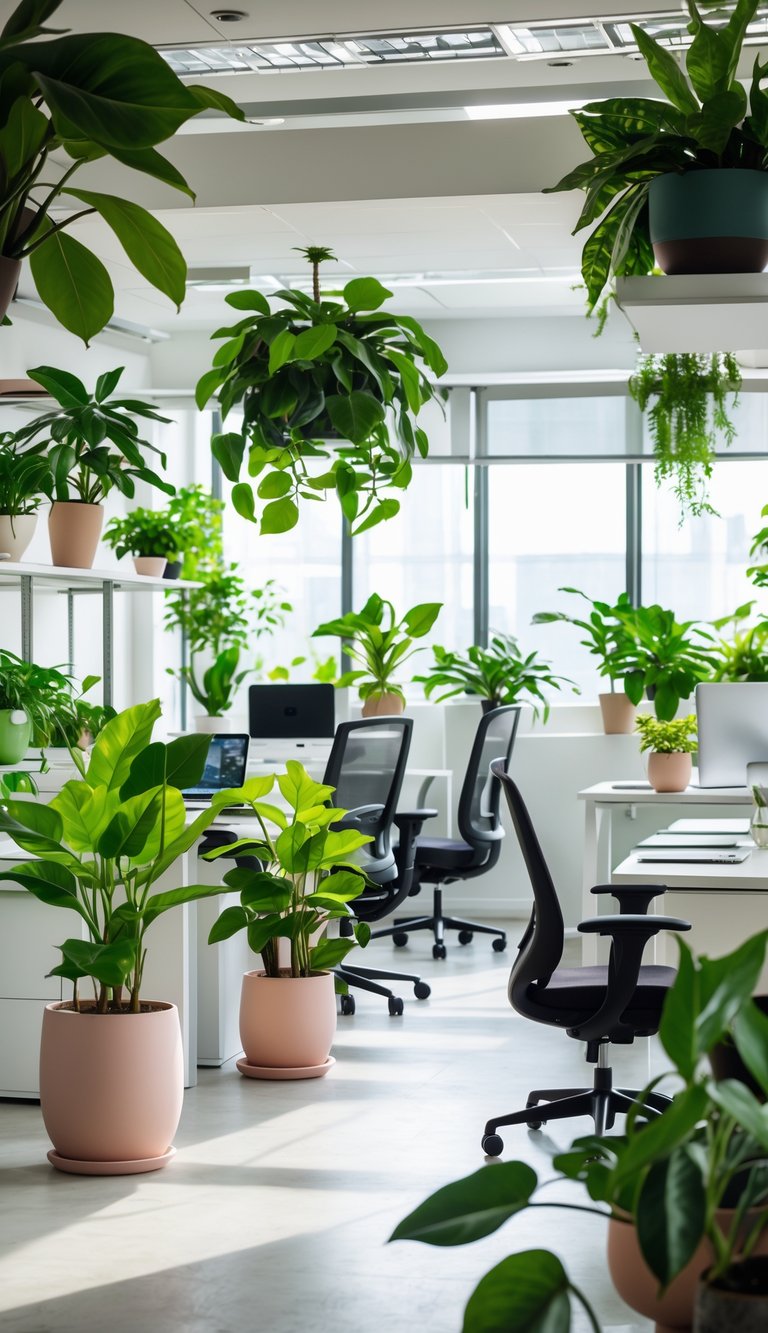
Adding indoor plants brightens your workspace and helps clean the air. Plants like snake plants, peace lilies, and spider plants can reduce common indoor pollutants and add a fresh feel to the room.
Caring for plants gives you short breaks that lower stress and improve focus. A few well-placed pots make your office more welcoming and calm without taking much space.
Choose low-maintenance varieties if you have little time for care. Rotate plants for even light and group them near windows when possible to keep them healthy and thriving.
PRO TIP
Choose a mix of sturdy, low-light and medium-light plants to cover different spots in your office. Grouping plants increases local humidity, which can reduce dry air issues and make the space feel more comfortable. Use pots with drainage and a simple watering schedule so you won’t overwater. If you want extra benefit, include at least one plant that releases oxygen at night, like a snake plant, in areas where people rest. Keep care tools—small pruners, a spray bottle, and a moisture meter—nearby so maintenance is quick. Rotate plants every few weeks to even out growth and light exposure.



March 21, 2026 2:54 pm
2) Install energy-efficient LED lighting throughout the office
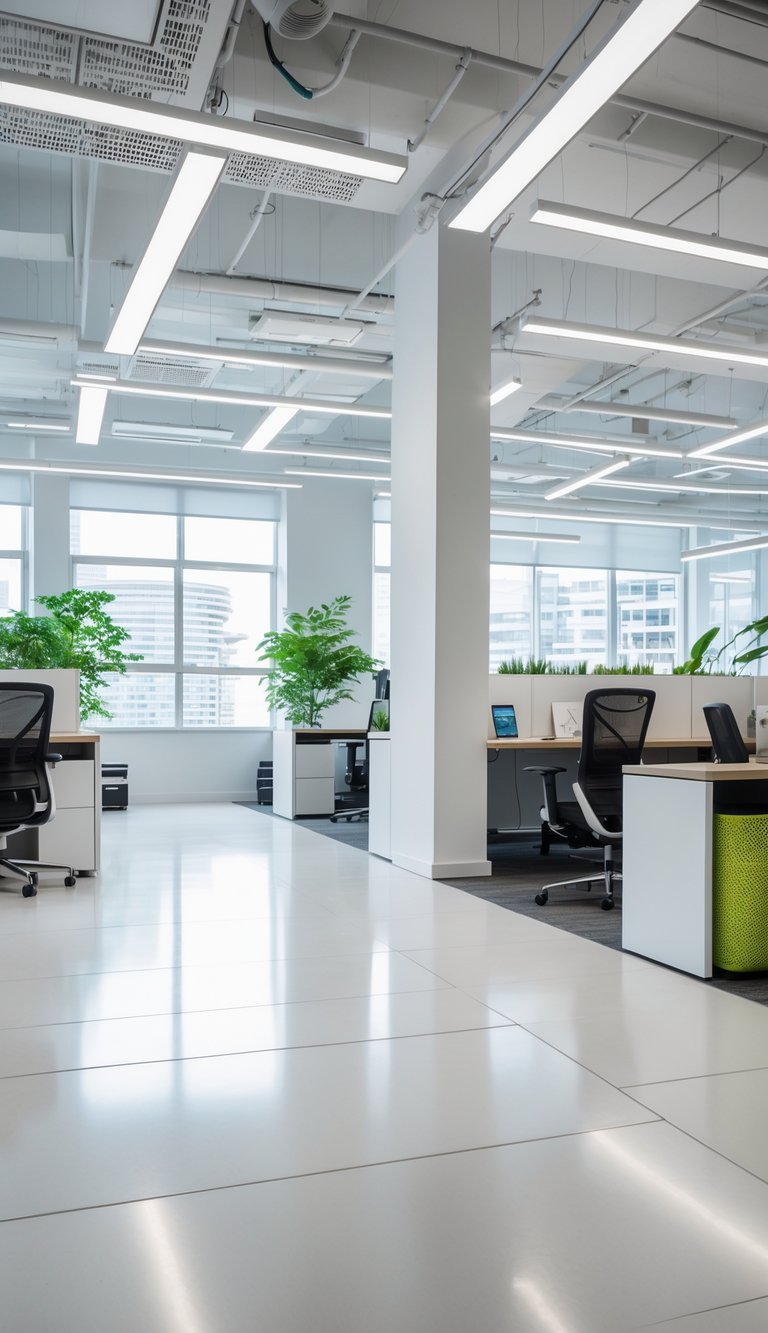
Switch to LED fixtures to cut energy use and lower maintenance. LEDs use far less electricity than old incandescent or fluorescent bulbs, and they last many times longer. You’ll spend less on replacements and see a steady drop in lighting costs.
Choose LEDs with good color rendering so people can read and work without strain. Use tunable color temperature where tasks change, like cooler light for focus and warmer light for meetings. Add dimmers and occupancy sensors to avoid wasted light in empty rooms.
Place fixtures to match daylight and avoid glare on screens. Pair LEDs with light-control shades to balance natural light and reduce heating or cooling loads. These small changes make your office greener and more comfortable.
PRO TIP
When you plan LED upgrades, map each room’s lighting needs first. Measure light levels and note window locations before buying fixtures. Prioritize areas with long daily use, such as open workspaces and conference rooms, to get the quickest energy savings. Consider investing in smart controls that let you group zones, set schedules, and track energy use remotely. Check for rebates or utility incentives to lower upfront costs. Finally, pick LED products with clear performance data and a solid warranty; that protects your investment and keeps maintenance simple.
3) Use recycled or sustainably sourced office furniture
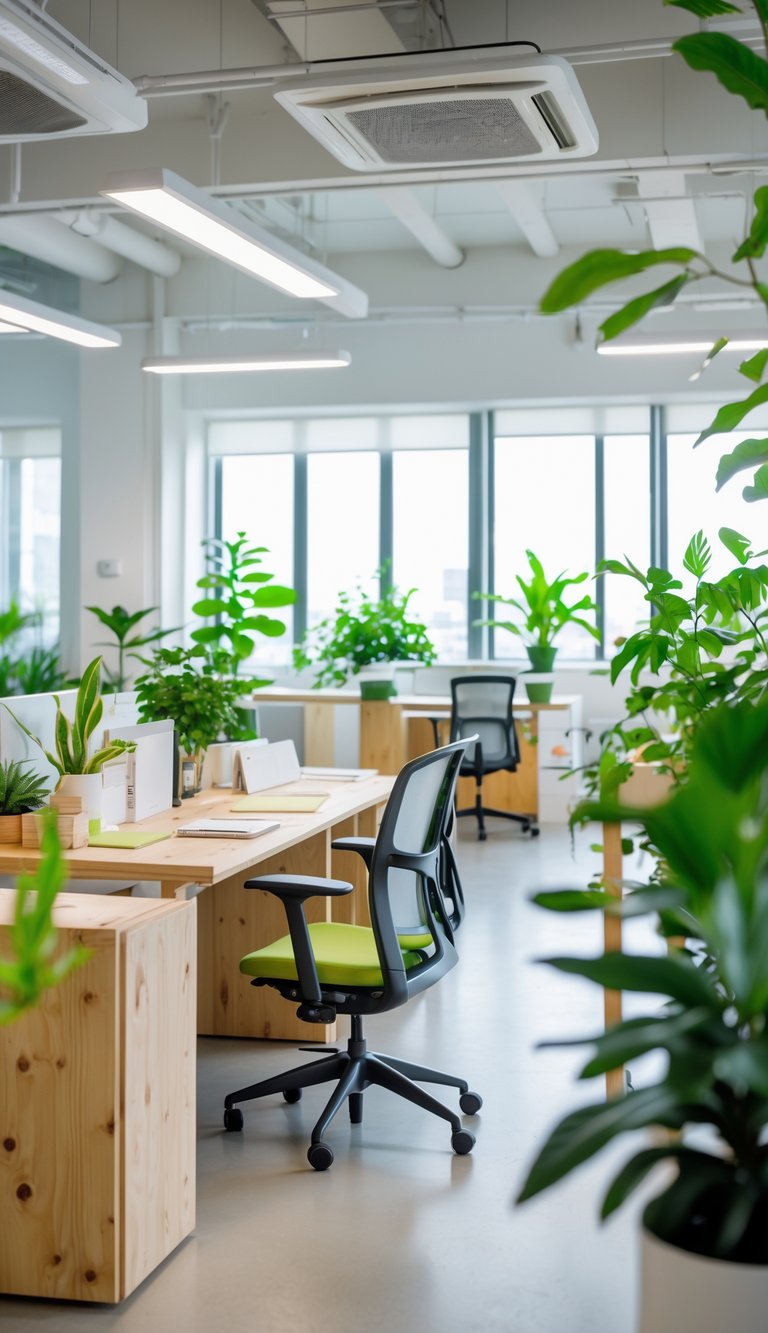
Choosing recycled or sustainably sourced furniture cuts waste and lowers the demand for new raw materials. Look for desks, chairs, and shelves made from reclaimed wood, recycled metal, or repurposed plastics. These pieces often last as long as new ones while using fewer resources.
You can also buy from makers who use responsibly harvested timber and low-VOC finishes. That helps indoor air quality and reduces harmful chemicals in your workspace. Local suppliers can offer unique pieces and lower shipping emissions.
If buying new feels costly, consider refurbished furniture or office auction finds. You’ll save money and keep usable items out of landfills. Small swaps add up when everyone on your team chooses eco-friendly options.
PRO TIP
When you shop, check for certifications like FSC for wood, GREENGUARD for low emissions, or verified recycled content labels. Ask suppliers about their material sources and the product lifecycle. Measure your space and prioritize durability over trend-driven styles to avoid frequent replacements. If possible, test ergonomic features to keep your team comfortable and productive. Consider leasing furniture or joining a circular program where items are returned, refurbished, and reused. These steps reduce waste and often save money over time. Track purchases so you can report sustainability progress to staff or stakeholders.
4) Create a living wall with easy-to-care-for greenery
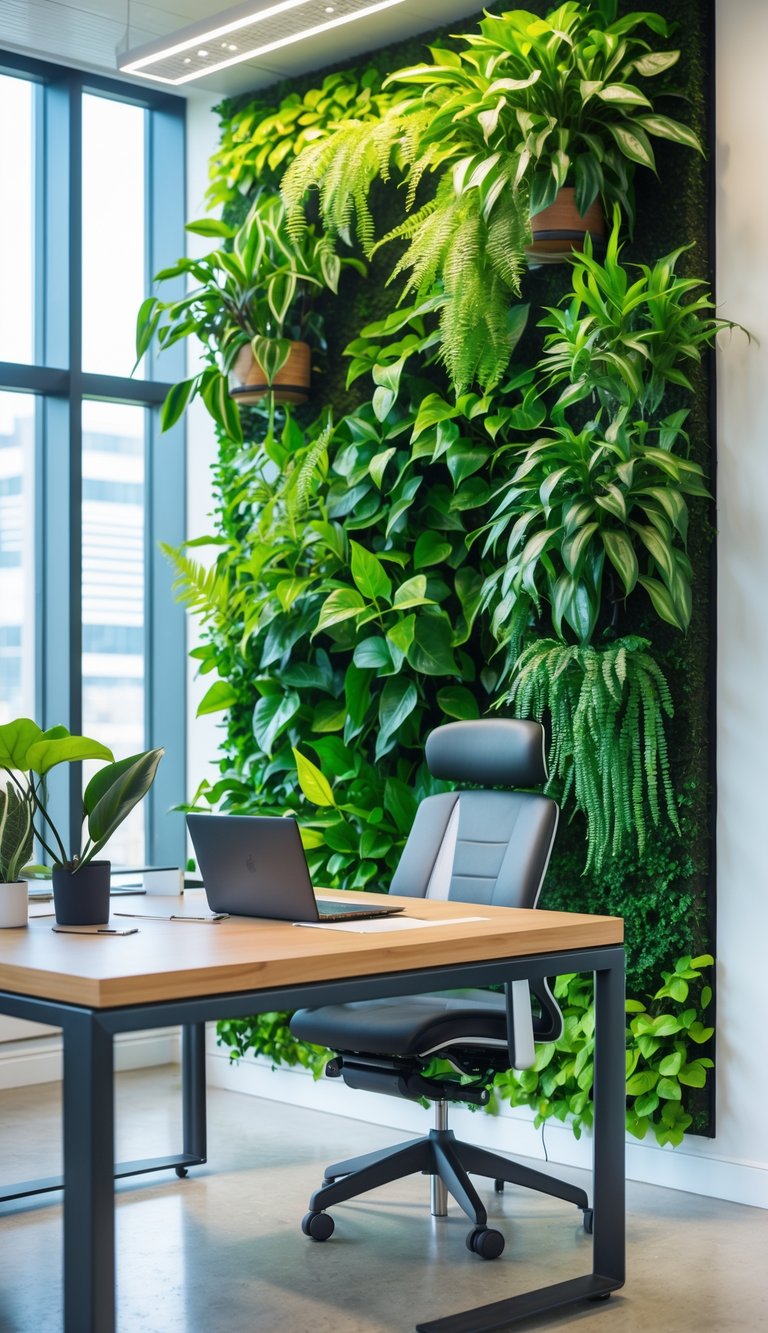
A living wall brings calm and life to your office without taking too much time. Choose low-maintenance plants like pothos, snake plant, and ferns that tolerate indoor light and occasional neglect.
Mount modular planter panels or a simple pocket system on a blank wall. These systems keep soil contained and make watering easier, so you avoid constant upkeep.
Place the wall where it gets bright, indirect light or add a grow light to support plant health. Rotate plants if parts of the wall get less light so growth stays even.
Feed plants lightly with a balanced liquid fertilizer every few months. That small step helps your living wall stay lush without needing daily care.
PRO TIP
You can set up a drip irrigation system or use self-watering pots to cut down on watering chores. A moisture meter helps you water only when needed and prevents overwatering, which is the most common problem. Group plants with similar light and water needs to simplify care, and label zones so anyone can help water correctly. Use lightweight, high-quality potting mix to reduce weight on the wall and improve drainage. Finally, schedule quick monthly checks to trim dead leaves and spot pests early; short, regular checks keep the wall healthy with minimal effort.
5) Switch to reusable dishware and cutlery in the kitchen
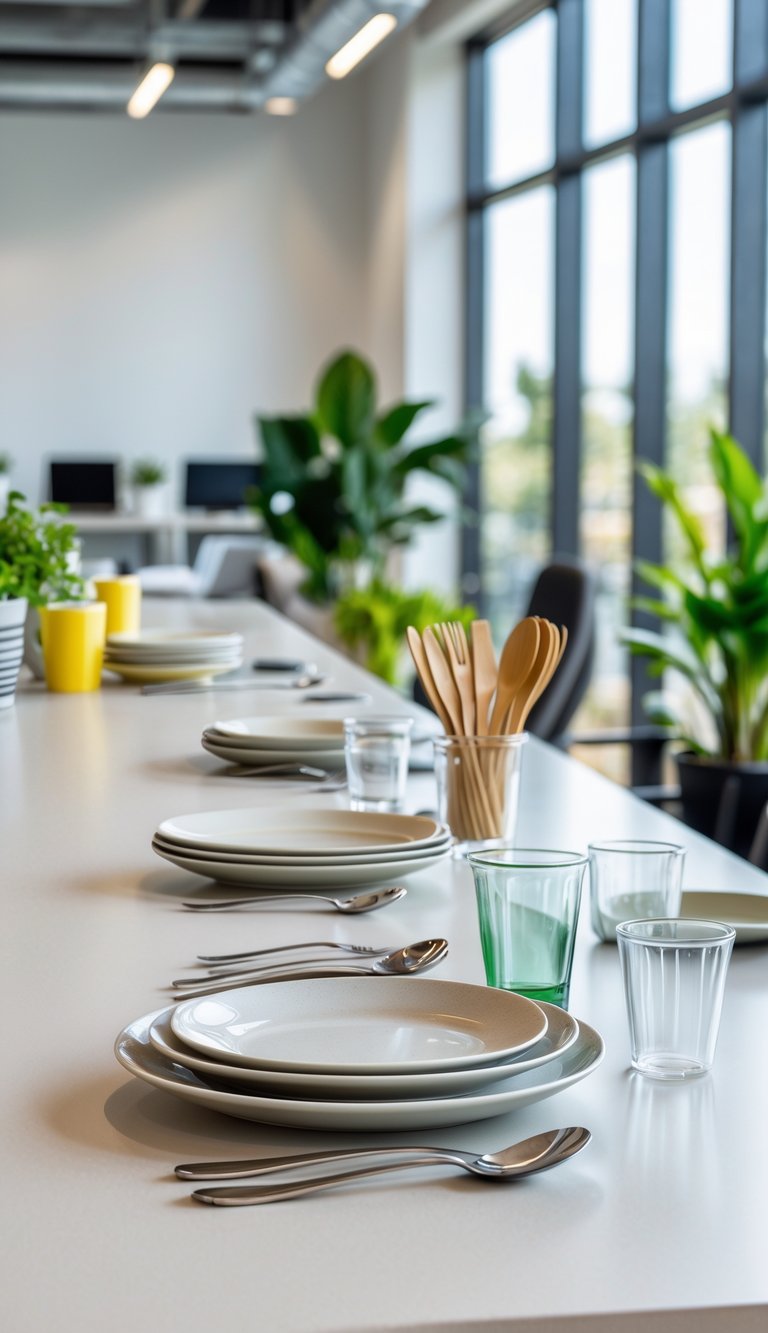
Switching to reusable plates, cups, and cutlery cuts waste and saves money over time. You will reduce how much single-use plastic and paper your office throws away each week.
Buy sturdy items like ceramic mugs, stainless steel cutlery, and glass containers that last. Keep extras in a cabinet so everyone can grab clean pieces easily.
Make washing simple by installing a dishwasher or setting up a clear rinse-and-return routine. Encourage staff to rinse and place items in the dishwasher or in a labeled drying rack.
Label storage spots and provide a small bin for lost items to keep things organized. Small habits make a big difference when everyone follows the same system.
PRO TIP
You can start small by replacing disposable cups and forks first, then add plates and food containers over time. Choose neutral colors or a simple pattern to make the set feel like part of your office style. Keep a few travel mugs and reusable water bottles on hand for visitors and new hires so they don’t reach for disposables. Offer a quick training or a printed guide that shows the rinse-and-return steps and dishwasher rules. Rotate responsibilities for loading and emptying the dishwasher so the task feels fair. Track how many disposables your office buys each month, then compare after a few months to measure progress.
6) Implement a robust recycling program with clear labeling
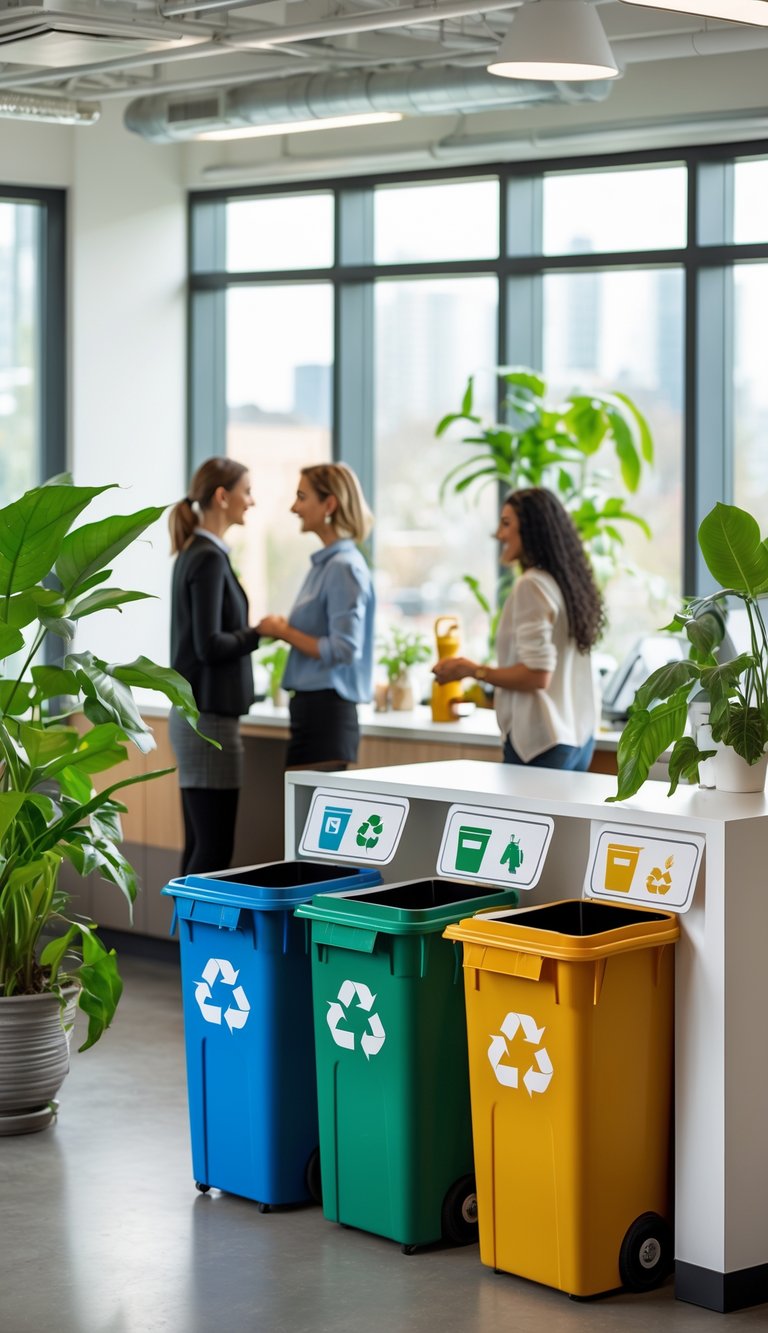
You can cut waste and make recycling easy by setting up a clear, consistent program. Place labeled bins in high-traffic spots like kitchens, meeting rooms, and near printers so people can recycle without thinking twice.
Use simple labels with pictures and short lists of accepted items. That reduces mistakes and keeps contamination low. Include a few restricted openings or slots for common items like bottles or paper to guide correct sorting.
Train staff with a quick demo or an email showing what goes where. Keep leadership involved and monitor bin contents so you can adjust signs or placement when needed.
PRO TIP
Set a small recycling team to oversee the program and meet monthly. They can check contamination rates, reorder supplies, and update signage based on real results. Use short surveys or suggestion boxes to get ideas from your coworkers and respond to common confusion quickly. Tie recycling success to a visible metric, like weight diverted or number of bags saved, and share progress in a common area or newsletter. Offer small incentives such as recognition or a casual team reward when the office reaches milestones. Consistent feedback and simple rewards keep people engaged and help the program last.
7) Encourage employees to use reusable water bottles

Make refillable bottles the easy choice for your team. Provide filtered water stations or coolers in common areas so people can refill quickly between meetings.
Offer branded reusable bottles as a welcome gift or reward for sustainability efforts. When employees have a bottle at their desk, they drink more water and use fewer single-use plastics.
Post simple reminders near sinks and dispensers to prompt refills. Pair this with a short guide on cleaning bottles to keep things hygienic and low-effort.
PRO TIP
You can boost adoption by running short, fun campaigns that make refillable bottles visible and social. Try a monthly photo challenge where employees share their bottle at a refill station or on a team chat. Consider giving small perks like a free coffee or a chance to win a prize for bringing a bottle every day for a week. Keep refill stations well-stocked with cups or spouts that fit common bottle styles and label filters with replacement dates. Track reduced plastic purchases to show real savings and share those numbers with staff—they like seeing progress.
8) Set printers to double-sided printing by default

You can cut paper use in half by making double-sided printing the default on your office printers. Change the setting on each computer or in the printer’s driver so every print job uses both sides unless someone chooses otherwise. This reduces paper waste and saves on storage and recycling costs.
On Windows, go to Settings or Control Panel, open Printers & Scanners, pick your printer, and adjust Print Preferences to duplex. On a Mac, open System Settings or Print dialog and set Two-Sided as the default. If a printer supports automatic duplexing, enable that feature to avoid manual flipping.
Tell your team about the change and post a short guide at shared printers. Train new hires so the habit sticks. You’ll see lower paper spending and a smaller environmental footprint.
PRO TIP
Make double-sided printing default in your print server or printer management console if your office uses a networked printer. That lets you enforce duplex across all users at once, saving time and preventing people from changing settings. Audit printer usage once a month and track paper orders to measure savings. For apps that bypass system defaults, create and share pre-set print profiles that force two-sided printing. If some jobs require single-sided prints, set clear rules for exceptions and charge project budgets for extra paper. Small policy steps and monitoring help keep savings real and consistent.
9) Use daylight sensors to automatically adjust office lighting
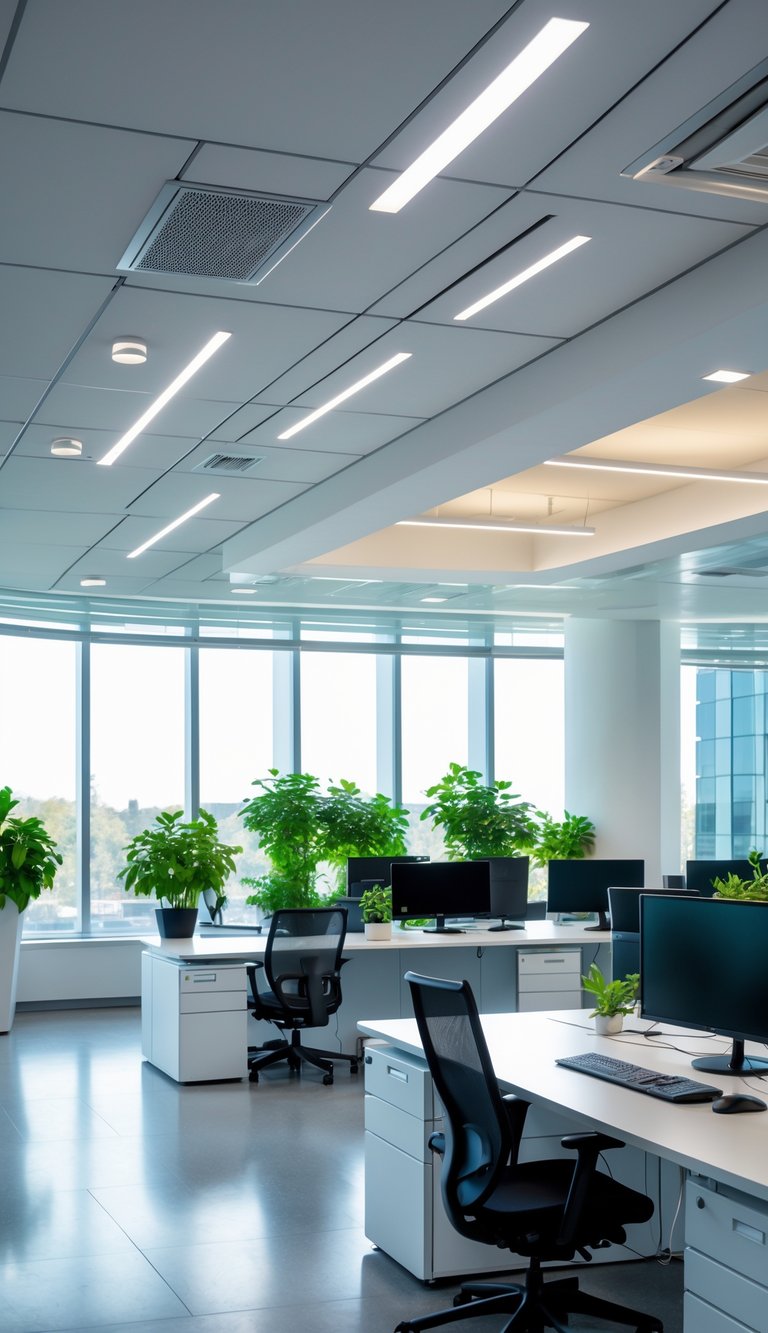
Daylight sensors cut how much electric light you need by sensing natural light and dimming or switching fixtures. They help keep work areas bright enough without wasting energy, and they can lower cooling costs by reducing heat from lights.
You can set sensors to control rows of lights or zones, so light levels stay even across open offices. The system reacts to changing sun and cloud cover, giving steady illumination for tasks and screens.
Install sensors with simple overrides so people can adjust when needed. Tie them into your building controls for schedules, occupancy sensing, and energy reporting to track savings and comfort.
PRO TIP
Choose daylight sensors that allow calibration for specific work surfaces and multiple zones. Test and tune sensor placement to avoid false readings from windows or reflective surfaces. Combine daylight sensing with occupancy sensors and DALI or other control protocols to get smoother dimming and better user control. During commissioning, measure work surface lux levels and adjust setpoints for the tasks people do most. Train staff on manual overrides and where to report issues so the system stays comfortable and efficient over time.
10) Choose low-VOC paints for office walls
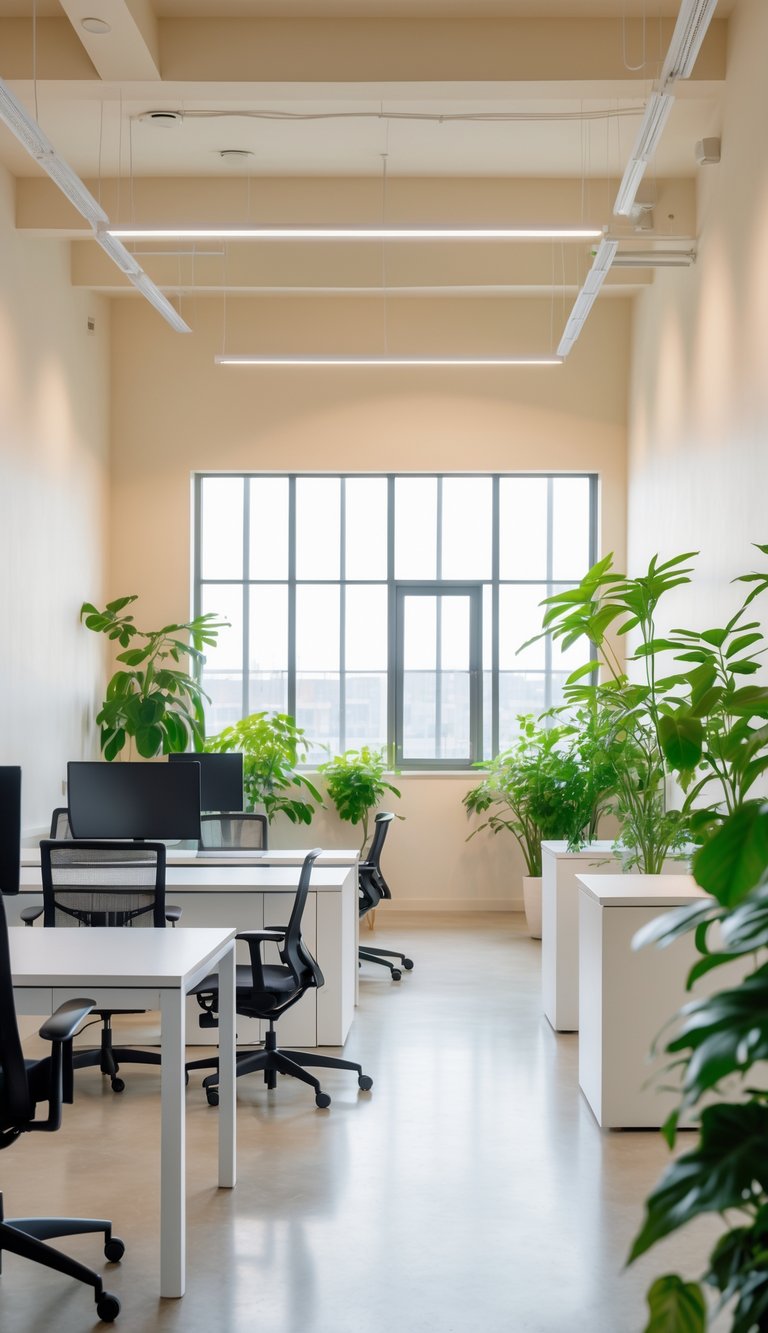
Pick low-VOC or zero-VOC paints to keep your office air cleaner. These paints release fewer harmful chemicals, so people who work in the space breathe easier and feel more comfortable.
Look for trusted brands and eco labels on the can. Certifications from third parties help you choose products that actually meet low-emission standards.
Plan ventilation while painting to reduce fumes even more. Open windows and use fans, and let the space air out for a day or two before regular use.
Test a small area first to check color and finish under your office lighting. That step saves time and avoids surprises later.
PRO TIP
When you shop, compare product data sheets for VOC levels and ingredient lists so you know what you are buying. Ask the retailer for low-odor or zero-VOC lines and check for third-party certifications like GreenGuard or similar regional labels. Consider water-based formulas, which usually have lower emissions than solvent-based paints. If anyone in your office has chemical sensitivities, choose natural or mineral-based paints and paint during off-hours to limit exposure. Keep cleaning supplies and wet rags sealed and dispose of them safely to prevent lingering odors.
11) Replace disposable coffee pods with a reusable coffee system

Switching to reusable coffee pods cuts single-use plastic and aluminum from your office waste. You can use stainless steel or BPA-free reusable cups that fit many Keurig and Nespresso machines. They last for years and are usually dishwasher safe.
Reusable pods let you choose whole-bean or ground coffee for better taste and lower cost over time. Staff can bring their favorite beans, which boosts morale and reduces the office’s supply expenses. You’ll still need a clear cleaning routine so filters stay fresh and coffee tastes good.
PRO TIP
Choose reusable pods that match your machine model to avoid leaks and poor extraction. Test a few types — stainless mesh, plastic with a filter, or fully metal options — to find the best balance of flavor and ease of cleaning. Buy a set with multiple inserts so staff don’t wait between brews. Keep a labeled sink-side bin for used grounds; compost them if your office has a compost program. Finally, post simple cleaning steps by the machine and schedule a weekly deep clean to keep your reusable system working well and reduce discarded pods.
12) Organize monthly ‘green challenges’ to engage the team

Pick a simple theme each month to keep things fresh and fun. You might focus on waste reduction, energy saving, or commuting choices.
Give clear rules and a short time frame so everyone can join. Small goals work best and feel doable, like using a reusable mug or cutting paper use by 20%.
Make participation social. Use a shared chat, a bulletin board, or quick weekly check-ins to celebrate wins and share tips.
Offer low-cost rewards or recognition to boost motivation. Even a public shout-out or a casual trophy builds friendly competition and keeps people coming back.
PRO TIP
Plan a year of monthly challenges ahead so your team sees the variety and can choose which months to join. Rotate themes between personal habits, office changes, and community actions to appeal to different interests. Track simple metrics like number of participants, items recycled, or kilowatt-hours saved. Share short stories and photos to make the results real and relatable. Consider pairing challenges with a small donation to a local environmental group when goals are met. That adds purpose and connects office effort to community impact.
13) Incorporate biophilic design elements like natural wood and stone
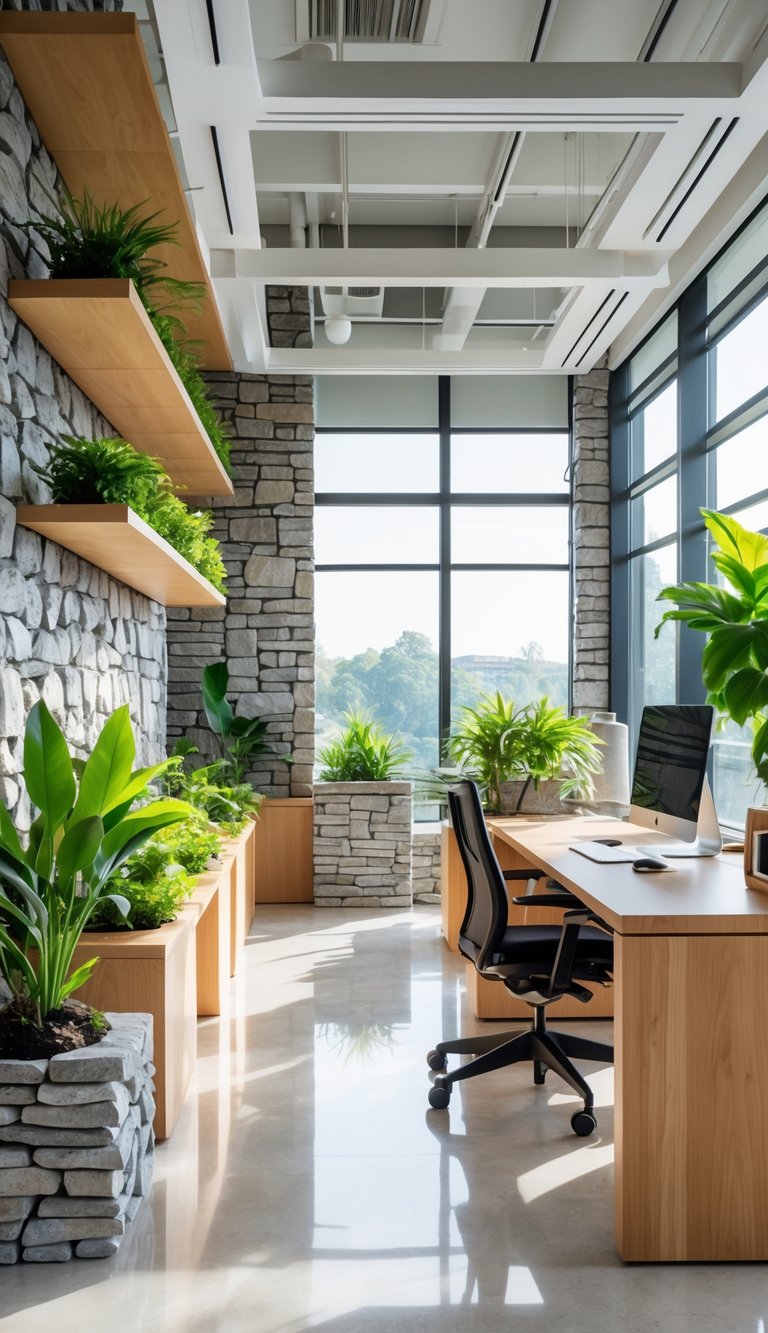
You can use natural wood and stone to make your office feel calmer and more grounded. Wood desks, shelving, or trim add warmth and a softer look than metal or plastic. Stone accents, such as a countertop or a feature wall, bring texture and visual interest.
Mix natural materials with plenty of daylight and plants to strengthen the connection to nature. Short sightlines to greenery help reduce stress and improve focus. Choose sustainably sourced wood and reclaimed stone to keep your design eco-friendly.
PRO TIP
You should start small if you’re new to biophilic design. Replace one furniture piece with solid wood or add a stone-topped communal table. Use low-VOC finishes and stains to keep indoor air healthy. Look for FSC-certified wood or reclaimed materials to reduce environmental impact. Pair these materials with living plants and large windows when possible to boost well-being. Rotate plants seasonally and clean stone surfaces with mild, eco-friendly cleaners. Keep maintenance simple so the natural elements stay attractive and functional without extra work.
14) Use water-saving fixtures in restrooms and kitchens
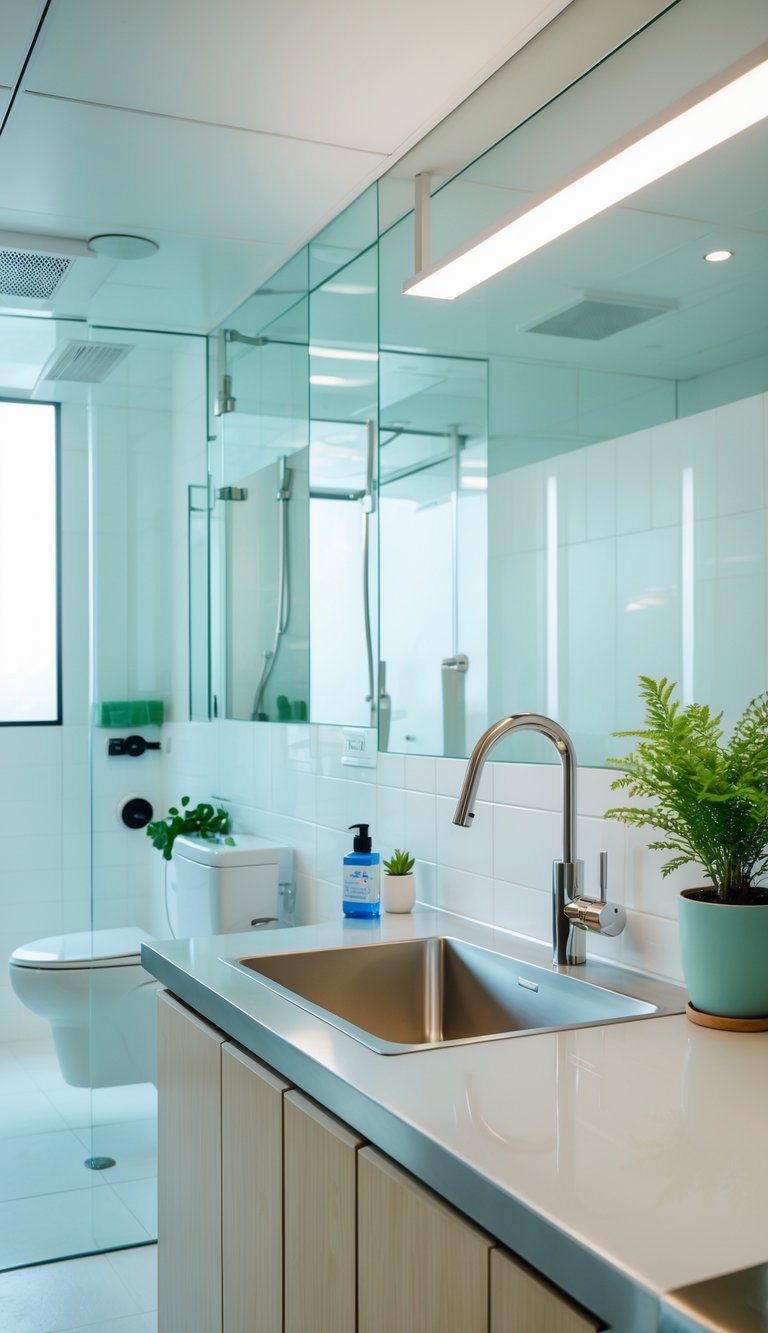
You can cut water use and lower bills by installing low-flow faucets, showerheads, and high-efficiency toilets. These fixtures give good pressure while using far less water than older models. Switching is easy and often pays back quickly through lower utility costs.
Choose WaterSense-labeled products or fixtures rated for low gallons per minute. Dual-flush toilets and faucet aerators are simple upgrades that work well in shared restrooms and kitchen sinks. Sensor taps save water by shutting off automatically after use.
Ask a plumber about recirculating systems or low-flow options for busy kitchens. Small changes across your office add up and help your building meet green goals.
PRO TIP
When you shop, look for WaterSense or similar third-party labels to ensure real savings. Track water bills for a few months before and after installation to measure impact. Prioritize high-use areas like main restrooms and staff kitchens for the biggest gains. For leased spaces, get landlord approval and offer to share cost savings as an incentive. Install aerators on all faucets; they are cheap and easy to fit. Consider timed or sensor-operated taps in public restrooms to reduce waste from running water. Regularly check for leaks and fix them quickly to avoid undoing the gains from new fixtures.
15) Offer incentives for employees who bike or carpool to work

Make it easy and worth your employees’ time to choose biking or carpooling. Offer small cash rewards, monthly gift cards, or extra paid time off for regular riders and carpoolers. These incentives help employees save money and lower commute stress.
Provide practical support like secure bike parking, lockers, and showers. For carpoolers, reserve preferred parking spots and create a simple matching tool or group chat to find partners. Track rides with a points system that employees can redeem for prizes.
Celebrate participants publicly to boost morale and visibility. Share short stories or photos in your newsletter and reward milestones to keep momentum.
PRO TIP
Set clear rules and simple tracking for your incentive program so participation stays fair and easy. Use a basic app or form where employees log commutes weekly; you can verify with photos, transit receipts, or signed confirmations. Keep rewards meaningful but affordable, such as monthly gift cards, commuter stipends, or reserved parking. Pair incentives with supportive facilities like lockers, showers, and bike repair partnerships to remove barriers. Promote the program with launch events and regular updates, and collect feedback after three months to adjust rewards or rules. Encourage managers to join to model the behavior and help build a lasting culture.
16) Hang art made from repurposed or recycled materials
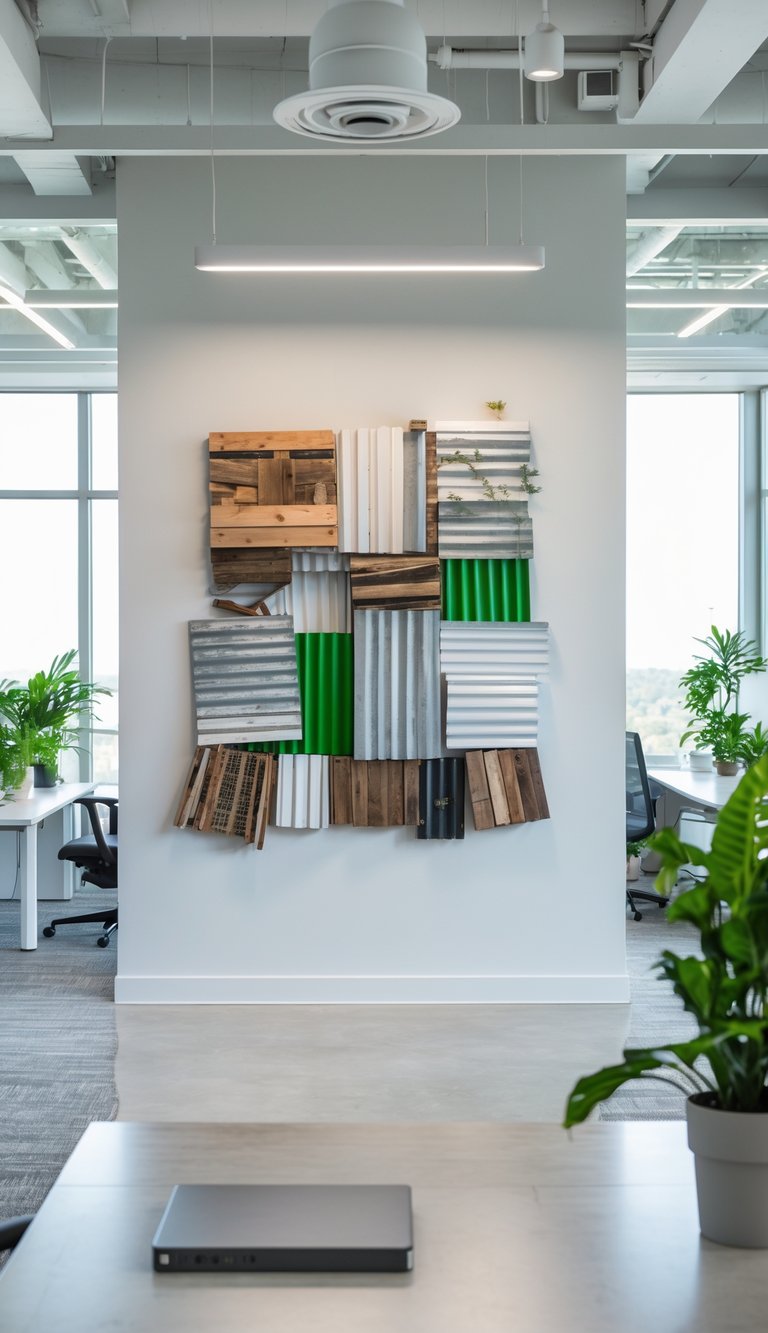
You can give your office walls new life by hanging art made from repurposed or recycled materials. Look for pieces made from reclaimed wood, metal scraps, or fabric offcuts to add texture without extra waste. These items often cost less and spark conversation with guests and coworkers.
Try sourcing items from local thrift stores, flea markets, or community swap groups. You can also commission a local artist who works with recycled materials to support the neighborhood and reduce shipping impact. Mix several small pieces into a gallery wall for a modern, layered look.
PRO TIP
When choosing recycled art, check for durable finishes and solid mounting hardware so the work stays secure and looks professional. Consider framing delicate textile or paper pieces under glass to protect them from dust and light. If you make your own pieces, label materials used and care instructions on the back for future users. Rotate artworks seasonally to keep the space fresh and to show off a variety of recycled finds. Small changes like adding felt pads to the back of frames prevent wall damage and keep the display aligned.
17) Set up a digital-first policy to reduce paper usage

You can cut paper use by making digital the default for most documents. Tell staff to share files by cloud links, use PDFs for signatures, and review documents on screen first. This lowers printing and saves storage space.
Create clear rules so everyone knows when printing is allowed. Give simple workflows for approvals, receipts, and forms that replace paper steps. Offer quick training and templates to make the change easy.
Make printers default to double-sided and grayscale for the rare printed pages. Track small wins with monthly reports so you can see how much paper you save and encourage continued effort.
PRO TIP
Start small by converting the most paper-heavy processes first, like invoices, HR forms, and meeting handouts. Give employees an easy checklist for each converted process that shows where to upload, how to name files, and who approves them. Offer short, 10-minute demos and one-page guides that show common tasks, such as sending secure links, using e-signatures, and scanning receipts with phone apps. Use simple metrics you can share each month — pages saved, trees saved, or storage freed — to keep momentum. Reward teams that cut the most paper with public recognition or a small perk, and update guidelines as tools change.
18) Create designated spots for e-waste collection
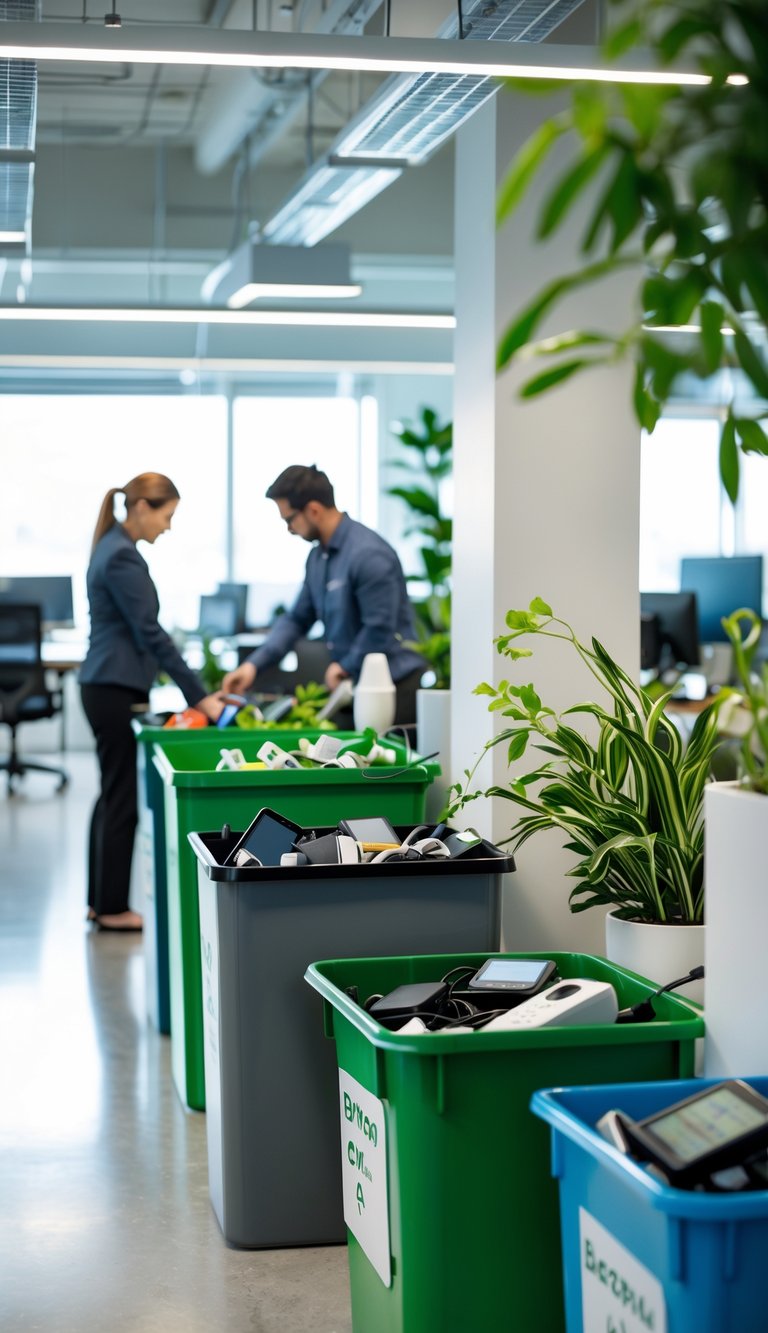
Set up clear, labeled bins where employees can drop old chargers, batteries, and small electronics. Place them in high-traffic areas like the mailroom or near recycling stations so people can dispose of items easily.
Make rules about what belongs in each bin and how often you’ll empty them. Partner with a certified e-waste recycler to pick up the collection and handle hazardous materials safely.
Promote the program with short reminders in meetings and a monthly email update. Offer small incentives, like recognition or a team reward, to encourage participation and keep the collection steady.
PRO TIP
Make a simple map showing all e-waste spots and post it on your intranet and breakroom board. Train one or two staff volunteers to check bins weekly for improper items and to keep the area tidy. Track how much e-waste you collect each month and share that number with staff to show progress. Consider hosting an annual e-waste drive for larger items like monitors, and invite nearby businesses to join. Work with certified recyclers that provide documentation so you can report responsible disposal in sustainability reports and reduce legal risk.
19) Choose office supplies certified by sustainability standards

You can cut your office’s environmental impact by choosing supplies with trusted eco labels. Look for certifications like FSC for paper and wood, ENERGY STAR for electronics, and Green Seal for cleaning products. These labels show that the items meet specific environmental or health standards.
Buying certified products helps you avoid greenwashing and supports companies that follow verified practices. Certifications also make it easier to compare products and justify purchases to managers or procurement teams. Start by checking labels on basics like paper, ink cartridges, and furniture.
PRO TIP
When you shop, create a short checklist of the certifications that matter most to your office. Include things like recycled content percentage, non-toxic materials, and end-of-life recyclability. Train one person to spot labels and keep a list of preferred vendors that carry certified items. Buy in bulk when possible to reduce packaging waste and shipping emissions. Track savings and reduced waste each quarter to show the impact of your choices. Small steady steps make it easier for your whole team to adopt sustainable buying habits.