
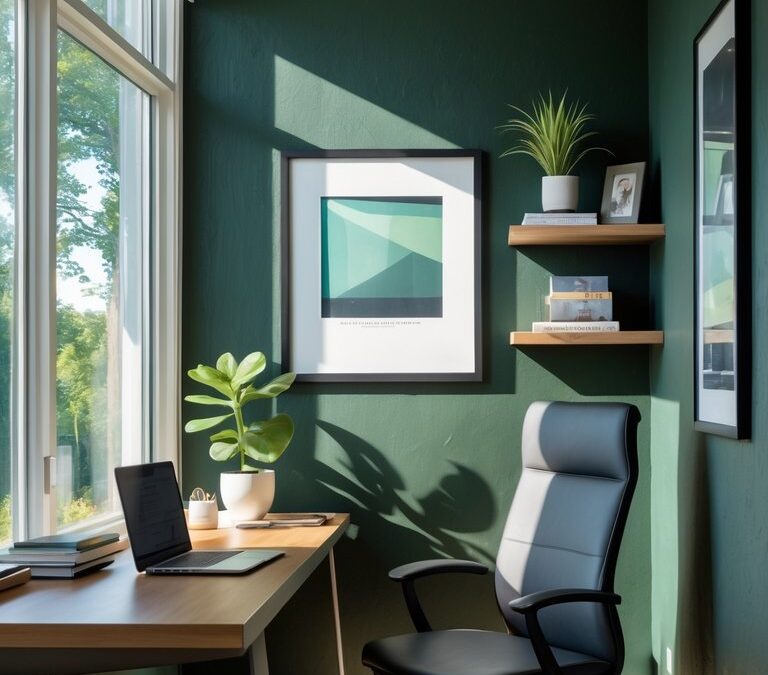
Dark green walls can change how your home office feels and how you work in it. They add depth, calm, and a strong sense of style so your workspace feels intentional and focused. You’ll learn simple ways to use dark green—through accent walls, textures, lighting, and decor—to make your office both productive and inviting.
This article will show options that fit different tastes, from matte paint and glossy tiles to velvet curtains, brass details, and natural wood pairings. You’ll see ideas that help you mix color, texture, and light so your office looks pulled together and helps you work better.
PRO TIP
Choose one main element to anchor your dark green scheme, like a deep emerald accent wall, a warm wood desk, or brass fixtures. Start by testing paint samples on the wall and look at them at different times of day. Pair dark green with lighter trims, soft rugs, or metallic accents to avoid a heavy look. Use layered lighting—task lamps, overhead lights, and accent lighting—to keep the space bright where you need it. Add texture with velvet cushions, leather chairs, or botanical prints to make the room feel lived-in. Finally, limit bold patterns to one area so the room stays calm and focused while still feeling stylish.
1) Deep emerald accent wall for a bold focal point
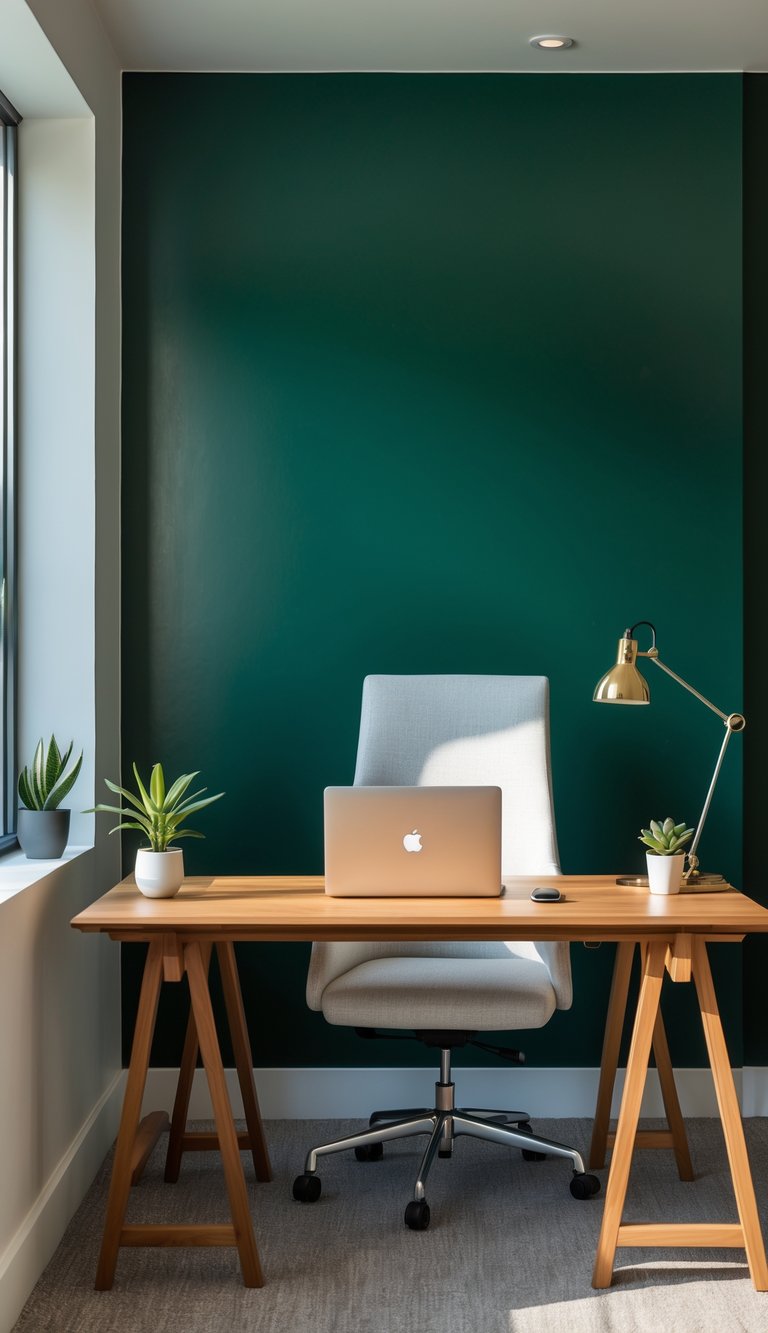
A deep emerald accent wall gives your home office a clear focal point that draws the eye. You can place it behind your desk or a bookcase to anchor the room and add rich color without painting every wall.
Pair the emerald with light furniture and warm wood tones to stop the space from feeling heavy. Small gold or brass accents bring a subtle touch of luxury and lift the palette.
Keep surrounding walls neutral and add layered lighting so the green reads well at any time of day. Texture from a rug or fabric chair softens the bold color and makes the space feel cozy.
PRO TIP
When you choose emerald, test large paint swatches at different times of day on the exact wall you plan to paint. Natural light changes the tone a lot, so observe the swatches in morning, midday, and evening light. Use swatches at eye level and step back to see how the color works with your furniture and flooring. If your room gets little natural light, pick an emerald with slightly warmer undertones to avoid a cold, flat look. Consider pairing the wall with soft whites, warm woods, and metallic accents to create balance. Finally, choose a satin or eggshell finish to hide small marks while keeping a gentle sheen that reads rich without being glossy.
2) Hunter green paired with natural wood tones
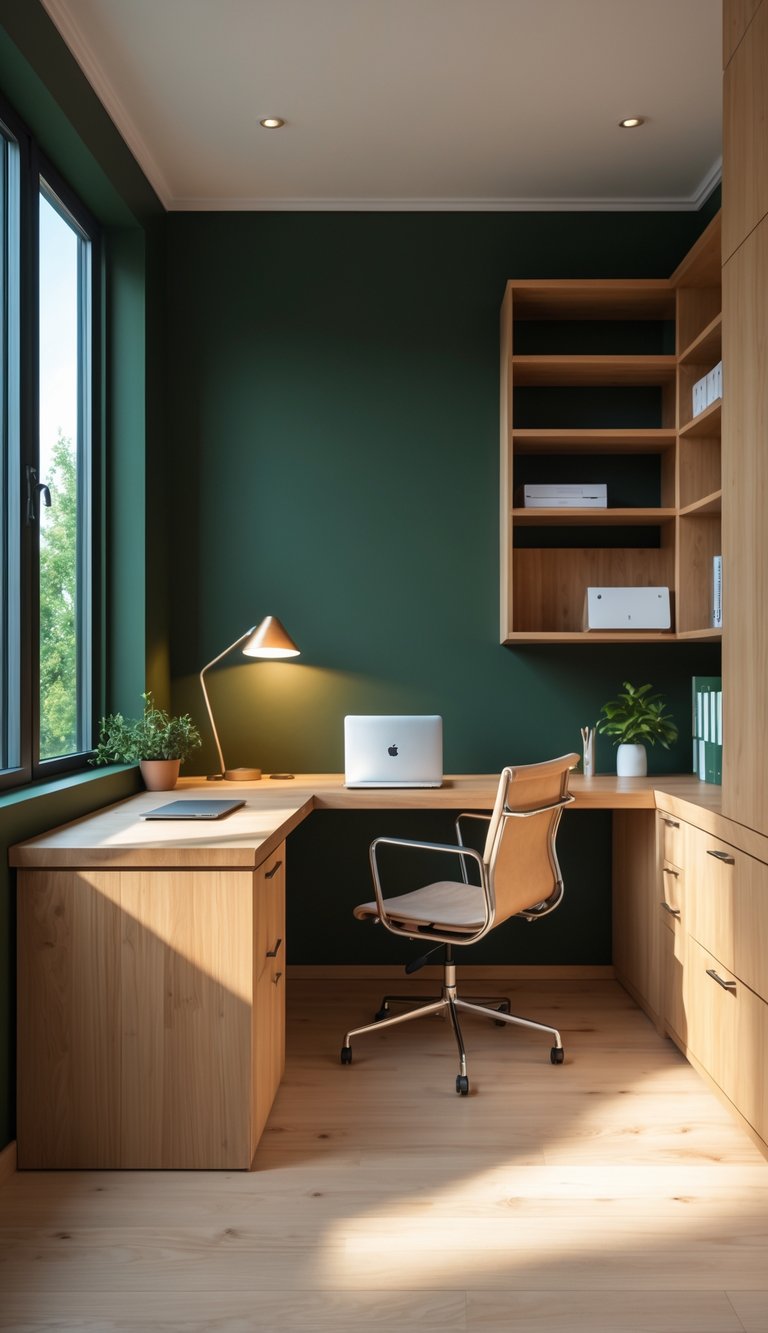
Hunter green walls give your office a rich, calm backdrop that feels both classic and modern. Pairing that deep color with natural wood tones brings warmth and keeps the room from feeling heavy.
Choose a wood finish with visible grain to add texture and visual interest. A mid-tone oak or walnut desk and shelving will pop against hunter green without clashing.
Keep accessories simple and light. Brass or matte black hardware can add small highlights while plants or woven baskets soften the look and echo the wood’s warmth.
PRO TIP
When you work with hunter green and wood, balance matters. Start by picking one main wood tone for large pieces like your desk or bookcase, then repeat that tone in small accents so the room feels cohesive. Use lighter textiles—linen curtains or a cream rug—to lift the space and prevent it from feeling too dark. Add a mix of closed storage and open shelving to control clutter and show off a few curated items. Finally, test paint on a large swatch next to your wood furniture and view it at different times of day to be sure the tones work together.
3) Dark green walls with white molding accents
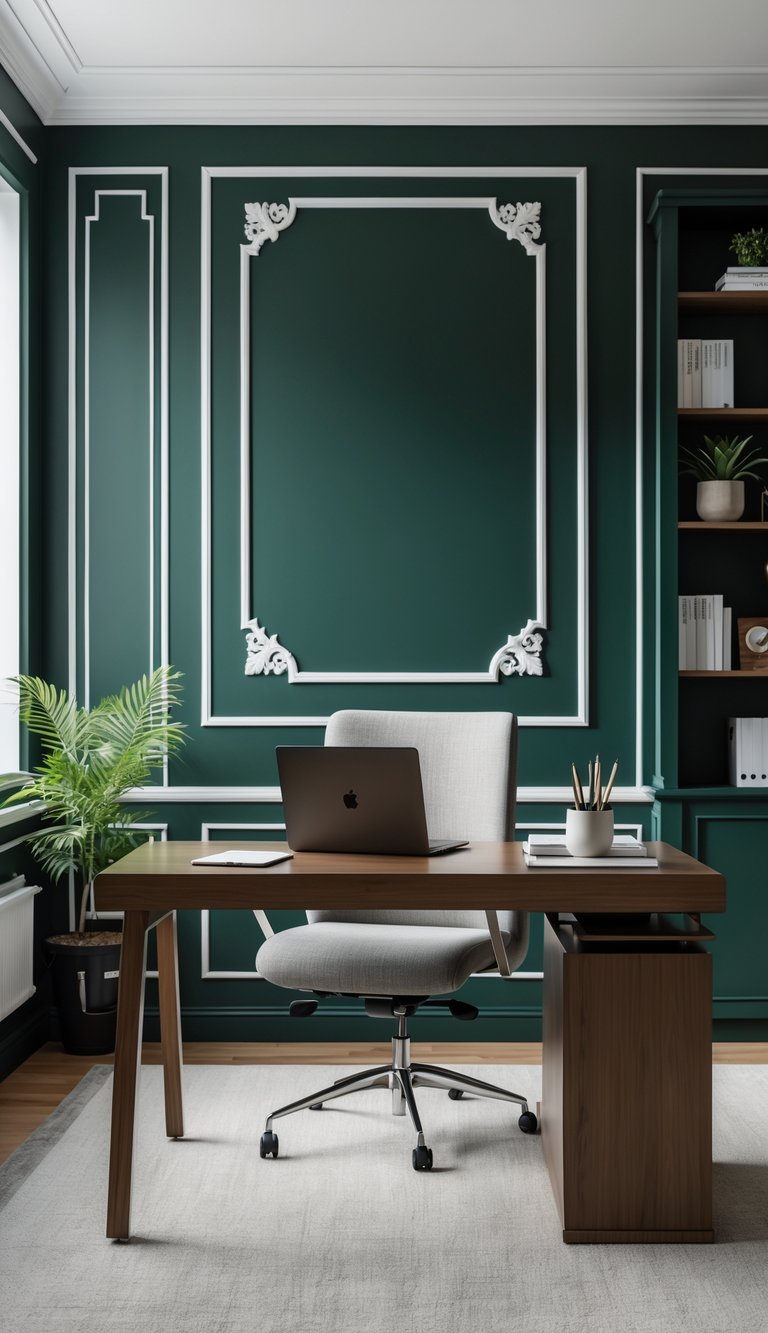
Dark green walls paired with white molding create a clean, classic look that still feels modern. You get depth from the green and crisp lines from the white trim, which frames the room and highlights architectural details.
Use white molding to break up large swaths of color and keep the space from feeling too heavy. Picture a deep green wall with picture-frame molding or chair rails in bright white; the contrast makes artwork and shelves stand out.
Keep furniture and textiles lighter to balance the mood. A white desk, light wood tones, or pale linen curtains will keep your office bright and focused while the molding adds polish.
PRO TIP
When you choose trim paint, pick a durable semi-gloss white so it cleans easily and reflects light back into the room. Test paint samples together—green wall swatches next to the white trim—at different times of day to see how natural and artificial light shift color. If your room feels small, add a white-painted shelf or floating desk under the molding to create visual breaks and extra surface area. For a cohesive look, match the white trim to small accents like lamp bases or picture frames. Finally, use warm metallic hardware—brass or matte gold—to add subtle warmth without clashing with the green.
4) Brass fixtures against deep green walls
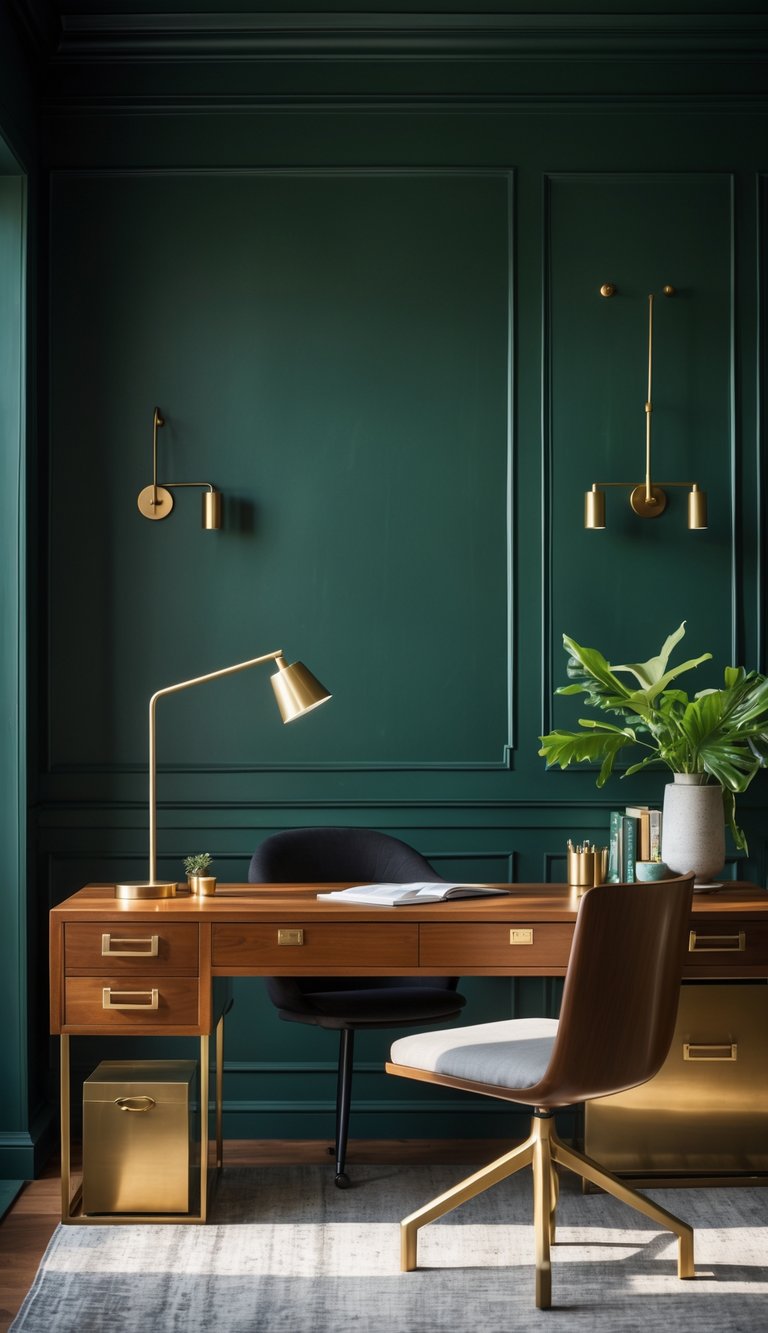
Brass fixtures look warm and rich against deep green walls. The gold tones pop without feeling flashy, and they give your office a refined, classic touch.
You can use brass in small doses, like a lamp, drawer pulls, or picture frames. These touches add shine and help guide the eye around the room.
Mix finishes carefully so the brass reads as intentional. Pair it with wood or matte black accents to keep the look balanced and grounded.
PRO TIP
When you choose brass, pick pieces with a slightly aged or satin finish to avoid glare and maintain a cozy feel. Test a few samples near your desk and shelves, because light changes how brass appears. Warm bulbs bring out the metal’s depth, while cool light can make it look harsher. For cohesion, repeat the brass in at least three places—such as a lamp, shelf bracket, and cabinet handle—so the finish feels planned. If you work with lots of screens, position brass accents where they won’t create distracting reflections. Finally, clean brass gently with a soft cloth to keep the finish consistent without stripping any intentional patina.
5) Velvet green curtains for added texture
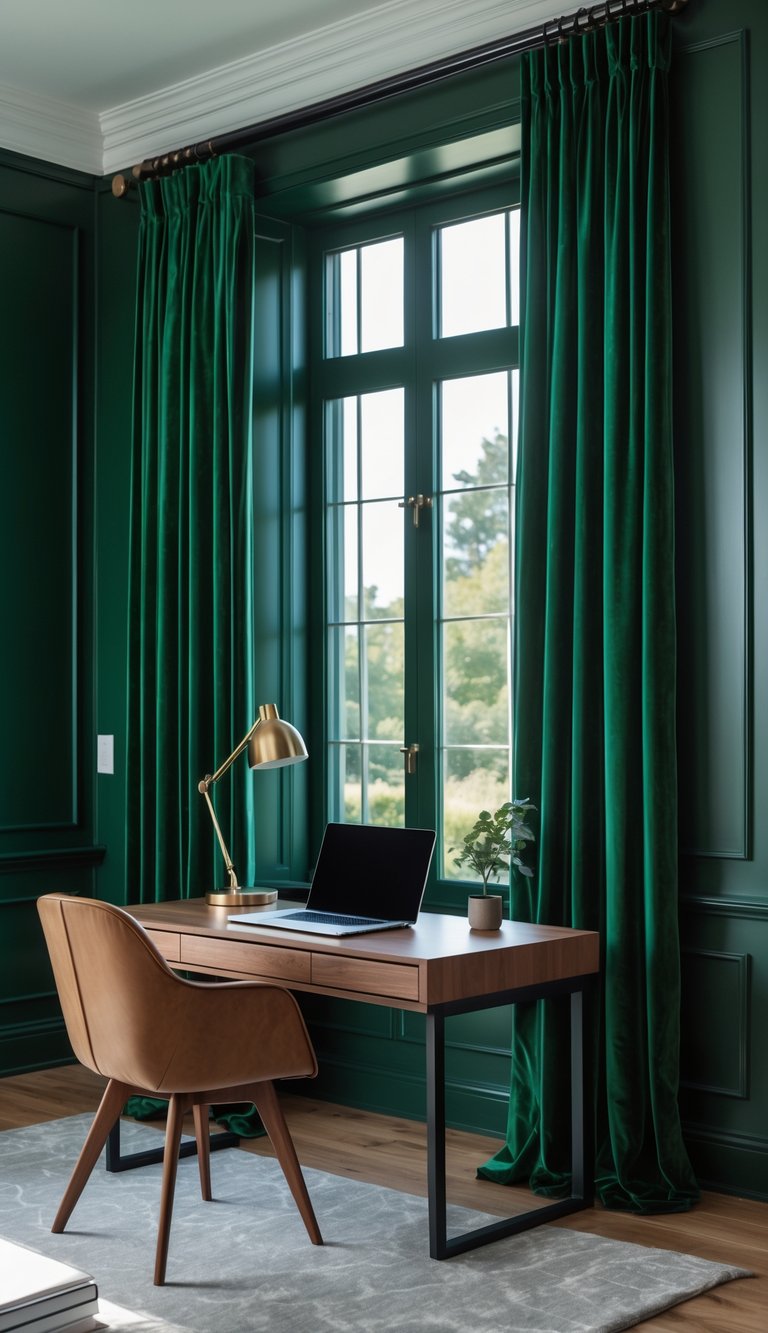
Velvet green curtains add soft texture and depth to your dark green home office. They catch light differently than flat paint, giving the room a rich, layered feel without extra clutter.
Choose heavier velvet if you want better light control and sound dampening. Lined panels help block glare on screens and make the space feel cozier during long work sessions.
Match the curtain shade to your wall tone for a seamless look, or pick a slightly lighter or darker green to create contrast. Keep curtain hardware simple so the fabric stays the focal point.
PRO TIP
You can use velvet curtains to improve both comfort and function in your office. Hang them a few inches above the window frame and extend the rod wider than the window to make your windows look larger. Full-length panels that puddle slightly on the floor create a luxe vibe, while hems that just touch the floor look neat and modern. If your office gets a lot of sun, add a blackout lining to protect furnishings and reduce glare on monitors. For easier care, choose machine-washable velvet blends or opt for dry-clean only if you prefer true velvet. Match curtain texture with one other soft element in the room, like a rug or throw, to tie the space together without overdoing it.
6) Matte dark green paint for subtle elegance
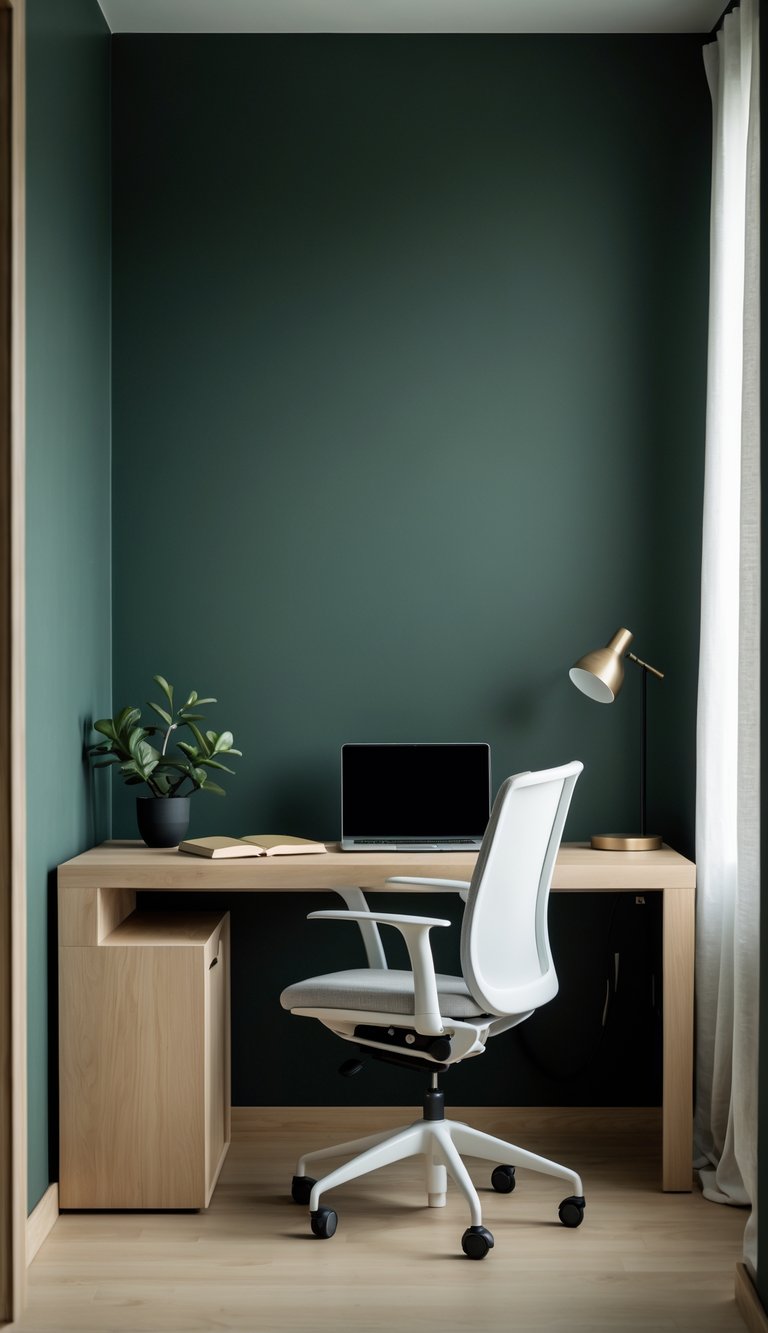
Matte dark green gives your office a calm, grown-up feel without flashy shine. It soaks up light and helps reduce glare on screens, which makes long work sessions easier on your eyes.
You can use it on all walls for a cozy, enveloping look or on just one wall to ground the room. Pair it with warm wood furniture or soft brass accents to keep the space from feeling too heavy.
Matte finishes hide small wall flaws, so you won’t need perfect walls to get a clean, refined result. Keep lighting layered — a desk lamp, overhead light, and a floor lamp — so the color reads well at any hour.
PRO TIP
Choose a matte dark green with a neutral undertone if you want flexibility with textiles and accessories. Test large swatches on different walls and observe them at morning, afternoon, and evening light to see how undertones shift. If your room has low natural light, pick a green with a touch of warmth to prevent the space from feeling cold. For trim and shelves, consider a low-sheen or satin finish to add subtle contrast and make details stand out. Finally, buy extra paint for touch-ups; matte finishes can be harder to match exactly after the first coat.
7) Dark green chalkboard paint for a creative touch
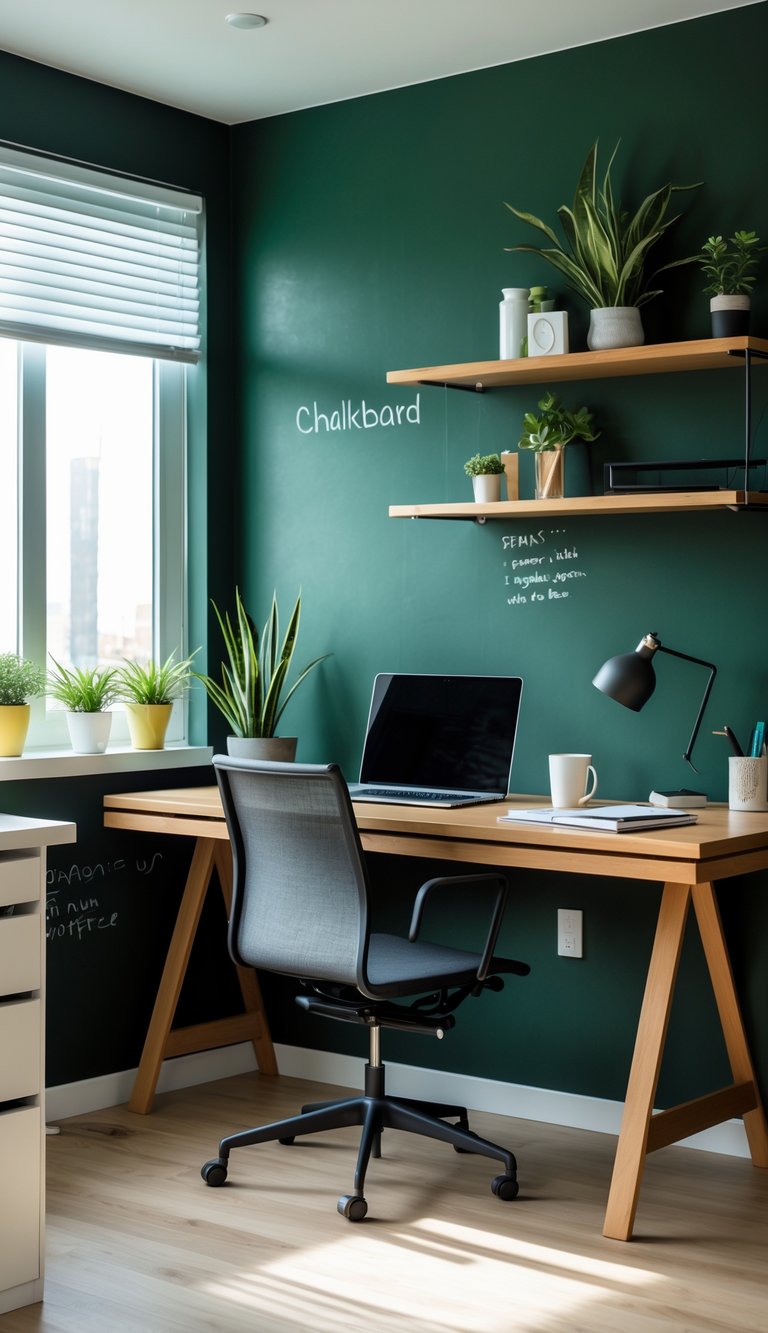
Dark green chalkboard paint turns one wall into a writable canvas. You can jot ideas, sketch plans, or leave notes without killing wall space. It works well on wood, drywall, and even glass if prepped right.
Choose a durable formula that resists scratches and cleans with soap and water. Test a small patch first to ensure the finish looks matte and the color reads as a deep green under your lighting. Use liquid chalk markers for fine lines and traditional chalk for quick notes.
Keep a small shelf or tray nearby for chalk and erasers. This makes the wall easy to use and keeps supplies tidy. The result adds personality and makes your office more hands-on.
PRO TIP
Think about the wall’s placement before you paint. Put the chalkboard wall where you’ll stand or sit to write comfortably, and avoid placing it behind screens that catch glare. Prep the surface thoroughly: fill holes, sand smooth, and apply a good primer if the paint label suggests it. For best results, apply two thin coats and let each coat dry fully before using the surface. Consider sealing with a clear, matte topcoat if you need extra durability in a high-traffic area. Finally, season the chalkboard by rubbing a piece of chalk over the whole surface and wiping it off to prevent permanent ghosting.
8) Glossy dark green tiles as wall art
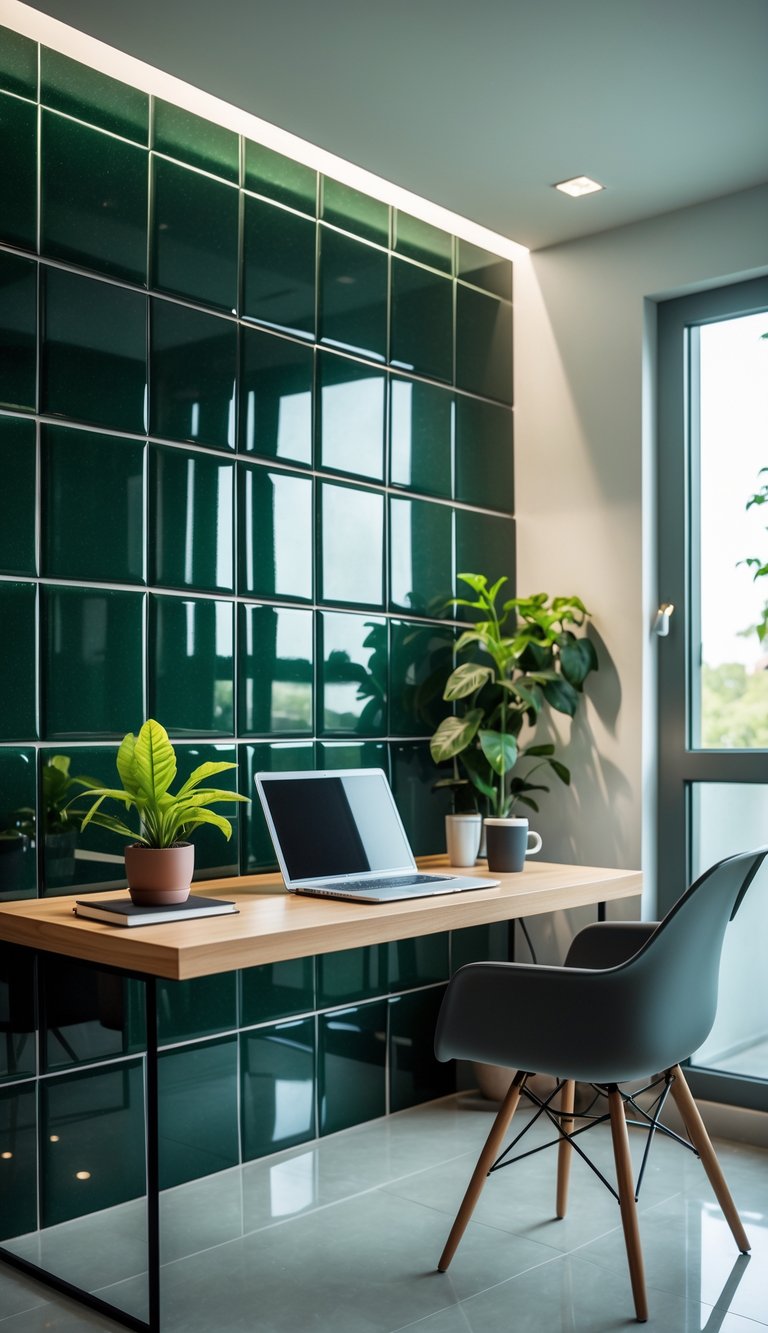
You can use glossy dark green tiles to make a striking wall art feature in your home office. The shine from the tiles catches light and adds depth, turning a plain wall into a focal point without heavy framing or large artwork.
Mix tile sizes or arrange tiles in a geometric pattern to create movement. A small grid looks modern, while staggered or herringbone layouts feel more dynamic and hand-crafted.
Pair the tiles with simple, neutral furniture so the wall stays the star. Natural wood or matte metal accents balance the gloss and keep the room warm and functional.
PRO TIP
When you plan your tile art, measure carefully and create a mockup on paper or with painter’s tape on the wall. This helps you test scale, pattern, and how light will hit the tiles at different times of day. Choose tile grout in a color that either blends for a seamless look or contrasts for a defined pattern; both approaches work, but each changes the final mood. If you can, use peel-and-stick glossy tiles for an easy, low-commitment option that you can change later. For permanent tile, use a suitable adhesive and sealant rated for interior walls to avoid peeling or moisture issues near windows or HVAC vents.
9) Botanical prints on green backgrounds
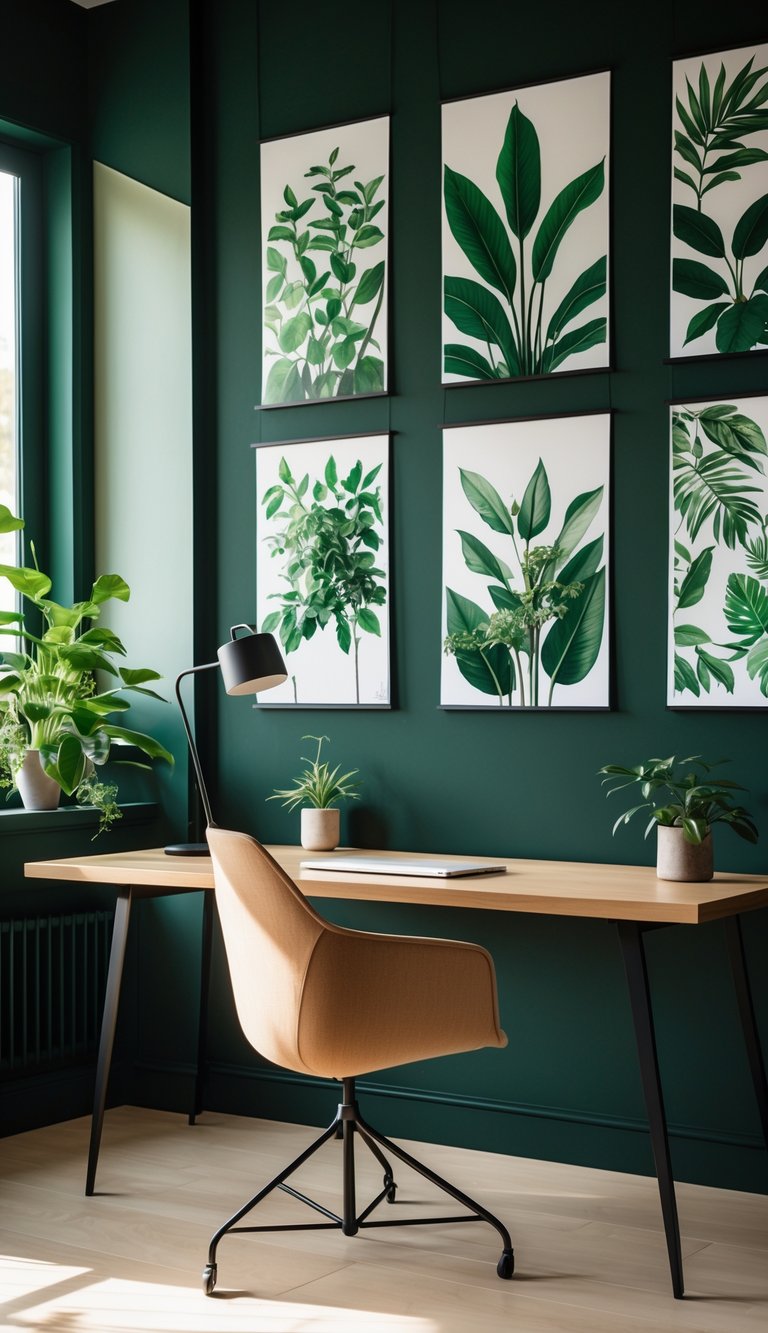
Botanical prints on green backgrounds make a calm, focused backdrop for your home office. You’ll get a natural feel without bright colors that distract. Dark green keeps the look professional and grounded.
Choose prints with leaves, ferns, or subtle flowers to add detail without busying the space. Match leaf tones to your wall shade so the art blends, or pick lighter greens to create gentle contrast. Framed prints in thin black or gold frames keep things tidy and modern.
Arrange a small gallery of three to five pieces above your desk for balance. Space them evenly and keep frames the same size for a clean, organized display. You’ll create a restful, inspiring area that helps you work.
PRO TIP
You can layer botanical prints with a mix of textures to add depth without crowding your office. Try pairing a few flat prints with one or two canvas pieces or a small woven wall hanging. Keep the color set to greens, creams, and muted tones so the wall reads as a single, calm surface. When you choose frames, stick to one finish—matte black, warm wood, or brushed gold—to keep the arrangement cohesive. Consider using peel-and-stick frames or removable hanging strips if you rent, so you can change the layout without damage. Finally, position your desk so natural light hits the art indirectly; this prevents glare and keeps the colors rich.
10) Dark green walls with black metal shelving
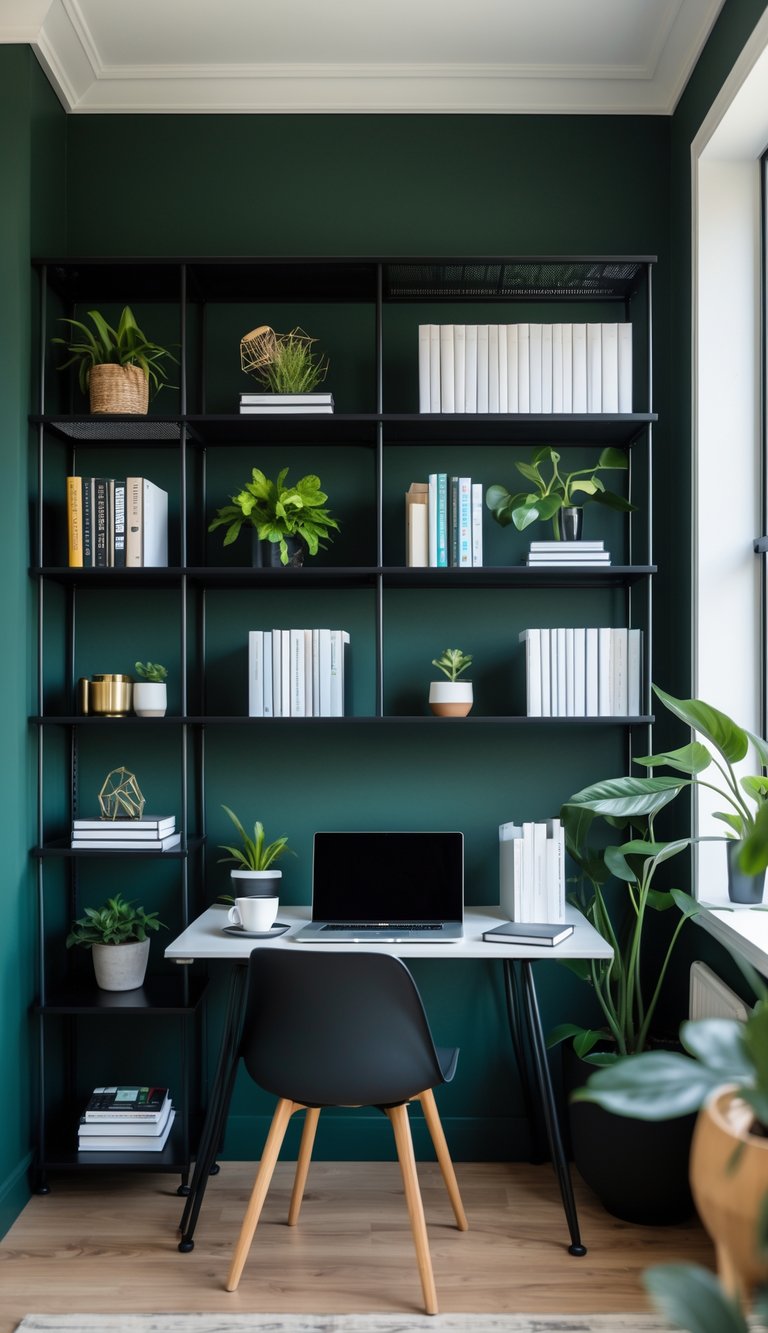
Dark green walls give your office a calm, rich backdrop that feels both modern and grounded. Pairing that deep color with black metal shelving adds a crisp, industrial edge that keeps the room from feeling too heavy.
Black metal shelves create strong lines against the green, so your books, plants, and gear stand out. Use open shelving to show texture—wood boxes, terracotta pots, and woven baskets balance the metal and soften the look.
Keep the shelving layout simple and functional. Stagger shelves at different heights to store files and display art without cluttering your workspace.
PRO TIP
You can make the pairing work even better by mixing materials and keeping scale in mind. Choose shelving with thin metal frames if your room is small, and pick thicker frames for larger rooms so the shelves don’t get lost. Add warm wood or brass accents on the shelves to break up the dark tones and add visual interest. Use baskets or boxes to hide cords and small items for a cleaner look. Place a lamp with a warm bulb or a small plant nearby to create contrast and make the space feel inviting. Rotate items seasonally to keep your office fresh and useful.
11) Leather chairs complementing green walls
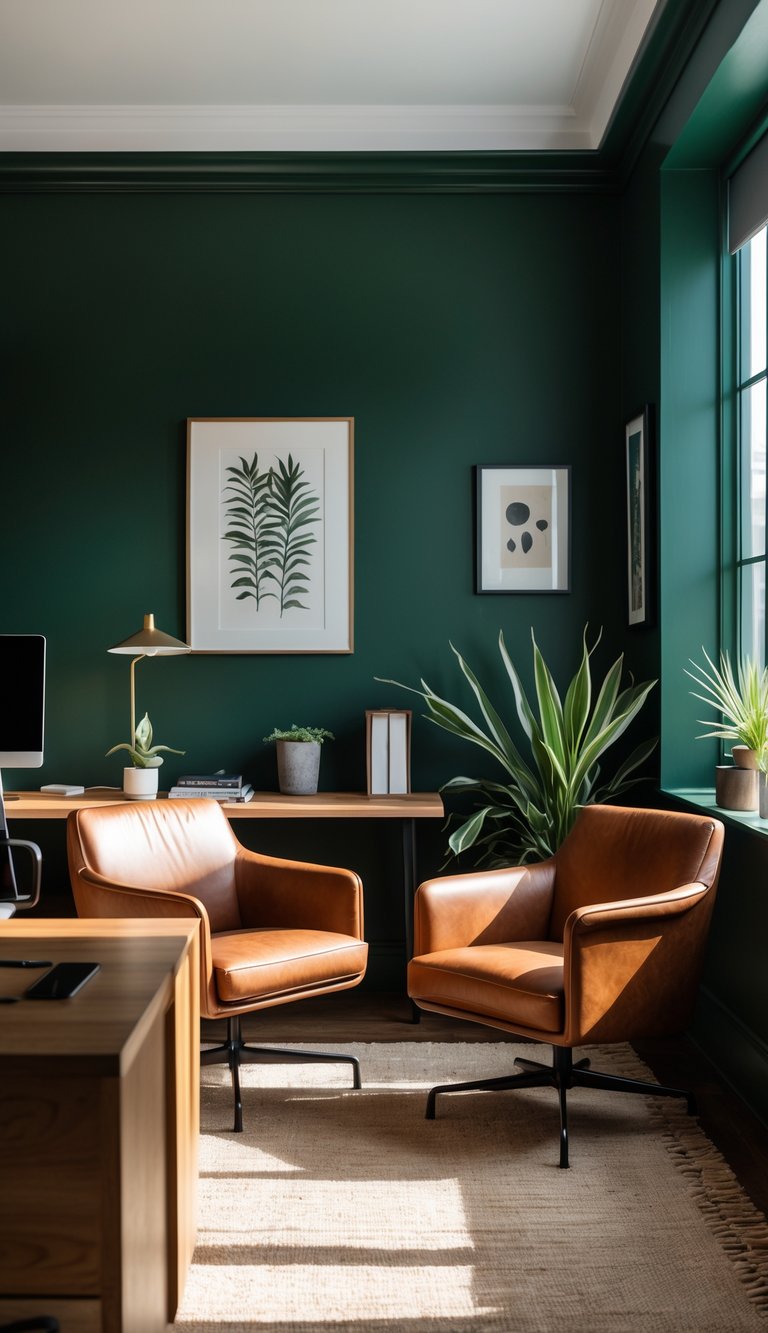
Leather chairs add warmth and texture against dark green walls. The smooth, rich surface of leather balances the depth of green and brings a classic, grounded feel to your office.
Choose brown or tan leather for a timeless look that pairs well with wood accents. Black leather offers a sleek, modern contrast that keeps the room feeling focused and professional.
A leather chair can act as a visual anchor in the space. Place it near a light source to show the leather’s natural patina, which adds character over time.
Keep comfort in mind. Look for good padding and lumbar support so your chair looks great and keeps you productive through long work sessions.
PRO TIP
You can mix materials to avoid a heavy or overly formal look. Add a soft wool throw or a textured cushion on the leather chair to introduce contrast and break up the smooth surface. If your green walls are very dark, choose lighter leather tones or leather with warm undertones to keep the room from feeling too closed in. For brighter greens, deeper leather colors add sophistication without clashing. Test samples in your actual light at different times of day before you buy. This helps you see how the green and leather shift with natural and artificial light, so you pick the best match for your space.
12) Green walls with soft beige rugs
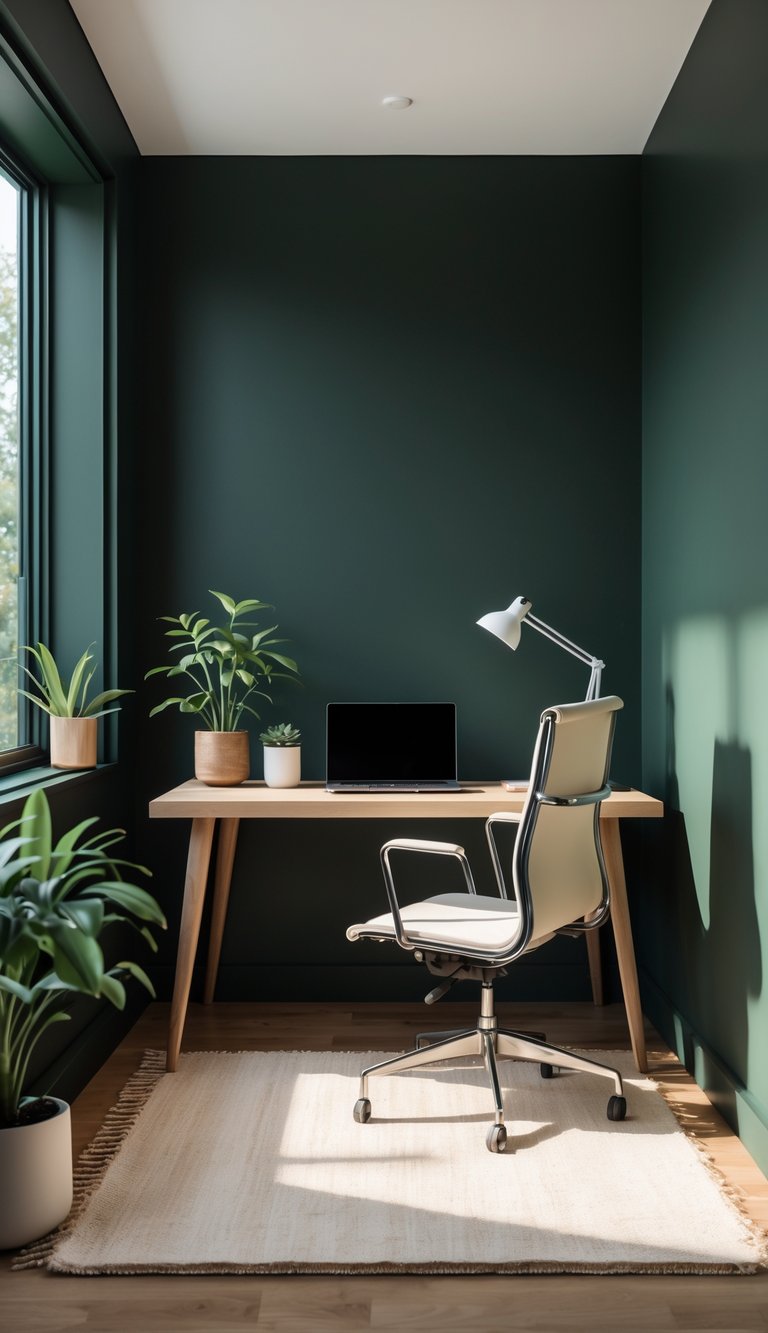
Pair dark green walls with a soft beige rug to balance depth and warmth. The beige keeps the room feeling open while the green adds calm and focus for work.
Choose a rug with a low to medium pile so your chair rolls smoothly and the floor stays easy to clean. A neutral rug also lets you add color with pillows, plants, or artwork without competing with the walls.
Use textures like wool or cotton to add warmth underfoot and soften the room’s look. If your office gets little light, pick a warmer beige to reflect more light and keep the space inviting.
PRO TIP
When you add a soft beige rug to a dark green room, think about layering. Place a slightly smaller patterned runner or textured mat under your desk to protect high-traffic areas and create visual interest. Mix fibers—wool for warmth, jute for an organic touch—to prevent the space from feeling flat. Keep rug size proportional: it should extend beyond the desk and chair so movement feels natural. Use a non-slip pad to keep the rug stable and protect the floor. If you have under-desk cables, route them along the rug edge or beneath it to avoid snags. Finally, test rug color against your wall paint in different light before you buy, because natural and artificial light can change how beige reads next to dark green.
13) Dark green and gold desk accessories
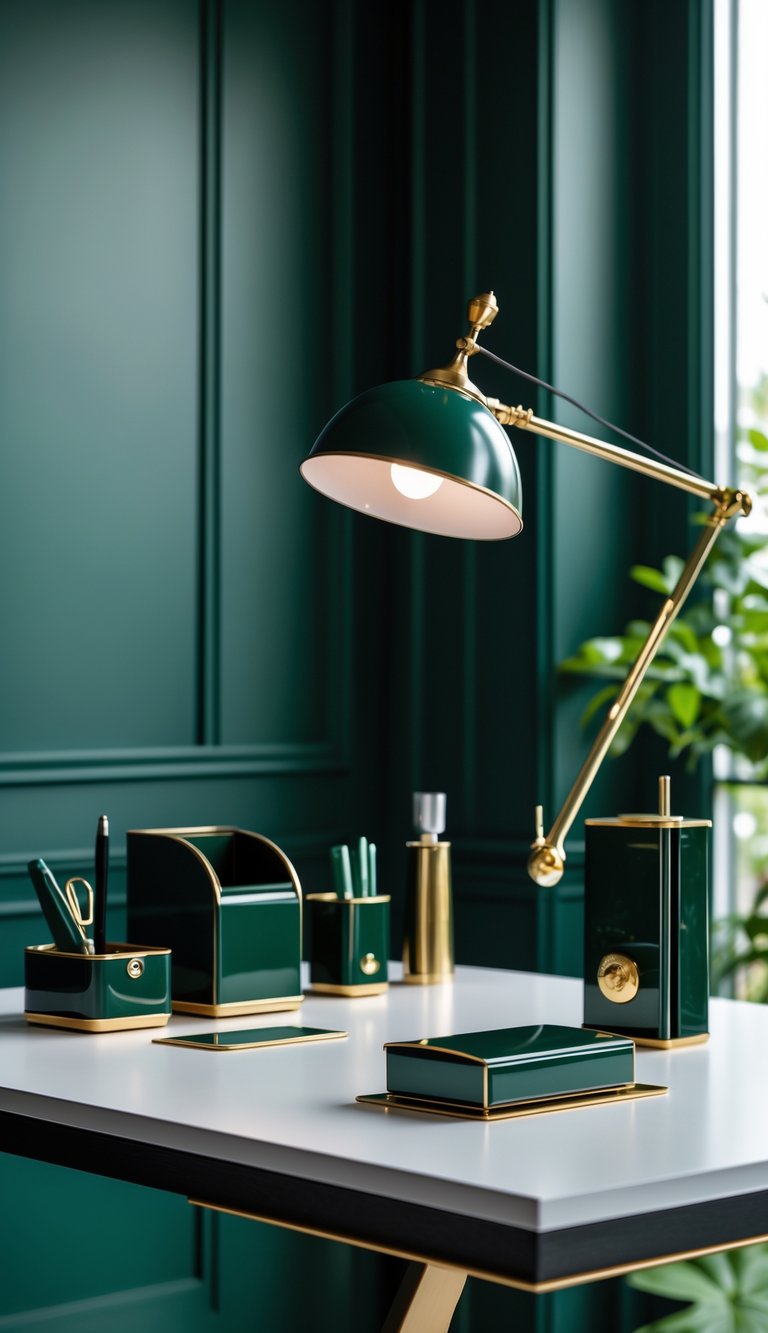
Dark green walls set a calm, rich backdrop for gold desk accessories. You can place a gold lamp, pen cup, or paper tray on your desk to add warmth and a touch of shine.
Choose accessories with clean lines to keep the look modern and not fussy. Small gold pieces pop best against deep green without competing with larger furniture.
Mix textures for balance: matte green surfaces with polished gold items create depth. Keep items you use daily within reach so the styling stays functional, not just decorative.
PRO TIP
Pick two or three gold accents rather than many to avoid a cluttered look. Start with a statement piece, like a brass desk lamp or a gold-framed mirror, then add one or two smaller items such as a pen holder or paperweight. Match the gold tone across pieces—warm brass looks better with deep, yellow-based green, while cooler golds suit bluish greens. Consider materials that resist fingerprints and scratches so they stay attractive with regular use. Finally, keep the desk surface tidy and leave some negative space; that makes the dark green wall and gold accessories feel intentional and calm.
14) Vintage green wallpaper for an accent wall
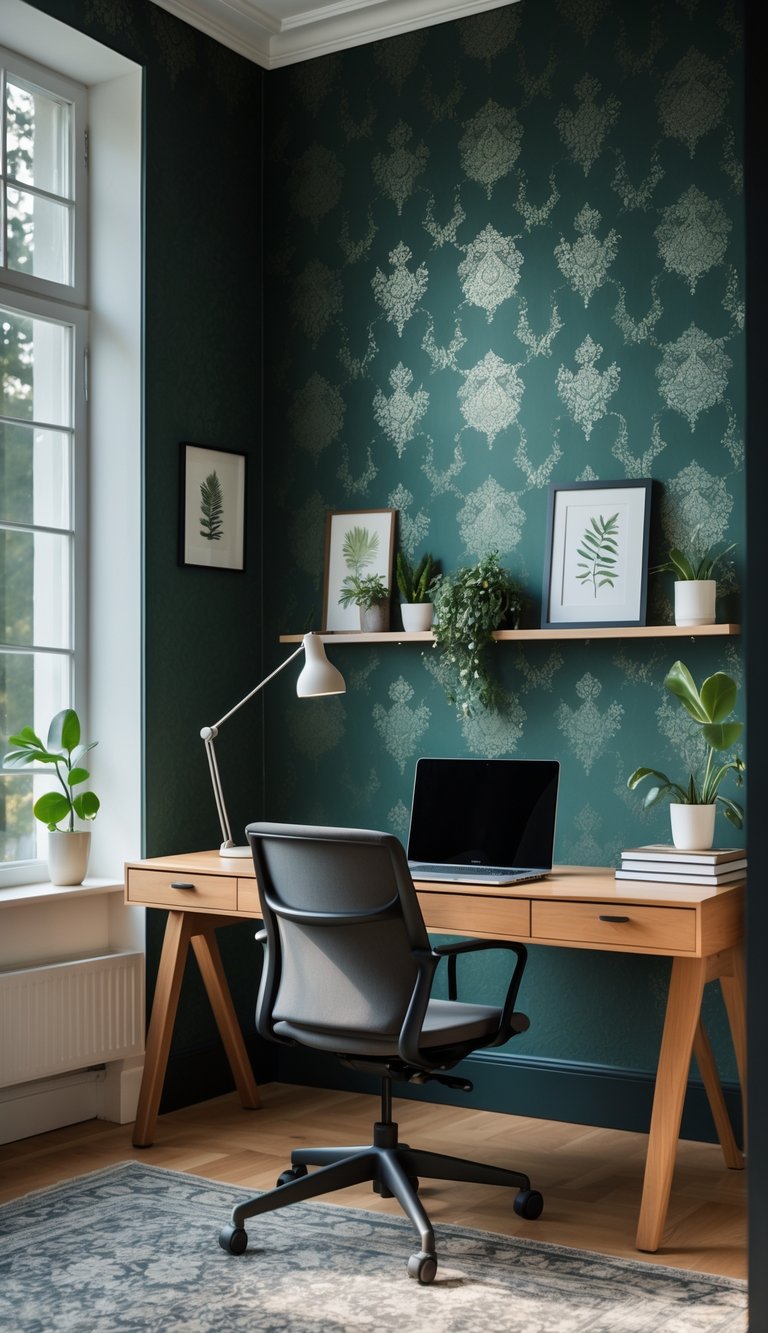
Choose a vintage green wallpaper to give your office a calm, lived-in feel. A patterned toile or botanical print adds texture without overwhelming the room.
Place it on a single accent wall behind your desk or bookshelf to draw the eye. You keep the rest of the room light to balance the darker tone and prevent the space from feeling small.
Look for peel-and-stick or washable materials to make changes easy. These options are simple to install and remove if you want a new look later.
PRO TIP
Pick a shade of green that complements your existing furniture and lighting. Test a few samples on the wall at different times of day to see how natural and artificial light affect the color. Use warmer bulbs or a lamp near the accent wall to bring out the wallpaper’s depth. Keep other walls, trim, and large furniture in neutral or muted tones so the pattern stands out without clashing. If your wallpaper has a busy pattern, choose simpler desk accessories and a solid rug to avoid visual competition.
15) Layered lighting to highlight green walls
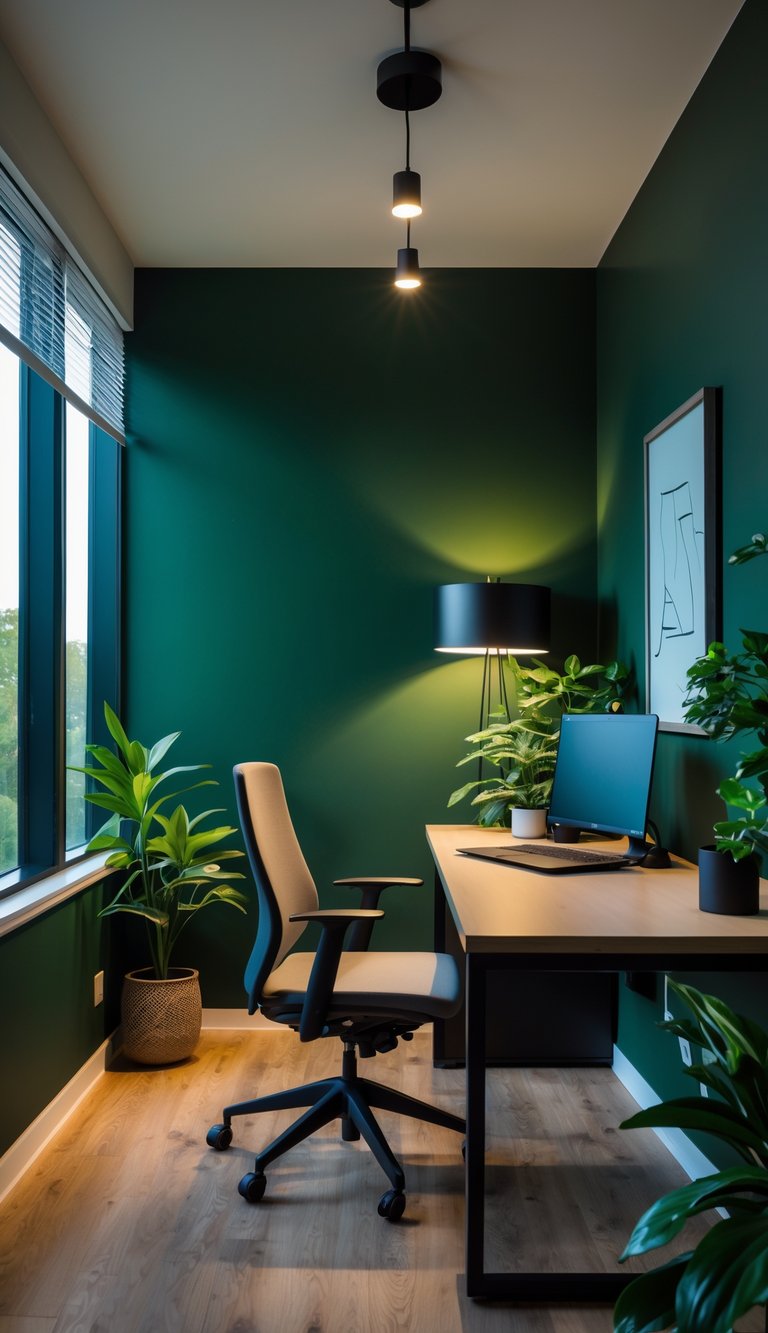
Use three types of light to make dark green walls look their best: ambient, task, and accent. Ambient light fills the room so the green reads true, while task lighting keeps your desk bright and your work clear.
Add warm-toned accent lights to bring out the richness in the green. Picture wall washers or adjustable picture lights aimed at textured paint or art. Small spotlights on shelves also create depth without washing the color out.
Mix dimmable fixtures so you control mood and contrast. You can brighten for video calls and soften for focused reading. This flexibility keeps the tone balanced and reduces eye strain.
PRO TIP
Choose bulbs with a CRI of 90 or higher so colors stay accurate under artificial light. Place warm LED strips behind shelving or the desk to add a soft glow that separates furniture from the wall. Use a combination of directional accents and diffused overhead light to avoid harsh reflections on screens. If you have molding or built-in bookcases, inset LED puck lights create subtle highlights. Test light positions at different times of day to make sure the green reads well both in daylight and at night.
16) Green walls paired with warm wood desks
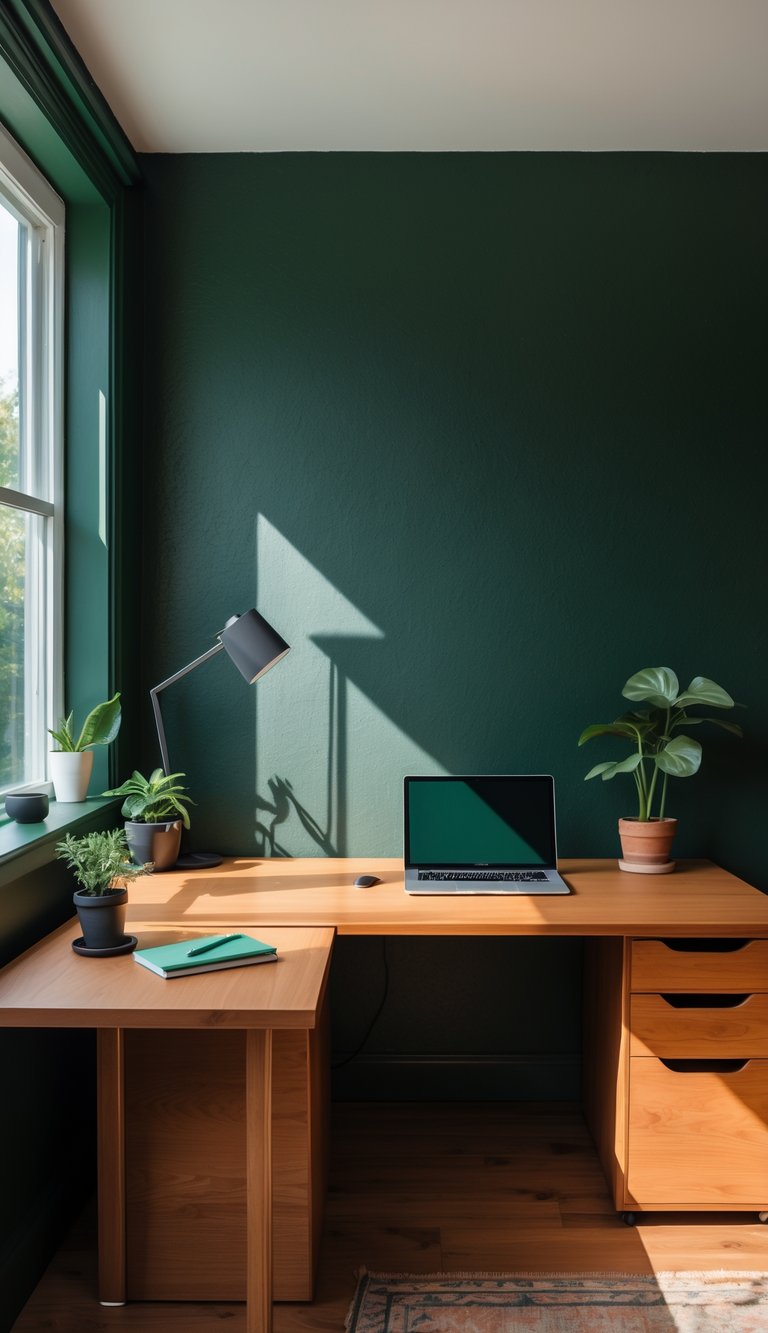
When you pair dark green walls with a warm wood desk, your office feels grounded and calm. The green creates depth while wood adds a natural, cozy touch that keeps the space from feeling cold.
Choose a desk with visible grain or a mid-toned finish to balance the deep green. Lighter woods like oak bring contrast, while walnut or mahogany add a richer, layered look.
Keep accessories simple: a brass lamp, a leather mouse pad, or a woven basket will complement both tones. Let the desk be the focal point by keeping clutter low and using a few warm-toned accents.
PRO TIP
If you want a cohesive look, match small wood pieces across the room, such as a bookshelf or picture frames, to your desk’s tone. You can also mix metals—brass or matte black—so the room reads as intentional, not matchy. Test paint samples behind the desk at different times of day to see how light shifts the green. Finally, place a small plant on the desk to echo the wall color and add fresh texture without crowding your work area.
17) Framed landscape art on green walls
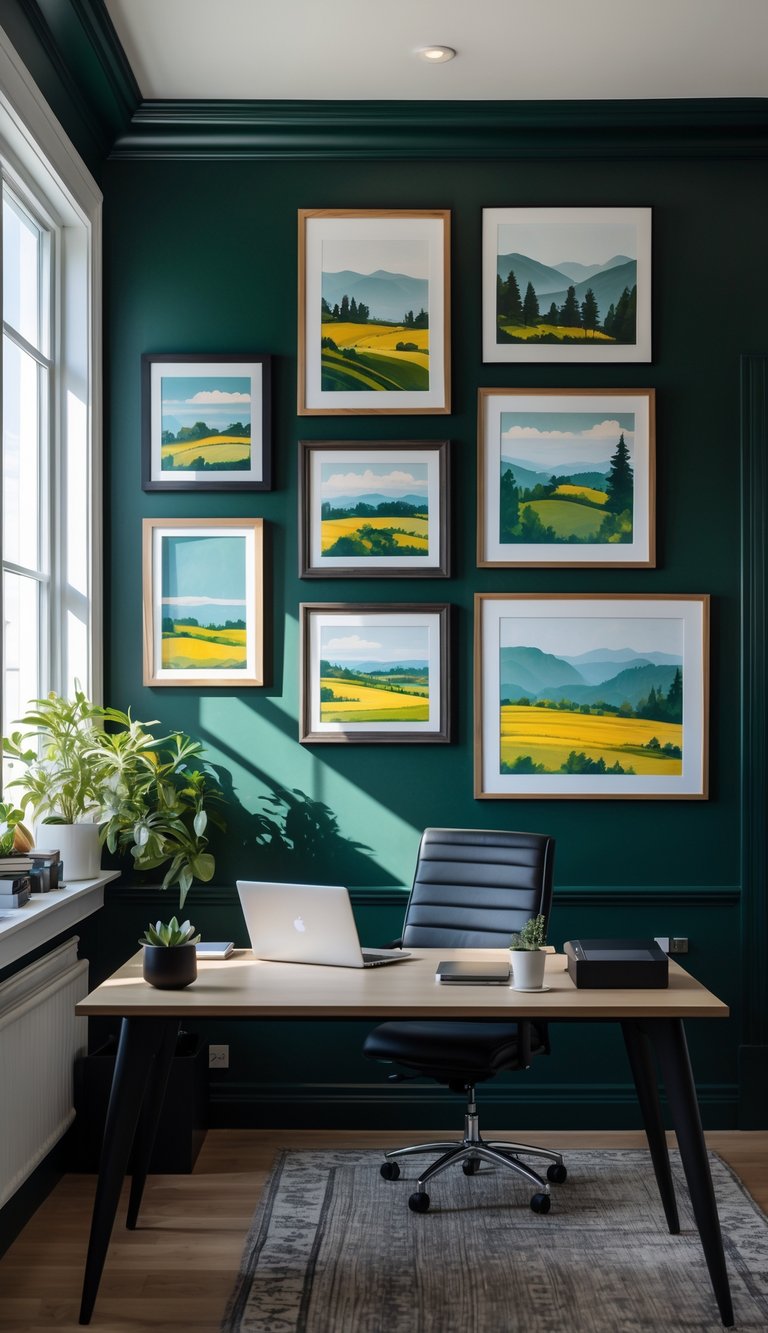
Framed landscape art pairs beautifully with dark green walls. The green backdrop deepens the hues in a landscape print and creates a calm, cohesive look that feels grounded.
Choose frames that contrast the wall — light wood, black, or brushed metal work well. A simple frame keeps attention on the scene, while a wider mat adds breathing room and a gallery-quality feel.
Hang a single large landscape to anchor a wall, or group smaller framed pieces for a layered effect. Vary frame sizes and spacing a little to avoid a rigid grid and keep the arrangement relaxed.
PRO TIP
When you pick framed landscape art for dark green walls, think about scale and light. Larger pieces make a strong focal point and prevent the wall from feeling heavy, especially above a desk or sofa. If your room has limited natural light, choose prints with brighter skies or lighter foregrounds to reflect more light into the space. For a curated look, mix textures: pair a matte print with a glossy frame or add a subtle linen mat. Keep frames consistent in color or finish to maintain cohesion, but vary the width slightly for visual interest. Finally, hang art at eye level for the best impact and use picture lights or adjustable lamps to highlight key pieces without overwhelming the room.
18) Soft green velvet cushions
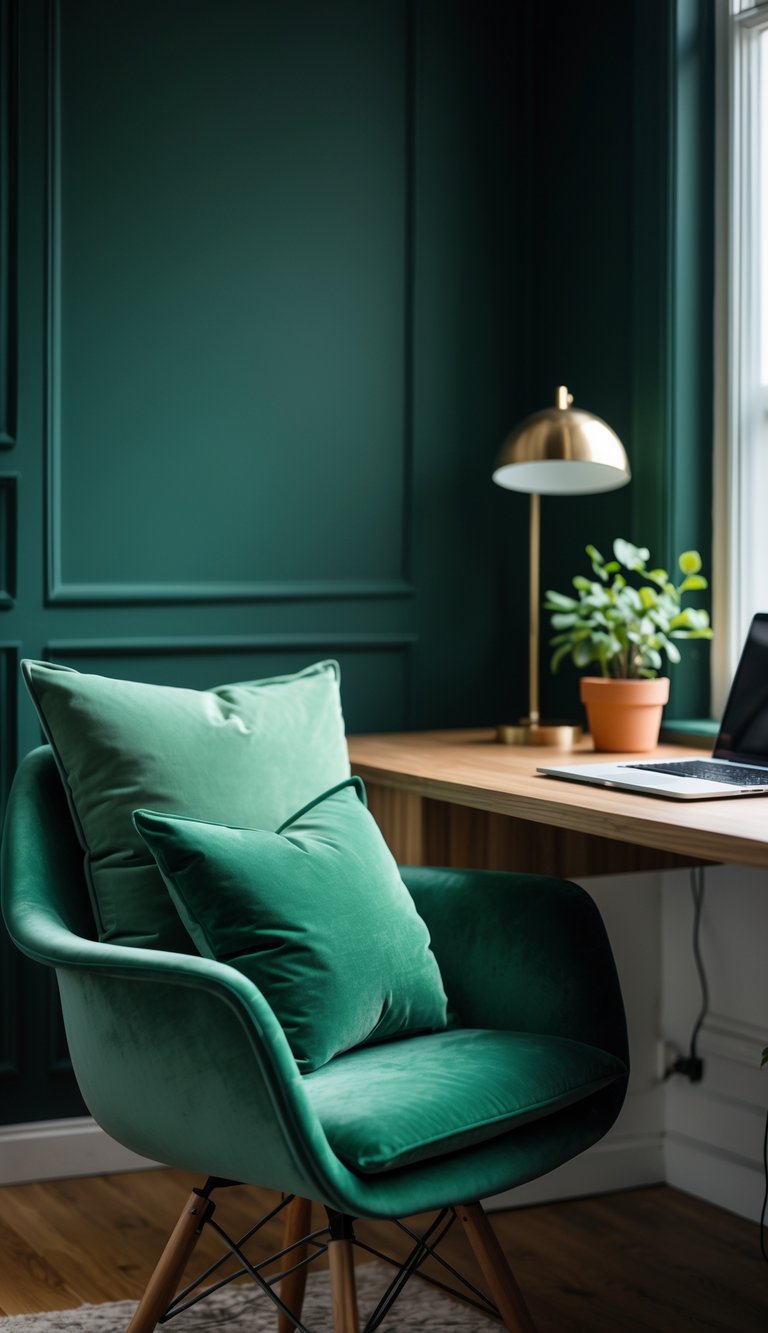
Soft green velvet cushions add a cozy touch to your dark green home office walls. They bring texture without clashing, and the velvet catches light in a way that softens the room.
Place a pair on a chair or sofa to balance the deep wall color. You can mix sizes for a relaxed look, or keep them uniform for a neater feel.
Choose shades that sit a bit lighter or have a subtle sheen to stand out against the walls. The cushions also make your workspace feel warmer and more inviting when you take a break.
PRO TIP
You can layer velvet cushions with different fabrics to add depth and make cleaning easier. Combine a soft green velvet cushion with a linen or cotton cushion in a neutral tone. This gives you texture contrast and makes the velvet pop without overwhelming the space. Rotate cushions seasonally or when they look flattened to keep them fresh. Use removable covers so you can wash them or swap colors quickly. If your office gets direct sun, pick cushions with a tighter pile or fade-resistant dye to keep color longer. Small accents like a stitched edge or subtle pattern help tie the cushions to your decor without adding clutter.