
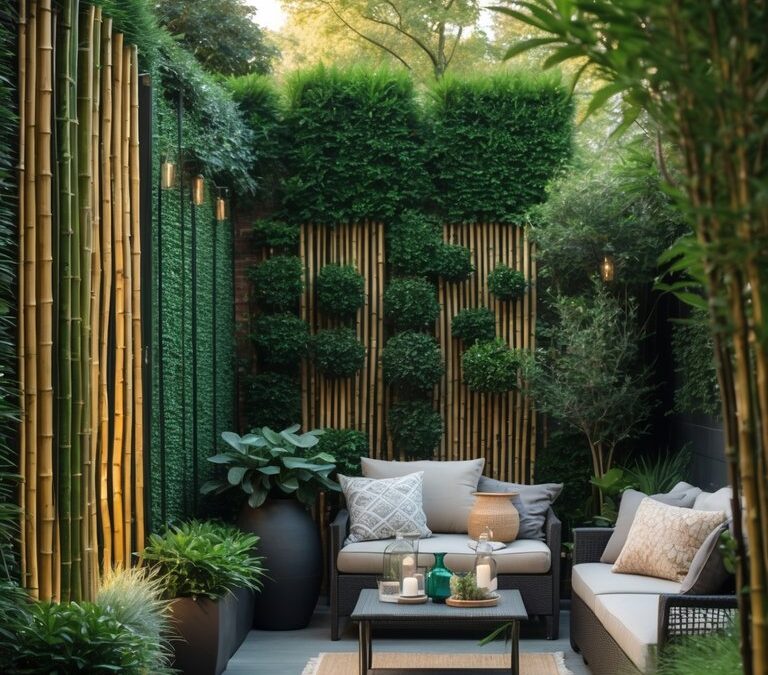
Turn your patio into a true extra room where you relax, entertain, and unwind. You’ll find ideas that help you blend comfort, warmth, and function so your outdoor space feels as cozy and livable as your indoor living room. You can make the patio feel like an actual extension of your home by focusing on layered seating, soft textiles, ambient lighting, and practical features that invite people to linger.
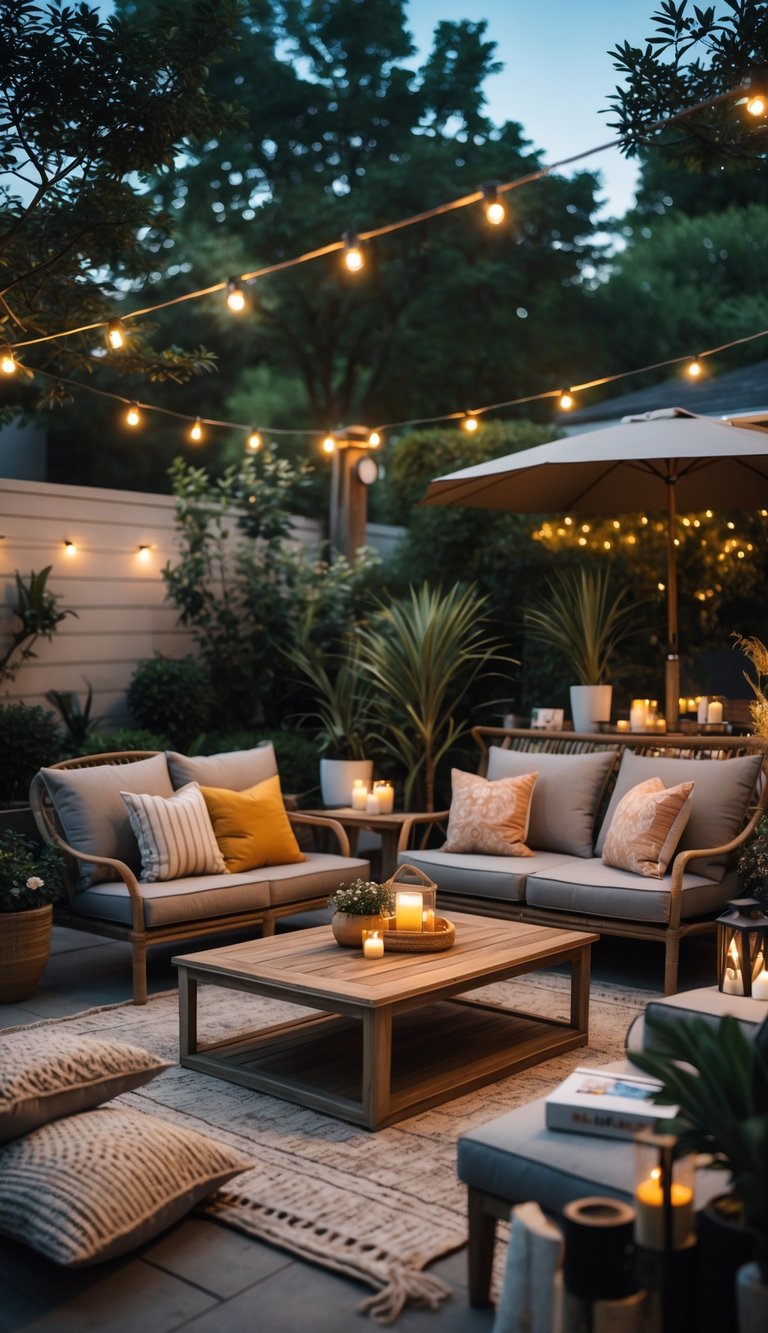
As you explore these 17 cozy patio ideas, imagine how each choice—like a pergola for shade, a fire pit for warmth, or a weatherproof rug to define the space—changes how you use the area. You’ll get simple, achievable tips that work together to create a comfortable, stylish outdoor living room you’ll want to spend more time in.
Start with how you want to use the space and build from there: pick one main function (lounging, dining, entertaining, or a mix) and choose a layout that supports it. Define zones using an outdoor rug and grouping furniture around a focal point like a fire pit or media setup. Layer textures with weatherproof pillows, throws, and a mix of materials—wood, metal, and woven elements—to create warmth and visual interest. Add flexible lighting (string lights, low-voltage path lights, and a table lamp) so the space works day and night. Finally, include at least one vertical element—tall planters, a tiled accent wall, or curtains—to frame the space and boost privacy without closing it off.
1) Create a layered seating area with an outdoor sectional and deep-seated cushions
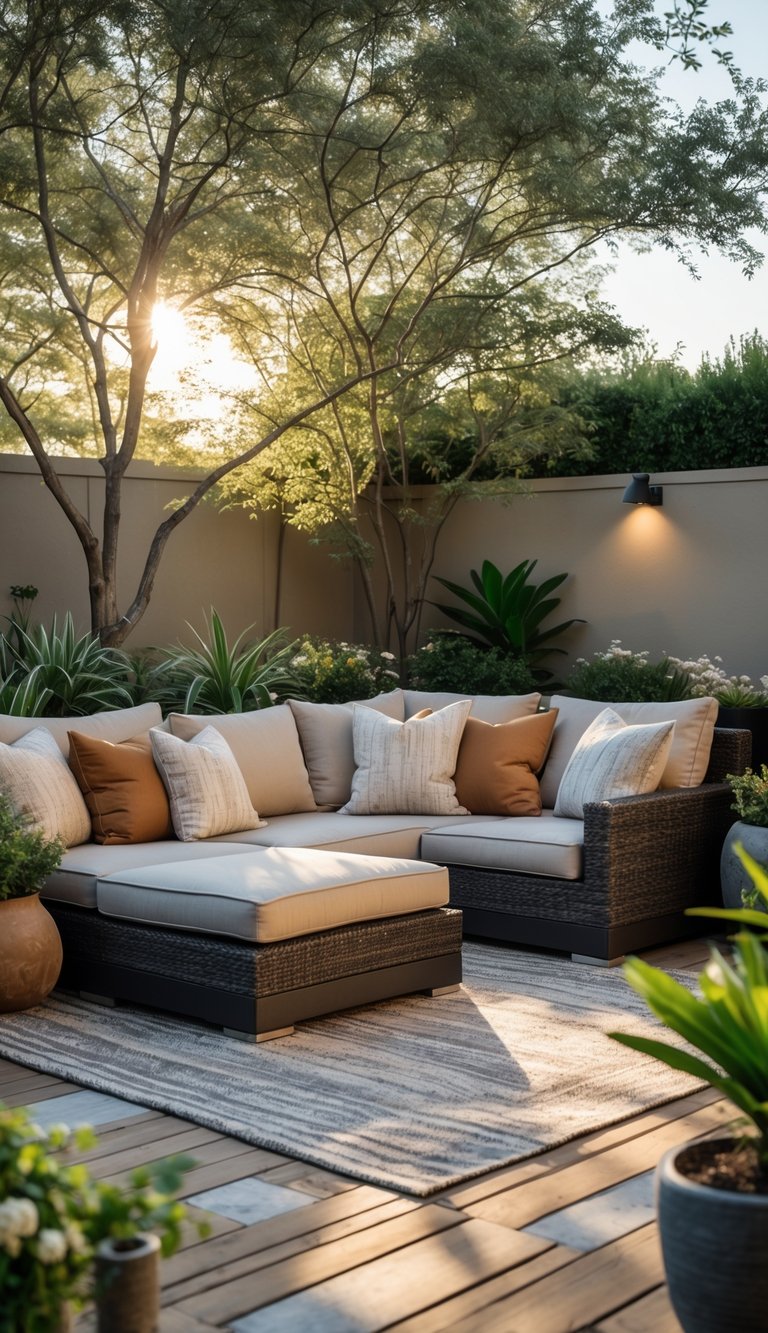
Choose a weather-resistant sectional to anchor your patio like a living room sofa. Pick deep-seated cushions that invite sinking in and long conversations.
Layer throw pillows in different sizes and fabrics to add comfort and visual interest. Use a mix of solids and subtle patterns for a cohesive look without clutter.
Add a low coffee table or ottoman in front of the sectional for drinks and feet. Keep pathways clear so people can move around the seating easily.
Place an outdoor rug under the sectional to define the space and add warmth. Match the rug size to the seating footprint so the area reads as one room.
PRO TIP
Think about cushion depth and seat height before you buy. Deep seats feel cozy, but very deep cushions can be hard to get up from for some guests. Choose cushions with quick-dry foam and removable covers so you can clean them after spills and rainy days. Mix cushions with different foam densities: firmer ones for back support and softer ones for lounging. Add a few waterproof throw pillows for low-maintenance color and comfort. Finally, store extra cushions in a weatherproof box or bring them inside in heavy rain to extend their life.
2) Install a recessed gas fire pit surrounded by built-in bench seating
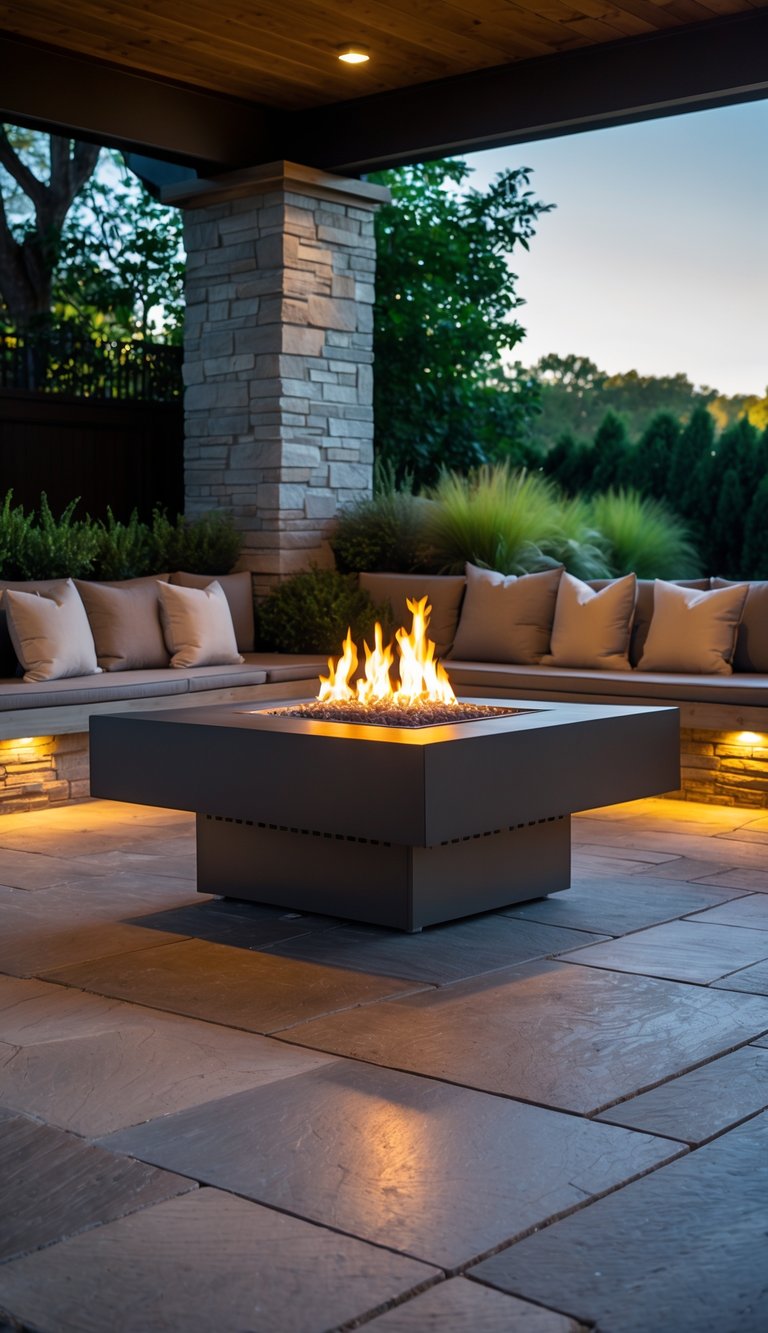
A recessed gas fire pit creates a low-profile focal point that feels cozy and controlled. When set into the patio floor, it keeps sight lines clear so your space reads like an extra room, not a separate feature.
Surround the pit with built-in bench seating to encourage lingering and conversation. Benches make the area feel intentional and permanent, and they save space compared with loose chairs.
Use noncombustible materials for the pit and enclosure, and follow local codes for gas connections and clearances. Add cushions and weatherproof fabrics to the benches so the spot feels as comfy as your living room sofa.
PRO TIP
Plan bench heights and seat depths to match your usual indoor seating so the transition feels natural. A seat height of about 16–18 inches and a depth of 18–22 inches works well for most people. Leave at least 36–42 inches of clear space from the bench front to the fire pit edge to allow easy movement and meeting code requirements. Install a shutoff valve and have a certified technician handle gas hookups to ensure safety. Choose flame-resistant cushions and removable covers so you can clean them and store them during bad weather. Add low-voltage lighting under the bench or along steps to improve visibility without overpowering the fire’s glow.
3) Hang weatherproof curtains to frame the patio like a room
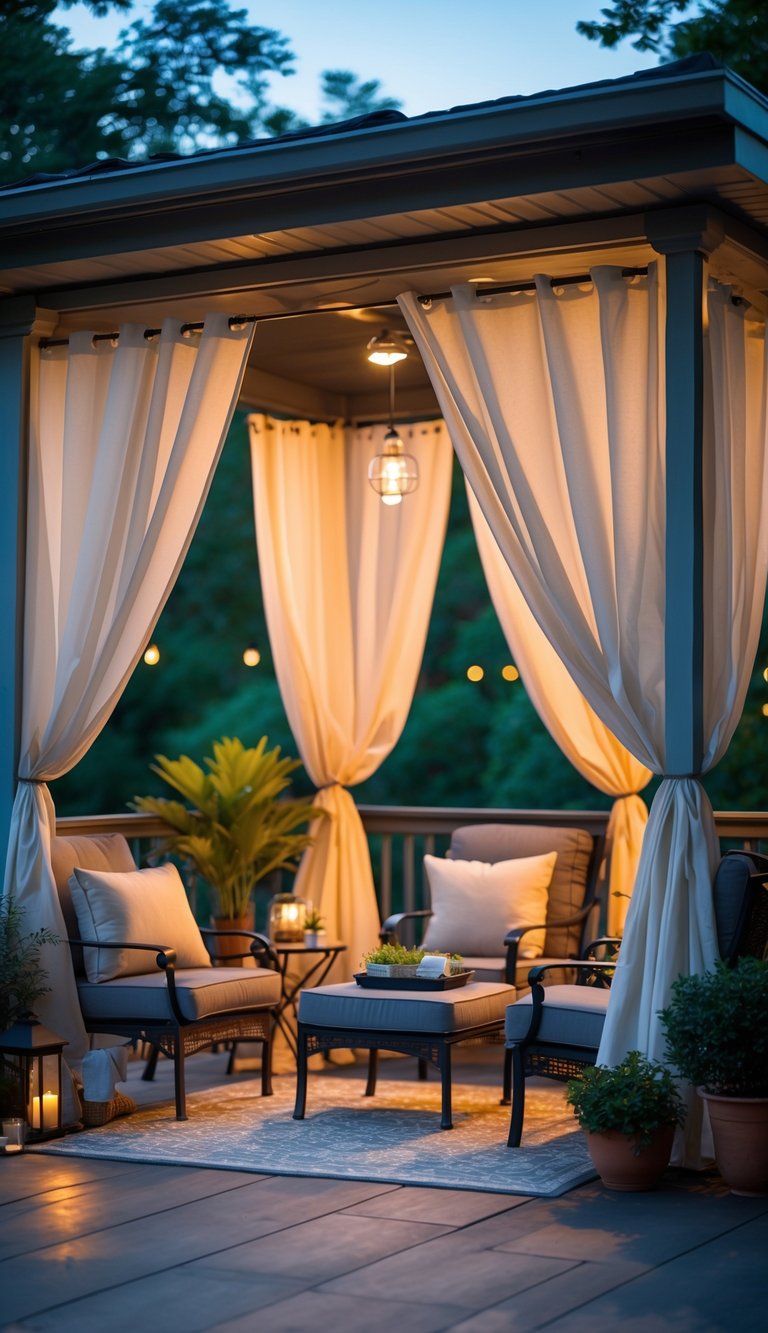
Hang weatherproof curtains to give your patio clear edges and a cozy feel. You can use a rod, hooks, or no-drill tracks to create a permanent or temporary room-like boundary. Curtains block sun, light rain, and street-side views while letting air move through.
Choose fabrics labeled water-resistant or outdoor-rated so they won’t mildew or fade quickly. Light colors reflect heat, and heavier weaves add privacy and sound dampening. Tiebacks and loops let you open the space when you want more breeze or view.
Mount curtains at the ceiling or beam height to make the area feel taller. Even simple panels create a soft backdrop that unifies furniture and rugs. This small change makes your patio feel like a true extension of your living room.
PRO TIP
When selecting outdoor curtains, pick fabrics that resist mold, fading, and stains to reduce maintenance. Measure the full height from the mounting point to the floor and add extra length for puddling if you want a more formal look. If you have wind, use curtain weights or magnetic tiebacks to keep panels in place without damaging the fabric. Install UV-resistant hardware like stainless steel or powder-coated rods to prevent rust. For easy cleaning, choose panels that unzip or have removable liners so you can machine wash them. Finally, layer semi-sheer panels with heavier ones to control light and privacy while keeping a soft, lived-in look.
4) Use an outdoor area rug (e.g., Fab Habitat rugs) to define the living room zone
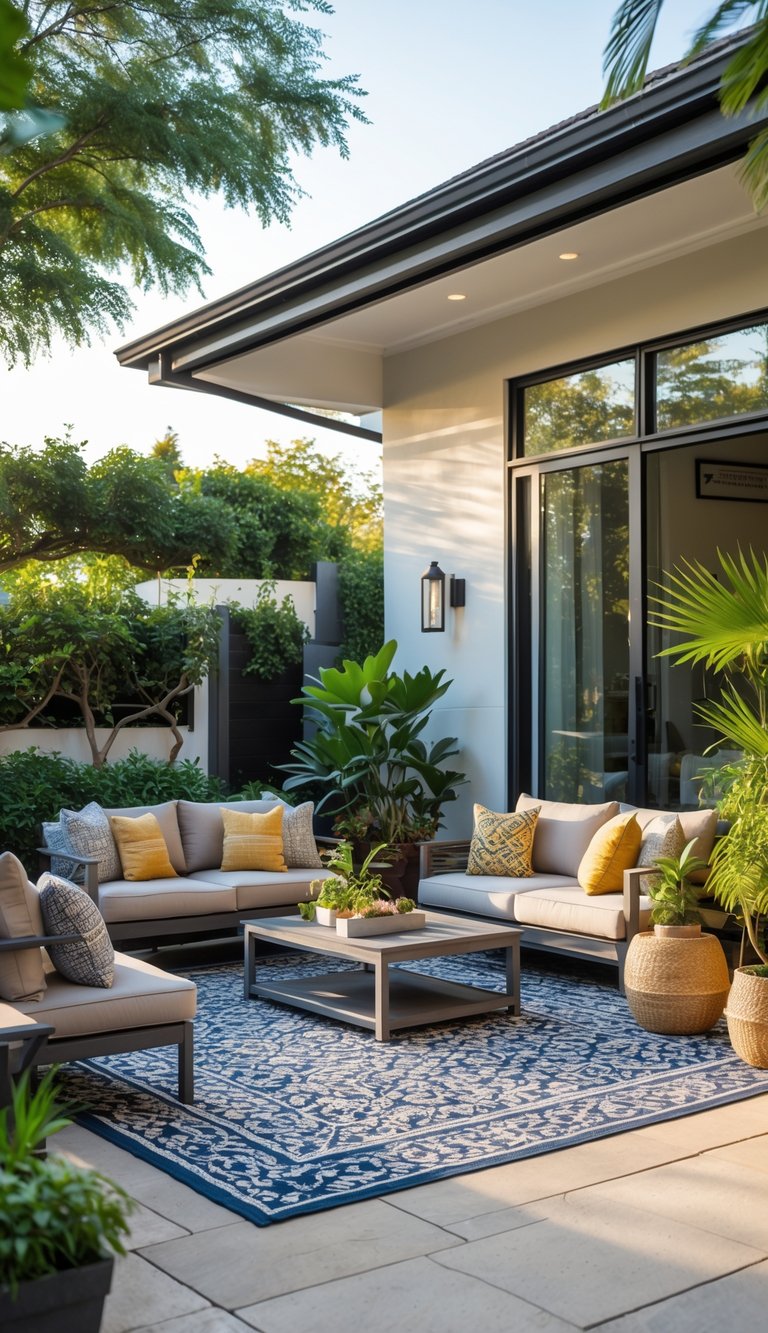
Place a durable outdoor rug to mark your outdoor living room. The rug gives the seating area a clear border so your furniture feels intentional and cozy.
Choose a weather-resistant rug that lays flat and resists fading. Recycled-plastic options clean easily and handle sun and spills, so maintenance stays simple.
Pick a pattern or color that echoes your indoor style. That link helps the patio feel like a true extension of your home, not a separate space.
PRO TIP
When you pick an outdoor rug, match its size to your furniture layout so legs sit on the rug or at least the front legs do. This keeps the seating area anchored and looks more finished. Opt for a rug with UV resistance and a tight weave to prevent creasing and shifting—those features cut down on trips to rearrange or smooth it out. If you have pets or kids, choose a rug labeled fade- and stain-resistant so it stays usable through heavy use. Finally, try a rug with a non-slip backing or add a thin pad underneath to keep it secure on deck or tile surfaces.
5) Add a pergola with retractable canopy for shade and coziness
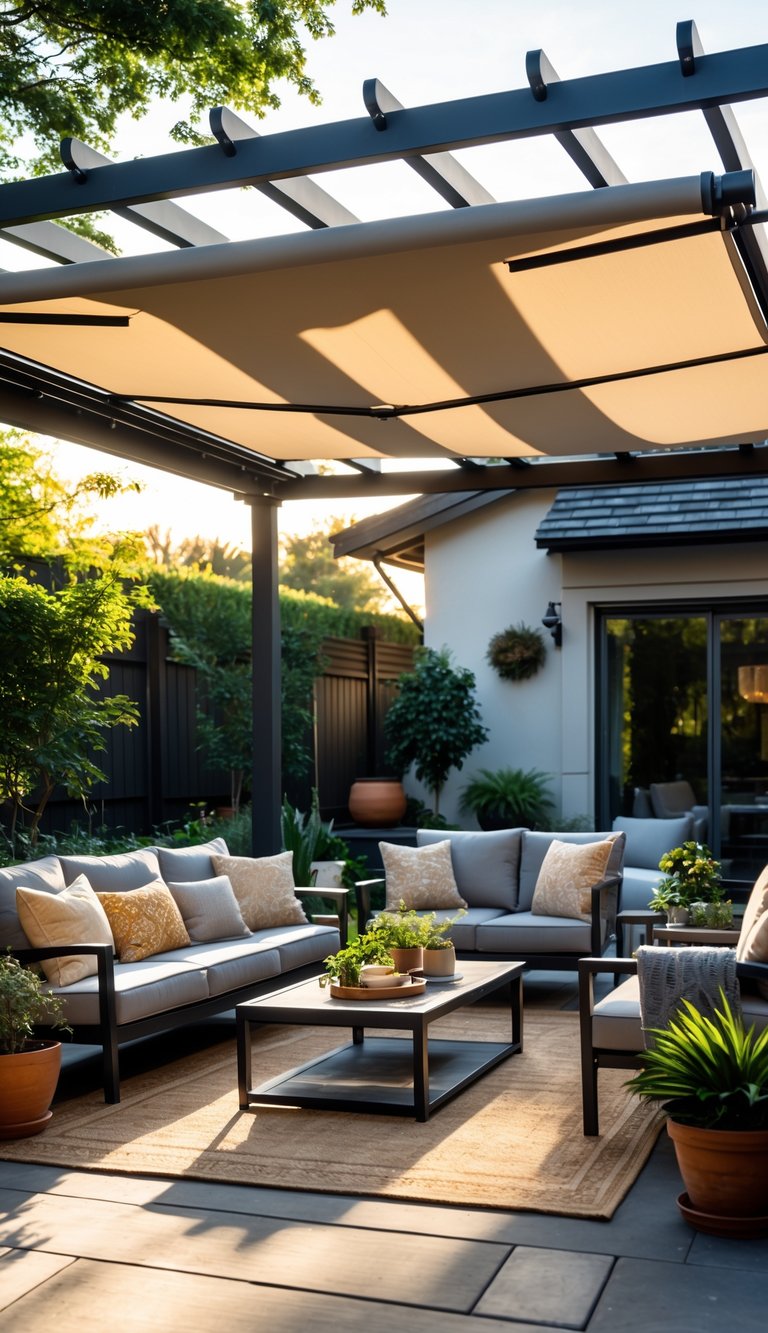
A pergola with a retractable canopy gives you control over sun and shade. You can open it on bright days and draw the canopy for cooling shade or light rain protection.
This setup makes your patio feel like an outdoor room. Add comfy seating, rugs, and string lights to create a cozy, living-room vibe.
Choose durable materials and a canopy fabric rated for UV and water resistance. Some retractable systems are motorized for easy use, while simpler models stay manual.
PRO TIP
When picking a retractable canopy, measure your space carefully so the pergola fits your layout and furniture. Look for fabrics with a high UPF rating and good water resistance to protect cushions and wood below. If your area gets strong winds, select a system with locking positions or wind sensors to avoid damage. Consider adding side curtains or lattice for extra privacy and wind blocking. Finally, plan electrical access if you want motorized operation or built-in lighting; that makes using your pergola easier and extends evening use.
6) Include a mixed-material coffee table—wood top with metal base—for gathering
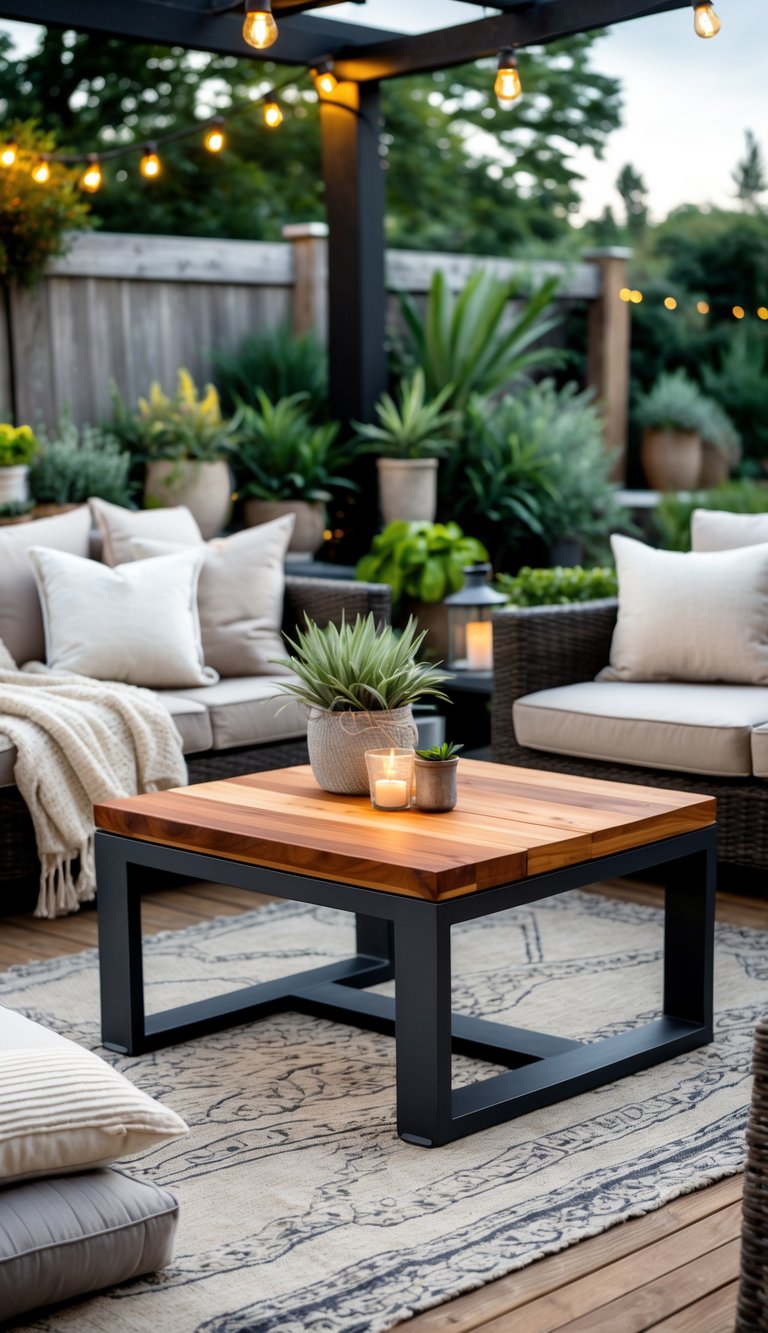
A mixed-material coffee table anchors your patio seating and gives you a clear place to set drinks, snacks, and books. Choose a solid wood top for warmth and a metal base for strength; the contrast makes the space feel intentional and cozy.
Pick a size that fits your layout so people can reach the surface without crowding. Nesting tables work well if you need more surface area sometimes and less at other times.
Look for weather-resistant finishes or add a removable cover to protect the wood from sun and rain. Metal legs should have rust protection or a powder coat to keep them looking good season after season.
PRO TIP
You can make the table feel like part of your living room by matching its wood tone or metal finish to an indoor piece you already own. If your indoor coffee table is a warm oak, pick a similar wood top outside to create a visual link between spaces. For the metal base, choose a finish that echoes other accents, like black for a modern look or bronze for a softer feel. Add a tray on top to corral items and protect the wood from spills. Consider a cushion-friendly height so the table works with both chairs and a couch. Finally, treat the wood with a clear outdoor sealer and keep a small can of touch-up oil handy to maintain the finish.
7) String warm Edison bulb café lights overhead for ambient evening glow
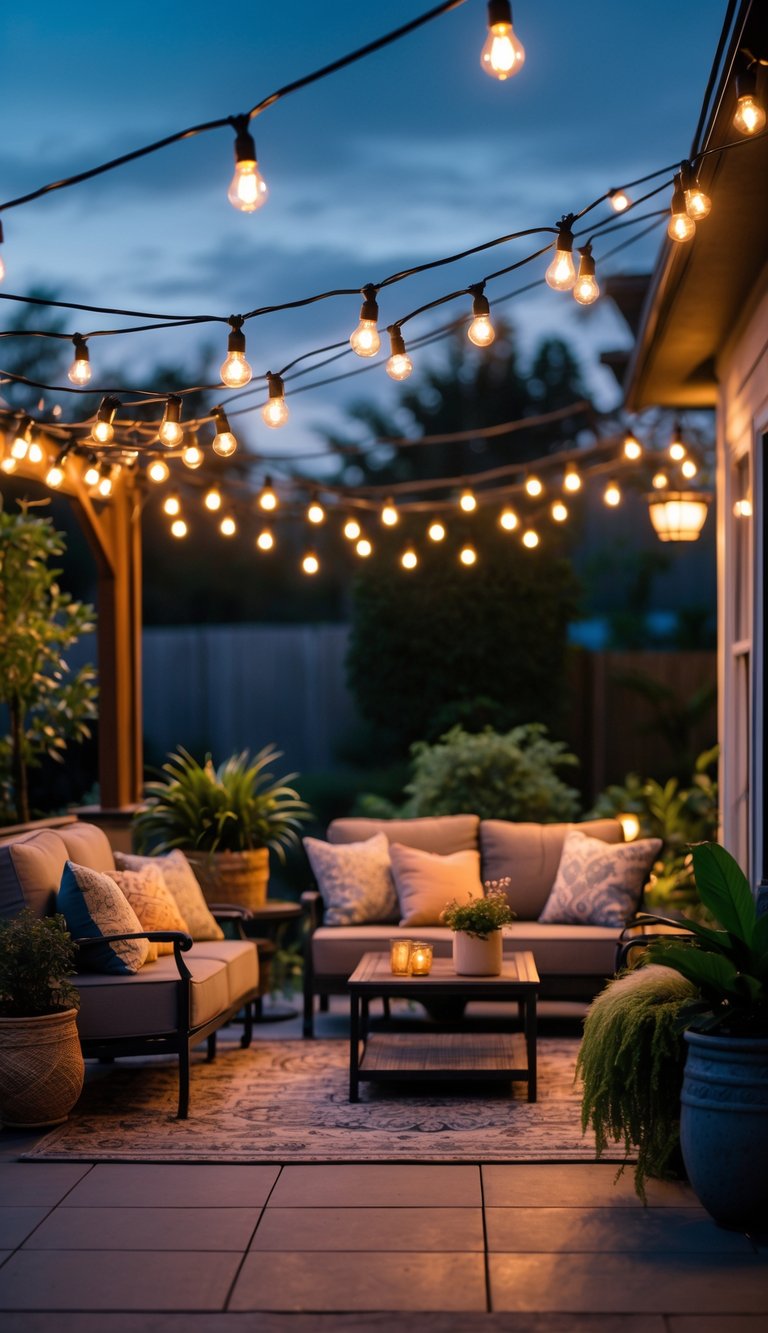
Hang Edison-style café lights across your patio to create soft, warm light that feels like an outdoor living room. The amber glow is gentle on the eyes and makes evenings feel calm and cozy.
Drape the string lights in straight lines, a zigzag, or a canopy over seating to define the space. You can attach them to posts, eaves, or trees using small hooks or zip ties for a clean look.
Choose LED Edison bulbs for energy savings and longer life. Look for weather-resistant strands and grounded plugs if your lights stay up year-round.
PRO TIP
Plan your lighting layout before you hang anything so you know where to place outlets or extension cords. Measure the span and add 10–20% extra length for slack and draping curves. If you want dimming, pick bulbs and a dimmer compatible with LED technology to avoid flicker. For a polished finish, use outdoor-rated cable clips and concealers to hide wires along beams or gutters. Consider mixing bulb shapes or stringing multiple strands at different heights for depth. Finally, test bulbs during the day and night to confirm coverage and mood before securing everything.
8) Place a hanging rattan egg chair with plush cushions as a focal nook
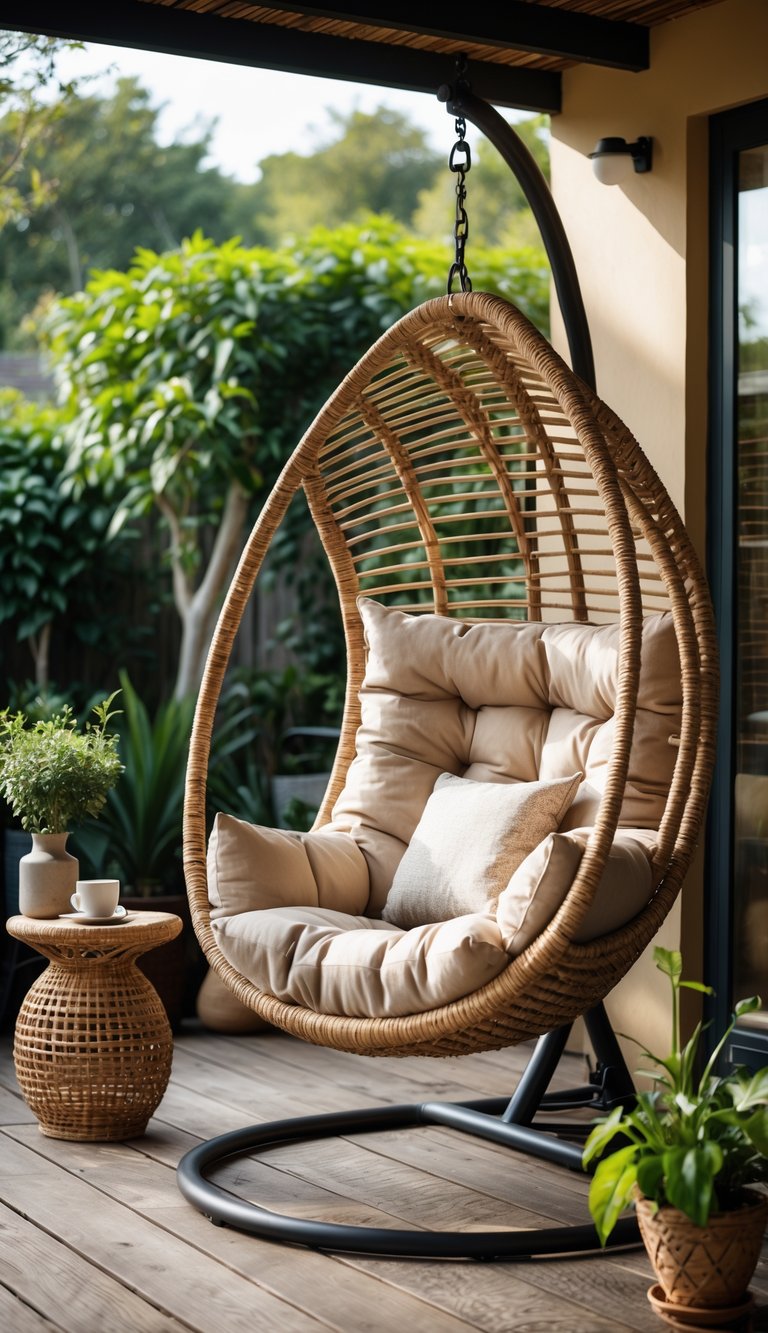
A hanging rattan egg chair creates an instant cozy spot that feels like an indoor lounge. Hang it on a stand or from a secure beam so you can move it if needed. Add thick, weather-resistant cushions and a throw to make it sink-in comfortable.
Position the chair where you can see the garden or face the house for a living-room vibe. Surround it with a small side table and a lantern or plant to anchor the nook. Keep the colors and textures similar to your indoor sofa to make the patio feel like an extension of your living room.
PRO TIP
When choosing your egg chair, pick one with durable woven rattan and a sturdy metal frame to resist outdoor wear. Measure the space and ceiling height or stand clearance before buying to ensure the chair swings safely without hitting walls or furniture. Use cushions rated for outdoor use and store them during heavy rain to extend their life. Add a removable cover or waterproof base to the stand for extra protection. Finally, layer a soft outdoor rug beneath the chair to define the area and keep your feet warm, matching rug tones to indoor textiles for a seamless transition.
9) Build tall planters with bamboo or boxwood for privacy and green walls
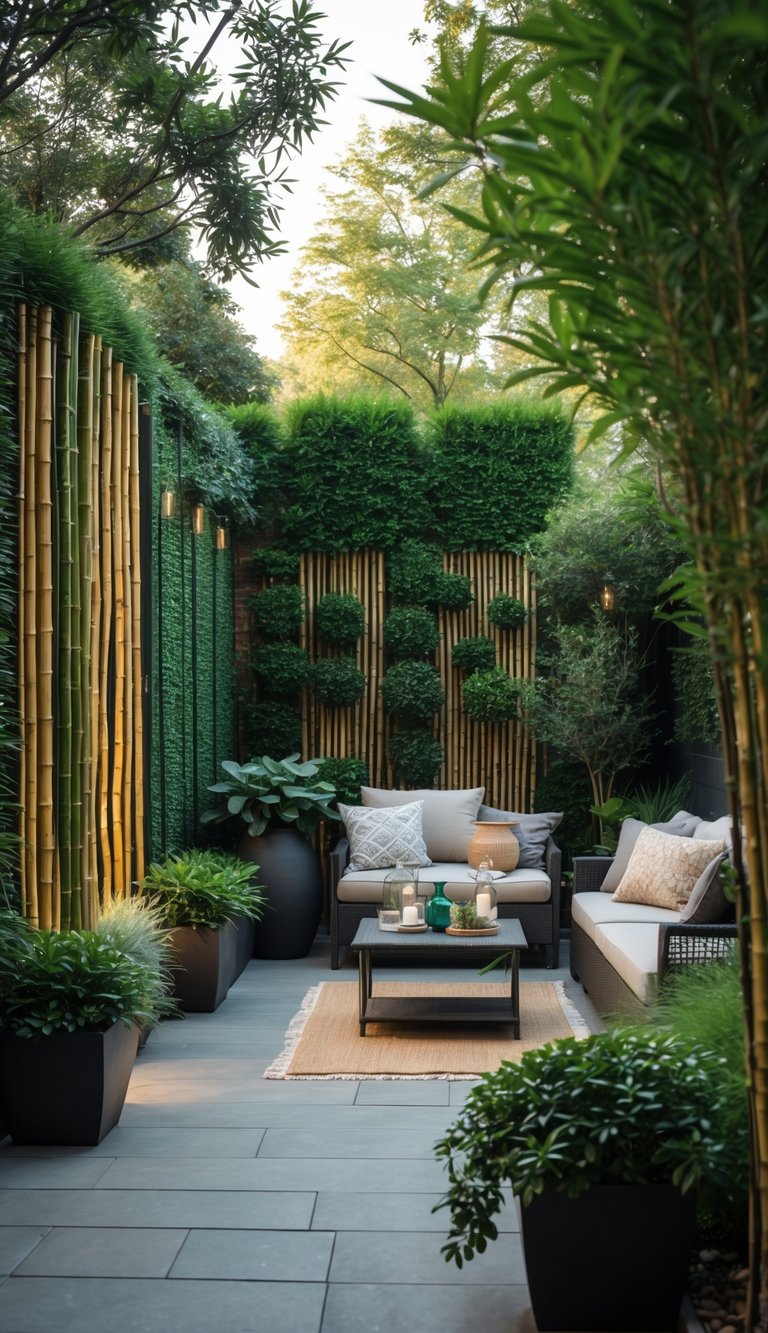
Tall planters give you quick privacy without building a fence. Place several along the edge of your patio to form a living screen that blocks neighbors and wind. Bamboo grows fast and looks lush, while boxwood stays neat and green year-round.
Use wide, deep containers so roots have room and plants stay healthy. Line the bottom with gravel for drainage, and choose a durable material like cedar or composite to withstand weather. You can plant mature specimens for instant coverage or smaller plants that fill in over a season.
Arrange planters at different heights for a layered look. Add a few pots with flowers or trailing vines to soften the edges and make the space feel like an indoor room.
PRO TIP
When you plant bamboo, use a root barrier or select clumping varieties to prevent invasive spread; running bamboo can escape containers and spread quickly. For boxwood, pick compact or container-friendly cultivars and prune lightly to keep a tidy wall. Water deeply after planting and check moisture regularly—containers dry faster than ground beds. Feed plants with balanced fertilizer in spring and midsummer to maintain dense growth. If winter cold is a concern, move lightweight planters to a sheltered spot or wrap them to protect roots. Stagger plant sizes and container textures to create depth and a cozy, lived-in look.
10) Incorporate an outdoor media setup with a weatherproof TV and Sonos One speakers
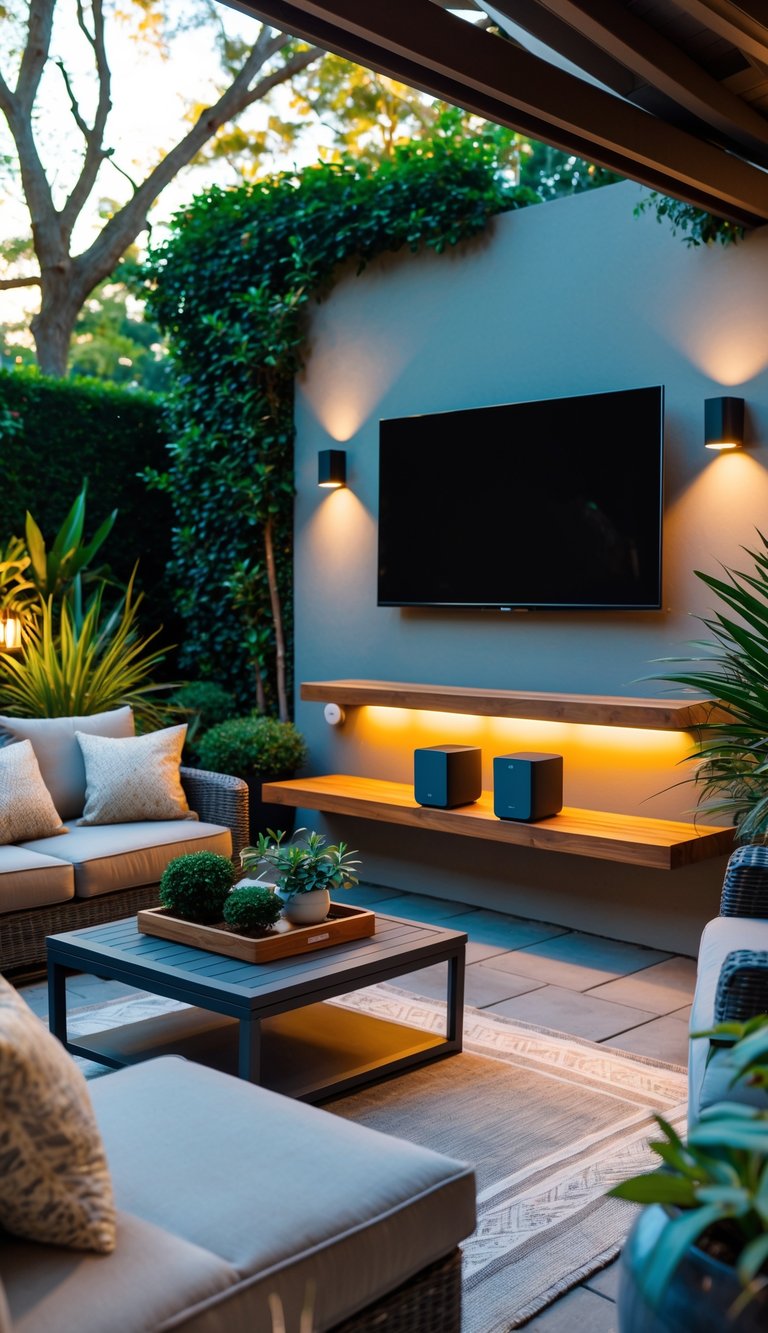
Pick a weatherproof TV made for outdoor use so you get clear picture and reliable performance in sun or light rain. Mount it under a covered spot or a pergola to reduce glare and protect the screen. Keep the viewing height comfortable—eye level from your main seating works best.
Add Sonos One speakers for simple, room-filling sound that pairs easily with phones or a smart home. These speakers resist moisture and stream music, so movie nights and playlists feel natural outdoors. Place them near seating but sheltered from direct weather to extend their lifespan.
Hide cables in conduit or run them through the wall for a clean look. Use a small outdoor-rated media cabinet for devices and remotes. That keeps your patio organized and makes the space feel like an easy extension of your living room.
PRO TIP
When planning your outdoor media area, think about power and internet first. Run a dedicated outdoor outlet and use a weatherproof surge protector to protect gear from storms and power spikes. Add a mesh Wi-Fi extender or an outdoor access point close to the TV so streams stay smooth without buffering. Choose mounts and speaker brackets rated for outdoor conditions and secure them to studs or masonry. Include a simple remote hideaway or magnetic holder to keep remotes dry. Finally, schedule a seasonal check: wipe screens, inspect seals, and test speakers so your system works whenever you want to use it.
11) Layer throws and outdoor pillows in varied textures (woven, faux fur, linen)
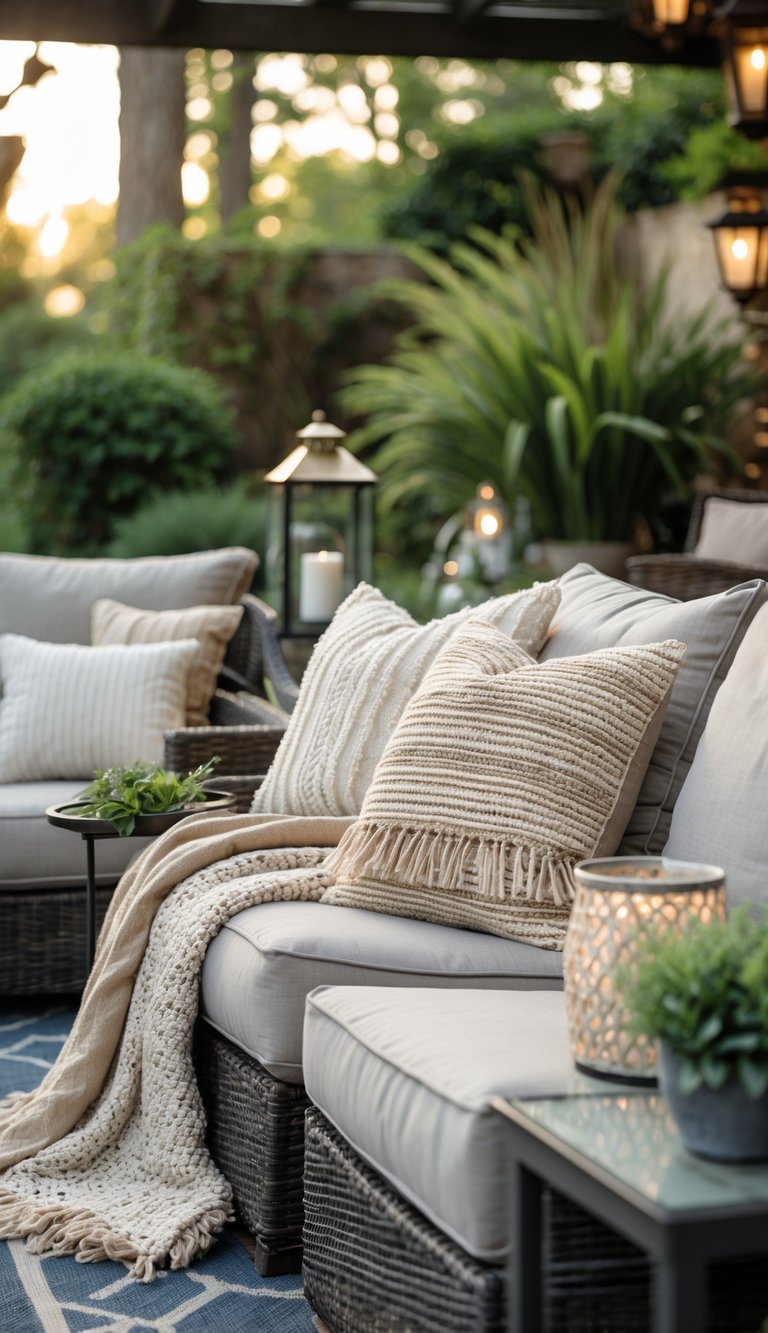
Mix different textures to make your patio feel cozy and lived-in. Start with durable woven cushions as a base. They hold up to sun and damp and give structure to seating.
Add linen or canvas pillows for a softer, casual look. These breathe well and keep your seating comfortable on warm days. Choose neutral shades or subtle patterns to tie pieces together.
Top with one or two faux fur or plush throws for chilly nights. They add warmth and a touch of luxury without overwhelming the space. Drape a throw over an arm or fold it on the back for an easy, stylish look.
PRO TIP
When layering, balance texture, color, and scale. Use larger woven pillows at the back, medium linen cushions in front, and small accent pillows or a lumbar for contrast. Keep most pieces weather-resistant, but make the top layer feel cozy—use removable, washable covers for easy care. Rotate fabrics seasonally: light linens for summer, richer textures and faux fur for fall and spring evenings. Stick to a simple color palette and add one bold accent color to connect indoor and outdoor spaces. This keeps your patio balanced and inviting while standing up to the elements.
12) Install low-voltage landscape lighting to highlight paths and seating edges
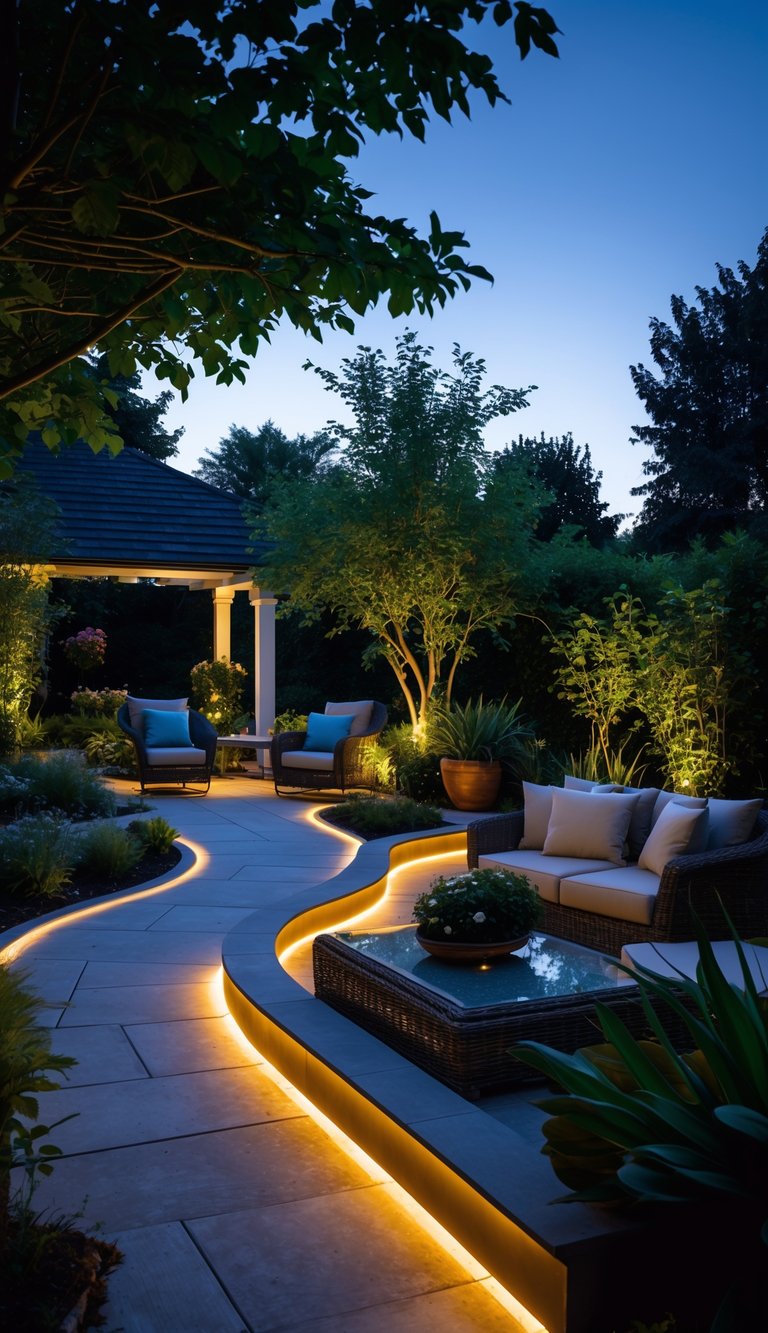
Low-voltage lighting adds a warm glow that makes your patio feel like part of your living room. You can line pathways and the edges of seating areas with small fixtures to define spaces and improve nighttime safety.
Choose 12-volt systems for easier DIY installation and lower electrical risk. A transformer, low-voltage wire, and weather-rated fixtures give you a reliable setup that uses little energy.
Place lights low and aimed to avoid glare in seating areas. Use spotlights for plants and soft path lights for walkways to create depth and a cozy mood.
PRO TIP
Low-voltage systems are versatile and safe for DIY, but you should still plan before you dig. Walk the layout at dusk to mark where light is needed and test fixture placement with a temporary lamp. Size the transformer to handle total wattage plus 20% spare capacity so lights never run overloaded. Use direct-burial cable and outdoor-rated connectors to prevent moisture issues. Put fixtures on a timer or photocell so lights turn on automatically at dusk and off when not needed. Finally, aim light fixtures down or shield them to reduce glare into seating areas while keeping sightlines clear.
13) Create a dining-lounge hybrid with a teak bistro table and lounge chairs
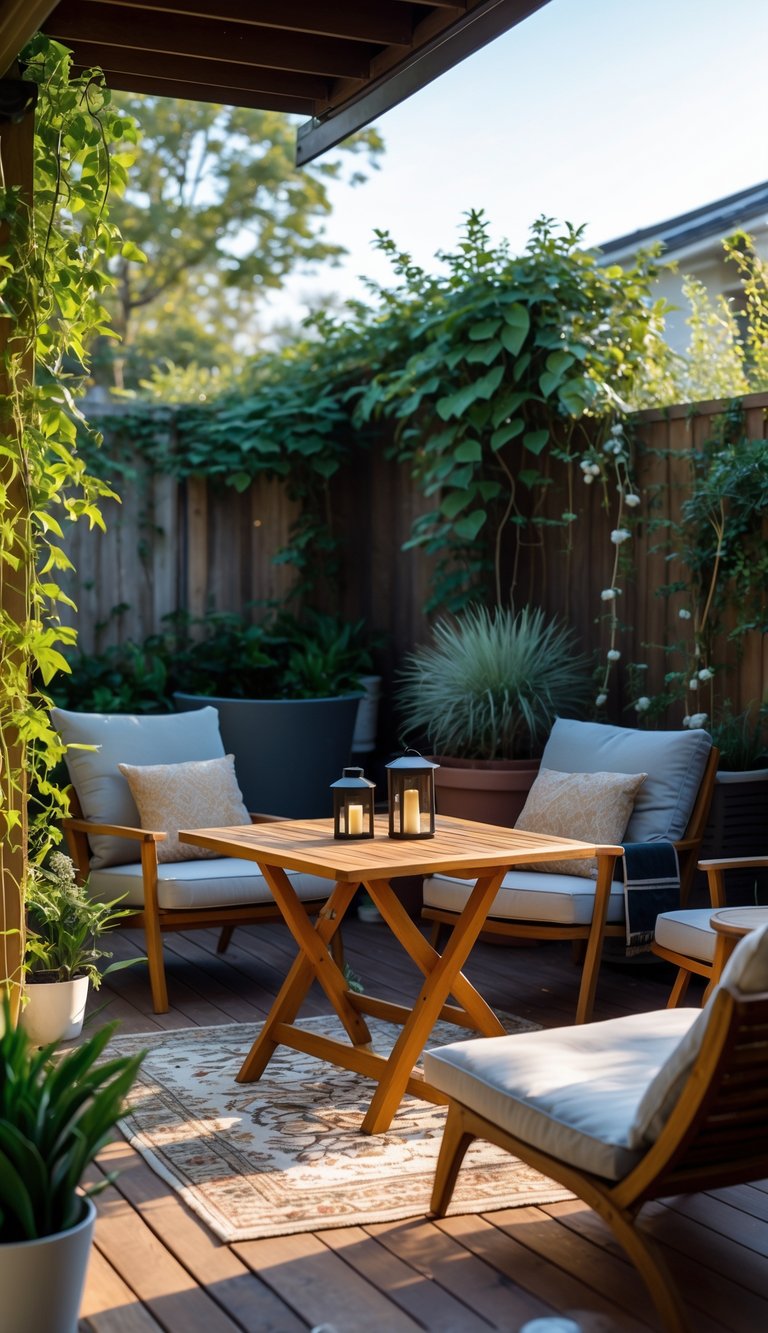
You can blend dining and lounging by pairing a small teak bistro table with low, cushioned lounge chairs. The teak gives a warm, natural look and holds up well outside, so it stays beautiful with little care.
Place the bistro table near the lounge chairs to serve meals or hold drinks and books. This setup lets you eat comfortably while staying relaxed, and it makes the patio feel like an extra room.
Choose weather-resistant cushions and a slightly larger table top if you host snacks or board games. Leave enough space to move around so the area feels open and inviting.
PRO TIP
Keep cushions in neutral shades and add one or two colorful pillows to tie the space together. Store cushions in a breathable bin or under a bench when not in use to reduce fading and mildew. Oil the teak once or twice a year with a teak protector to maintain color and prevent drying. For cooler nights, add a small outdoor rug and a portable electric or propane heater rated for outdoor use. Aim for flexible seating: a couple of lightweight stools or poufs can double as extra chairs or footrests when needed.
14) Add a propane patio heater for extended-season comfort
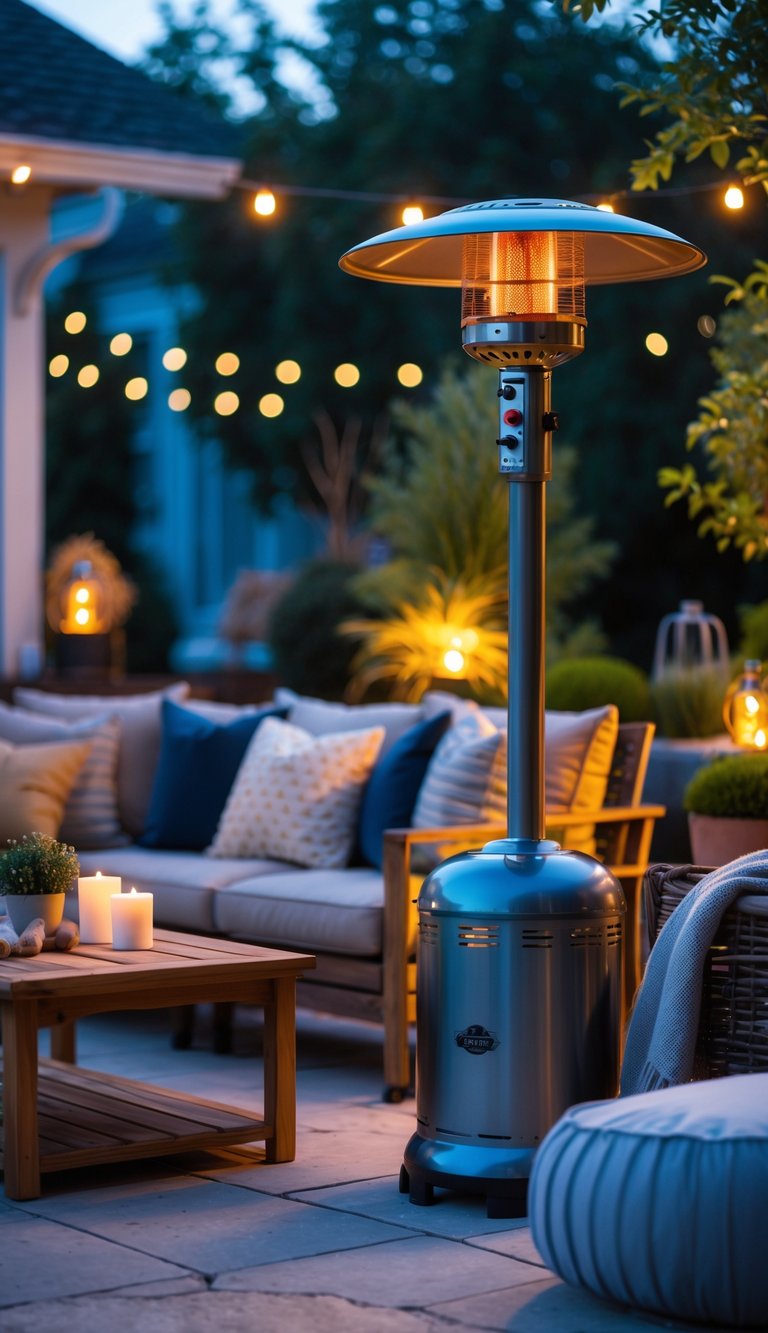
A propane patio heater brings steady, direct warmth to your outdoor living area. You can keep sitting outside on cool nights without bulky layers, which makes your patio feel like a true extension of your living room.
Pick a heater with the right BTU for your space; higher BTUs heat larger areas faster. Look for features like wheels for easy moving and an auto shut-off tilt switch for safety.
Place the heater away from flammable items and near seating so heat reaches people, not empty air. Turn it off when you leave the area and store the tank per local rules.
PRO TIP
Choose a heater that matches your patio size and style to avoid wasting fuel. For a small patio, a 30,000–40,000 BTU unit often suffices; larger areas may need 45,000–50,000 BTU or more. Consider models with wheels so you can aim heat where guests sit, and pick one with a protective mesh and tip-over safety cut-off. Always use a proper propane tank and check hoses and fittings before each season. If you plan covered use, ensure enough clearance above and around the heater and follow the manufacturer’s rules to prevent fire risks. Store spare tanks upright in a ventilated outdoor area.
15) Design a built-in outdoor kitchen counter with bar stools for easy entertaining
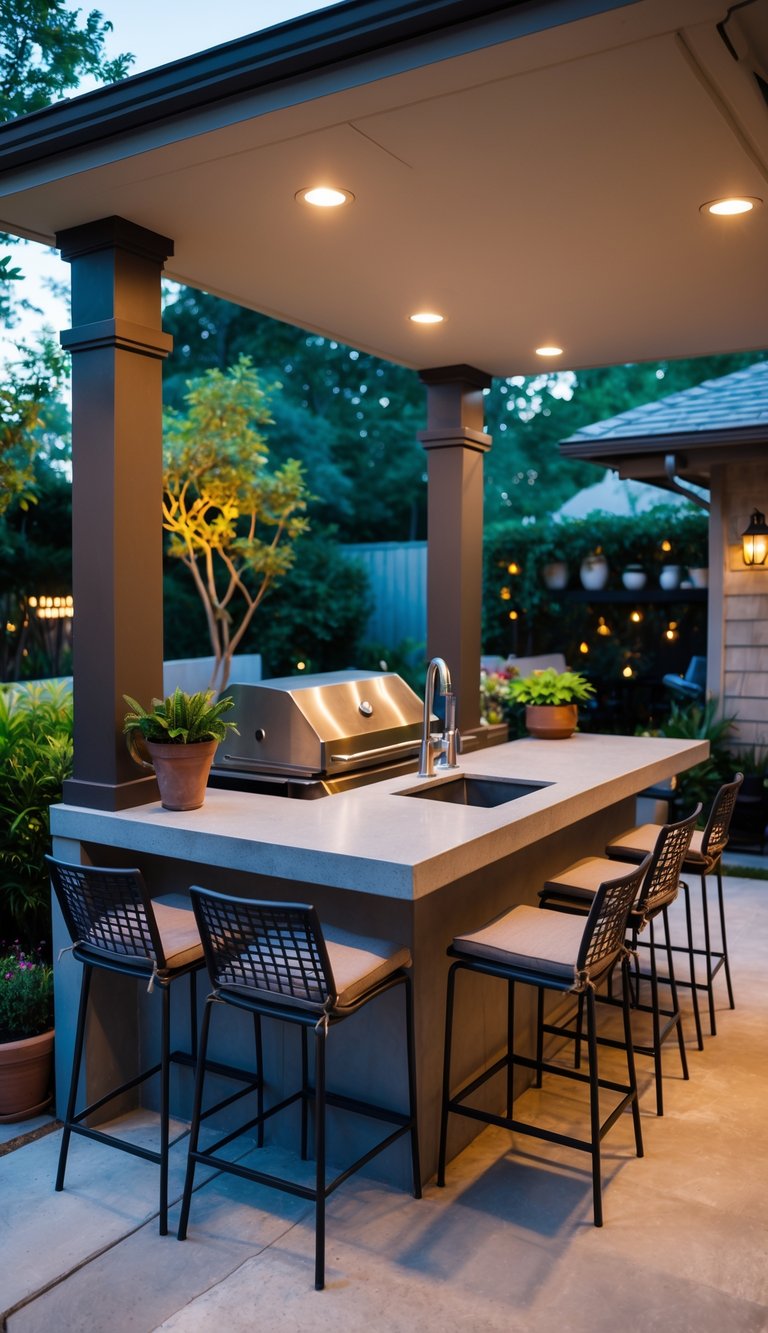
A built-in outdoor kitchen counter turns your patio into a true living-room extension. Place the counter near your grill or smoker so food flows smoothly from cook to guest. Use durable materials like stone or stainless steel to stand up to weather and heavy use.
Arrange bar stools along the counter to create a casual dining spot. Choose stools with outdoor fabric or rust-resistant frames so they last longer. Leave enough space between seats so people can sit and chat without bumping elbows.
Add storage under the counter for utensils, plates, and drinkware. A mini-fridge or ice drawer keeps drinks cold and handy. Good lighting and a few potted plants make the space feel warm and inviting.
PRO TIP
Think about how you and your guests move while you host and plan the counter height accordingly. Standard counter height works for most stools, but a raised bar gives a more relaxed, social vibe. Install a sink if you often prepare food outdoors; it cuts down on trips inside. Include covered storage for cushions and glassware to protect them from rain. Consider a mix of seating—two stools for close conversation and a small bench for kids or overflow guests. Finally, pick finishes that match your indoor kitchen to create that seamless indoor-outdoor feel.
16) Use vertical herb planters for scent and a living-room-like backdrop
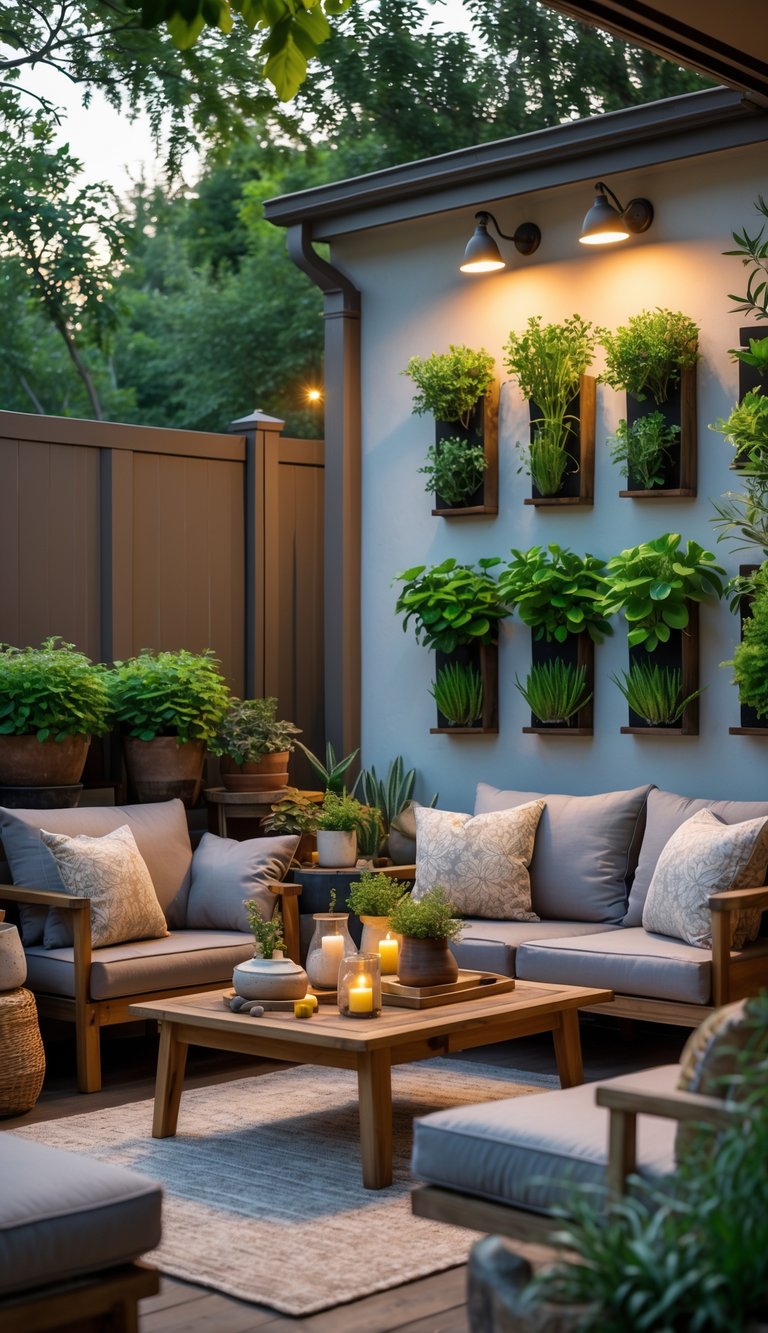
Vertical herb planters bring green texture to your patio and act like a living-room wall. You can mount them on a fence, lean them against a wall, or hang a narrow frame to save floor space. These planters make the area feel cozier while keeping fresh herbs within reach for cooking.
Choose fragrant herbs like lavender, rosemary, and mint to add subtle scent when you sit outside. Mix leaf shapes and heights to create depth so the backdrop reads like indoor greenery. Use matching pots or a simple frame to keep the look tidy and cohesive.
PRO TIP
Think about light and water needs when you arrange your vertical herb planters so each plant thrives. Place sun-loving herbs in the brightest rows and shade-tolerant ones lower down. Consider modular planters you can swap out for seasonal herbs, and use a drip system or self-watering inserts to cut down on daily care. For a uniform look, paint frames to match your outdoor furniture or wall color. Add a small shelf or hooks near the planters for garden tools, snips, and a watering bottle so everything you need stays handy and neat.
17) Install a tiled accent wall or mosaic behind the main seating area
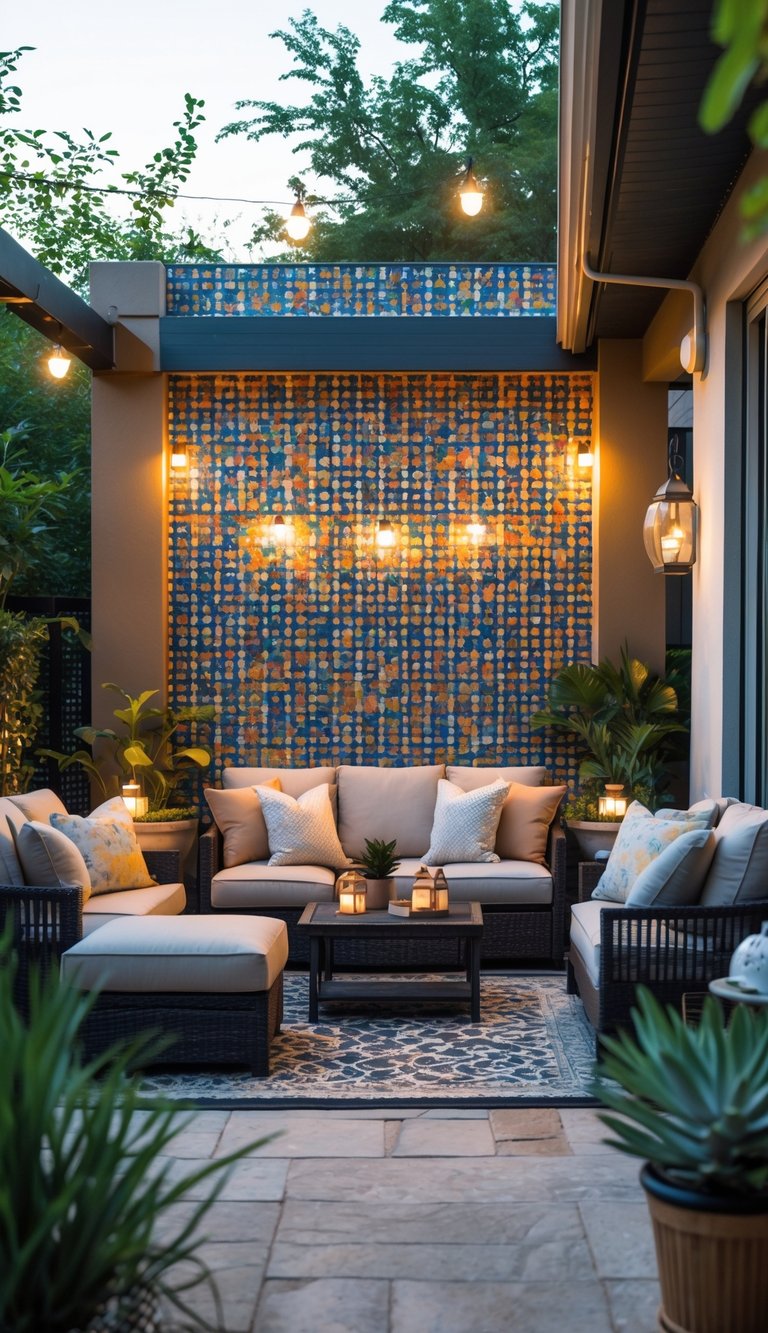
A tiled accent wall adds color and texture that makes your patio feel like a real room. Choose weather-resistant tiles like porcelain, slate, or glass that stand up to sun and rain. A bold mosaic can become the visual center and tie together pillows, rugs, and planters.
You can place the wall behind a sofa or a cluster of chairs to create a clear focal point. Use grout color to soften or highlight the tile pattern. Keep the scale balanced: large tiles for modern looks, smaller mosaics for intricate, cozy detail.
PRO TIP
Think of the tiled wall as art and protection in one. Use outdoor-rated adhesive and grout to prevent moisture damage and freeze-thaw problems. Seal natural stone every few years to keep colors rich. If you rent or want a temporary option, consider large-format peel-and-stick tiles made for exterior use or a removable metal or wood frame that holds tile panels. Add a narrow shelf or floating ledge in front of the tile to hold candles, plants, or a small speaker. This gives you functional storage and helps the tiled wall connect visually to your seating area, making the patio feel like an extension of your living room.