
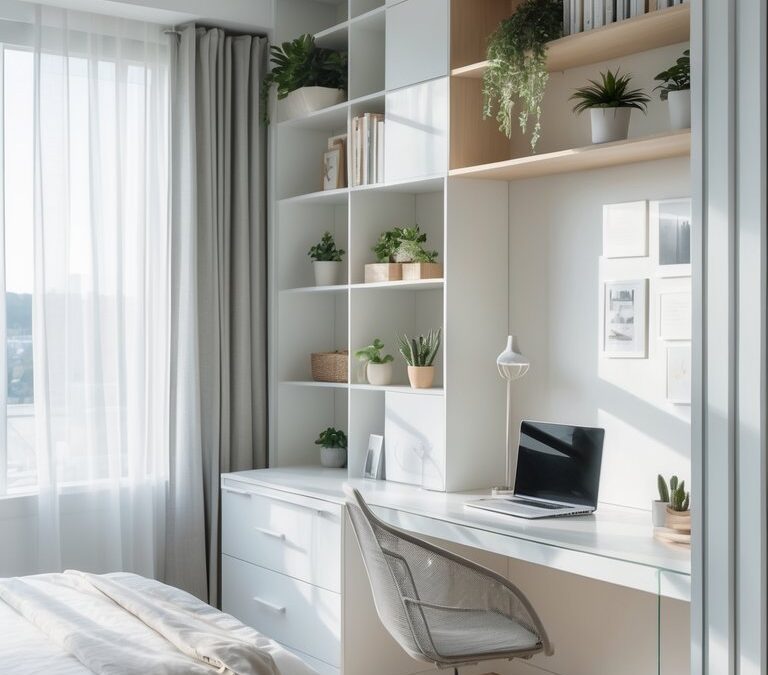
You can make your bedroom work harder without turning it into an office. This article shows simple, practical ideas to carve out a productive workspace, keep clutter away, and keep your sleep space calm and comfy.
You’ll learn smart ways to save floor space, store supplies, and create a clear work zone that helps you focus and relax.
Follow easy tips on lighting, furniture choices, storage, and layout so your bedroom can do double duty without feeling crowded. Small changes will help you work better at home while keeping your room cozy and restful.
Place your desk where light and sightlines support focus: near a window if possible, or facing a wall with a calming picture to cut distractions. Use vertical storage like floating shelves and wall-mounted organizers to free up floor space, and keep frequently used items within arm’s reach by adding a slim under-desk filing drawer or rolling cart. Choose a chair with a slim profile and good back support so it tucks under the desk when not in use. Keep cables grouped with clips or sleeves and label chargers to avoid a tangle.
For multi-use rooms, pick furniture that doubles as storage—an ottoman or bench with a lid works well—so you hide office gear quickly when you want to relax. Finally, set soft, adjustable lighting and use calming colors to mark the difference between work time and rest time, helping you switch modes faster.
1) Install floating shelves for vertical storage
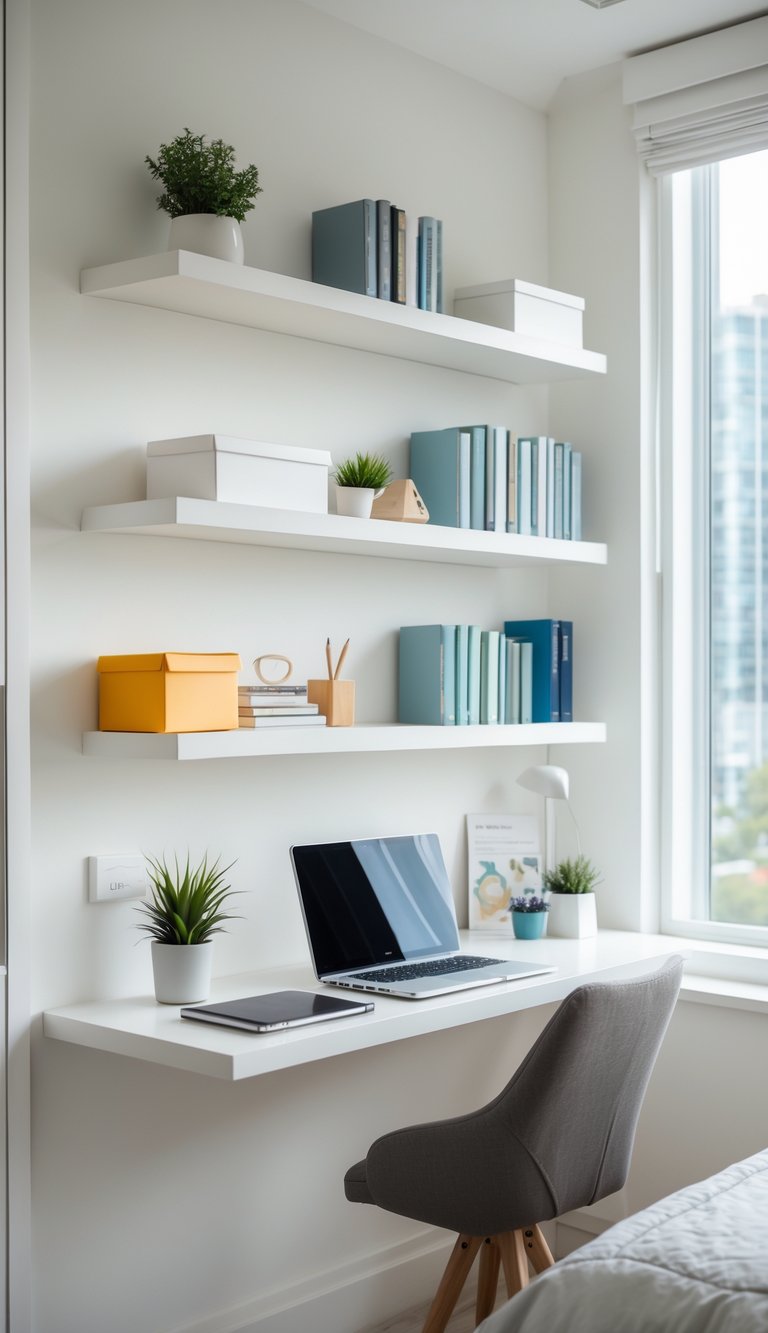
Floating shelves free up floor space and give you more room to work. Mount them above a desk or bed to keep books, supplies, and decor within reach without crowding your workspace.
You can mix sizes and finishes to match your room’s style. Stagger shelves for visual interest and to fit different items like plants, file bins, or framed photos.
Choose sturdy brackets or hidden-mount systems so the shelves carry heavy items safely. Measure and anchor shelves into studs when possible to avoid sagging and accidents.
PRO TIP
Place a few floating shelves near your desk to create zones for work, reference materials, and personal items. Use one shelf for frequently used supplies, another for reference books, and a lower shelf for a small printer or charging station. Keep baskets or labeled bins on some shelves to hide clutter and make cleanup fast. Consider installing an under-shelf light or adhesive strip lights to brighten the workspace without taking up surface area. If you rent, choose removable mounts or lightweight shelves that still hold small loads. Regularly reassess shelf contents every few months to keep only what you use and avoid overcrowding.
2) Use a fold-away wall desk
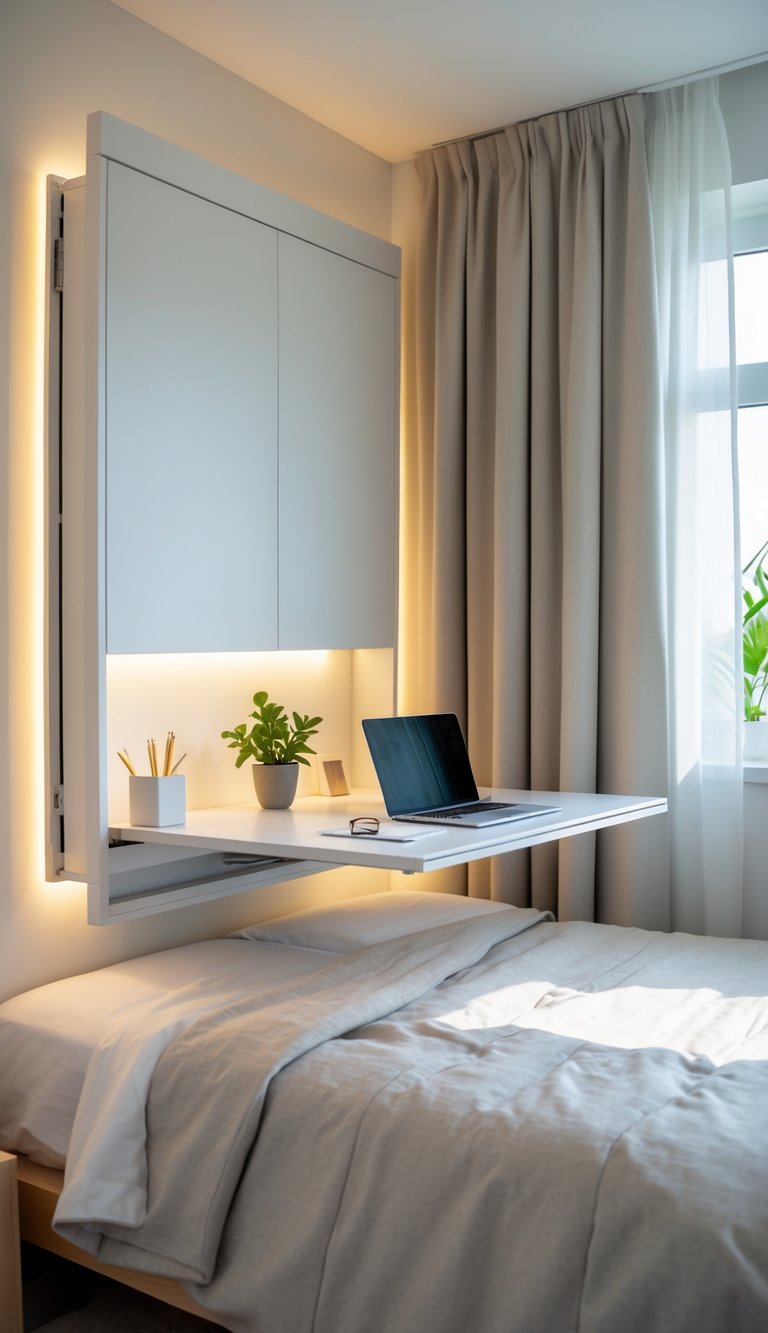
A fold-away wall desk frees up floor space when you are not working. You can fold it down to write, use a laptop, or hold a cup of coffee. When finished, fold it up and the room instantly looks neater.
Choose a model with built-in shelves or a shallow cabinet to store pens, chargers, and papers. That way your essentials stay within reach but out of sight. A small ledge or hook helps keep cables tidy.
Mount the desk at a comfortable height for your chair or stool. Test the height before you drill so you don’t need to redo it later.
PRO TIP
Pick a fold-away desk with a strong hinge and clear weight limits to avoid surprises. If you plan to use dual monitors or heavier equipment, look for desks rated for higher loads or add a simple bracket for extra support. Use Velcro straps or a small cable basket under the desk to keep wires from hanging down. Consider a model with magnetic closure or a latch so the desk stays secure when folded. Paint or finish the back panel to match your wall so the folded desk blends in, and add soft pads on corners to prevent bumps in tight spaces.
3) Place your desk near natural light sources
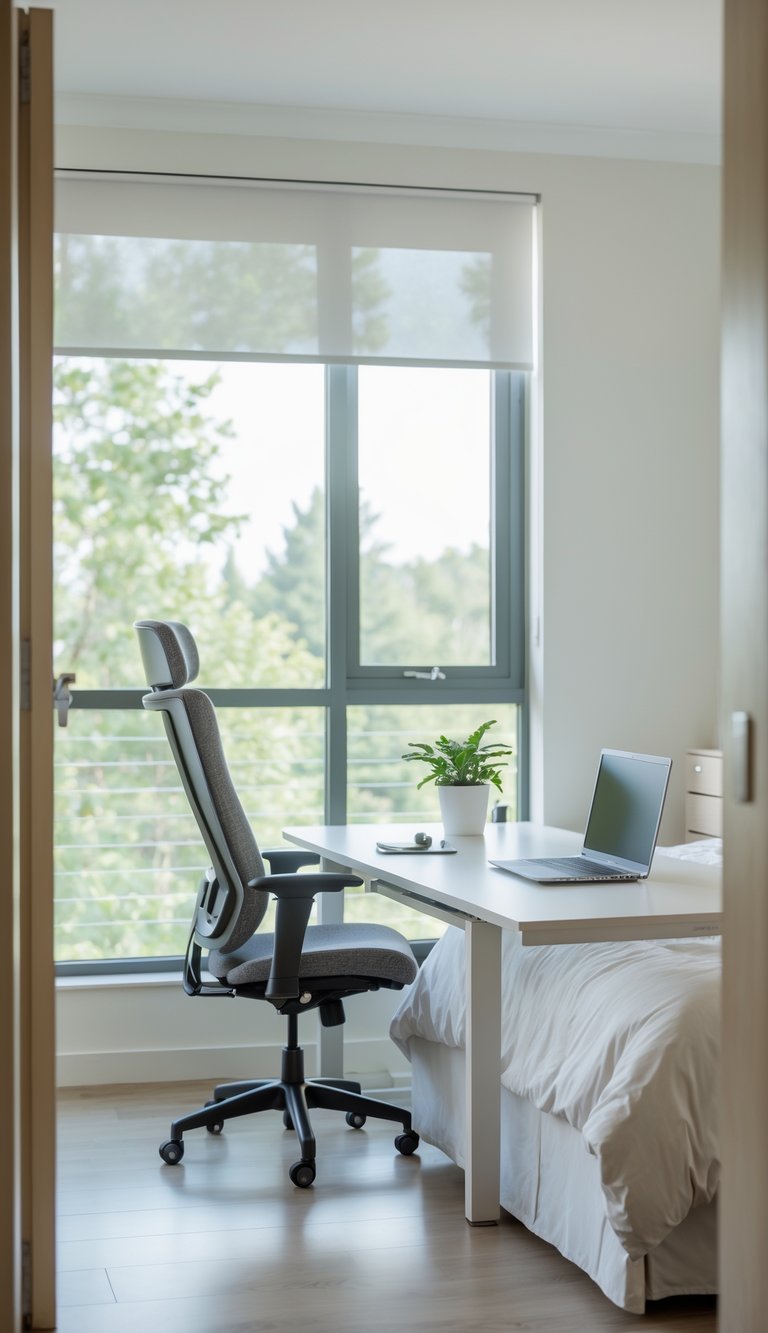
Put your desk close to a window when you can. Natural light helps reduce eye strain and can make the room feel larger and more open.
Face the window or sit side-on depending on glare and screen reflections. You might need blinds or a sheer curtain to control bright midday sun without losing light.
If a window isn’t available, set your desk under a skylight or near a glass door. Reflective surfaces like a light wall or mirror can bounce daylight into darker corners.
Keep frequently used items within reach and avoid blocking the light with tall furniture. This keeps your workspace bright and functional.
PRO TIP
Place a small adjustable desk lamp on your workspace even when you use natural light. You’ll want focused light for late afternoons or overcast days. Choose a lamp with warm, dimmable LEDs to match daylight tone and reduce harsh contrasts on your screen. Position the lamp so it lights paperwork without casting shadows from your hand. Use a light-colored desk mat or a white mouse pad to reflect light upward and soften shadows. If glare remains on your monitor, use an anti-glare screen protector or tilt the display slightly. Rotate your desk position seasonally if sun angles create uncomfortable glare.
4) Add a room divider to separate work and rest zones
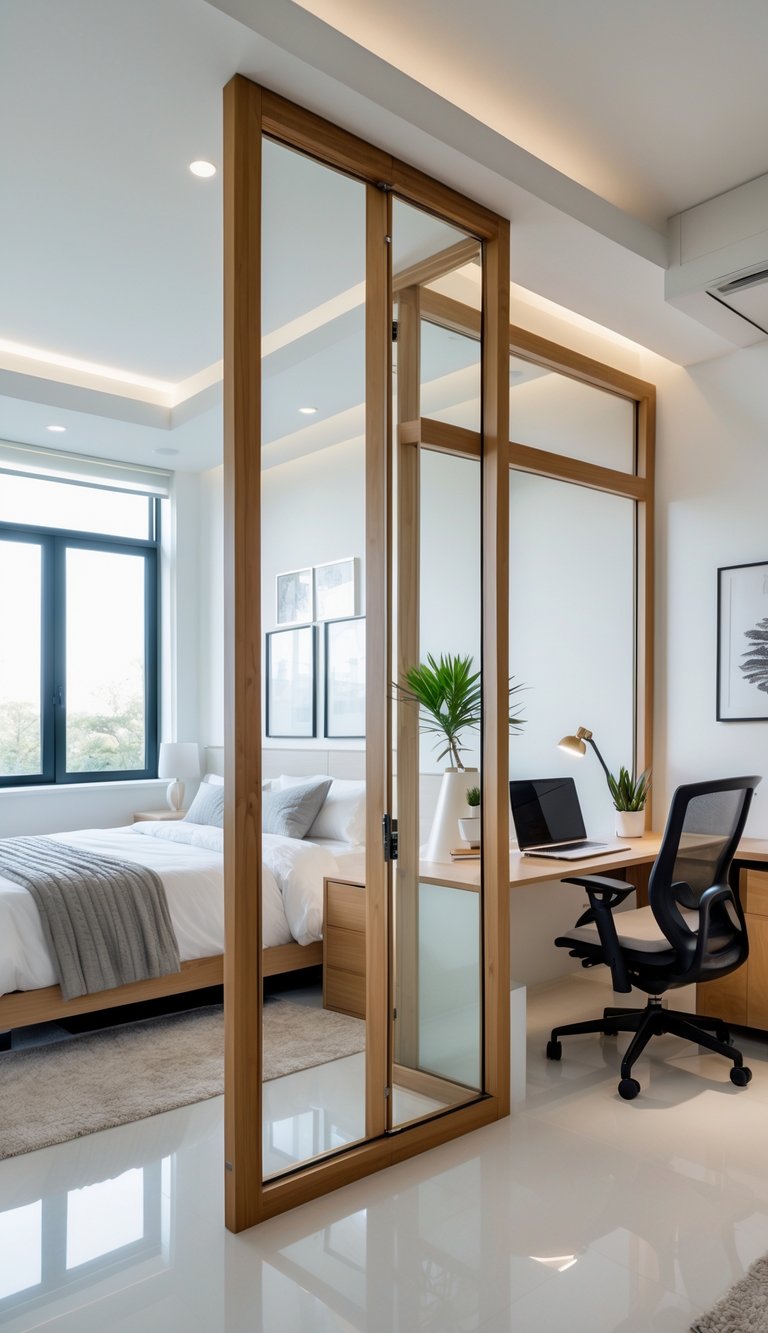
A room divider helps you mark off a clear workspace without building walls. You can pick a folding screen, a shelving unit, or a curtain to create a visual break between the bed and your desk.
Choose a divider that fits your style and needs. Open shelving adds storage and light flow, while a solid screen offers more privacy and reduces distractions during calls.
Place the divider so you still have natural light at your desk. Leave a small gap for ventilation and easy access to both zones.
PRO TIP
When you pick a room divider, think about both function and feel. If you need storage, use a tall open shelf as a divider so you can store files, books, and baskets that keep clutter off your desk. For more privacy, choose a thicker panel or fabric screen that blocks sightlines and helps mute noise. Consider the divider’s height and width so it doesn’t overwhelm the room; aim to keep a visual balance with your bed and other furniture. Test different placements before committing; sometimes angling a divider or leaving a small passage improves flow and makes both zones feel intentional. Finally, add a few plants or soft lighting on the divider to make the workspace feel separate but still welcoming.
5) Incorporate a compact filing cabinet under the desk
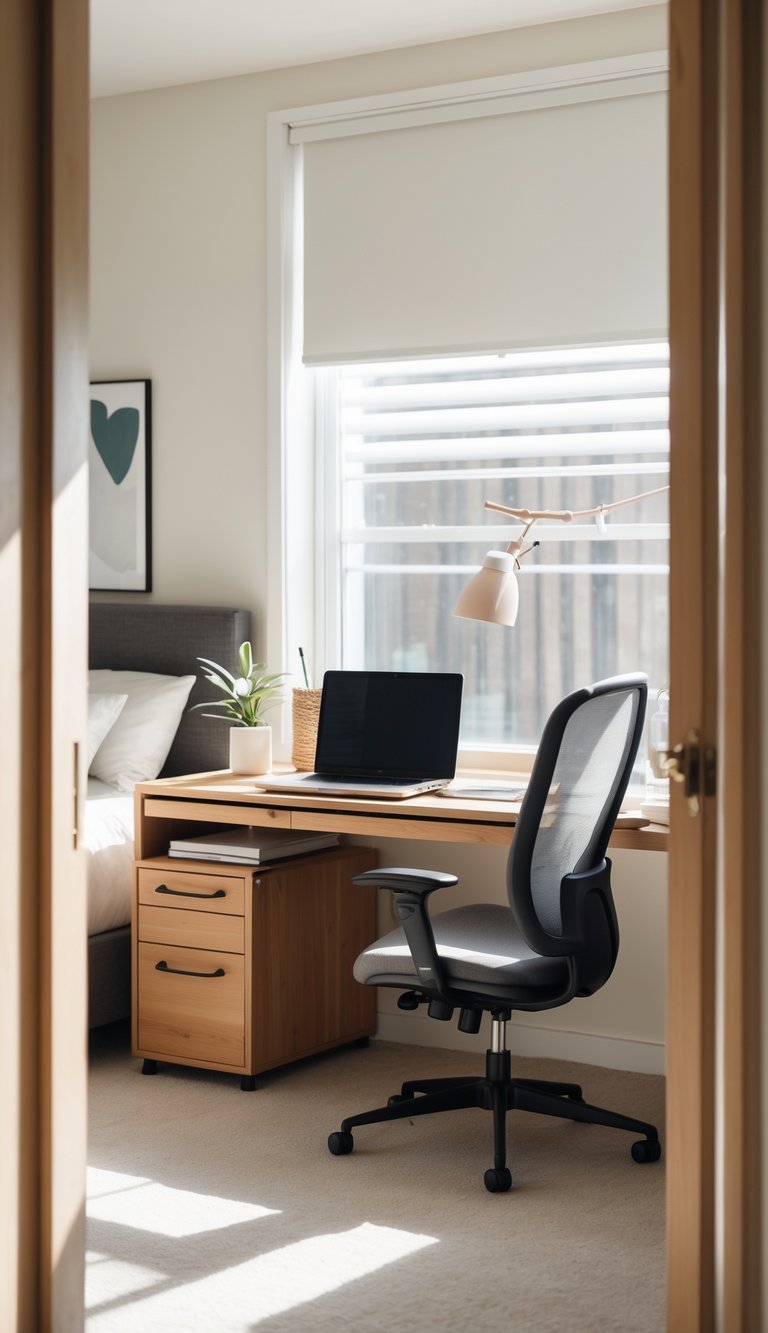
Place a slim filing cabinet under your desk to keep papers and supplies within reach without eating floor space. Pick a model that fits your desk height so you can slide it fully under and still have knee room.
Choose a cabinet with drawers sized for your files and a top drawer for small items like pens, chargers, and sticky notes. Metal or wood options can match your room’s style and add a tidy, finished look.
If you have limited room, opt for a rolling cabinet. Wheels let you pull it out when you need papers and tuck it away when you don’t.
Lockable drawers add security for sensitive documents and give you peace of mind. Keep only active files close by and archive older papers elsewhere to avoid clutter.
PRO TIP
Keep one labeled folder for “action items” and store it in the top drawer of your under-desk cabinet. That way, you won’t lose track of bills, forms, or urgent notes. Use color-coded hanging folders to separate projects, taxes, and receipts so you can find things fast. If you work with both paper and digital files, consider scanning older documents and storing them on a secure cloud drive, then remove the paper to save space. Measure the cabinet and desk before buying, and leave about an inch clearance so drawers open smoothly. Finally, clean out the cabinet every three months to prevent buildup and keep your workspace efficient.
6) Choose a chair with a slim profile
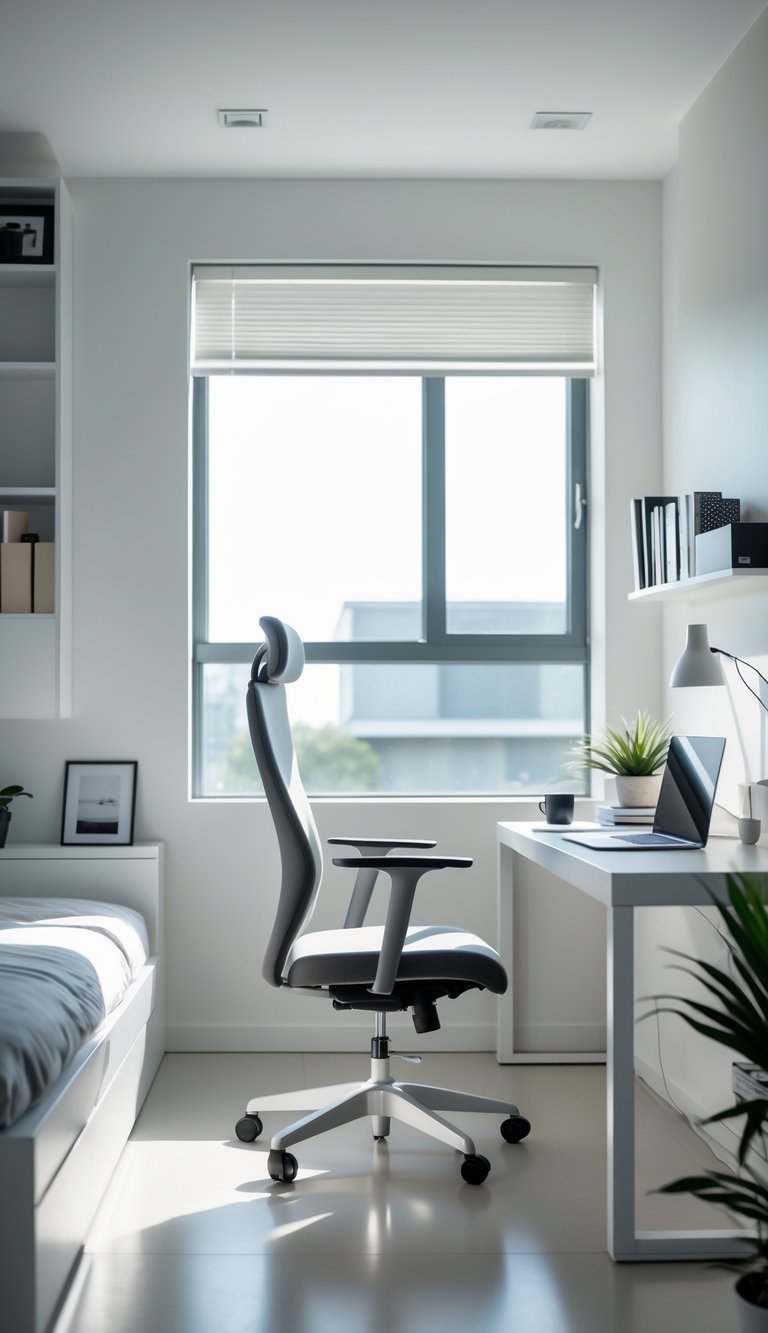
Pick a chair that fits your bedroom scale. Slim-profile chairs take up less visual and physical space, so your room feels less crowded and more peaceful.
Look for chairs with exposed legs and a narrow seat. These designs let light pass under the chair and make the area look larger.
Consider armless chairs or those with low arms if you need to slide the chair under a desk. Wheels can help you move without stretching the room, but choose small casters for tight floors.
Aim for good lumbar support even in a slim design. You want comfort for long work sessions without a bulky silhouette.
PRO TIP
When shopping, measure the clearance around your desk and the path to your door. A slim chair that looks small may still block walking space if you don’t check dimensions. Try chairs with adjustable seat height so you can tuck them under varied desk styles. If you like a softer seat, choose one with removable cushions that you can store when not in use. Materials matter: mesh backs breathe and feel light, while thin leather or faux-leather looks sleek but can add warmth to a small room. Finally, pick a neutral color or a slim pattern to keep the visual profile low and make the chair blend with your bedroom decor.
7) Utilize under-bed storage bins for office supplies
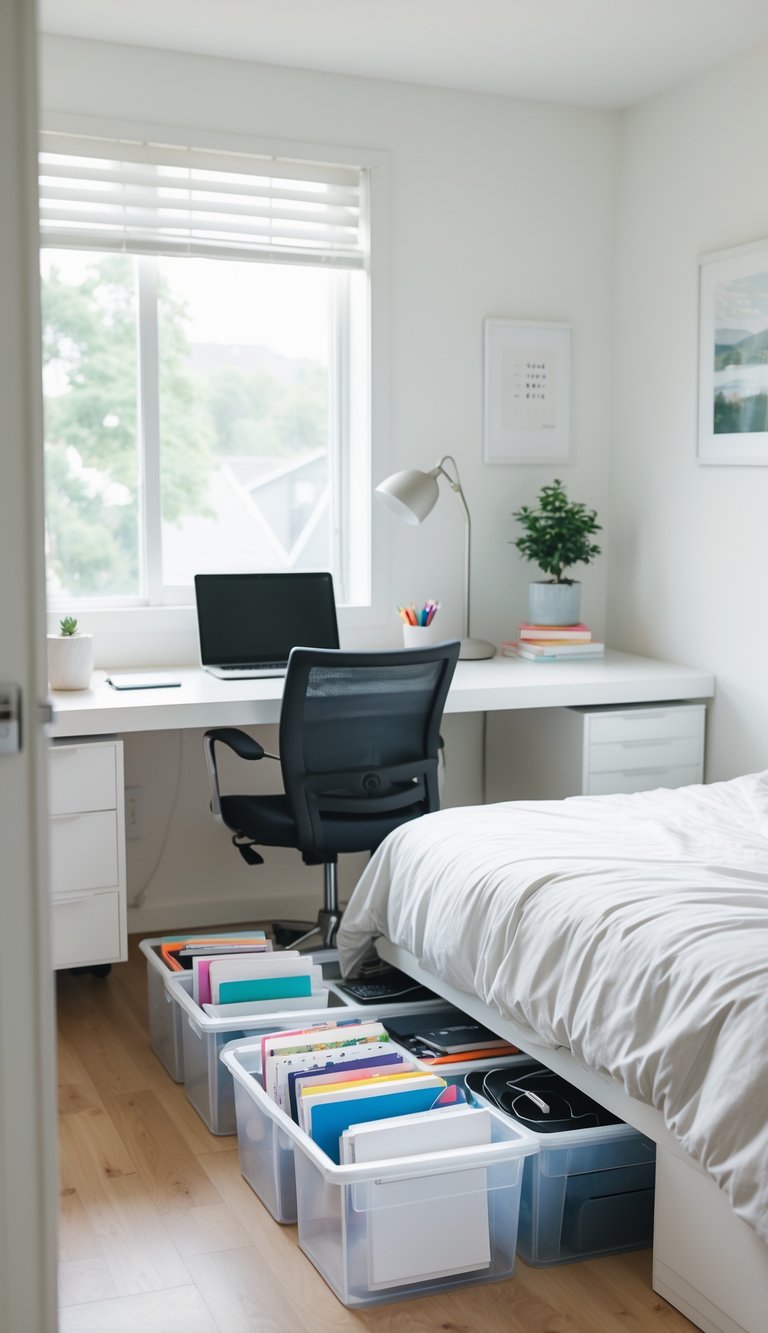
You can free up desk and shelf space by storing less-used office items under your bed. Use shallow bins with wheels so you can slide them out easily, even in tight rooms. Label each bin so you find what you need fast.
Choose clear plastic or fabric bins with compartments to keep paper, cords, and small devices organized. Store bulky items like extra paper and reference books in deeper bins. Keep frequently used supplies in a top bin for quick access.
Make sure bins fit the bed height and leave airflow to avoid moisture. If you have a bed skirt, pick attractive bins or use matching covers to keep the look tidy.
PRO TIP
Use a system that separates items by task: one bin for tech (chargers, external drives), one for stationery (pens, staples, sticky notes), and one for paper goods (notepads, printer paper). Rotate items seasonally so you only keep what you need nearby. Line bins with non-slip drawer liners to protect fragile items and stop shifting when you pull them out. Measure the space before buying bins and stack only if stable; unstable stacks make access harder and can damage contents. Add a small inventory note on each bin lid so you can glance and know what’s inside without opening every box.
8) Mount wall organizers for files and stationery
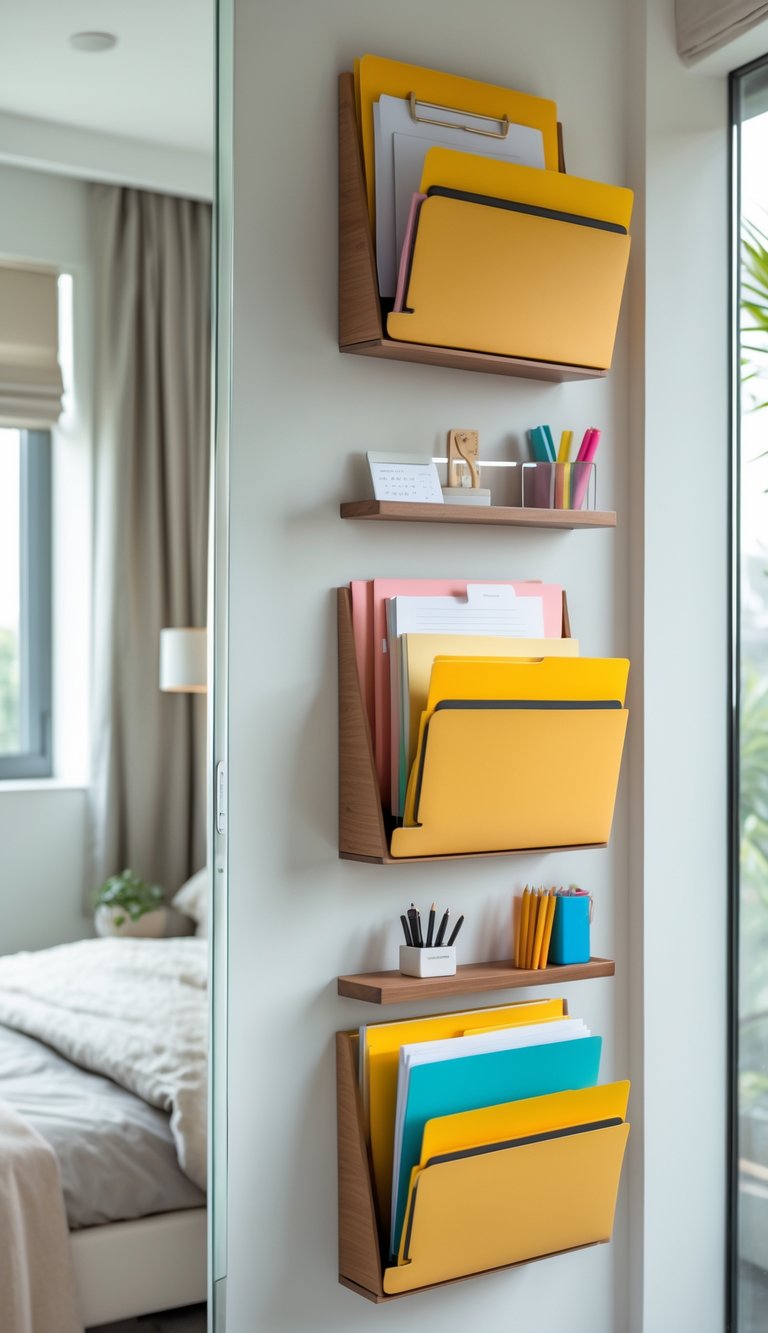
Mounting wall organizers frees up desk space and keeps items within reach. Use vertical pockets, small shelves, or metal grids to hold files, pens, and sticky notes. This keeps your surface clear and your work visible.
Choose organizers that fit your room size and style. Slim, multi-pocket racks work well behind the door or above the desk, while a pegboard holds tools and small containers. You can mix open bins with covered trays to hide clutter.
Keep everyday items at eye level and lesser-used supplies higher or lower. Label pockets or use clear holders so you find things fast. Anchoring the organizers securely prevents accidents and protects walls.
PRO TIP
Pick modular wall organizers so you can rearrange them as your needs change. Start with a basic set: a vertical file rack for papers, a small shelf for a printer or storage boxes, and a pencil cup or magnetic strip for pens and clips. Measure the wall space and plan where cords and vents sit before drilling. If you rent, choose damage-free hangers rated for the weight you need. Combine closed containers for messy items with open pockets for things you use every day. Finally, keep a small tray on the desk for loose items that don’t fit on the wall to avoid overloading wall organizers.
9) Use multi-functional furniture like an ottoman with storage
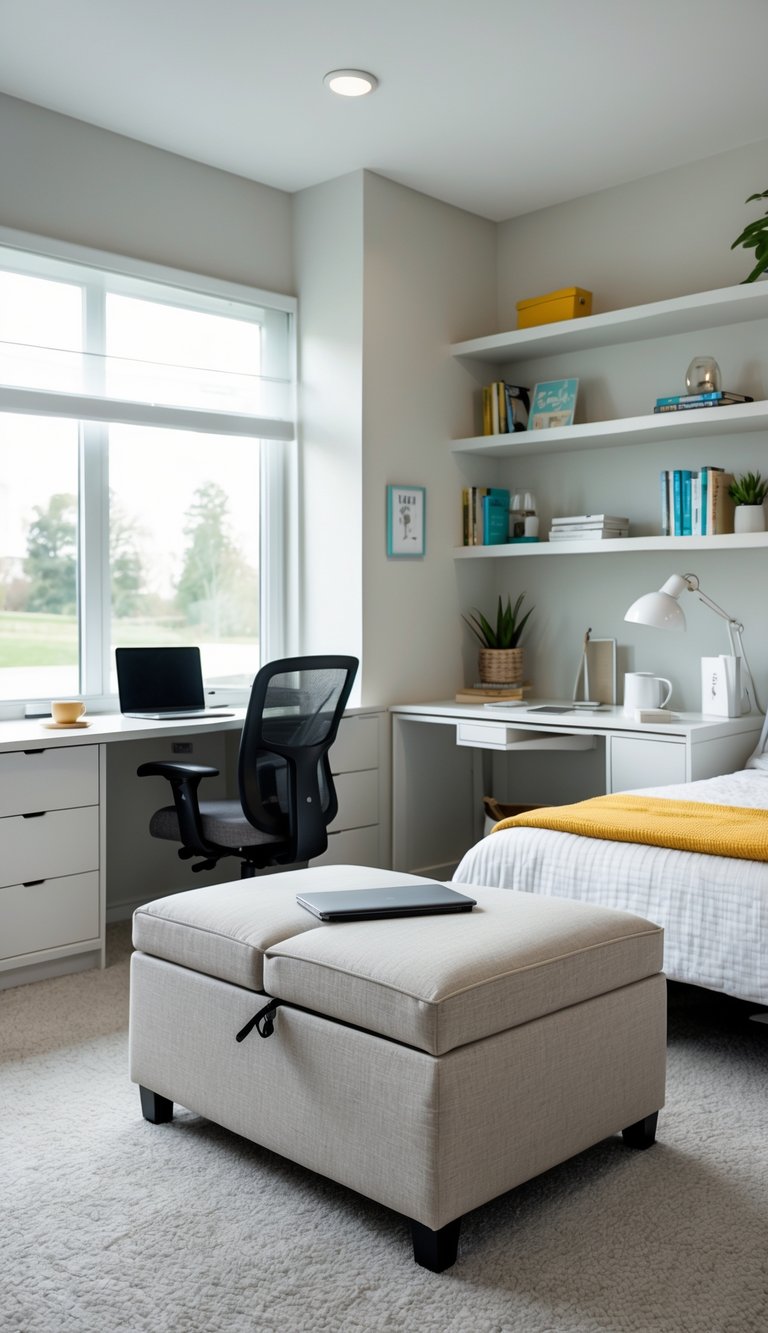
An ottoman with storage gives you extra seating and a place to stash supplies without taking up more floor space. You can hide papers, cables, and spare office supplies inside, keeping your desk area tidy and focused.
Pick a size that fits your room and doubles as a footrest or extra chair for guests. Choose a neutral color or a pattern that matches your decor so it looks like part of the room, not extra furniture.
Look for a sturdy lid and a light inner lining to protect items from dust. If you need cable access, consider one with a small cutout or use a desk grommet to run cords neatly.
PRO TIP
You can use multiple storage ottomans to create a flexible layout that adapts to your work needs. Place one near the desk for daily items like notebooks and chargers, and another by a seating area for blankets or reference books. Label small bins inside so you can find things quickly, and use foam inserts to protect fragile items. If you move often, choose ottomans with lightweight frames or removable lids so you can carry them easily. Finally, measure doorways and stair turns before buying to make sure the piece fits into your space.
10) Add soft, adjustable lighting to reduce eye strain
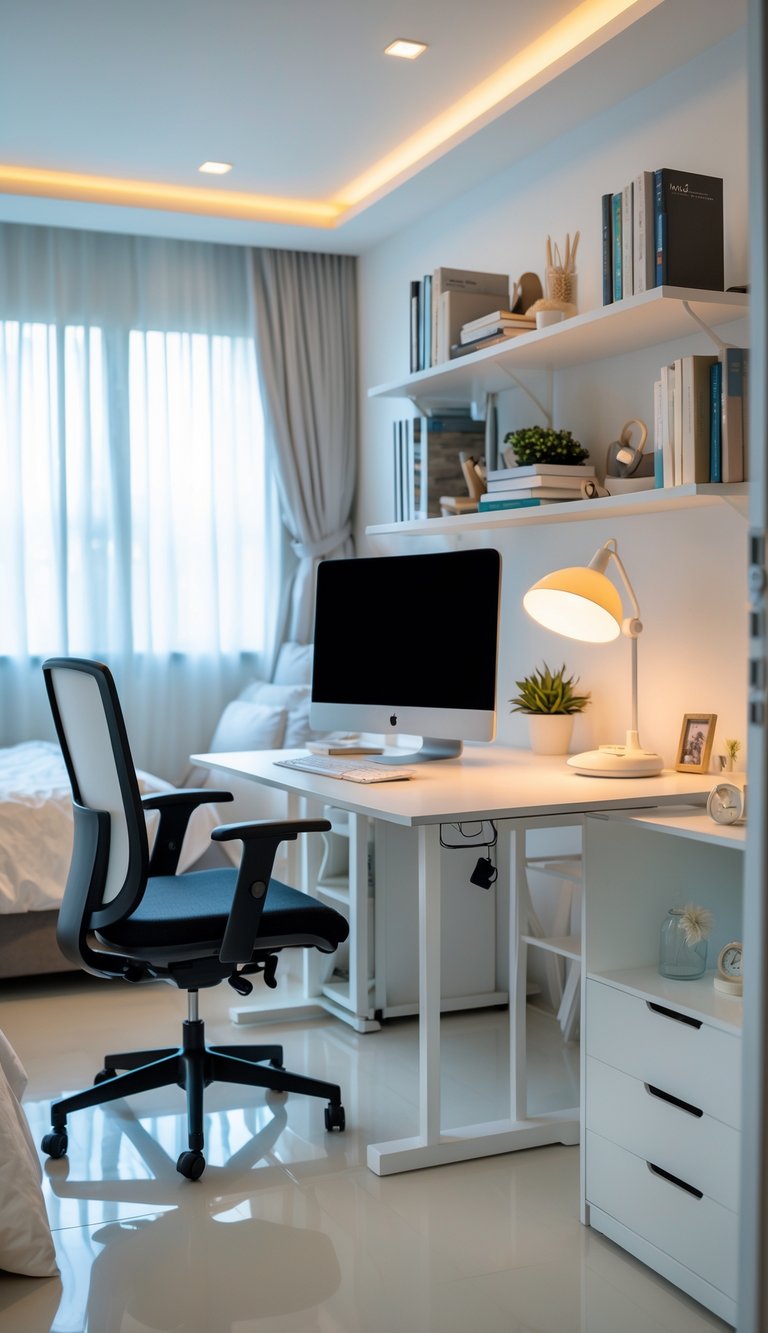
Place a lamp with dimming controls on your desk so you can match light levels to each task. Soft, adjustable lighting cuts glare and keeps contrast gentle on your eyes while you read or look at screens.
Choose bulbs with a neutral color temperature (around 3500–4000K) to avoid overly warm or cool tones. This balance helps colors look natural and reduces visual fatigue during long work sessions.
Add layered light: a task lamp for focused work and a low-level ambient light for the room. You’ll avoid sharp shadows and sudden brightness changes that can make your eyes work harder.
Keep a diffuser or frosted shade to soften light. That small change reduces hotspots and keeps your workspace calm and comfortable.
PRO TIP
You can save eye strain by using a lamp with both dimming and color temperature controls. Start your day with cooler, brighter light to feel alert, then shift to warmer, softer light as evening approaches. Position the task light to one side so it doesn’t reflect off your screen, and aim for even room lighting rather than a single bright source. Consider LED bulbs with high CRI (90+) so colors stay accurate and less taxing to view. If you use screens a lot, enable a night mode or blue light filter in the evening to ease the shift to warmer tones. Regularly clean lamp shades and bulbs so light stays even and consistent.
11) Select a minimalist desk with built-in drawers
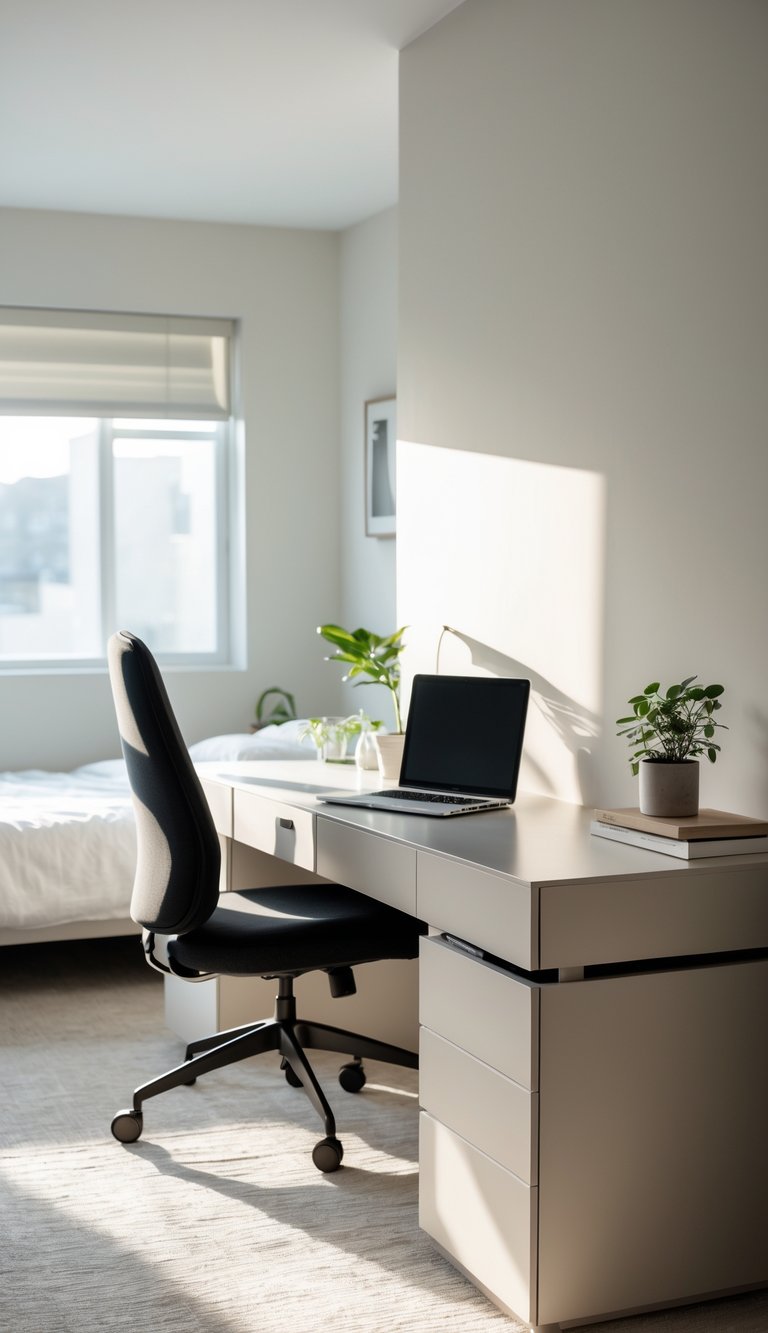
Choose a slim, minimalist desk to keep your bedroom office feeling calm and open. A simple shape and light finish reduce visual clutter and make the room feel larger.
Built-in drawers give you quick access to pens, chargers, and papers without adding extra furniture. You can hide messes fast and keep the desktop clear for work or hobbies.
Pick a desk with one or two shallow drawers for everyday items and a deeper drawer for folders. Measure your space first so the desk fits well and leaves room to walk.
Think about materials and durability. A wood or metal frame with smooth drawer glides will last longer and look neater.
PRO TIP
When you pick a desk, think about how you use the space daily. Choose drawers that match your habits: small compartments for stationery, a wider drawer for notebooks, and a lockable one if you store sensitive papers. Keep only what you need in the top drawers; store less-used items elsewhere to avoid crowding. Use simple organizers inside the drawers to prevent everything from shifting when you open them. Place the desk near an outlet so cords stay tidy and use cable clips to route wires along the desk legs. Finally, test the drawer action before you buy to make sure it opens smoothly and doesn’t stick.
12) Use calming colors to enhance focus and relaxation
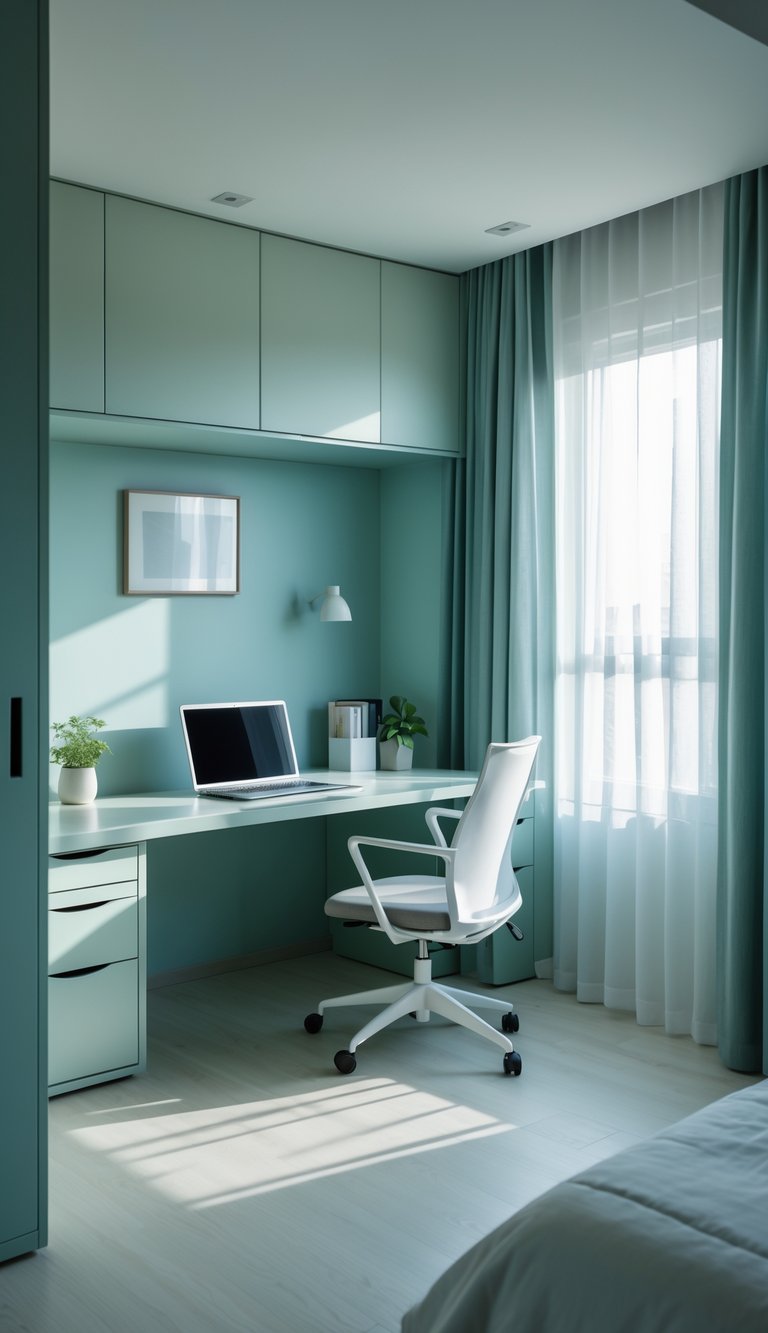
Choose soft, muted colors for your bedroom home office to help you focus without feeling tense. Gentle blues and greens calm your mind and reduce stress, making it easier to think clearly during work sessions.
Neutral tones like warm gray, beige, or soft white create a clean backdrop that keeps distractions low and lets your furniture and plants stand out.
Keep contrast low between walls and trim to avoid visual noise. You can add small pops of color with pillows, artwork, or a desk lamp to lift your mood when needed.
Test paint samples on the wall and observe them at different times of day before committing.
PRO TIP
Pick a primary calming color for most walls, then use a slightly darker or lighter shade for accents like a feature wall or shelving back panel. This adds depth without overstimulating the room. If you work from bed, paint the workspace area a touch cooler or calmer than the sleep area to create a mental boundary. Use non-toxic, low-VOC paints to improve air quality and reduce smells that can distract you. Add a few natural elements—like a small plant or wooden shelf—to balance the palette and bring warmth. Finally, keep finishes matte or eggshell rather than glossy to avoid glare on screens and maintain a soft, restful feel.
13) Create a small nook with a corner desk
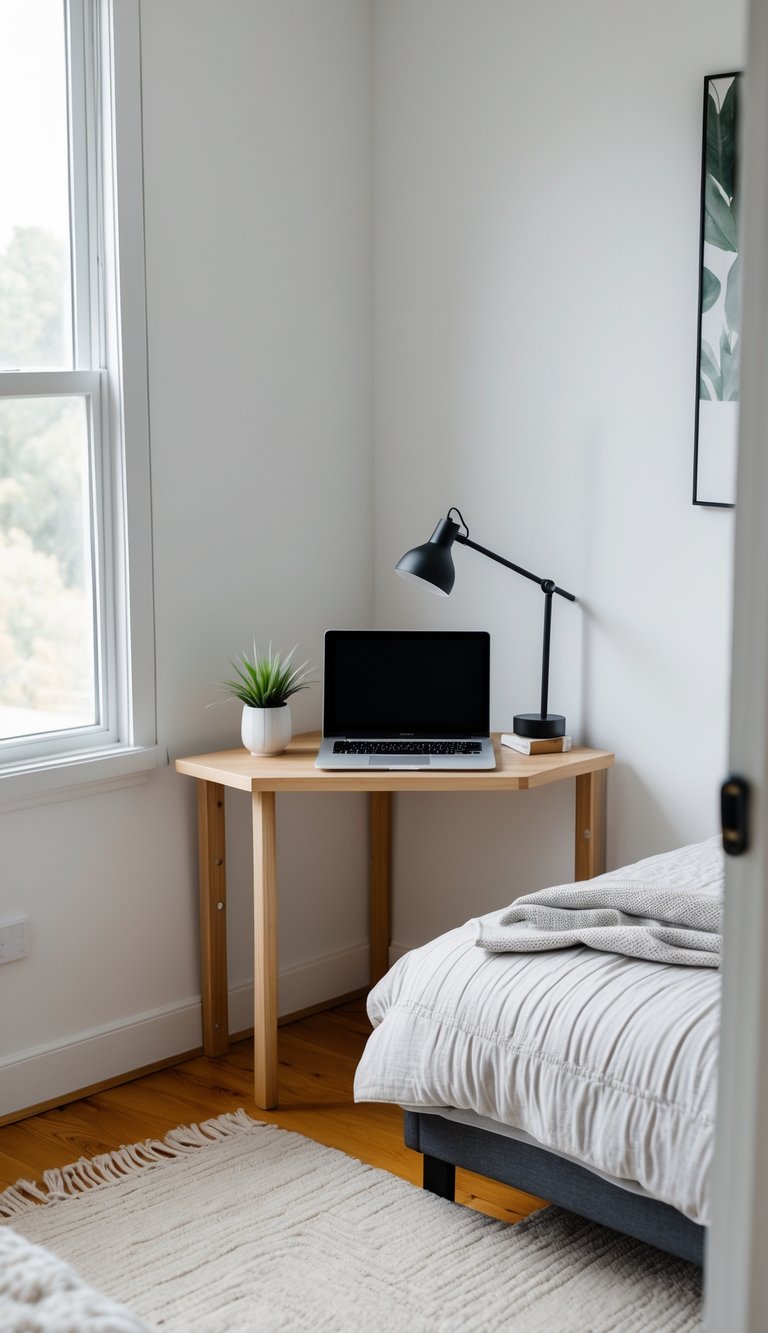
A corner desk turns an unused bedroom corner into a calm work spot. You can fit a compact desk or a fold-down model to save floor space when you don’t need it.
Place the desk near a window if possible to get natural light and keep your energy up. Add a slim chair and a small lamp for focused tasks without crowding the room.
Use floating shelves or narrow storage to hold supplies and keep the desktop clear. Choose light colors and simple lines to make the nook feel larger and less busy.
PRO TIP
Think about a fold-down corner desk if you need flexibility. These desks attach to the wall and fold up when not in use, giving you more floor space for other activities. Measure the corner carefully so the desk and chair fit without blocking doors or walkways. Mount a power strip nearby to plug in your laptop and lamp without long cords across the floor. Add a corkboard or magnetic strip above the desk for notes and keep only daily items on the surface to reduce clutter. Finally, pick a comfortable chair you can tuck in fully; good posture helps you work better in a small space.
14) Add whimsical wall shelves for personality without clutter
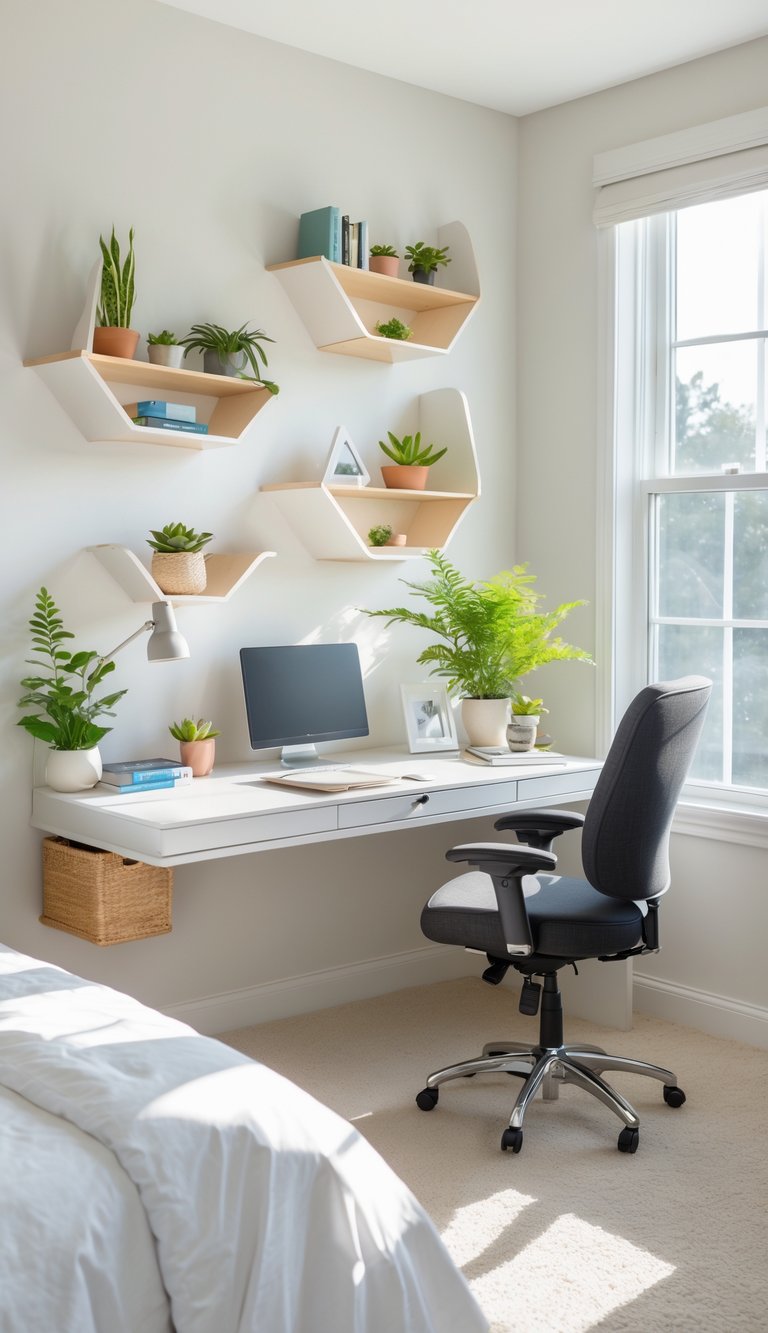
Choose wall shelves with fun shapes or bright colors to add personality without taking up floor space. You can use small shelves to hold plants, photos, or a favorite mug so your desk stays clear for work.
Mix open shelves and closed boxes to hide cords or small clutter. Keep items grouped and intentional; too many pieces makes the space feel busy instead of playful.
Place shelves at eye level near your desk to keep essentials within reach. Change the display seasonally or when you need a refresh — it’s an easy way to update your room without buying new furniture.
PRO TIP
Pick lightweight, easy-to-move shelves so you can rearrange when your workflow changes. Use a color theme or material mix—wood, metal, or painted ones—to tie the shelves into your room’s look. Limit each shelf to three or four items to avoid visual clutter; rotate items weekly to keep the area fresh. Add small baskets or boxes on lower shelves to hide chargers, notes, or headphones. Anchor shelves to studs or use proper wall anchors for safety, especially if you store heavier items.
15) Keep cables organized with clips and sleeves
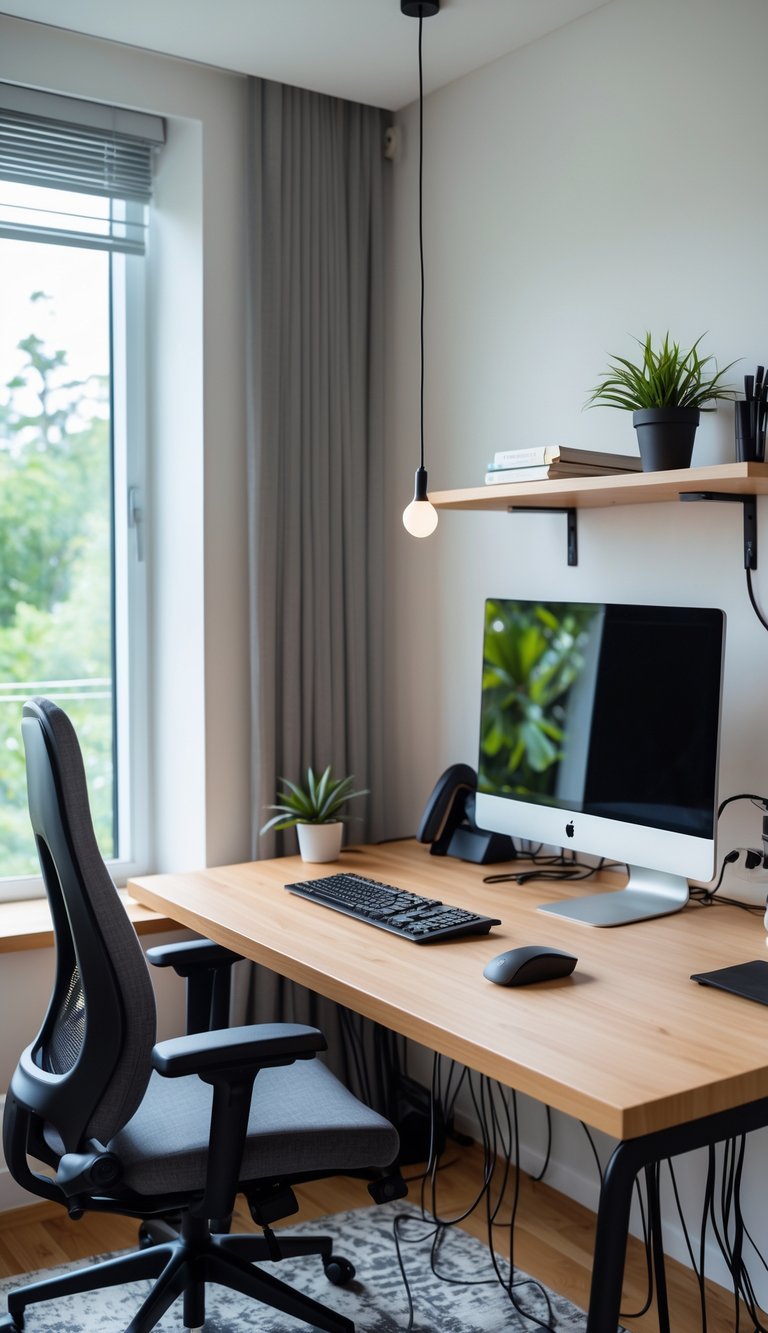
Keep cables off the floor and out of sight using clips and sleeves. Stick small adhesive clips along the back of your desk or bed frame to route chargers and headphone cords where you want them.
Use a fabric or neoprene sleeve to bundle thicker groups of cables. Sleeves make the area look neater and stop cords from tangling when you move a laptop or monitor.
Label each cable near the plug so you can grab the right one fast. That saves time and prevents unplugging the wrong device during a call.
Place a cable box or tray under your desk to hide power strips and extra length. This keeps pets and curious hands away from plugs and reduces tripping hazards.
PRO TIP
You can mix and match solutions to match your space and budget. Use adhesive clips for light cords, Velcro ties for bundles you adjust often, and a sleeve for a cleaner look around a monitor or TV. Run power cables to a single power strip inside a cable box or under-desk tray to make swapping devices simple. If you rent, use damage-free adhesive strips so removal won’t harm walls. Color-code or label each cord near both ends to find the right one quickly without unplugging devices. Periodically check clips and ties for wear to avoid loose, dangling cords.